This article first appeared in the Solutions newsletter. Click here to learn more and sign up.
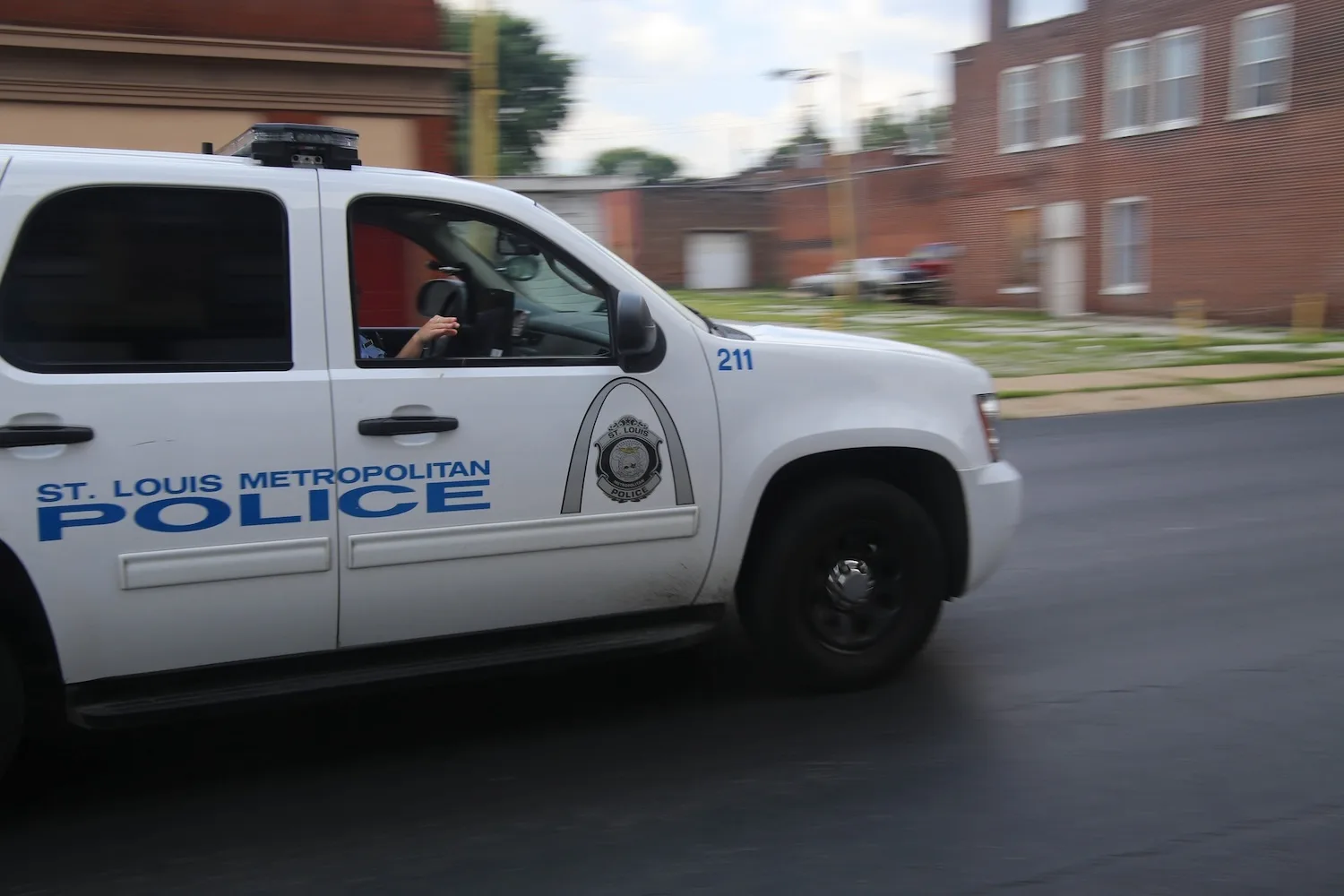
Last week, 45 civic leaders in St. Louis told Mayor Cara Spencer what they think she should do over the next four years. One short-term recommendation: that the St. Louis Metropolitan Police Department, which is well below authorized strength, hire 200 new officers.
Stay informed on the area’s civic issues
Subscribe to the St. Louis Solutions newsletter to learn about public problems and possible fixes.
Easier said than done. Officer recruitment is tough all over the country. And anyway, hiring decisions aren’t really Spencer’s to make. The city negotiates with the St. Louis Police Officers Association on the pay scale, which either attracts applicants or doesn’t, and now, thanks to recent state legislation, a reconstituted St. Louis Board of Police Commissioners will oversee departmental operations.
But there’s research to suggest that hiring more cops is a good idea—not because it would lead to more arrests, but fewer.
In the new-ish book Unforgiving Places: The Unexpected Origins of American Gun Violence, the University of Chicago behavioral economist Jens Ludwig argues that we’ve gotten gun violence all wrong.
Most gun violence, Ludwig writes, is not caused by soulless perpetrators coldly plotting their next move (as many on the right believe), or by victims of poverty rationally responding to their plight (as many on the left believe). While it’s true that some criminals do engage in violence that’s “instrumental, ” or done for a tangible reward, the majority of gun violence, Ludwig posits, is “reactive” or “expressive”—a manifestation of rage, jealousy, or fear felt in a fleeting moment.
Those feelings trigger in the human brain something that the Nobel Prize–winning economist Daniel Kahneman called “System 1” thinking. One such cognitive process is “catastrophizing”—the conclusion that nothing could possibly be worse than, for example, being disrespected, being cheated on, or witnessing violence to a friend. Another System-1 thought process is adopting an “egocentric perspective”—e.g., assuming, for instance, that the slowness of the car in front of you is an insult to you specifically. A third is the “fundamental attribution error”—assuming that anyone who bumps into you at the gas station is being intentionally rude. All of these processes lead to severe misreadings of situations—and thus lead to violence.
But System-1 thinking can be interrupted. A powerful way to do so, Ludwig argues, is to put more “eyes on the street”: pro-social adults whose very presence and occasional intervention will act to slow minds and cool tempers—the voices that ask, “Everything OK over here?” or say, “Hey, let’s take it easy.” Parents, neighbors, and educators do this. So do business owners, security guards, and yes, many cops. Writes Ludwig:
The best available data suggest that when cities hire more cops, violent crimes go down. In the average city, when the number of police goes up by 10 percent, the murder rate (most of which involve guns) goes down by around 10 percent. Arrests for serious crimes also decline.
The last sentence is key: Why would arrests fall as more officers hit the streets? Ludwig cites a 2022 study that looked at data from 242 large cities and found that “it is the presence of police officers rather than the number of arrests that they make which drives the public safety returns to investments in law enforcement.” Ludwig continues:
People sometimes say “We can’t arrest our way out of this crime problem,” which they usually intend as a skeptical take on police being a useful part of the solution. What that skepticism misses is that when policing is done right, it seems to be doing something to prevent violence in the first place—as behavioral economics (unlike conventional wisdom) would predict.
So what is policing “done right” to Ludwig? It’s not, he emphasizes, some kind of zero-tolerance arresting spree. Hiring a slew of cops and ordering them to crack down on minor offenses will not reduce violence, he writes. But hiring a slew of cops with the goal of de-escalating situations could indeed.
Boosting police presence isn’t the only way to get more eyes on the street, Ludwig adds. There are plenty others, and some—sprucing up vacant lots, repairing abandoned homes, installing better streetlights—have been shown in randomized control trials to be effective.
In addition, there are evidence-backed methods for teaching young people to self-interrupt their System-1 thinking, Ludwig points out. One such method, cognitive behavioral theory, has been taught in St. Louis to the street-outreach workers in Show Me Peace, with the hope that they’ll spread it into the community. (Street outreach itself, by the way, tends to bring about “a small but significant reduction in violent offenses,” according to a recent systematic review co-authored by the University of Maryland professor Thomas Abt, who helped the St. Louis region launch its Save Lives NOW! initiative.)
All of which is to say that there are many ways to reduce gun violence without spending money on law enforcement. But assuming the new state law survives legal challenges, the city of St. Louis won’t have a choice—by statute, at least 25 percent of its general revenue must go to the police force by 2028. And chances are, the new police board, appointed by the thoroughly pro-police Gov. Mike Kehoe, will follow the advice of the mayor’s transition advisory committee and prioritize the hiring of more officers. The question will be: For what purpose? The board members have been panned even by a prominent Republican for their lack of expertise, but it would not be hard for them to read Unforgiving Places. Maybe they’d see that, with a beefed-up department, there’s no need to over-police or under-police a neighborhood that’s struggling with violence. Rather, officers can prioritize just being there—and helping to de-escalate.