Lisa was a long-time renter in Florissant who wanted to buy her own house and build equity, but she couldn’t find a path forward. (She works in law enforcement and spoke to SLM on condition that we not print her last name.) “My credit is immaculate,” she says. “I’ve been working at the same job for over 20 years. That was not a problem. My biggest issue was the down payment.”
Traditionally, someone buying a house makes a down payment equal to 20 percent of the closing price—for example, a $50,000 down payment for a $250,000 house. But saving tens of thousands of dollars can be a struggle for people in low income brackets, which by the federal definition, included Lisa. And while such homebuyers can, in certain scenarios, bring a smaller down payment to closing, it’s not ideal: They’ll pay more in the long run and will almost always build equity (and thus, generational wealth) much more slowly. So when people of modest means try to buy houses, they’ll either have a savings problem or a slow-equity problem.
Stay informed on the area’s civic issues
Subscribe to the St. Louis Solutions newsletter to learn about public problems and possible fixes.
Then, earlier this year, Lisa stumbled on a way to solve both problems at once: the Affordable Seconds program run by St. Louis Community Credit Union and Carrollton Bank. In this program, which is still in the pilot phase, the buyer of a house costing up to $250,000 secures not one but two mortgages. The first is the typical 80 percent of the home price; that’s offered by the bank. The second, which is 20 percent, comes from the credit union. This second loan relieves participants of making a 20 percent down payment, while allowing them to build equity faster than conventional homebuyers—and with roughly the same monthly payments.
That’s been made possible by philanthropy. A family that doesn’t have money for a 20 percent down payment can, in many cases, buy anyway by paying for private mortgage insurance, or PMI—a policy that covers the lender’s loss if the family defaults. When that PMI premium gets folded into the family’s monthly house payment, some of the money that could’ve gone toward paying down the mortgage’s principal goes instead to an insurance company. This acts on a drag on the family’s long-term effort to own the house outright. In the Affordable Seconds program, there’s still a risk of default, only in this instance it’s borne not by an insurance company but by the James S. McDonnell Foundation, which has given the credit union a $3.6 million grant to recover from such situations. (Full disclosure: St. Louis Magazine is also a grantee of the foundation.) The buyers still have the same responsibilities: If they miss payments, they risk losing their houses. But in this set-up, when they do pay, they’re amassing ownership.
Terrence Rogers, president of community lending at Carrollton, says that overall, defaults are rare —maybe 2 to 3 percent of mortgages. Nevertheless, the bank has tried to be conservative in this program by requiring, for example, a relatively low debt-to-income ratio for the buyers it works with. Yet the goal is not merely to be good stewards of the foundation’s grant, Rogers says: “We want these folks to buy these houses and be able to take care of the house. We don’t want them to be overextended.” At the same time, the idea is to assist St. Louisans who could use some upward economic mobility, so eligible households may earn no more than 80 percent of area median income. In the St. Louis metro, that’s $63,600 for a single person and $90,800 for a family of four.
Lisa says that she spent several years looking for the right house. Thanks to her job in criminal justice and her fine-grained knowledge of how neighborhoods feel at street level, she could rattle off a list of ZIP codes that she considered non-starters, but she was also leery of landing in too nice a neighborhood: If her mortgage was too high, she wouldn’t be able to travel or keep her home in good repair. “I didn’t want to be house poor,” she says. “I still want to live.”
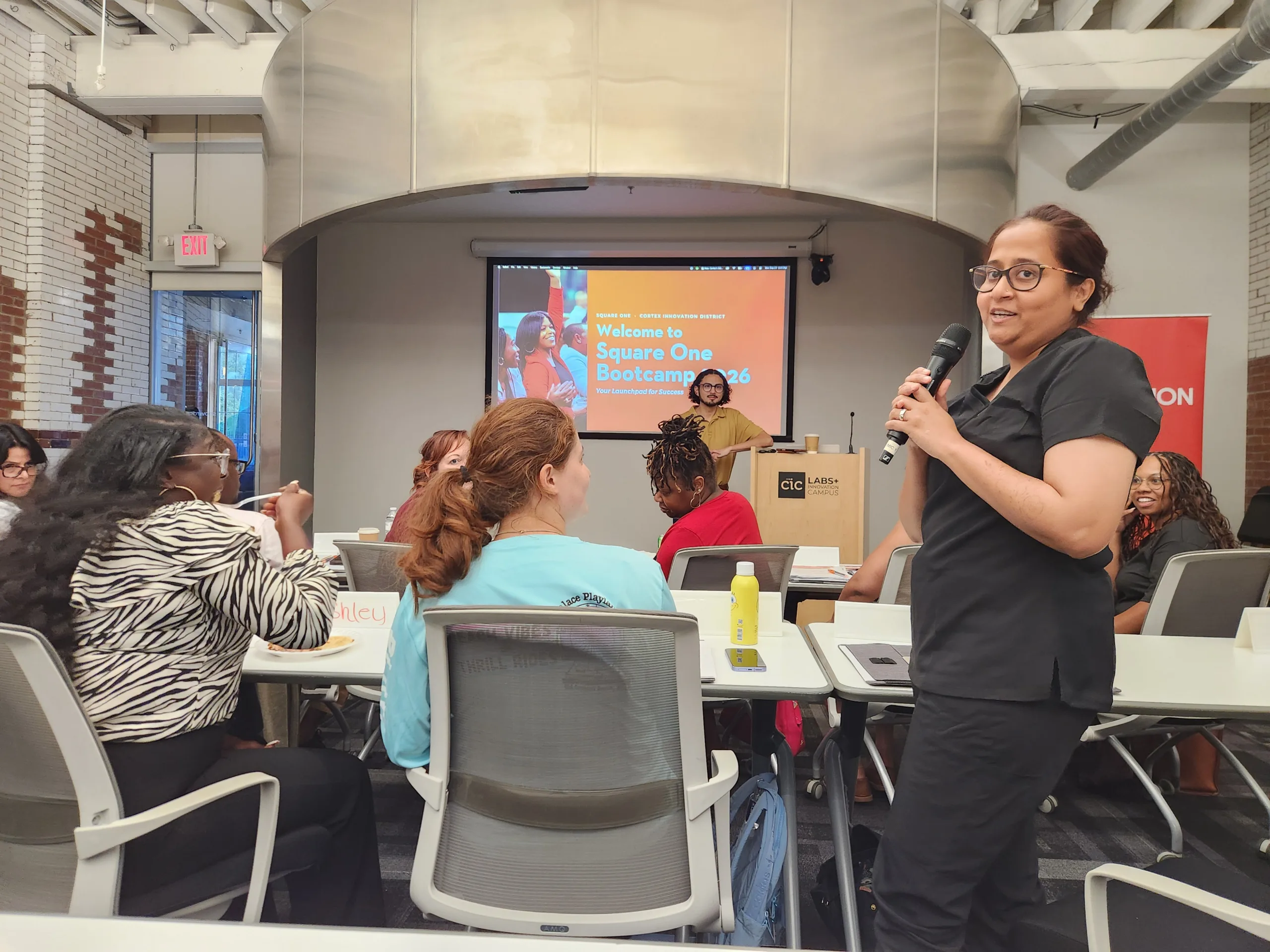
When she heard about a learning session at the credit union’s St. John location last April, she was skeptical. She’d attended various workshops for prospective homebuyers and nothing had panned out. But she was off work that Saturday, so she stopped by. And while there, it dawned on her: This might actually work. So she went home, applied, and was accepted. She found a house she liked in a Black Jack subdivision, and visited it every day for two weeks. By the end of May, she had closed on it, utilizing her Affordable Seconds loan.
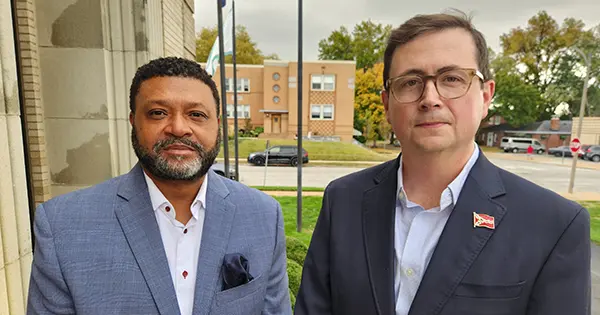
Paul Woodruff, vice president of strategic initiatives at St. Louis Community Credit Union, argues that a home is not just a place to live. “It is a part of who that family is,” he says, “but it is a part also of the financial legacy of that family. And for far too long, there have been too many families that have not had an avenue to be able to create financial legacies.”
Rogers, of Carrollton Bank, concurs. “This is all about systemic change,” he says. “This is about building wealth.” He adds that Carrollton has been piloting Affordable Seconds at its St. Louis Hills branch but plans to roll it out at other locations in the first quarter of next year.
Lisa, meanwhile, is thrilled to no longer be renting and to be building equity for herself. “Now, is it my dream home?” she says. “No, not at all. Nowhere near my dream home. But I love it.” And one of the things she loves about it, she says, is that she can pass it on to the next generation. “I have something for my children,” she says.