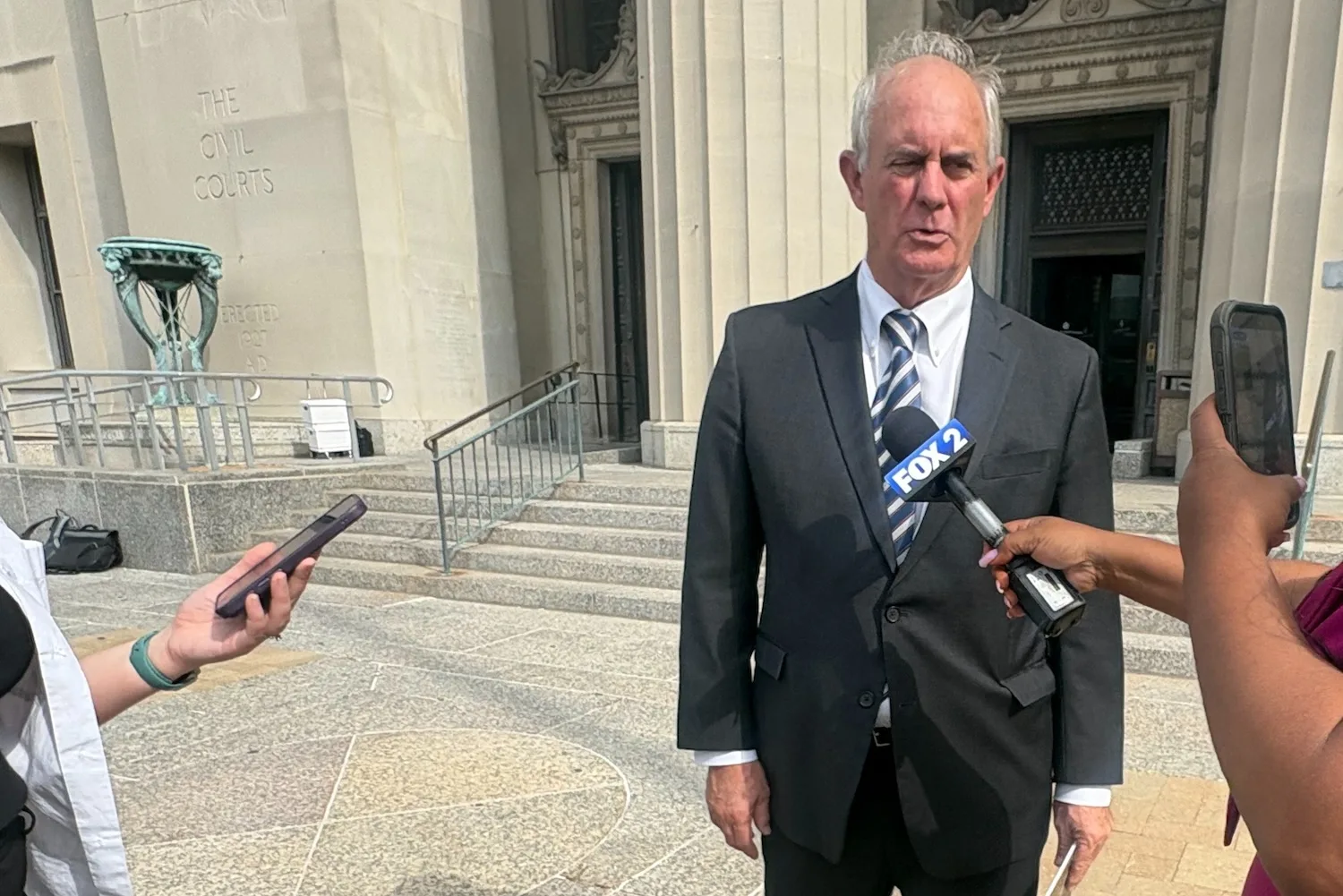
A St. Louis man who racked up nearly $6,000 in unpaid parking tickets wants two of his cars out of impound—and his attorney Bevis Schock says he’s entitled to those vehicles, citing what Schock says is ambiguity in the city’s municipal code.
“There’s a rule in the law, sometimes called a doctrine, called the rule of lenity. The word relates to the word leniency,” he said. “Any time there’s an ambiguity, it’s always ruled in favor of the person charged with the offense.”
Get a fresh take on the day’s top news
Subscribe to the St. Louis Daily newsletter for a smart, succinct guide to local news from award-winning journalists Sarah Fenske and Ryan Krull.
In that case, the person charged with 63 parking violations is Keiono Sutton, who was in St. Louis Circuit Court yesterday morning as Schock argued the Downtown West resident ought to get his Toyota Yaris and Dodge Voyager returned.
The ambiguity that Schock referenced is a line in the city’s municipal code that says that when the city tows a vehicle, that vehicle “shall be impounded for a period of 30 days.” Schock takes that to mean there is a 30 day cap on how long the city can hold onto an impounded vehicle. Schock says that there is further complication because the city code also says that the tow lot can sell the car—but that process takes longer than 30 days.
In yesterday’s hearing, Assistant City Counselor Tom Goeddel argued that the reference to 30 days is the duration for which the tow lot must hold onto a vehicle before selling it—in other words, a floor rather than a ceiling. “We can do what we want after 30 days,” he said.
Goeddel put the blame directly on Sutton. “One ticket, two tickets, OK,” he said. “But 63 tickets? You’re taking advantage of the system.”
Goeddel essentially said the tow lot would give Sutton his car back if he paid his tickets.
However, Goeddel intentionally said car rather than cars because it’s going to be particularly difficult for Sutton to get his Yaris back. It’s already been auctioned off.
Schock took umbrage at that.
After the hearing he said he didn’t know which of the 63 tickets applied to which car and questioned whether the city could auction off one car for unpaid tickets on a different vehicle, even if they had the same plates. “Which tickets are on which car? Do the charges follow the car or follow the person?” he said after the hearing. “Can you impound car A because there are tickets on car B? I don’t know. It’s a good question.”
Judge Rochelle Woodiest said she would be issuing her ruling in the matter “shortly.”
The city has recently ramped up efforts to impound derelict vehicles or those with a significant amount of unpaid fines after news outlets, including SLM, reported that scofflaws racked up $10.7 million in unpaid fines after a COVID-era prohibition on towing cars lingered long after the pandemic. But Schock has been busy pointing out potential flaws in the city’s operations now that towing has resumed; last month, he got fines totaling $6,000 thrown out on behalf of a different client due to the city’s coding error.