If you have an unpaid parking ticket from the City of St. Louis, take a close look before you pay. You might not have to. Especially if the ticket you got was for parking “contrary to sign.”
For years the parking enforcement crew of the city’s Treasurer’s Office has been issuing tickets for that offense. But because the tickets relied upon a faulty reference to the specific law being violated, an attorney challenging those tickets in court is now winning.
Get a fresh take on the day’s top news
Subscribe to the St. Louis Daily newsletter for a smart, succinct guide to local news from award-winning journalists Sarah Fenske and Ryan Krull.
Last month, lawyer Bevis Schock wiped away nearly $6,000 in parking fines owed by Forest Park Southeast resident Theodore Swider. His car had been booted and towed due to the outstanding fees. Schock got that back for him, too.
Treasurer Adam Layne, who handles parking operations for the City of St. Louis, did not respond to questions about how for long the faulty tickets have been issued or many were written with the error.
In an email, a spokesperson says Layne “fully supports” the system in place for people who wish to contest parking violations—and that they support the decision that led to the tickets being dismissed for Schock’s client.
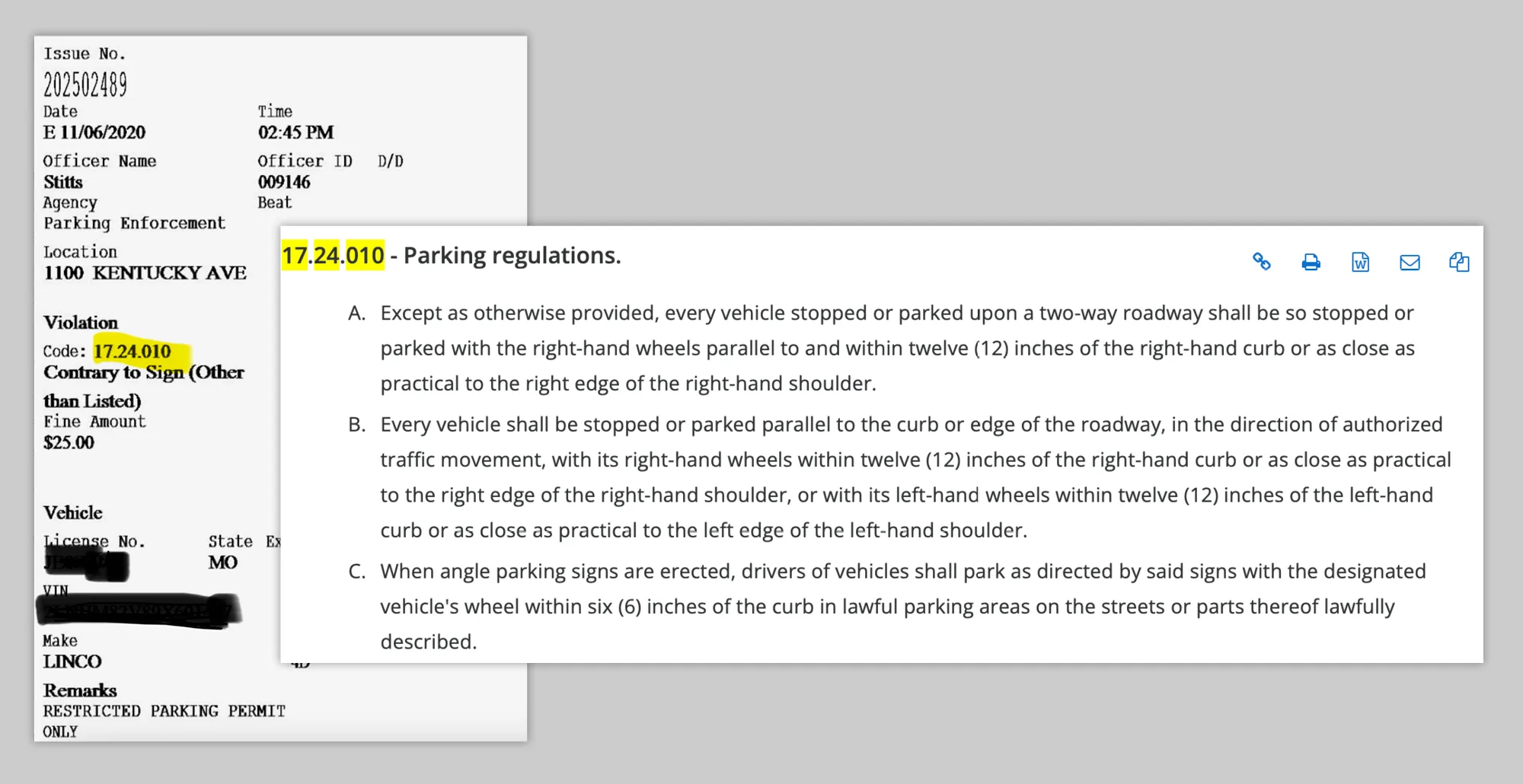
Schock’s argument was simple. The lion’s share of the more than 50 tickets issued to Swider were for “parking contrary to sign”—in Swider’s case, a sign saying a special permit was needed to park on his street in The Grove. The actual tickets on Swider’s car reviewed by SLM reference city ordinance 17.24.010, which mandates drivers not park too far away from the curb.
As SLM previously reported, the city has been issuing many tickets for parking contrary to sign in recent years, some of them for vehicles that park downtown and don’t realize they must pay a flat $5 fee even after 7 p.m., when meters typically stop charging. A chagrinned downtown parker who spoke to SLM for that story had a ticket with the wrong code written on it as well, indicating the issue is not confined to just Forest Park Southeast. A review of parking records shows a ticket from November 2020 with this coding error.
Swider moved to St. Louis from Colorado in 2013, and has rehabbed three houses in the city, two of which he purchased from the city’s land bank. One of his rehabs was featured in the Post-Dispatch. Perhaps surprisingly, he says that permitting for construction in the city has always been pretty smooth. He’s never encountered confusion and red tape like that around parking in his own neighborhood.
Swider’s neighborhood has an unusual permitting system for parking because The Grove district is both a nightlife destination and near a hospital. A vehicle needs a permit to park on a residential block so that the street parking isn’t monopolized by bar patrons or people working at the hospital. However, Swider says that for a long time the permitting system was barely enforced. For nine years he paid for a permit only to see, according to his motion to dismiss the fines, “countless people would park on his street,” enjoy the nightlife, and not get ticketed. Reports from 2023 suggest parking enforcement was active, and perhaps even heavy-handed, in the area. But whatever the reason, Swider eventually stopped paying for the permit and in the fall of 2024 began getting ticketed on a semi-regular basis.
Those tickets barely seemed to matter, though. By 2023 the Parking Division had for years not been booting or towing cars, meaning the tickets had little teeth.
Then, following media coverage from SLM and KSDK earlier this year about the millions of dollars in uncollected parking fees, the Treasurer’s Office began booting vehicles, for the first time in nearly a decade. By this point, Swider had accrued $5,590 in fines. His car got booted and towed in July.
Enter Schock.
The libertarian-minded attorney never misses an opportunity to be the proverbial pebble in local government’s shoe. Here, though, the Treasurer’s Office seems to be wearing loose fitting sandals and walking on a gravel path.
Schock noted in his legal filings that almost all of Swider’s tickets were for parking “Contrary to Sign (Other Than Listed).” But the specific ordinance listed on the tickets reviewed by SLM is in reference to three paragraphs in city code primarily pertaining to vehicles parking within 12 inches of a curb. “That’s a big issue, a real big issue,” says Schock. “So I think the city’s got some problems here. We’re gonna have fun with it.”
The Treasurer’s Office says that when it was made aware of “code input error” related to these tickets, they immediately took action and fixed it. “Our office is committed to ensuring that parking enforcement is administered accurately, consistently, and in accordance with City Code. When an issue is identified, as was the case with the ‘Parking Contrary to Sign’ code, we review it and make the necessary corrections,” it says in a statement. The office added that a parking violation ticket notice is prima facie evidence of the municipal violation.
Schock argued in legal filings that the faulty ticket represented a lack of due process and a violation of the Sixth Amendment of the Constitution, which requires defendants “be informed of the nature and cause of the accusation.”
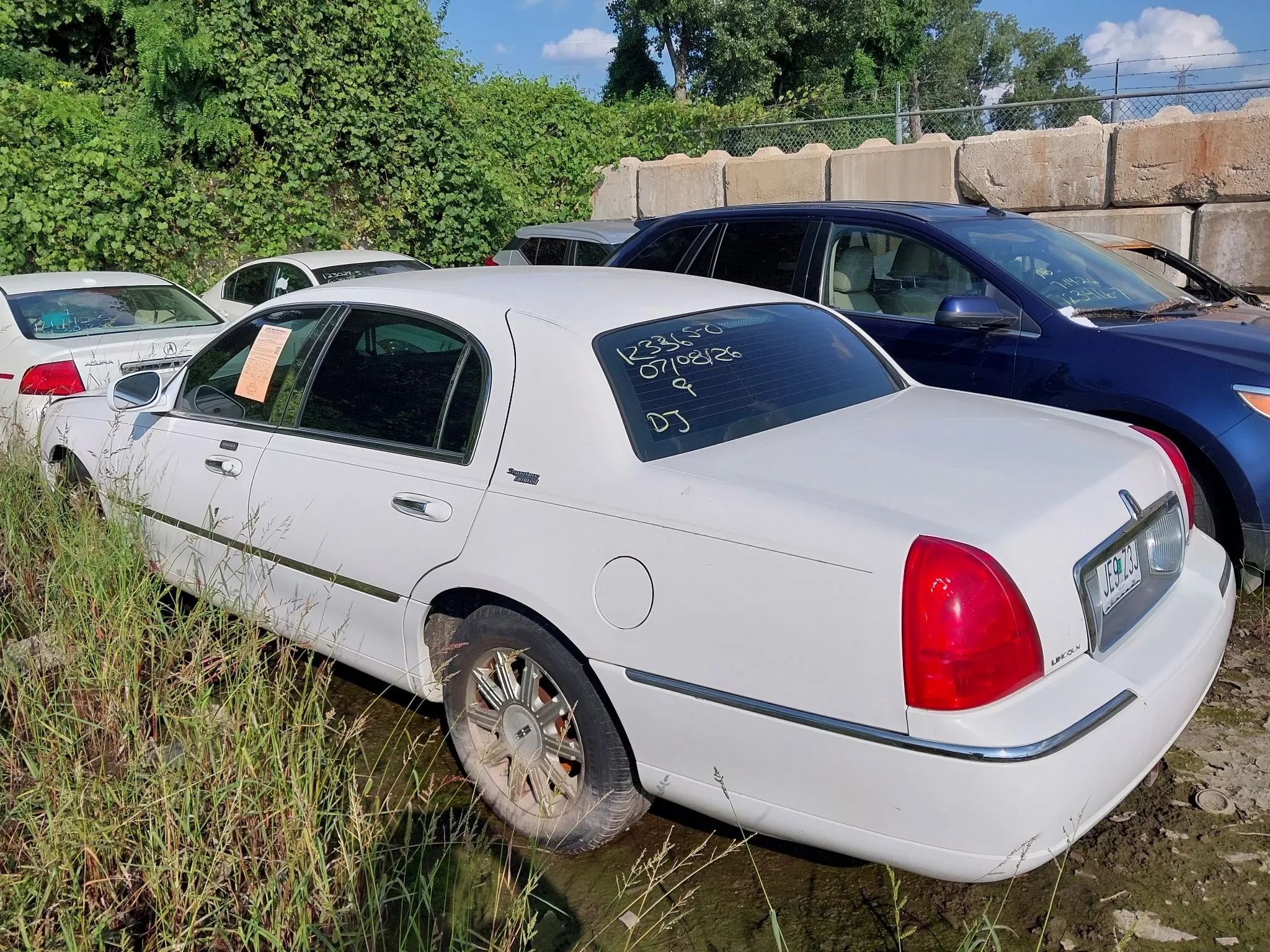
Schock got Swider’s fines and fees dismissed by an administrative hearing officer by using the tickets’ plain language. He also got Swider’s car back from the city tow lot. Swider says that when he retrieved his Lincoln Town Car, he found it in a grassy patch of the lot with water pooled in the bottom of its back seats. He still managed to drive it back home.
Schock says he’s not done filing challenges against the city’s parking and towing operations. He believes that the ordinance authorizing the city to boot and tow vehicles also requires the city to return an impounded vehicle within 30 days—even if the bill hasn’t been paid. (The City Counselor’s Office did not return multiple emails seeking comment, though a plain reading of the ordinance suggests Schock may have a point.) Shock also argues that the way parking penalties quadruple in 45 days is unconstitutional under the Eighth Amendment, which prohibits excessive fines.
Not every case has gone as smoothly as Swider’s. Another client of Schock’s, Keiono Sutton, racked up $5,975 from 63 tickets, albeit from a wider array of parking offenses than Swider’s. Schock’s efforts to get those tickets wiped away failed in administrative court. He filed for what’s called a trial de novo, essentially a new trial in a different venue, last week in St. Louis Circuit Court.
“We’re just getting warmed up,” says Schock.