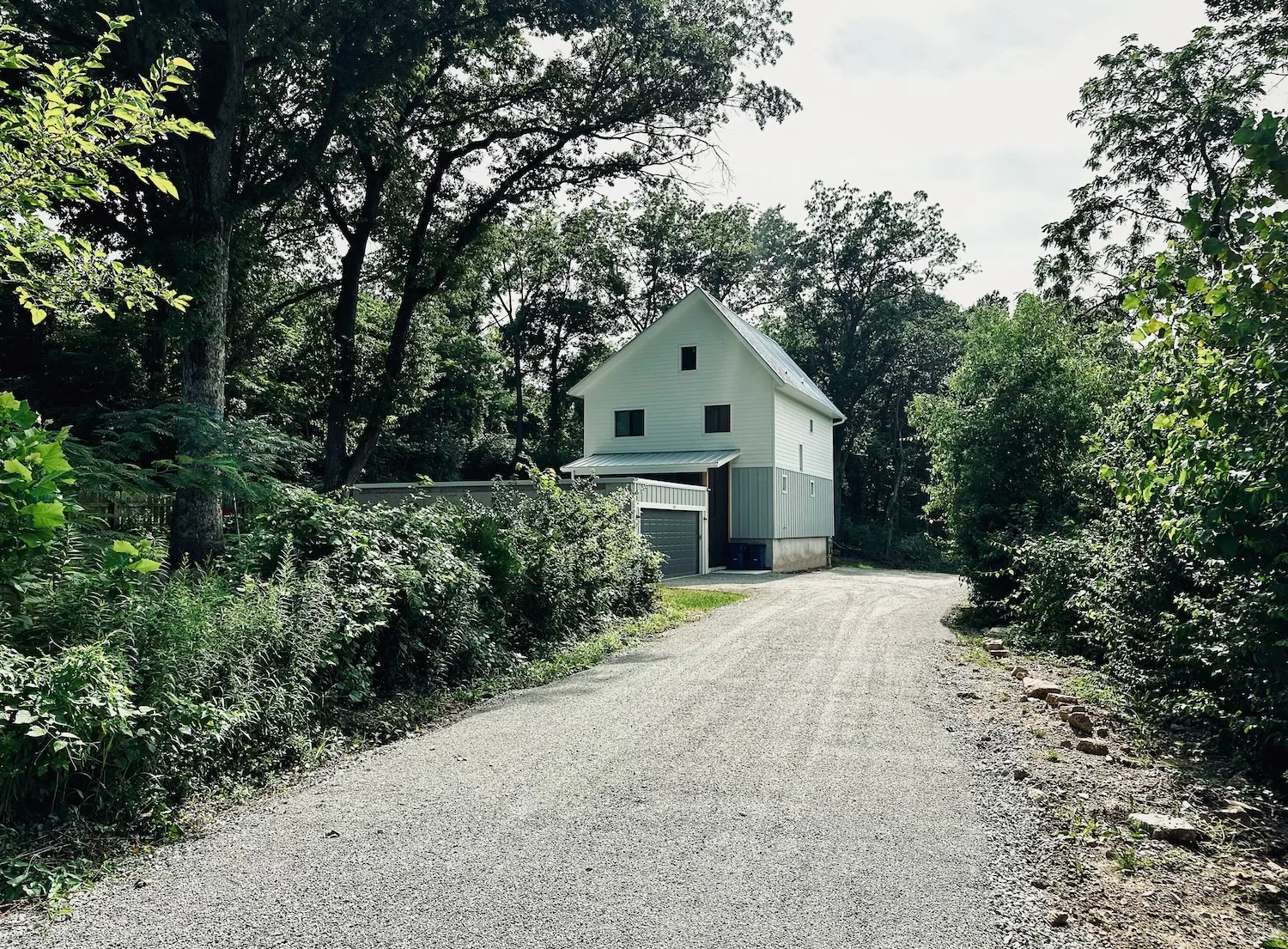
A house in Rock Hill is something new for the region: It’s the first to be certified as a Passive House. Architect Jessica Deem of Virescent Architecture + Design says the certification from the nonprofit Phius is the first for any residence on the eastern half of Missouri. “I think Kansas City beat us to the first one in the state,” she says.
What the certification means is that the 3,466-square-foot home is designed to be so energy efficient, it can produce as much energy as it uses. Solar panels on the roof generate 14,844 kilowatt-hours of electricity annually, while expert insulation and high-performance windows keep the house airtight even on the coldest, or hottest, days.
Get a fresh take on the day’s top news
Subscribe to the St. Louis Daily newsletter for a smart, succinct guide to local news from award-winning journalists Sarah Fenske and Ryan Krull.
Deem says she first became aware of the Passive House movement while studying in Switzerland, and she stayed abreast of homes being built in Minneapolis and Chicago even after moving back to her native St. Louis in 2012 and starting her firm in 2017. It wasn’t until being hired to design the home in Rock Hill, however, that she was able to design one of her own. “I came back here with the intent of bringing this knowledge back, and it maybe took a little longer than I was expecting,” she acknowledges. “We have the expertise here. We just haven’t really had the demand for it. We’re hoping this is the first of more projects to come.”
The clients who gave Deem the opportunity she’d been waiting for are Nate and Alison Brack, psychotherapists with two young children. Neither has a background in design. But they did live in a home, built in 1935, that was driving them crazy. Nate Brack recalls that the house, a brick home in Affton, seemed poorly insulated. Despite a more recent renovation, that was also true of the attic.
“It had very little insulation, where the air conditioners could barely keep up,” he recalls. “It was just, like, constantly hiring people or looking into how to fix all of those problems, where the fundamental problem was always like the lack of efficiency and how it was built.” His frustration led him down the internet rabbit hole of learning about passive houses—and, after the couple acquired a large lot near Berry and Manchester, in Rock Hill, they set out to build something new and try to do better.
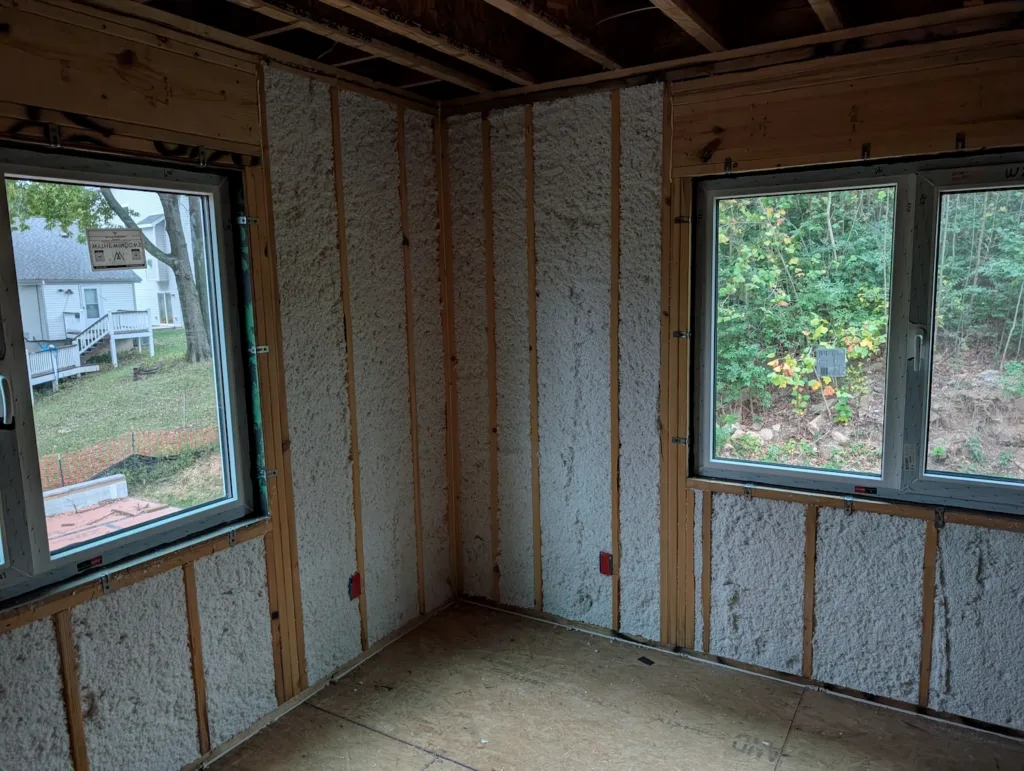
Brack says building the custom home proved to be a fairly frustrating experience, describing arguments with their builder (and the Passive House standards sometimes offered as an excuse for delays). But even before the home was finished last February, it was clear that the frustrations they’d had with their previous home in Affton were over. “It’s a very comfortable home,” he says. “Last year in the winter there was a day that was like negative 8, and we just heated the whole house with like two space heaters. That was before the HVAC was on. And it just does not leak heat.”
As Deem explains, designing a certified Passive House isn’t as simple as creating something that’s airtight; you also need ventilation. “Despite the name passive, it’s not truly passive,” she says. “There’s a very active ventilation system, but unlike a typical home, in a passive house, you’re actually introducing fresh outdoor air, which is rare for a residence. That’s really a big difference for healthy indoor air quality, because you have a a completely separate ventilation system that’s ducted into every one of the major living spaces in the home and it’s constantly filtering all the pollutants in the house, mixing it with outdoor air, and there’s also an energy recovery process in there.”
She adds, “When you’re super insulated, you’re not running your heating and cooling as often, so you just need that ventilation to mix in there and keep everything fresh.”
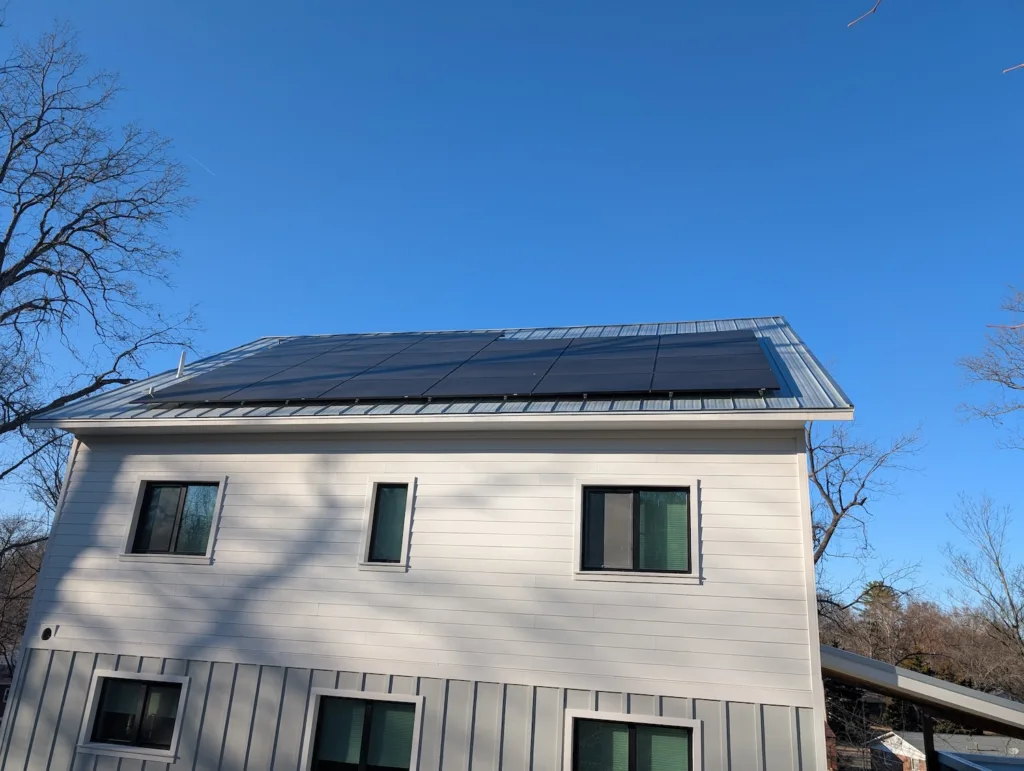
She notes that Passive Houses aren’t just about lower bills; they’re also built to withstand the failure of the power grid far better than a typical home.
Says Deem, “We’ve heard stories of other people in passive houses, even in upstate New York and in the winter where the power went out over the weekend, and they only realized days later that the power had even been out because it just holds its temperature so well,” she says. “I think that energy efficiency was the original drive for many folks getting into a Passive House, but as we see more extreme weather events, people are really starting to recognize the benefit of the resilience of a house like this.”
Brack says that’s very much on his mind. “We have a 20 kilowatt-hour battery system and solar, and then I also have an electric vehicle that I can plug into the house as a generator, if needed,” he says. “Altogether, the house could probably run for like a week without having to use Ameren.”
Now that the family’s settled in, he’s looking forward to their first winter in the house. Says Brack, “I anticipate we’ll have almost zero electricity bills, and it will be incredibly comfortable.”