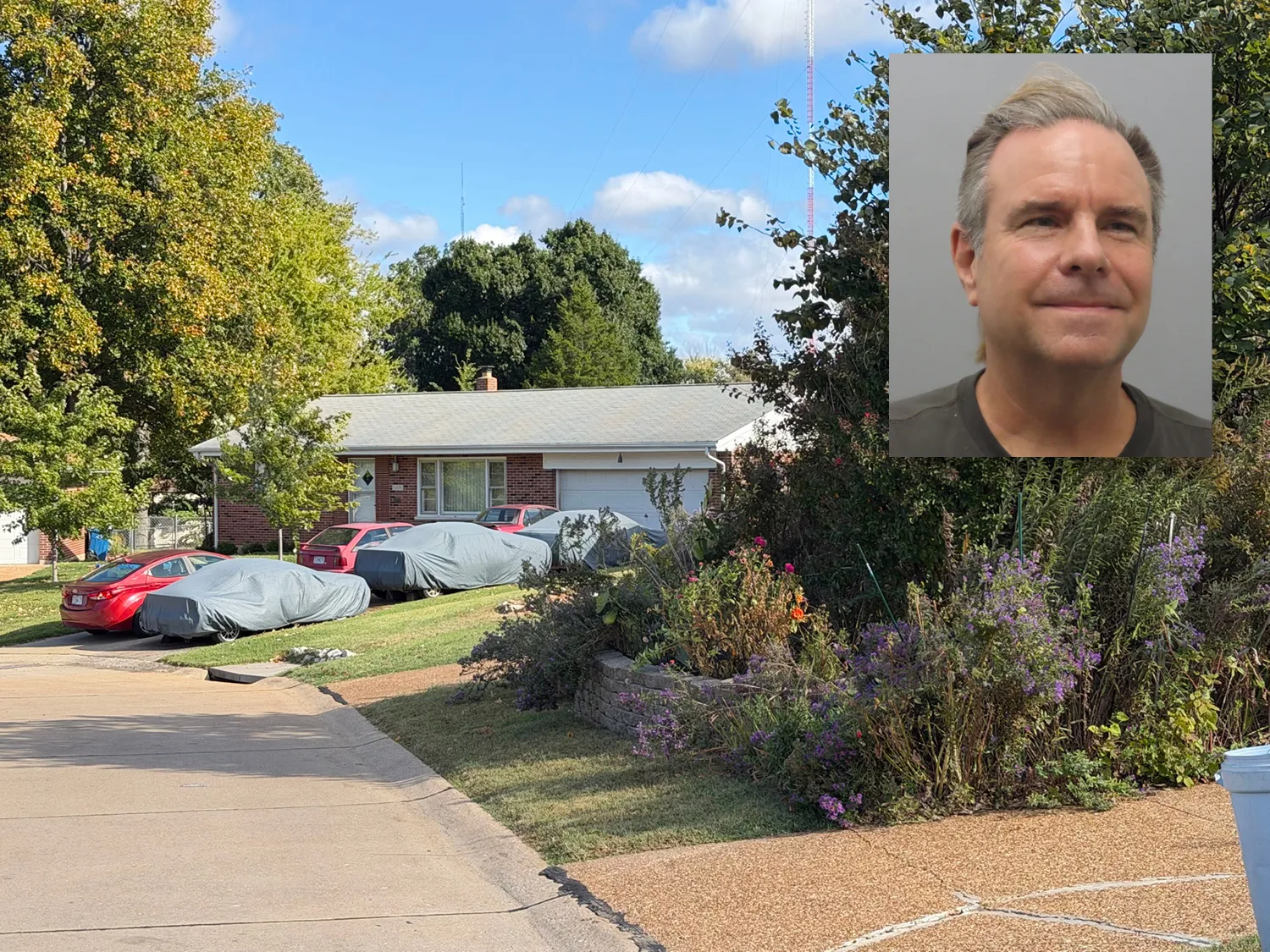
After an incident involving a can of spray paint and a propane heater caused Kenneth Sandrell’s Bevo Mill home to burn down in 2025, he considered turning the vacant lot into tiny homes or a park for the local children.
Instead, the property has become, depending on whom you ask, either an unlicensed mini car lot or an illegal parking lot. It’s racked up building code violations and Citizen Service Bureau complaints. Sandrell owes the city a little more than $10,000 in back taxes, penalties, interest, fines, and fees. The property was one of 173 properties the city filed foreclosure lawsuits against last week.
Get a fresh take on the day’s top news
Subscribe to the St. Louis Daily newsletter for a smart, succinct guide to local news from award-winning journalists Sarah Fenske and Ryan Krull.
As SLM previously reported, those lawsuits were made possible by a pair of relatively new laws that allow the city to foreclose on property over unpaid fines and fees (for instance, money the city spends cutting a derelict property’s grass or boarding up its broken windows, which are then assessed to the homeowner). The majority of the suits filed last week were against Paul McKee’s Northside Regeneration, part of what seems to be a city strategy of wresting parcels away from the developer’s failed bid to revitalize North City.
While the delinquent tax lawsuit against Sandrell’s Bevo Mill property is much more modest in scope—the $10,000 he owes the city on one property pales in comparison to the amount owed by McKee on more than 100—it demonstrates what happens when a property owner who won’t bring his property into compliance encounters a city government newly empowered to take that property away. Until recently, the city only had small-ball fines for ordinance violations in its arsenal—and little way to force payment. Now, if those fines go unpaid, a judge can order the property sold on the courthouse steps.
Since Sandrell purchased the house in January 2024, it’s been the subject of 43 complaints to the Citizens’ Service Bureau. These range from general public nuisance complaints to reports of derelict cars and concerns about unpermitted work. “There’s certainly a lot of things that do not make sense that have taken place on this property,” says Alderwoman Anne Schweitzer, in whose Ward 1 the property sits. She says that the parcel has been on the city’s radar for some time.
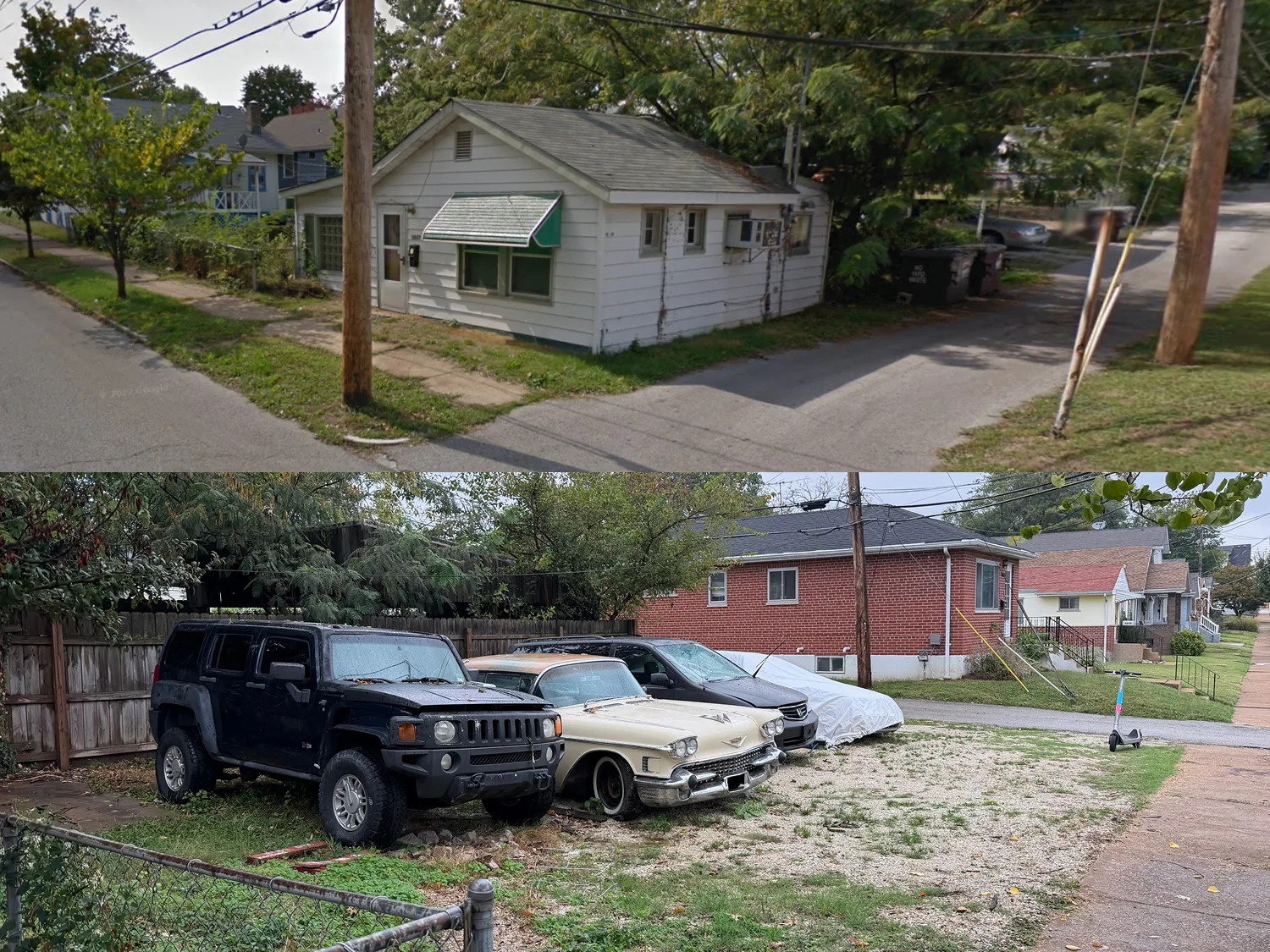
Sandrell, 49, is a St. Louis native but bounced around in Columbus and Indiana, working as a truck driver for several years as well as in property management. Now technically disabled, he had a few scrapes with the law in his younger days, the most serious of which involved being pulled over with someone else’s meth in his car in 2020. The case took six years to wind its way through the courts system and he pleaded guilty to a misdemeanor this summer. The affable Sandrell says he bought the home because he grew up in the area and his mom still lived close by. Historical photos of the property show a small vinyl sided home with an adjacent, fenced-in yard. It doesn’t look exceptionally well taken care of but it’s far from an eyesore.
The inside, however, was apparently a different story. Sandrell bought the house for just $11,000 on a block where homes mostly run between $100,000 and $200,000. This is in a stretch of Bevo about halfway between St. Mary’s High School and Morgan Ford Road, an area where more homeowners than not take care of their property, where many of the tidy bungalows sport oversized inflatable witches, pumpkin flags, and other Halloween decorations.
Sandrell says the house had no power when he bought it. His plan to live in an apartment while he fixed up the home fell through, so he had no choice but to live in the house as he made repairs. “I was running a damn generator 24/7 just to keep power, heat, electric, AC,” he says. He calls the situation, “a nightmare.”
Neighbors would agree on that point. Jeannette, who has lived in the neighborhood for 49 years, and her daughter Jennifer say that the generators ran “all the time” and were a particular headache for the elderly woman whose backyard abutted Sandrell. She frequently called the city to complain. “Just a terrible neighbor,” Jeannette says of Sandrell.
A spokesman for the city’s Build Division says that in November 2024, Sandrell’s DIY electrical work failed the inspection. Those inspectors also noted that it looked like the house was a full gut rehab and permits needed to be pulled for that. They never were.
Sandrell insists his electrical work was fine, but the city took issue with the way the wiring was grounded. “Somebody downtown was not playing fair,” he said.
Then, in February of 2025, a little over a year after he bought the house, it burned down.
Sandrell’s story of the fire is quite a tale. He says he had neuropathy in his hands after a car accident left in a coma for 48 days. When he used a small pry bar to open a can of spray paint, he ended up puncturing the can. He says he went to throw it out the front door (it was winter) so as not to cover the interior of his rehab-in-progress with black paint. When the aerosol came into contact with the propane heater, it caused ignition.
The fire, Sandrell says, is indirectly the city’s fault because there was exposed insulation everywhere. He’d wanted to put up drywall but the city hadn’t given him a permit to do so. (The city says he never applied.)
Sandrell, who has a soft spot for cats, lost a cat in the fire. “It crushed my soul, and she was such a good cat.”
Sandrell says that he was in the process of having a company demo the house when the city came by and did the job for him. The Building Division spokesman says Sandrell never paid the city for the fees assessed to him for the demo work. Of the $10,262 Sandrell owes the city, the majority—$7,558—is from unpaid fines and fees the new laws enable the city to use as a basis for foreclosure.
Sandrell said he intends to fight the foreclosure. He’d been under the impression he still had time to appeal the matter before the suit was filed.
Even with the house gone, the nuisance remains.
Last week, a visit to the property showed four cars sitting on the gravel patch where the home once sat. A neighbor referred to the property as being used as a small car lot. Jennifer and Jeanette say that it’s their understanding the cars are for sale as well, and that Sandrell—or someone—is regularly bringing potential buyers by in the middle of the night. They see the beams of flashlights illuminating the vehicles.
“He’s got all that junk bringing property values down,” says Jeanette. Both she and her daughter were happy to hear of the city’s efforts toward foreclosure.
Sandrell insists it is not a car lot and this is merely where he parks his cars. “There’s nothing that says ‘for sale’ or anything like that,” he says. One of the cars is a 1958 Cadillac, which he wants to eventually sell but needs to get running first. He’s looking for a new windshield for a minivan whose windshield is currently smashed in. The Hummer and the Mercedes he bought at auction from the city tow lot.
“Those I was thinking about flipping, but I like the Mercedes and am going to keep it and thinking about keeping the Hummer as well,” he says. “Nothing’s wrong with them. They’re just sitting there.”