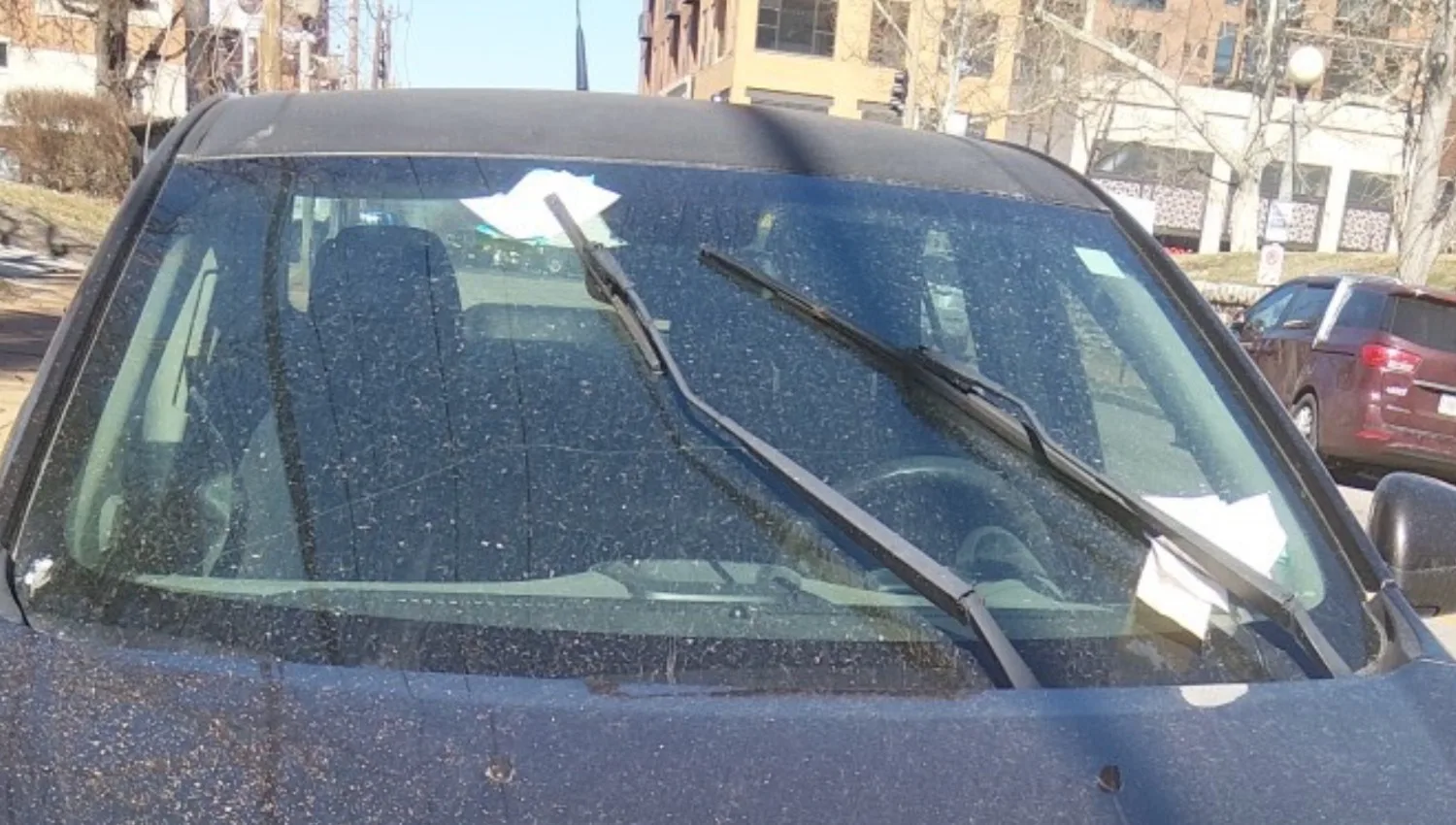
In January, a group of downtown St. Louis boosters decried a so-called “hookah bus” that had racked up $2,000 in unpaid parking tickets while parked illegally around the neighborhood—all while seemingly receiving little incentive to stop.
But the hookah bus is hardly the worst offender. There’s a Tesla with Illinois dealer plates that has accumulated more than 200 tickets totaling $27,140 in fines. A set of Missouri plates that started out on a blue Honda and then were put on a gray Chevy racked up more than 500 tickets totalling $42,275. An Illinois Hyundai Santa Fe owes $31,775 from 350 tickets. That’s according to data from the office of the city treasurer, who controls parking in the city.
Get a fresh take on the day’s top news
Subscribe to the St. Louis Daily newsletter for a smart, succinct guide to local news from award-winning journalists Sarah Fenske and Ryan Krull.
All told, by the treasurer’s own accounting, 13,100 vehicles have collectively accumulated more than $10.7 million in unpaid tickets. And there’s nothing to suggest any of those vehicles have been towed.
The reason, like everything in the City of St. Louis, is a little complicated. The Treasurer’s Office told SLM earlier this year that they don’t tow, but that they merely maintain a list of vehicles eligible for towing, which then can be towed by the Streets, Traffic, or Refuse Department.
But those departments have not received the list. And they note that the Treasurer’s Office is responsible for “booting” vehicles to immobilize them, a critical first step before they can be towed. By its own admission, despite owning 30 boots, the Treasurer’s Office has not regularly booted vehicles for unpaid tickets since before the pandemic.
Beyond that, the list maintained by the Treasurer’s Office appears badly out of date. In response to a Sunshine request for the Treasurer’s Office’s “boot list,” we received a spreadsheet dated last July with more than 13,100 vehicles on it, including their license plates, vehicle makes, number of accrued tickets and total fines owed. That spreadsheet includes the Tesla, Hyundai, and Honda mentioned earlier in this story.
Many of its worst offenders have continued to flout parking laws in the six months since. It doesn’t include more than 60 tickets racked up by the Chevy since last summer. Its most recent ticket was on Friday afternoon. The list shows the black Tesla owing the city $23,640, even though its bill on the city’s parking website shows it to be $3,500 higher. It also indicates that the plates owned by this reporter are connected to a car he sold in 2023 (the tickets that got his new car on the list were paid off last August). A Subaru owned by a colleague that was sold in April 2025—with no transfer of plates—is on the list as well. All this raises the question of how well maintained the “boot list” is and how useful it would be to anyone.
The Treasurer’s Office did not respond to questions about how it uses that list. They also did not respond to repeated requests for comment over three weeks about who is responsible for booting vehicles in the city.
Treasurer Adam Layne is elected by voters and controls his own budget, with parking revenue kept separate from the general fund.
Sean Hadley, a spokesman for the Streets Department, says the department doesn’t get any sort of list of tow-eligible vehicles from the Treasurer’s Office. “We have asked for that on a couple of occasions, and I haven’t seen a list,” says Hadley. Hadley adds that if the Treasurer’s office doesn’t boot cars, Streets would essentially be chasing a moving target. (As a matter of policy, Streets doesn’t chase down cars to people’s homes or places of business, which is why booting is an important step in the process.)
Top leaders in the city say that they are ready to take more action on parking enforcement, but that the Treasurer’s Office is the bottleneck.
“The city is ready and willing to do the enforcement,” says Mayor Cara Spencer. “We’re waiting for the Treasurer to sign the MOU.” That memorandum of understanding referenced by Spencer is one between the Streets Department and Layne’s office that would in theory put them on the same page.
“The millions of dollars in uncollected parking fines represent a significant loss of revenue for the city,” says Comptroller Donna Baringer.
Baringer added that at the very least the Treasurer’s Office should be booting cars illegally parked and with no license plates.
“You can’t give a ticket that has no plates,” she says. “That’s where I’d ask the boots to be put.”
On Monday, KSDK’s Mark Maxwell reported that the city has 40,000 cars in St. Louis that are eligible to be booted, a number he got from Layne himself (although it’s unclear where Layne got it, seeing how much bigger it is than the list his office provided in response to our Sunshine request). Maxwell added that, according to Layne, the Treasurer’s Office has a total of 30 boots on hand but that it has not booted any cars since 2018—due at first to problems at the tow lot and then a moratorium instituted during the pandemic while people were struggling financially.
SLM previously asked Layne’s office for a list of cars that had been booted in 2025 and was told there were “no responsive documents.”
Layne told Maxwell his office would again resume booting vehicles, initially suggesting it would happen last week. Then, this week, he blamed “an inter-departmental agreement with the Streets Department that’s been sitting unsigned for two weeks, waiting for approval from the Streets Department or city counselor.”
A driver who racks up a significant amount of parking tickets could potentially be prevented from renewing their license plates with the Missouri Department of Revenue, however that would only happen if the Parking Division flagged the vehicle to the state agency. SLM asked the Treasurer’s Office how many vehicles they had flagged to the state last year and got no response.
The city’s revenues from parking have been declining. According to a March 2023 Riverfront Times story, parking revenue and booting fees collected by the city totalled around $5.7 million annually from 2014 to 2019. But between 2020 and 2022, those receipts dropped to $4.09 million, $3.37 million, and $4.1 million, respectively. The dip coincided with the office contracting a significant chunk of parking enforcement duties to the firm Hudson and Associates, which has been paid $2.35 million per year since 2020 to manage parking meter maintenance and collections, as well as parking enforcement.
And while few residents would likely support booting and towing vehicles that owe only a few hundred dollars in parking tickets, the more extreme bills racked up by some vehicles on the treasurer’s list suggest that even in restricted parking districts or metered spots, there are no consequences for flouting the rules.
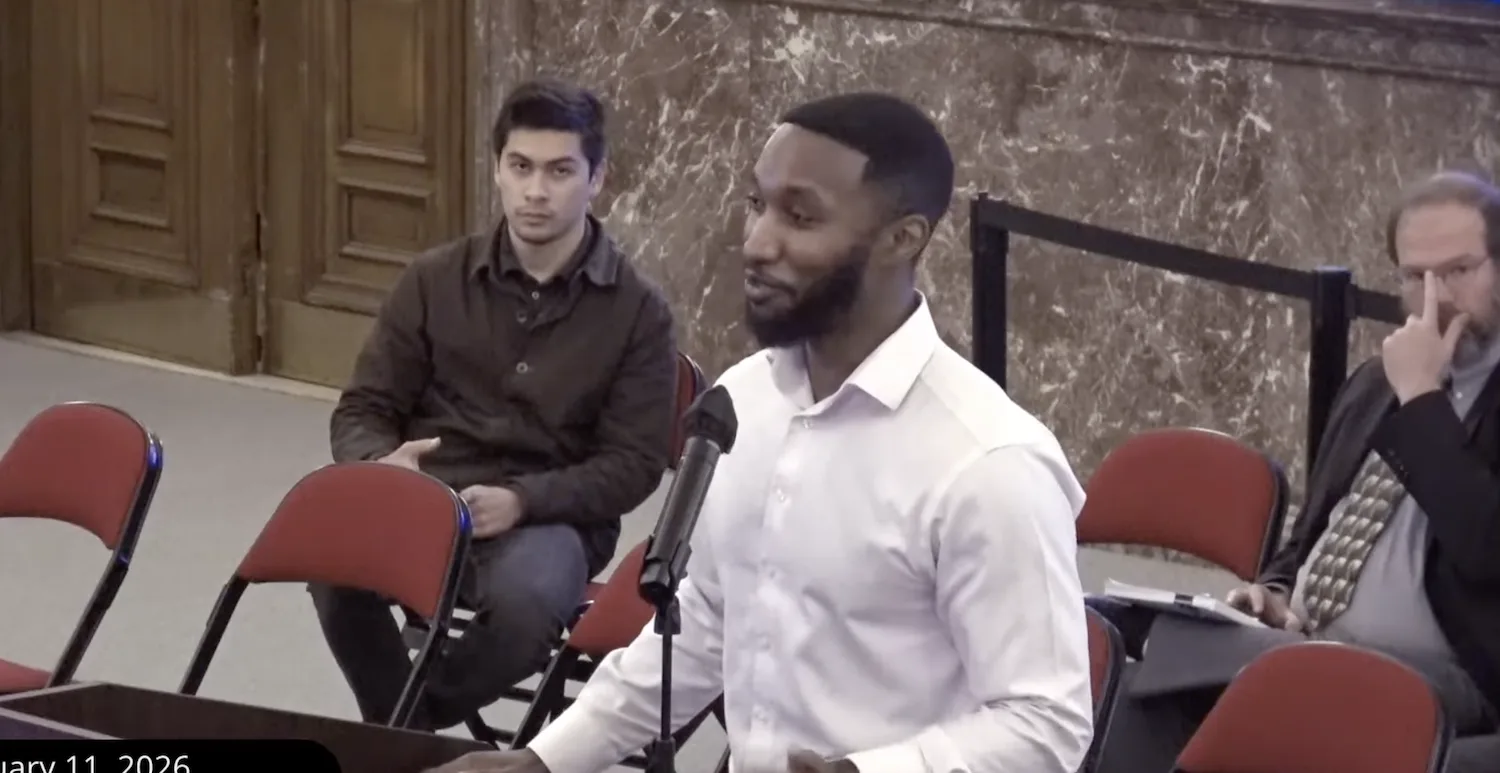
Alderman Michal Browning is the vice chair of the Board of Alderman’s Budget and Public Employees Committee, which has oversight over parking. He tells SLM that in The Grove, which is in his ward, “the parking enforcement on Manchester seems non-existent at night, and inconsistent during the day. There are almost always illegally parked vehicles.”
Historically, one of the reasons there has been a hesitancy to tow illegally parked cars is because they’d be taken to the city’s overflowing municipal tow lot.
But Hadley, with the Streets Department, says that the tow lot has the capacity to handle vehicles that only stay for a few days—like, presumably, cars that are still being driven but simply owe money for tickets. Problems with capacity stem from cars that go to the low lot and stay for weeks or even months. “If your car got booted and towed, you’re going to go get your car more likely within the next 24, 48 hours,” he says.
Baringer added that her office has located city-owned space near the tow lot where operations could be expanded, if more capacity is needed.
But Browning says that he’s had trouble getting cars towed from his ward, especially when it is for quality of life reasons. “If a car needs to be towed fast, I have better luck calling the police. This is necessary in the case where a car is crashed and abandoned. Otherwise, it can take months to get an abandoned car towed,” he says.
Browning is himself dispirited by the general scofflaw regard that many have in regard to parking in the city. He recalls attending an event at a brewery in his ward. Parking was tight. The street was full of parked cars. That’s when he witnessed someone driving his car over the sidewalk and onto the lawn of an empty lot, settling between the sidewalk and a garden—a place clearly not meant for parking. The driver quipped loudly that this “was the city, so it didn’t matter.”
Browning confronted the driver and said that as an elected representative he could have the car towed at the drop of a hat.
Says Browning: “It was a bluff, but it worked.”
Hear more on this story from Ryan Krull on The 314 Podcast.