Even with all the traffic, L.A.—lined by palm trees and retro signs, aglow with endless sunshine— manages to look serene. But inside the dark-paneled West Hollywood restaurant, the tension’s spiking. Because their manners were hammered in years ago in Catholic boys’ schools in St. Louis, Alex Lindley and Danny Kerth are too polite to interrupt the chatty waitress, too modest to tell her they’re on their way to the first rough-cut screening of a documentary they’ve been working on for five years. They steal glances at their phones; parking might be tricky, and they’ll only have the studio for two hours. Finally Kerth, who’s marginally calmer, asks for the check, and Lindley excuses himself. For somebody in a hurry, he’s gone a long time, and when he comes back, he’s pale.
What he’s about to see isn’t just an indie doc with Hollywood shine and his name on the credits as producer. It’s a tribute to one of his best friends—and a wake-up call to the rest of the world.
Your guide to a healthier, happier you
Sign up for the St. Louis Wellness newsletter and get practical tips for a balanced, healthy life in St. Louis.
Lindley once had the healthy self-absorption you’d expect from a tall, affable Mizzou student with a ready sense of humor, a sweet disposition, and big plans for his life. Mental health wasn’t something he’d ever had to think about. But the suicides of two friends—first Carolyn Dolan, then Ryan Candice—snapped him out of that complacency.
Awareness hit Kerth much earlier, after his father, well-known civic leader Al Kerth, died by suicide. “It was punch-jab-punch,” he says. “My dad, Carolyn, Ryan. Feelings that had been repressed and not mentioned for more than a decade—” When he heard that Lindley wanted to make a documentary, he signed up fast.
That was five years ago. Now Lindley’s a lawyer at McCarthy, Leonard & Kaemmerer, and Kerth’s working where his father once did, at FleishmanHillard. They throw any spare energy toward Project Wake Up, the nonprofit they formed to produce this doc.
On the flight to L.A., they dreamed out loud, hoping to finagle a last-minute cameo by Lady Gaga or Selena Gomez for the celebrity factor. They want, above all, to pitch Netflix, noting the two years it took the company to remove the graphic suicide scene from 13 Reasons Why and the 29 percent rise in adolescent suicides the month after the show debuted. They also want to submit the doc to all the major film festivals…
Now, as we pull up to the Wilshire Screening Room, they fall silent, taut with anticipation. They did a lot of the early work on this film themselves, lining up interviews with academics, activists, and politicians. (Among them was U.S. Representative Joe Kennedy, well before his cousin Saoirse Kennedy Hill died by suicide.) They also raised a ton of money—and then a ton more (around $525,000 at last check), because what had started as a low-budget educational film was growing into an intense, artful documentary with a nationwide sweep.
Part of the reason is Nate Townsend, a Clayton High School grad just a bit older than Kerth and Lindley. When a member of the Project Wake Up team first mentioned the documentary to Townsend, he was a little skeptical that a group of college kids could pull it off. When their initial GoFundMe raised $10,000 overnight, then sailed past $33,000, the team member called Townsend again: “Hey, dude, I really think you should look into this.” So he and Lindley spoke by phone.
Lindley remembered meeting Townsend at parties he’d gone to with Candice, whose easy warmth got him invited all sorts of places. They hadn’t really talked, though, until now. “I knew he was our guy before I hung up,” Lindley says. “I had spoken with several other candidates for director, and none of them seemed to give off any vibes of ‘Hey, I empathize with your loss and really do give a shit about what you’re trying to accomplish.’ Nate did. He shared with me that he’d lost his brother Alex in a drunk-driving accident a few years prior, and I could feel the bereavement in his voice. I knew he understood why I was doing this.”
Still, Townsend had reservations. His narrative shorts had won awards and screened internationally, but this would be his first feature-length documentary—and he’d be shooting without a script, piecing scenes as he went, tying it all together on a shoestring budget. “OK, I’ll do it,” he said finally. But, he added, this film had to go beyond telling the story of one young man.
The U.S. suicide rate has risen by 30 percent in the last two decades. Yes, it’s increasing fast for young people, with the highest number of suicide attempts among those who identify as lesbian, gay, bisexual, or transgender. The rate among military veterans caught up to that of the general population in 2009—and kept rising. And according to the American Foundation for Suicide Prevention, white males accounted for 69.67 percent of suicide deaths in 2017.
The best tribute to Candice might be telling a few more stories.
At first, Lindley was wary; he’d started Project Wake Up as a promise to his dead friend, a way to lift the stigma on college campuses so people wouldn’t hesitate to share suicidal feelings. On the other hand, he’d done enough research by now to get what Townsend was saying. Besides, law school had taught him the power of the caveat: The scope could expand, as long as Candice’s life and death still framed the documentary.
Townsend added a caveat of his own: “This isn’t going to be the kind of documentary that collects dust on a psychiatrist’s office shelf.” Painful as the subject was, it had to be something people wanted to watch. The characters had to be compelling; the experts couldn’t sink into dry jargon; the film itself had to be beautiful.
Lindley was nodding as he spoke.
By 2018, Project Wake Up had raised enough money (through trivia nights like the one the nonprofit will host on March 21) that Townsend was able to hire a production company, Paxeros Creative, run by two of his classmates from Loyola Marymount University’s film school. Lindley and Kerth, who were now sharing a downtown loft and working on this project nights and weekends, could stop begging for time off to schedule shoots and haul around heavy cameras.
As a result, they haven’t seen the newest interviews, and they haven’t seen how Townsend put everything together.
That happens today.
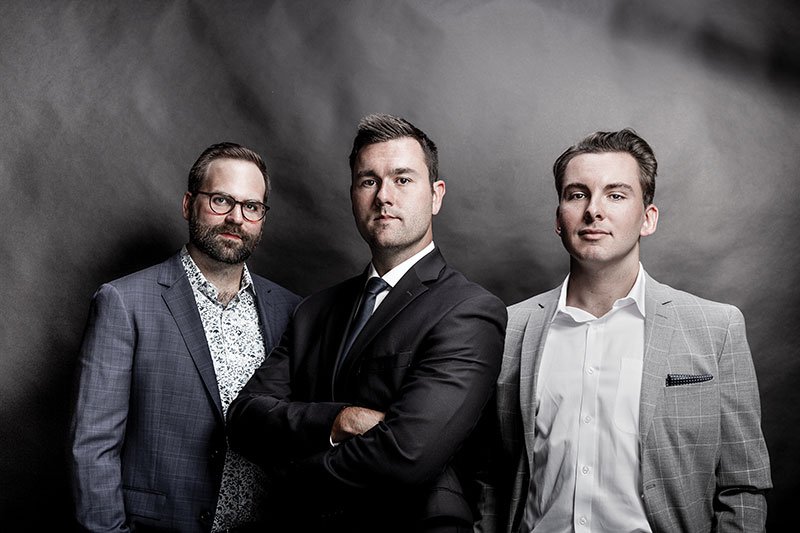
Danny Kerth was 9 when his father checked himself out of the hospital, had dinner with a friend, and killed himself the next day. Danny was sure something else had happened—maybe somebody killed his dad—and nobody was telling the truth. At school, he could feel this awkward hush, everybody knowing, nobody wanting to talk about it. His mom found him a therapist, which made it feel like he’d done something wrong, and he worried that his friends would think he was crazy. Today, he says, “at least kids in my shoes feel like they can talk.”
Even with therapy, Danny boxed up much of what he was feeling and stored it out of sight. Then, in 2012, he and Lindley were finishing their freshman year at Mizzou when their friend Carolyn Dolan killed herself. It all surged back.
Bubbly and dramatic, impulsive and fun, Dolan had a quirky sense of humor. She’d gone to Visitation Academy before transferring to Cor Jesu Academy for high school, and Kerth, who attended Chaminade College Preparatory School, was in some of Viz’s plays. Dolan had solemnly informed him that she’d bought him a hippo as a present. Every time she saw him, she’d say, “Oh, I forgot your hippo!”
She said it again at Mizzou, the last time he saw her.
Lindley knew Dolan even better—she was his first girlfriend, when he was at Parkway West Middle School. “So funny and entertaining,” he says, “and beautiful. Perfect brown hair”—he puts his hands toward his shoulders, awkwardly gesturing its length. “These light-blue eyes—I don’t want to compare them to Gatorade, but they were that Glacier Freeze blue. We had a serious little sixth-grade relationship—true love, I thought. Then she went off to Viz, and I didn’t see her till high school.”
Just as Dolan left Parkway West Middle, Ryan Candice transferred there from Chaminade. Lindley hated him on sight.
“I was the quarterback on the sixth-grade football team, and I thought I was hot shit,” Lindley explains. “First day of seventh grade, this kid came in with these Justin Bieber bangs, a puka shell necklace, and an Abercrombie T-shirt. My first thought was, Who’s this kid? And all the girls were saying, Who is this kid? Within a matter of days, Ryan had started going out with the girl I liked. We were archrivals. But by the end of the semester, we were fast friends.
“My favorite thing to do was make Ryan laugh,” Lindley continues. “He had this roaring belly laugh, so unique, you just wanted to bring it out. Our social life was loitering at Chesterfield Mall and then playing Halo and Xbox until the sun came up.” By eighth grade, they were so close that Candice applied to De-Smet Jesuit High School, where Lindley was heading. “The Jesuits absolutely changed him,” Lindley says. “He became a very, very good student—better than me—and he found tennis, became one of the team captains.” Candice was always intense, took everything seriously, was harder on himself than anyone else could have been. But he was also “the social beacon. All the guys would be calling him Friday nights, saying, ‘What are we going to do?’”
Because this is a St. Louis story, the circles keep overlapping: Candice dated Dolan for a while in high school, and Lindley dated one of her good friends, so they all hung out. When they went off to Mizzou, Lindley and Candice pledged different fraternities, got close again on holidays and summers. “Ryan was open enough about his anxiety,” says Lindley. “It was never crippling or life-threatening, but he was anxious about a lot of things: general anxiety, money, worried about using this opportunity because of the debt he was taking on…” With friends, though, he was easygoing, warm, amused. When he pledged Pi Kappa Phi, one of the older frat brothers put him at the door of a party and told him he was to let only the cute girls in. Pretty soon, the room was packed; Candice had let everybody in.
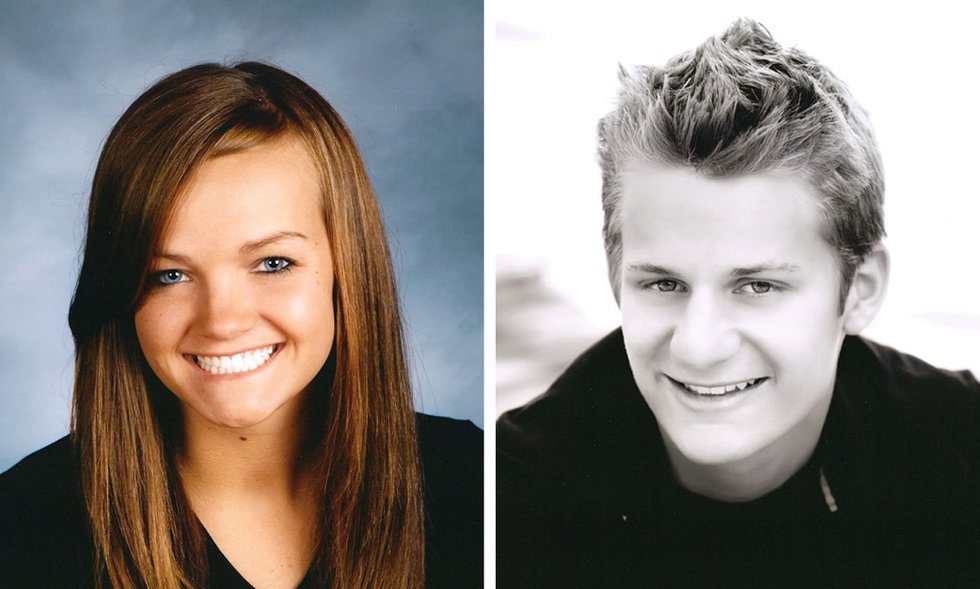
He and Lindley took it hard when Dolan killed herself, April 29 of their freshman year. They didn’t really talk about it; didn’t know how. But on trips home, they’d bring a white rose to her grave.
Two years later, Candice was playing basketball at the rec center, and he fell hard, banged his skull. “He had vertigo after that,” Lindley says, “this really severe dizziness. I remember him not wanting to go out some nights, and me thinking, Wow, it must really be bad.”
The anxiety built. The dizziness worsened. Attempts to treat it failed. His mom, Denise Candice, remembers how one doctor “took his finger and circled his ear, like Ryan was crazy.” Nobody was talking much about concussions at the time, she says. “He’d been put on Zoloft, and he called his doctor, and didn’t hear back, so he stopped taking it.”
He stopped wanting to socialize, canceled all dreams. But he didn’t tell his friends. “After Carolyn, I was truly vigilant, with all my friends, and I still didn’t see it,” Lindley says, the frustration still clawing at him. “I’d read up. I knew the basic warning signs—someone gives their stuff away, stops eating, sleeps an excessive amount, makes amends.” He breaks off, his expression bleak. “I wasn’t prepared for hitting their head and getting vertigo that won’t go away.”
Kerth is listening, eyes down. He tugs at his white Project Wake Up wristband, printed in black, “You have to check on your strong friends.” Because the thing is, neither Candice nor Dolan was the morose sort. Just the opposite: They gave off joy. People were drawn toward them, wanted to be friends with them. “Carolyn made everyone laugh,” says Kerth, “and everybody made Ryan laugh.”
When the vertigo increased Candice’s anxiety a hundredfold, panic and misery drenched him. On June 19, 2014—just two weeks shy of his 21st birthday—Candice couldn’t stand it any longer. He went to a hospital emergency department, said he didn’t want to live anymore. They asked if he had a plan to kill himself. He said no. They gave him an outpatient appointment.
A few hours later, he was dead.
After Dolan’s suicide, Lindley had felt dazed and numb. This time, he wasn’t paralyzed with sadness; he was furious. He was 21 years old, and he’d already given two eulogies. People had to learn how to talk about this. Candice had never even hinted that he felt suicidal. “If even someone who’s lost a dear friend feels afraid to reach out because of that f—king stigma—” Lindley said. Blazing with purpose, he put out a call for volunteers to work on a video, something strong enough to jolt the conversation open.
Kerth saw him at Harpo’s Bar & Grill a few days later and said, “I heard what you’re doing. I’m in.”
A dozen people spread out in the tiered screening room, settling into buttery yellow leather chairs. Townsend, a bearded 28-year-old with a gentle voice, stands in front. The music’s not in yet, he warns; it’s being written by his friend Roberto Murguia, a composer whose reputation is skyrocketing but who “makes time.” The film has already been colored, Townsend tells us, because it has to be ready for a private screening in St. Louis in two months. “It’s a whole science: A colorist will go in and, frame by frame, gear the contrast, the saturation, the palette, the vignette. You can soften the focus; you can make sure the eye goes to certain places.”
His girlfriend leans over to me and whispers that she once compared the process to an Instagram filter: “He did not like that.”
“What you’re going to see is maybe 85 percent done,” Townsend says, clearly uncomfortable. He likes to polish every frame before anybody sees a director’s cut. This time, he had to rush it—and there’s a damn reporter in the room.
He walks back, sits next to Lindley, who’s so jittery, his seat is rocking. The lights go down and the film opens hard, the actor who plays Candice frantic with anxiety. We see a tight shot of his hands, shaking uncontrollably; we see him pacing, driving erratically in the dark as headlights whiz past, steering into a hospital emergency department’s parking lot—and being turned away.
Lindley’s chair has stilled.
Gripping stats about suicide in the U.S. slide onto the screen. The stretch from Midwest to East to South to West is illustrated with string, slowly wrapped around pushpins, crisscrossing a map of the country. As the stories change, drone shots reorient us, zooming across icy Philadelphia, the Louisiana bayou, the rugged Utah mountains.
Once the filmmakers decided to broaden the doc’s scope, other narratives flowed in. Lindley was in L.A., running in Runyon Canyon, when he got a phone call from Michael Zibilich, whose only child had died by suicide a month before Dolan did. Nineteen years old, Michael Zibilich—who went by his middle name, Keller—had a sweet smile, bright eyes, and a strong, clean jaw. He loved whitewater rafting, made the National Honor Society, was elected president of his Sigma Chi pledge class at Louisiana State University. His dad remembers visiting him at LSU soon after he arrived and watching his son make his way down the sidewalk, shaking hands, hugging, joking. How did he already know so many people? Like Candice, though, Keller had an ease that hid anxiety. He pushed himself hard, expected himself to succeed in every realm. He got depressed after a rough conversation with his girlfriend.
The next day, he was dead.
His brokenhearted parents set up a suicide hotline and prevention program, the Sigma Chi Keller Zibilich Lifeline Program, and began traveling and speaking, fighting the stigma. Townsend uses a clip of Michael giving a talk at a Sigma Chi frat house, then cuts to him speaking to a crowd 10 times that size, embraced afterward by young men he now calls his sons.
Another story focuses on Dese’Rae Stage, a suicide survivor who’s spent years photographing other survivors of every age, color, and class because “we were never even asked, ‘What did this experience mean to you? Why did you do it?’” There’s another reenactment, this one of Dese’Rae being outed as a lesbian in high school and wanting to die. Kerth had worried about Townsend’s plan to incorporate reenactments: “I’d seen a few Netflix docs, true crime shows that used them, and it was really tacky.” These, though, feel like scenes from a strong film, pulling us into the eye of the storm, giving us a safe way to understand the emotions that raged.
A third story, powerfully charged, focuses on one of the best treatment programs in the nation for veterans with PTSD. A fourth looks at the incredibly high rate of gun suicide in Utah, where 85 percent of firearm deaths between 2006 and 2015 were suicides. Utah is in what’s now known as the Suicide Belt—eight of the top 10 states for suicide are in the mountain West—and Republicans fierce about Second Amendment rights are pushing for gun control and gun suicide prevention.
Woven through these stories are interviews with worried mental health experts and crusaders. Tim Murphy, a psychologist and former member of Congress, calls it “unconscionable” that people are turned away from hospitals because there’s no room, or they have no insurance, or they have no plan. Would that happen if someone came in with chest pain? “Why are we still acting as if this is a problem that will just go away if we ignore it?” He gives the film its closing quote: “We can either run away in our grief and our sadness or we can say, ‘Let that be a moment that wakes up our own heart.’”
After the screening, the group moves to a small room for a critique session. Lindley is flushed with relief: “There’s been so much fear that we would let people down, and I really don’t think we will. I could cry right now, just thinking about that.”
Everybody likes the working title, Wake Up. “I want Ryan to wake up,” Lindley says. “I want the world to wake up and end the stigma. I want people to have a chance to wake up the next day.”
Kerth has notes, small tweaks, segues to smooth, ideas for the final polish. So does Lindley—including a major one that he’s afraid Townsend will balk at: There’s still not enough of Candice in the doc.
As it turns out, they resolve it easily. They’ll pick up a sequence they used in the trailer, with one person after another identifying Candice as “my best friend.” Nothing sums him up better.
“Oh, and Nate? You’re gonna have to cut the secret Sigma Chi handshake you revealed on camera,” Lindley adds dryly.
“What?” Townsend scribbles another note. He’s breathing easier: He showed his work before he wanted to, and what’s come back is helpful, not painful. The group heads to the rooftop bar at the Hotel Wilshire to celebrate. It’s there, as the setting sun slants through one of L.A.’s $18 cocktails, that Townsend announces that there’s been some interest from the Sundance Institute’s documentary lab. (Later, Kerth writes that Sundance might not screen the film, but they’re trying for Tribeca.)
Elation gives way to jokes and storytelling. Lindley recalls how they filmed his interview “in a giant studio that Kanye West had recorded in, an old tire factory in south Louisiana, and there was fighting in the next studio, and planes and helicopters overhead, and hot rods going by, and they were taking the Knight Rider car out of the studio…”
Kyle Krupinski, the director of photography—who’s also from St. Louis—is teased about his predilection for sheer black vintage Dior stockings, which he places over the camera lens to soften the digital sharpness. It’s a trick, he announces, drawing himself up, that was used by Steven Spielberg’s director of photography.
They laugh about how they set off four fire alarms trying for Krupinski’s hazing effect and how the crew slogged through the snow carrying huge cinema cameras, which doesn’t happen in most documentaries. “This is way better looking,” Krupinski explains. “It should feel more like a movie than a doc, where everything is kind of shaky.”
“I don’t know how many people will willingly watch a documentary about suicide,” says Chelsea Bo, co-founder of Paxeros, “but this is not just about suicide. It’s about the conversation about why we’re not talking about suicide.”
They debate the need for a celebrity. Townsend’s made his peace with the difference that can make, in terms of marketing and impact. On the other hand, he says, “there is no place in our entire doc for a Selena Gomez interview.” He lists off their experts, foremost national authorities in suicide, PTSD, and grief—“and then there’s Selena Gomez? WTF is going on?”
The conversation turns serious as they remember how it felt when Townsend’s father, Tom Townsend, co-founder of the Rodgers Townsend ad agency, was shot in the face during an attempted carjacking. They’d just finished filming the first Utah segment and had been focusing all their energy on understanding why people took their own lives. Now Tom, vibrantly creative and eager to live, might not.
For five years, Lindley’s kept a quote on his wall, something a guy asked Kerth at a bar near campus: “Do you guys actually think you’re going to make a difference?”
Yeah, they do. “I now feel like I have a responsibility to people,” Lindley says, surprised himself at the change that’s taken hold. “Like, if I recognize something, I can go ahead and ask the tough questions bluntly: ‘Are you thinking about taking your own life?’ ‘Would you mind if we went and talked to somebody?’ And if they put up a fight? ‘I care about you too much to let you be alone right now.’”
Kerth talks about all they’ve learned from the experts they interviewed. Julie Cerel, president of the American Association of Suicidology, pointed out the ripple effect: Suicide doesn’t just traumatize a small inner circle; each death affects, on average, 135 people. Psychologist Thomas Joiner, a leading authority on suicide, has identified the three key factors: a sense that you’re a burden, a sense that you don’t belong, and an ability to harm yourself. He’s also sharply corrected the notion that suicide is selfish, pointing out that people who kill themselves often believe that they’re doing those who love them a favor.
Much of the naïveté has dropped away, Lindley adds: “At first, I thought we just need to stop stigmatizing so more people will reach out for help. But sometimes the professionals aren’t trained properly. It can take months to get help. People can’t afford care. Mental health has a pretty big budget, but it’s spread to so many different organizations, and nobody’s working together.”
Lindley is eager to make more mental health documentaries, and he keeps needling Townsend, who’s probably lost money doing this project, to see whether he’s in. Kerth has his eyes on the Project Wake Up curriculum they want to create, training people to recognize signs, talk openly, stop the deaths.
In 2017, Project Wake Up released a short film, “Wounds,” just to show donors a little progress. It was seen 100,000 times on Facebook, and some of the donations came in foreign currencies. Many fundraisers later, they are now ready to finalize the production. If the movie makes more than it cost, the first $200,000 will go straight to Project Wake Up. Any proceeds after that will be split among Project Wake Up, Nate, and Paxeros, with a small percentage going to Krupinski so he can afford more vintage Dior sheers for his lens.
Men in black tie and women in gowns trickle into the Saint Louis Art Museum, like glitter slowly poured from a tube. There’s a red carpet and a photographer, and bottles of Champagne are chilling, but a little instinctive dread is mixed into the festivity. Guests grab complimentary mini-packages of tissues, bracing themselves for what could be a brutal evening. Most have no way of knowing that the focus isn’t just on loss; the stars of this doc are people who are pioneering ways to prevent suicide.
The stakes are highest for Kerth and Lindley: They’re about to see the final cut shaped by that L.A. critique session. And all their closest friends—and their parents, and their parents’ friends—will see it with them.
Once people are seated, Lindley invites Project Wake Up’s board members onstage to be applauded. Then he says quietly, “A lot of you know our story, and it’s one that is rooted in tragedy.” He describes how, after Dolan’s death, her friends “didn’t know how to deal with it. We didn’t know how to grieve.” And then, after Candice’s death, the resolve: “Turn the tragedies on their head. Give their deaths meaning.” He looks around the auditorium. “Every one of us knows somebody who is suffering from mental illness. I guarantee it.”
Kerth sighs as he takes the mic: “I am so sick of following this guy’s speeches.” What he wants to convey is Project Wake Up’s future: the Ryan J. Candice Memorial Scholarship Fund at Mizzou; the curriculum that will be created for training at university and business campuses.
He hands the mic to Townsend, who urgently warns the audience not to call this a premiere on social media. It’s a private screening. Each festival wants its showing to be the premiere.
Audience members, less invested in these technicalities, nod and wait.
“Um, I didn’t really prepare anything,” he says. “Other than this movie”—which is now polished and smoothed. The best- friend sequence is in, and it works. Violinists perform Murguia’s soundtrack, and it’s hauntingly beautiful, slowing the pace so the tangled emotions can break apart and breathe. A silence falls, the crowd’s attention fixed on the screen.
Denise Candice has been dreading this night, but as it turns out, she’s not alone in her sorrow: By the film’s end, at least half of the people in the audience have tears streaming down their faces.
“Those children were brilliant,” Denise says afterward, her tone almost fierce. “They didn’t just talk about it; they did it. And they have made a difference. They’ve shown me the love Ryan had from everybody—I needed to see that, as a mother.” Voice shaking, she continues: “The pain never goes away, but if he is helping other people, I’m going to realize that, instead of just being so sad that he’s not with us.”
After the screening, just as Kerth and Lindley are settling back into their everyday lives, someone leaves a post on the Project Wake Up Facebook page, wanting them to know: “A suicide survivor chose to reach out for help at a critical point in her life because she was in the audience that evening.”
If you have thoughts of suicide, confidential help is available for free at the National Suicide Prevention Lifeline. Call 1-800-273-8255. The line is available 24 hours, every day.