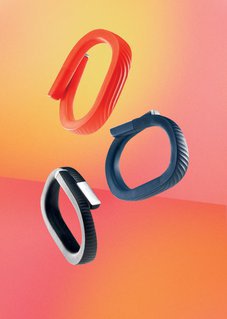
Last month was big for wearable technology. The buzz grew to a roar as the Apple Watch finally hit shelves in late April. That same week, SLM wrote about about how devices like the FitBit and Jawbone might soon do more for healthcare than just help with losing a few pounds before bikini season.
Now, there’s more good news: Wearable devices could soon help save money on your health insurance.
Your guide to a healthier, happier you
Sign up for the St. Louis Wellness newsletter and get practical tips for a balanced, healthy life in St. Louis.
According to a March report published by Chesterfield’s Reinsurance Group of America, fitness trackers help people make healthier lifestyle choices, which in turn presents an opportunity for insurance companies to create new products.
“It’s a win-win situation,” says Tim Rozar of Reinsurance Group of America. “The insurance company and the consumer have aligned interests.” A healthier client means lower medical bills. The motivations might be different, but the goal is the same.
In the United States, there’s a trend toward “the quantified self.”
“It’s where individuals are becoming more engaged in all manners of information and data about themselves, from their medical conditions to their financial status,” explains Rozar.
Medical professionals hope the shift will empower people to make lifestyle changes. The World Health Organization cites noncommunicable diseases—heart disease, cancer, chronic respiratory disease, diabetes—as the largest causes of death worldwide. What puts people at risk for these diseases are largely lifestyle-based, things like smoking, physical inactivity, an unhealthy diet, and alcohol abuse. The quantified-self approach encourages people to get informed and make changes before it’s too late.
Reinsurance Group of America’s report breaks down what this all means to insurance companies. With the growth of telematics in technology (think GPS or smart phone—anything that transmits data over long distances), there’s ample opportunity for insurance companies to create new products.
The first option: opt-in wellness programs, based on the idea of “incentivizing or rewarding individuals for taking active control of their own health and wellness.” Some auto-insurance providers already offer it. Progressive, for example, uses a tracking device called the Snapshot to monitor policy holders’ driving behavior; if they drive safe, they save with a pay-as-you-go, or usage-based insurance, plan.
In healthcare, it might be going to the doctor every year, getting a flu shot, or quitting smoking. Whatever the activity, Rozar says certain tasks can turn into big savings. “You might get points accumulated for certain activities that turn into a reduction on your insurance rates,” he says. You could also get a more tangible reward, like a discount on running shoes or a reduction on your gym membership.
The insurance movement couldn’t come at a better time. With the release of the Apple Watch, wearable devices are at the pinnacle of popularity. “What the wearable devices provide is the ability to verify that information in a pretty reliable manner,” Rozar says. “That’s where all these things connect. You’ve got technology intersecting with quantified self. Then you’ve got wellness programs intersecting with wearable tech. It all leads to product innovation, using wearable devices to help improve the experience for the customer and the insurance company.”