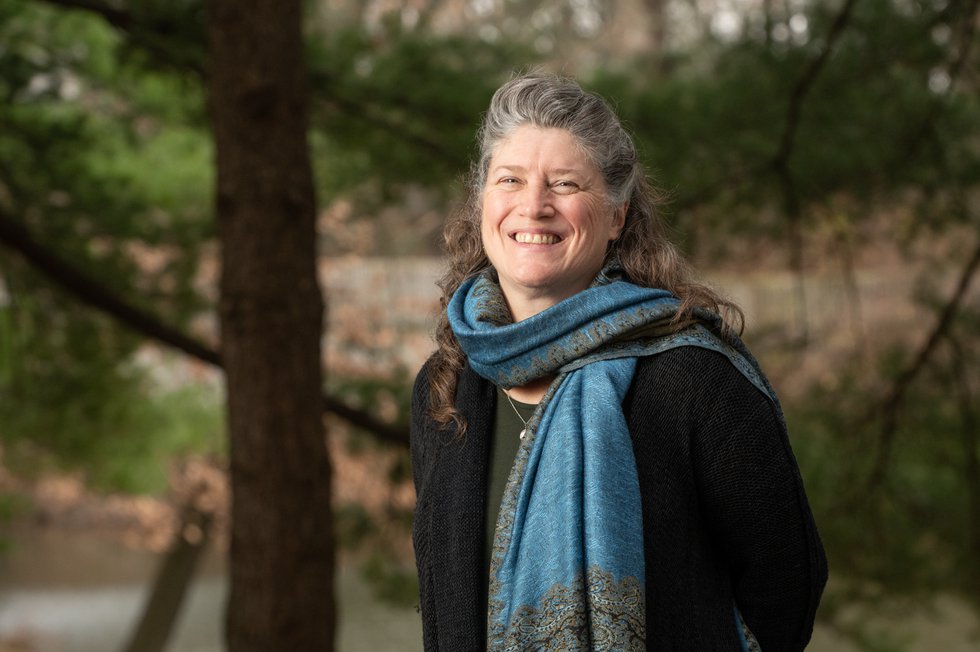
Shelly Goebl-Parker isn’t just a therapist. She’s an artist who uses her talents to help others make sense of the world around them. As this year’s Cultural Thinker in Residence at Laumeier Sculpture Park, Goebl-Parker is using elements of art therapy—a therapeutic practice that uses forms of artistic expression and creativity to improve mental health—to enrich Laumeier’s programming. As part of the institution’s 2022 theme of health and wellness, Goebl-Parker has introduced a new Art Hive series that invites people of all artistic skill levels to create works of their own and enjoy all of the psychological benefits of creating art.
Can you explain Art Hives and how they work? It’s where we create an open studio that invites people in. One of the basic principles is that everyone’s an artist, and one of the things that’s different about an Art Hive space from an art class is that we don’t have a specific aesthetic outcome in mind. The idea is that people come in and we help them learn how to engage in self-directed art making by providing a range of materials and supplies and opportunities. But it’s a little different from doing therapy because I’m also there as a fellow person and artist, and I also make art.
Your guide to a healthier, happier you
Sign up for the St. Louis Wellness newsletter and get practical tips for a balanced, healthy life in St. Louis.
What kind of impact do you believe these Art Hives have on the overall wellness of participants? One of the things that we’ve learned as art therapists is that just engaging with art materials has therapeutic benefits. In art therapy, we think a little more broadly about art making as a way of thinking and making sense of our world. For example, I’ve actually done research on textiles and the benefits of working with them. There’s a lot of evidence that just touching, feeling, looking at, and engaging with textiles has a lot of therapeutic benefits.
What are the elements that Art Hives might share with therapy, rather than a common art class? Part of it is being able to move into a space where you are very welcome, no matter who you are. Another one of the Art Hive principles is positive kind regard, which is a basic principle in therapy, too, where we always engage one another with positive regard. That’s a baseline of how we start our relationships and maintain our relationships. It sounds kind of easy, but if you look around culturally, we’re struggling with that. So I think Art Hives are a really good place for people to be exercising positive kind regard and learning how to do that.
What might someone who comes to an Art Hive expect to complete while they’re there? It varies. In art therapy, you can have sessions that don’t really result in much actual output that looks like art, or you can have somebody who’s deeply developing something. When we’re engaging in the Art Hives, we have a range of things that allow people to have success with making a product if they want that. Or they can start something that they take with them to work on later.
Is there anything that has surprised you about Art Hives and their effectiveness? I get surprised at how sitting down and making art in the company of other people affects my own nervous system. After about 30 minutes or so, I feel a real sense of relaxation come over me. Also, being at Laumeier, I’m hopeful we’ll get to do some outdoor Art Hives where we can engage with even more natural materials as a way of attuning ourselves even more to the natural world.
Laumeier Sculpture Park (12580 Rott) is hosting its next Art Hive on Saturday, April 9 from 1–4 p.m. The event is free and open to all ages.