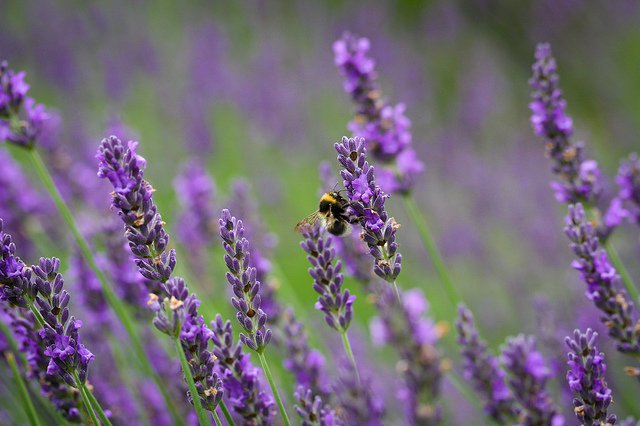
Lavender might just be the most soothing scent in the world. As a 5-year-old, when I couldn’t (or didn’t want to) sleep, my parents would rummage through the medicine cabinet for this specific black vial, wrapped in an amethyst label, which at the time meant nothing more than “time to relax.”
Twenty-plus years later, sleep still doesn’t always come easy. Over the years, there have been moments where my insomnia simply couldn’t be cured via natural means. Diagnosed insomnia is a complex condition and I find it a waste of time to feel guilty for sometimes needing stronger, prescription sleep aids. At the same time, my parents’ hippie values—preferring natural remedies—stuck with me.
Your guide to a healthier, happier you
Sign up for the St. Louis Wellness newsletter and get practical tips for a balanced, healthy life in St. Louis.
It appears they were onto something.
“Lavender is the most widely used essential oil,” says Cathy Schram, owner of Herbs & More in Ellisville. “It’s very relaxing and calming—just smelling it works on your nervous system to help calm it down.” And that’s not just hippie nonsense: research confirms that inhaling lavender-scented products does have a calming, sedative effect.
For the past six months, I’ve dabbed a few drops of lavender oil on my wrists and neck to inhale as I drift off to dreamland. No, it doesn’t knock me out, but the effect is a whole lot sweeter than popping a pill. The aroma takes me to a happy place, my muscles soften, and the gentle fragrance of my childhood brings on a warm, fuzzy state of sleepy relaxation.
Thankfully, it’s been half a year and I’m still using the same 15 mL (0.5 oz.) bottle of lavender oil I shelled out $30 for back in September. If the price sounds steep, it’s because producing lavender oil is tedious. As a rule of thumb, you won’t find any “cheap” essential oil for the same reason—the extraction process takes a lot of work. “Think of squeezing a leaf,” Schram says. “You get a few drops of oil and it takes a lot of leaves to fill a bottle.”
Harvesting lavender oil is particularly delicate. You need a specific variety of plant and a whole lot of patience. Once harvest season arrives, you begin an extraction process known as steam distillation. Flowers and stems go into closely monitored pressurized containers until the steam causes the plants’ oil glands to burst. That oil initially evaporates right back into the steam, so it takes a complex process to channel the steam, cool it, condense it and eventually separate the oil from the water in the end.
I’d rather pay the piper, or the lavender distiller.
According to Schram, I haven’t even been reaping all the potential benefits locked up in my precious vial: “Both young children and adults can put a couple of drops on the bottoms of their feet. There are over 2,000 pores on the soles of your feet, so it quickly absorbs into your bloodstream and is very effective to calm you down.”
Beyond reducing stress, lavender benefits the skin itself: “It’s great for burns and is very healing on the skin,” Schram explains.
One prominent study found lavender oil could help reduce the incidence of common fungal infections. Researchers found the oil to be lethal when it came into contact with certain skin-pathogenic fungi strains. Also known as dermatophytes, these strains cause infections of the skin, hair and nails by feeding on the keratin protein that keeps them strong and healthy.
Dermatophytes also lead to athlete’s foot, ringworm and scalp infections—common conditions naturalists have been treating with lavender oil for years. There’s also some evidence to suggest lavender might help treat alopecia, or hair loss, but more data is needed.
If you find yourself with a puffy, red toenail, a few drops of lavender oil might help fight infection, and it’s safe to try.
“Tea tree and lavender oil are the only two essential oils you’re supposed to put directly on skin without using a carrier oil,” Schram explains.
That came as a surprise—you don’t hear much about carrier oils. Schram suggests using any unscented, light oil (like grapeseed, avocado or olive) with all essential oils, to stay on the safe side.
“I’d say use a 1:3 ratio, but that’s a recommendation. I do it according to smell—usually with an ounce of carrier oil, you could add 10 drops of essential oil. There’s not really a science to it. You want it to smell good.”
You don’t want to drink lavender, but ingesting it in pill form is a lesser-known yet effective way to add its benefits to your daily life. Schram’s shop carries lavender pills, which she says help calm the nervous system and reduce anxiety.
I’ve also recently taken up another of Schram’s suggestions, adding a few drops of lavender oil to my bath for a soothing soak after a long day.
Another way to keep calm and carry on is to add lavender to a diffuser. Place it in your bedroom or in any part of your home and let the device do the rest. Usually through wooden reeds, the diffuser picks up the oil and disperses it into the air.
It seems I’ve only gotten a fraction of my money’s worth by placing a few drops of lavender on my wrists each night. No wonder this plant’s known in Provence as “blue gold.”
/health/essential-oils%3A-oregano/Also check out yesterday’s post on oil of oregano, and come back tomorrow to learn about tea tree oil.