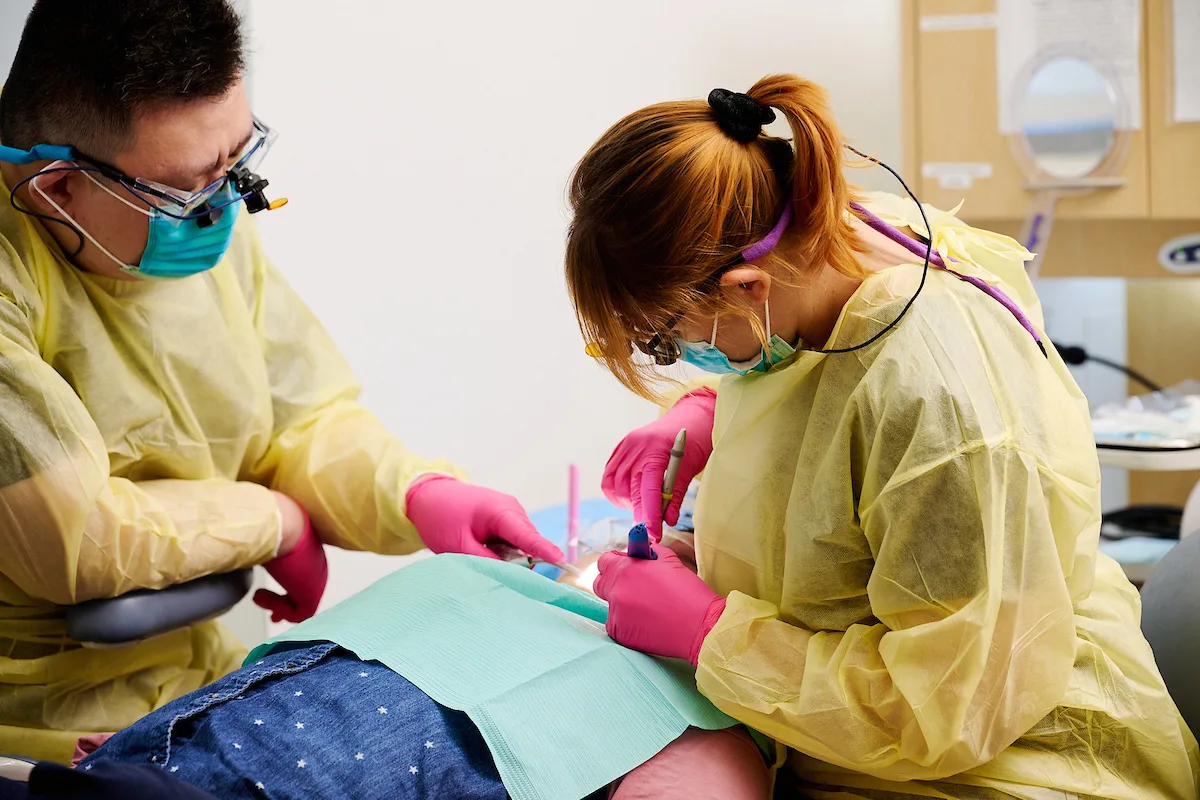
Oral healthcare is increasingly recognized as an indicator of overall health and wellbeing. In response to this larger wellness conversation, The St. Louis Dental Center has adopted a primary focus to educate local and underserved communities on the importance of maintaining good oral health practices.
Dwight E. McLeod, dean and professor at A.T. Still University’s Missouri School of Dentistry & Oral Health, who also practices as clinician for patients and instructs students who work at the dental center, says it’s time to bridge the gap between oral health and overall wellbeing. “I think many of us tend to think that the head and mouth are not a part of the overall body, partly because, over the years, medicine and dentistry separated,” McLeod says. “Now, we’re trying to restitch the head back to the neck. We know that what goes on in the mouth can affect overall health.”
Your guide to a healthier, happier you
Sign up for the St. Louis Wellness newsletter and get practical tips for a balanced, healthy life in St. Louis.
McLeod says neglect or a lack of access to care for the mouth and teeth can lead to inflammation and swelling of the gums. In the early stages, this is referred to as gingivitis. In more advanced stages, this can progress to periodontal disease. This bad bacteria produces toxic substances and chemicals that can cause leaky blood vessels. Through those leaky blood vessels, bacteria can enter the bloodstream and affect distant organs, such as the heart, kidney, lung, or brain.
McLeod says that a diet that lacks vitamin C, leads to collagen degeneration, which weakens blood vessels. “Some of us have poor nutrition,” McLeod says. “We eat a lot of foods with high cholesterol, so you have that plaque that builds up in the artery. Bacteria can get from the mouth and colonize the plaque, and then plaque continues to grow. It breaks off and bam, you have a stroke or bam, you have a heart attack.”
McLeod adds that these factors lead to hypertension and diabetes. “Diabetes is referred to as a two-way street,” McLeod says. “Gum disease is referred to as the sixth complication of diabetes. So people with diabetes will have premature loss of teeth, and people with gum disease will complicate what we call glycemic control, so those people with severe gum disease and diabetes will have higher blood glucose levels.”
To address oral health challenges in the local community, the St. Louis Dental Center offers a full scope of specialty care, including extraction of wisdom teeth, root canals, dental implants, and full mouth rehabilitation at affordable fees. The center is also advancing dental treatments by expanding its diagnostics capabilities.
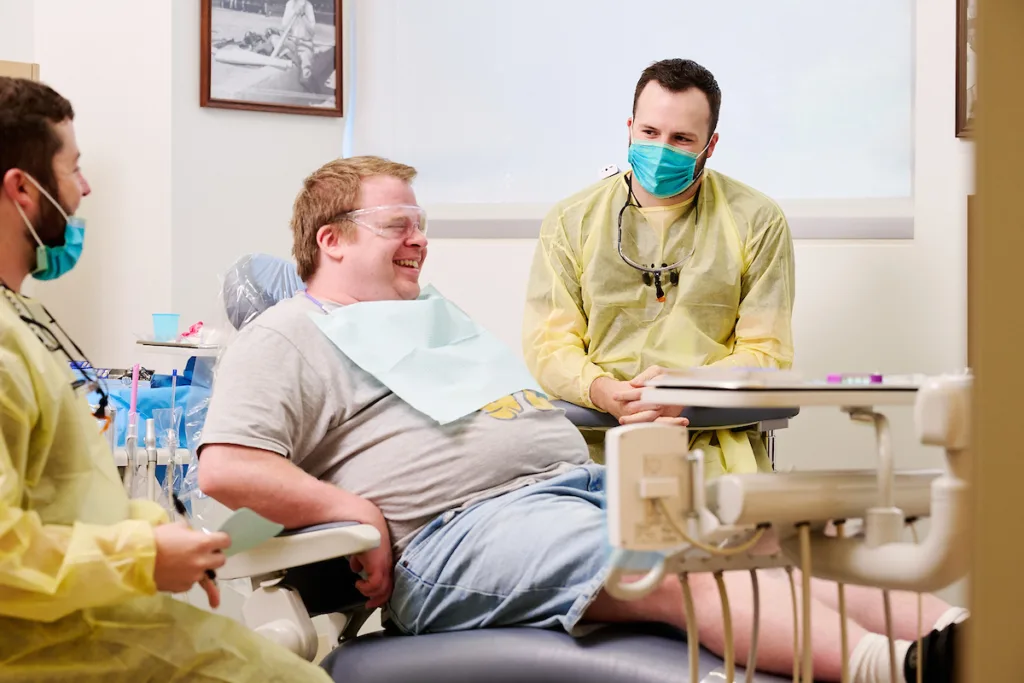
The St. Louis Dental Center prioritizes equity and community, extending outreach to schools, nursing homes, correctional facilities, and assisted living facilities. To ensure accessibility, interpretation services are available in over 57 languages. Additionally, through a partnership with Barnes-Jewish Hospital, the center has access to an OR and general anesthesia, available when patients with special needs have to be sedated in order to receive the oral healthcare they need.
“We might see somebody who is so severely impacted that they won’t even let you look in their mouths,” McLeod says. “They usually have severe dental diseases, because everybody has neglected them, and the general population of oral healthcare providers does not offer care to them. Those poor individuals are in pain, and my heart goes out to them. That’s why we’re intentional about setting up these programs to make sure that their needs are addressed.”
In addition to this partnership with Barnes Jewish Hospital, the St. Louis Dental Center collaborates with St. Louis University to access affordable care that is urgent yet comprehensive in growing specialty and advanced programming. This includes pathology and community service projects, such as their Smile for Veterans program.
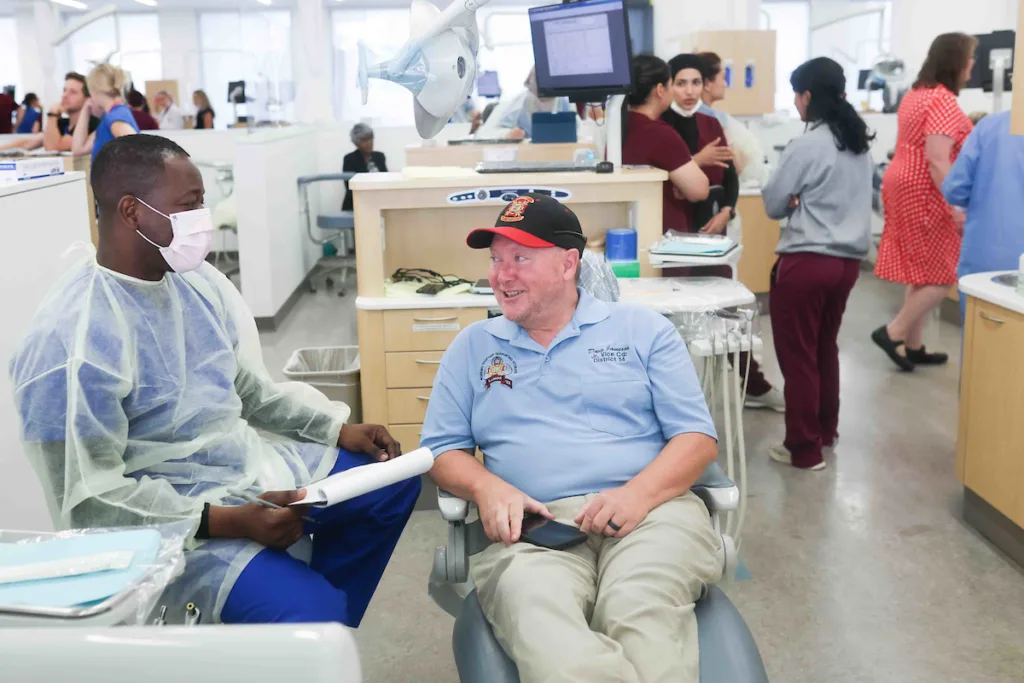
McLeod says that beyond creating new opportunities for patients, the center is committed to educating and supporting those pursuing careers in the dental field.
“Not only do we want to have patients treated, we want students here in the community to see that they too can become dentists and make a difference in their community,” McLeod says. “And so, we’re very intentional about how we accept students. We look in rural areas and we look in urban, underserved areas of St Louis.”
Although the St. Louis Dental Center has various programs available to the local community, McLeod says that 99 percent of oral care should take place at home. He recommends daily brushing and flossing, at least twice a day, along with brushing or scraping the tongue to remove odor-causing bacteria. Additionally, he advises using a soft-bristled toothbrush in circular motions, spending two minutes on the upper arch and two minutes on the lower arch.
“Good oral health should be like a birthright, something that’s handed down in the family unit,” McLeod says. “The emphasis must be there, just like some families will emphasize a good education. It’s a birthright. It’s a must.”