Twenty-three years ago, Pauline Cella and husband, John Cella, purchased a farm on a whim. Located in O’Fallon, Missouri, and owned by a friend of the couple, the property was operating as a nursery when the Cellas expressed interest in buying it, should their friends ever want to sell it. Three months later, they were the proud new owners of Planthaven Farms. In the decades since, the Cellas have quadrupled the size of the greenhouse to 150,000 square feet and expanded production to yield enough plants to stock Planthaven’s two offsite locations: a garden center and gift shop in Oakville that opened in 2017 and a second shop, in Olivette, that opened late last year. We recently caught up with Pauline Cella to learn more about how she got her start in the plant business and what people can expect to find at Planthaven’s new location.
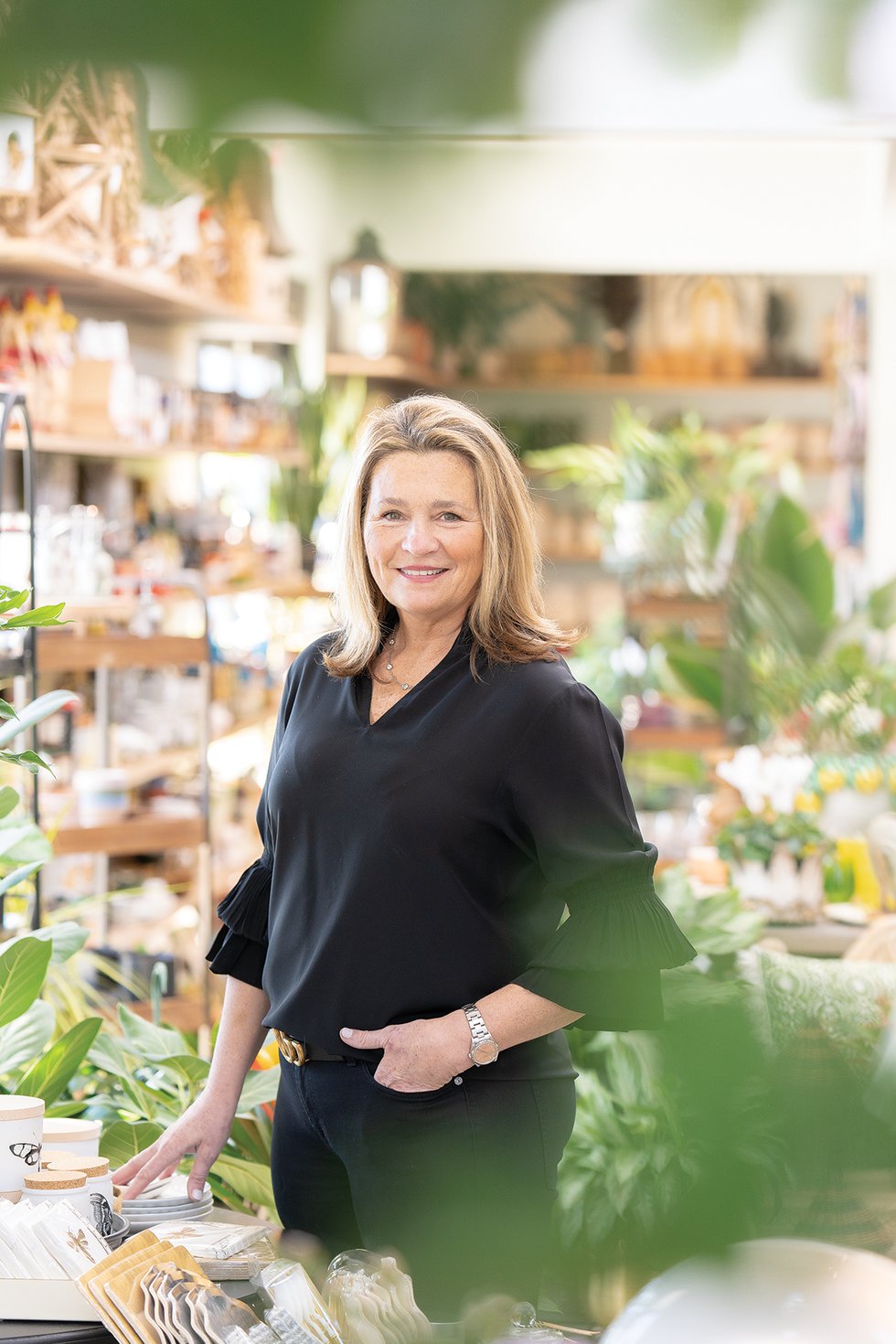
What sparked your interest in owning a nursery? When I was a child, I thought I would be a florist. I loved to pick flowers and make arrangements. It’s funny that I never became a florist and ended up doing this as an afterthought. I loved my banking job and thought I would be a banker my whole life, but I love this more. I never dreamed I’d end up being so fortunate to have a business that I love as much as I do.
Get a weekly dose of home and style inspiration
Subscribe to the St. Louis Design+Home newsletter to explore the latest stories from the local interior design, fashion, and retail scene.
What do you grow, and how do you decide what to plant each year? We grow everything we sell, with the exception of trees, shrubs, and tropical plants such as mandevilla and hibiscus. It’s a gamble—you grow it all, and you hope they come. One thousand geraniums sold last year, and you hope that 1,400 sell this year—but who knows if it’s the year of the geranium? You grow a lot of stuff having no idea [what will sell], but I always believe you can’t take something away from your product list, because there’s always someone who wants that.
What inspired you to open the Olivette shop? Our friends were too lazy to drive out to O’Fallon, and we wanted a place that would get them to buy our stuff, so we started a pop-up shop in the Olivette bowling alley parking lot. That was 12 to 15 years ago. It had 22 parking spaces, and it featured a little bit of everything we sold. A typical garden center is only as good as the wholesalers they buy from. Olivette was such a big success, partially, because our stuff was different and our price point was better. We could create our own margin, [since] we weren’t buying from the area wholesalers that everybody else buys from, but it was hard on that parking lot. You got a great tan and probably lost weight because you were sweating all day. My husband, who is a commercial developer, had been knocking on the door of Ponderosa for forever, and the guy finally said he was ready to sell. Then COVID hit, so we sat on the property for two-plus years. When the world began coming back to normal, we broke ground [on a new center,] and we’re its first tenant.
What can people expect from the new shop? How is it different from the Oakville location? We tried to make the footprint the same. The big difference is that Oakville has a greenhouse attached. We sell hydrangeas, we sell all kinds of perennials, but we don’t inventory huge evergreens and things like that. We sell all the holidays. We sell tons of house plants. You can buy everything from a hanging basket to a tomato plant to a cactus to a gift to a tea towel. I think we cover a lot of bases.
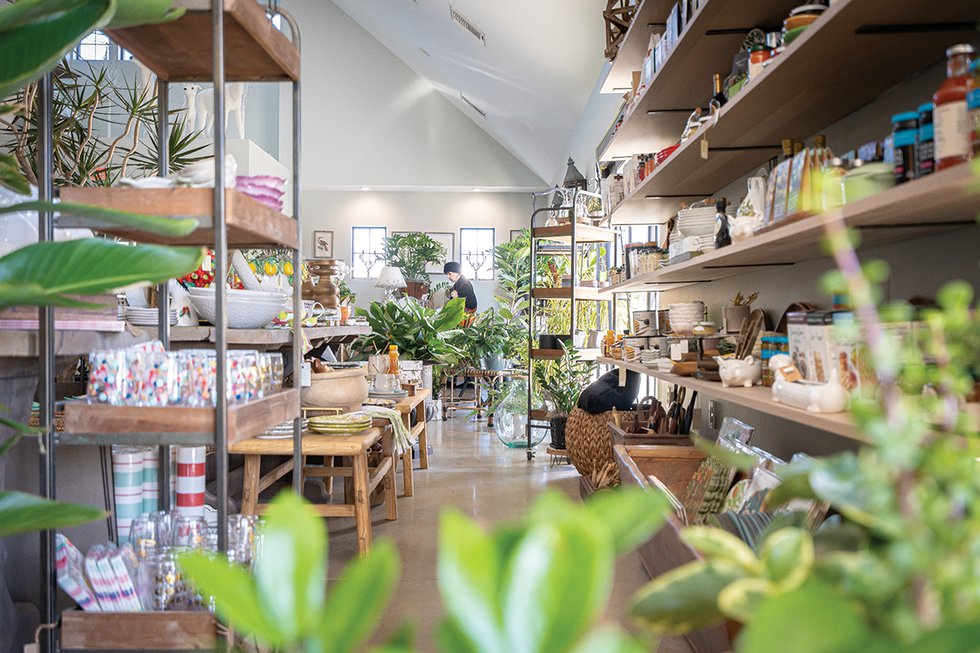
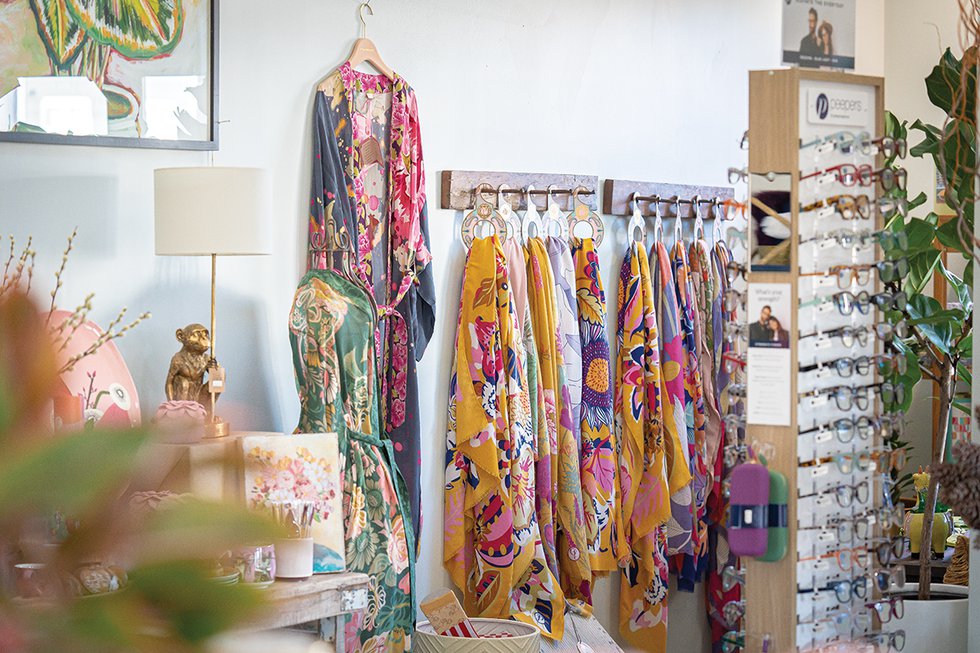
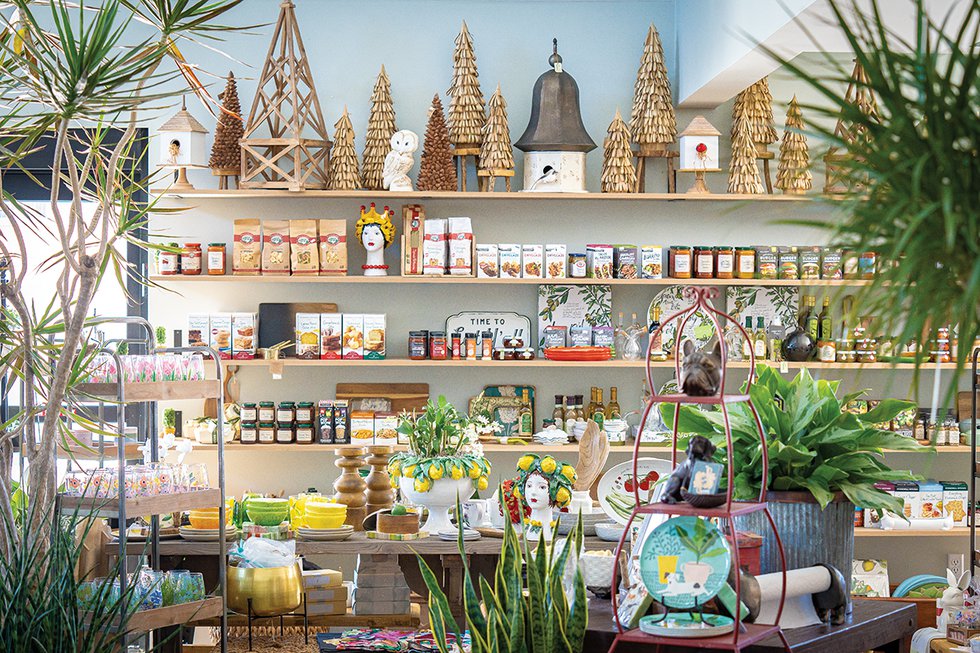
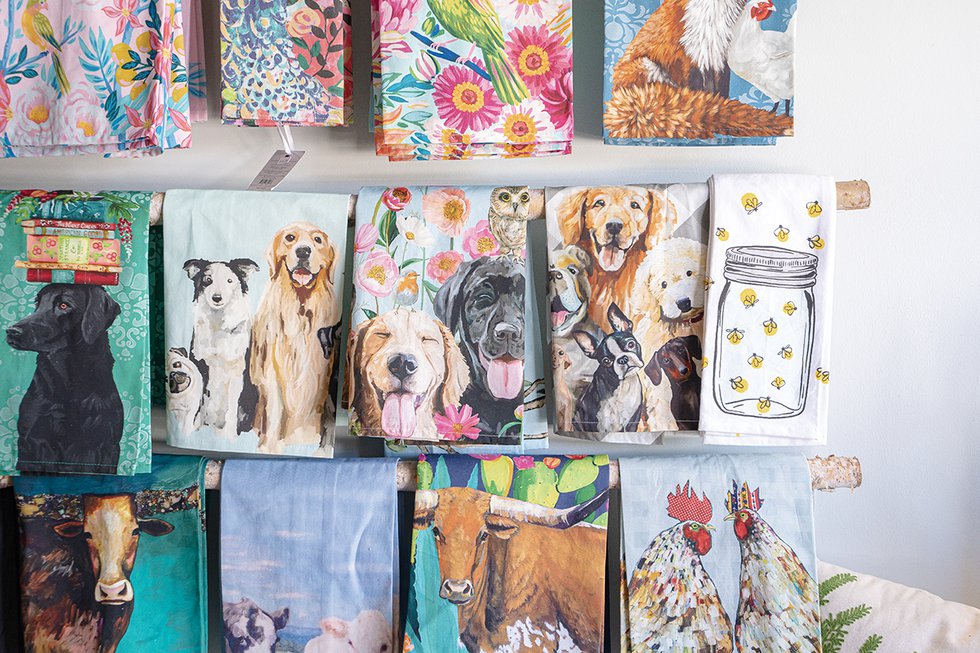
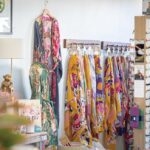
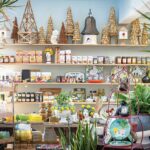

What made you want to expand your offerings beyond plants? When we opened the location in Oakville, I saw a need because of the fact that there were no gift shops out there. The gift shops were Walmart, Target, all the discount stores, which I love, but there was nothing different. We had no interest in getting into the gift business. We’re a garden center first—that’s what keeps the lights on—but we started the gift shop in Oakville and it seemed to take off. It’s just kind of fun, whimsical. I’m buying all year long, going to markets several times a year, usually in Atlanta, Dallas, Vegas, or New York. If it has a cardinal on it, I buy it. Everything that I buy, I love. If I don’t love it, I don’t want to sell it. I know there’s a theory that you should sell things that you don’t like because someone else will like them, but I have a hard time with that concept.
What do you find most rewarding about what you do, and what makes you stick with it? Probably the look on peoples’ faces when they walk in and they’re just sort of taken aback by how pretty the plants are—the satisfaction from another person’s happiness. The first five years were hard, because it was a lot more work than I thought it would be and my kids were young, but it was still more fun than putting on pantyhose and going to a bank. I’m going to do this until I don’t like it anymore, but I don’t see that happening any time soon.
Pauline Cella’s Five Favorite Things
1. Flowers. Cella’s favorite flower: Angelonia, or summer snapdragon. “It blooms all summer long,” she says.
2. Orchids. Her favorite flower that she doesn’t grow: the Hawaiian orchid. “I love orchids—I have a serious problem,” she says.
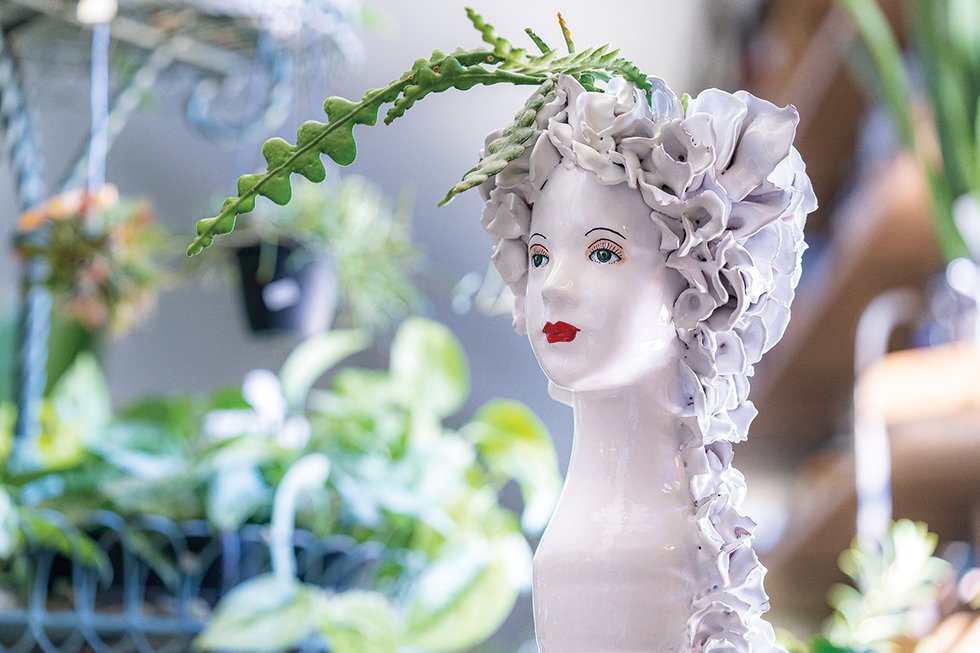
3. Italian pottery. A new line in Planthaven’s Olivette shop is handmade pottery designed to resemble the faces of women. Because the pieces are handmade by artisans, no two are alike.
4. Planting Pots. Cella loves the wide range of whimsical interior pots sold at Planthaven. Her favorite pot, she says, is handmade in Tuscany. “I love the color green and the feeling of alfresco dining when I see it filled on a table.”
5. Antler-inspired decor. “Antlers are for all seasons and all décor styles,” Cella says.