Annie Brahler and Charles Smith had already started to renovate and restore one historic St. Louis church when the opportunity to purchase another came to their attention.
“Charlie instantly said, ‘We have to go see it,” Brahler recalls. “And I was like, ‘Are you totally out of your mind?’”
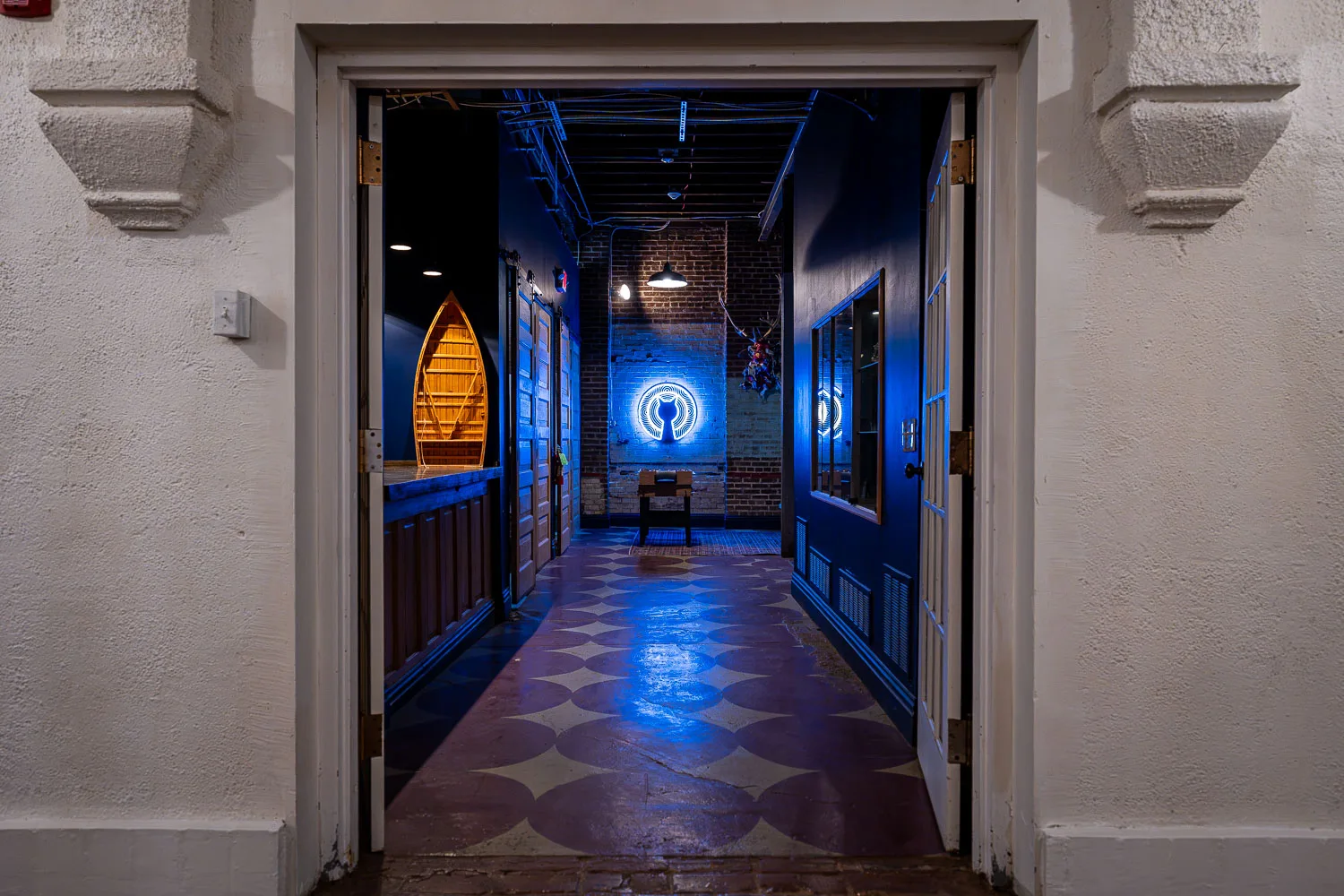
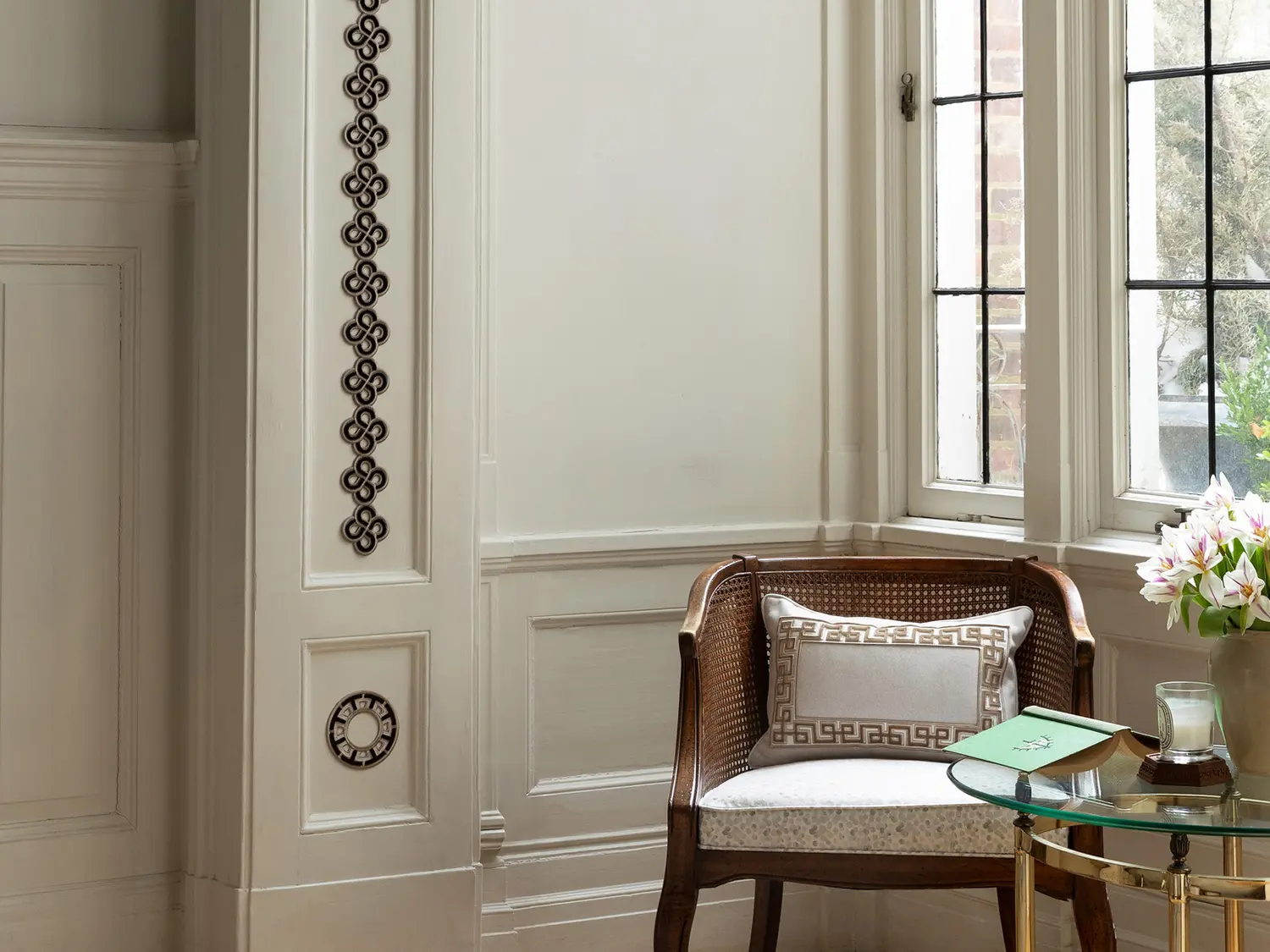
The couple, who are also business partners, had a similar exchange before purchasing the first church, Westminster Presbyterian, at the corner of Delmar and Union boulevards, for their award-winning design firm, Euro Trash. Smith saw the English Gothic-style building as a solution to consolidating the business under one roof. At approximately 30,000-square-feet, the church was large enough to hold the firm’s studio and corporate offices, as well as its sizable warehouse containing art, antiques, and furniture. After an initial site visit, Brahler saw the vision, too.
As the couple navigated complex renovations to the 101-year-old church, the EF3 tornado that hit St. Louis last May cut a devastating path through the neighborhood, causing significant damage to the building. Undeterred, they began the process of rebuilding, including replacing the roof that had been badly damaged. As renovations neared completion, the couple learned about the opportunity to purchase the second church.
Located at 3120 Lafayette in the Gate District, the former Immaculate Conception Church and Rectory not only offered a large enough footprint to house the various branches of the company, but gave Brahler and Smith the chance to preserve a unique piece of St. Louis history. Built in 1908 and designed by renowned architecture firm Barnett, Haynes & Barnett, the same architects who built the Cathedral Basilica of St. Louis as well as many other local landmarks and historic homes, the property includes a 15,750-square-foot Gothic Revival church and adjacent 9,324-square-foot rectory.
Get a weekly dose of home and style inspiration
Subscribe to the St. Louis Design+Home newsletter to explore the latest stories from the local interior design, fashion, and retail scene.
In 1977, the rectory was home to Robert Prevost, who is now known the world over as Pope Leo XIV. Prevost lived at Immaculate Conception for a year after entering the Order of Saint Augustine’s novitiate in the Province of Our Mother of Good Counsel. By the time Brahler and Smith toured its halls, the church had been closed for 20 years; it later became home to the Compton Heights Concert Band before it was purchased by Pat and Carol Schuchard, who have restored and now operate Das Bevo, Majorette, Boo Cat Club, and Tim’s Chrome Bar. It was important to the Schuchards that whoever purchased the church would want to preserve it.
“For me, it’s really bittersweet. I’m sort of grieving the thing,” says Pat Schuchard. “I worked on it pretty much by myself for the last couple of years.”
Brahler was hesitant to take on another historic church restoration, she says—until she stepped inside. “This feeling came over me,” she recalls. “I was like, ‘This is where I am. This has to happen. It was like a really calm feeling—I’ve never felt like that before.”
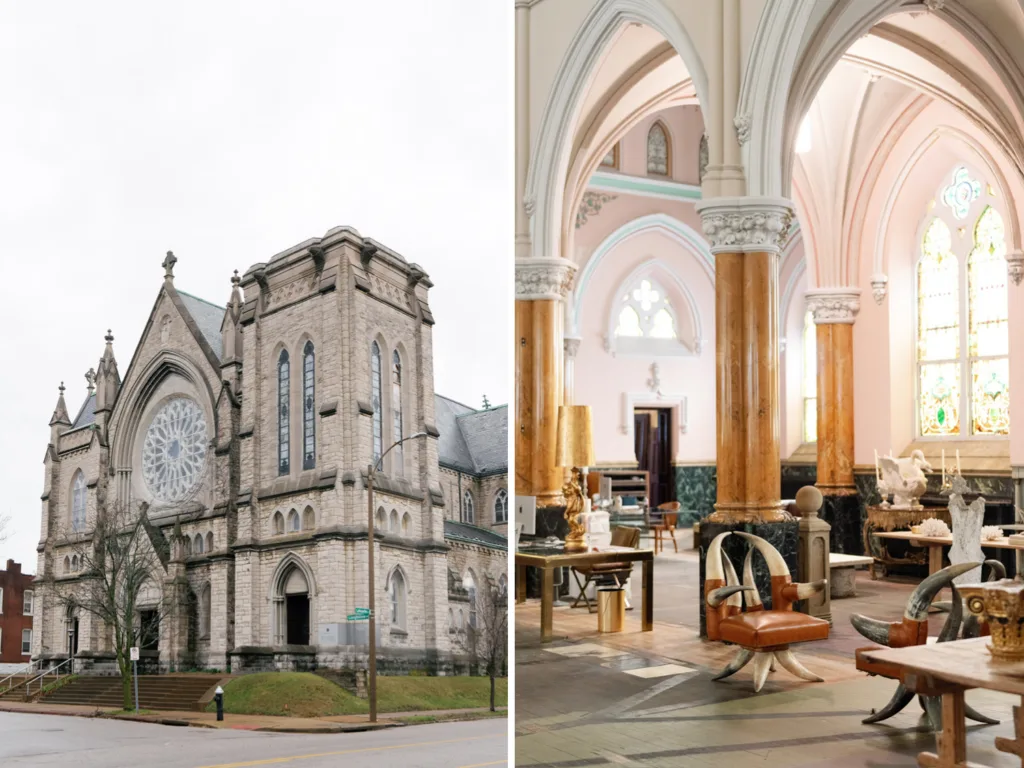
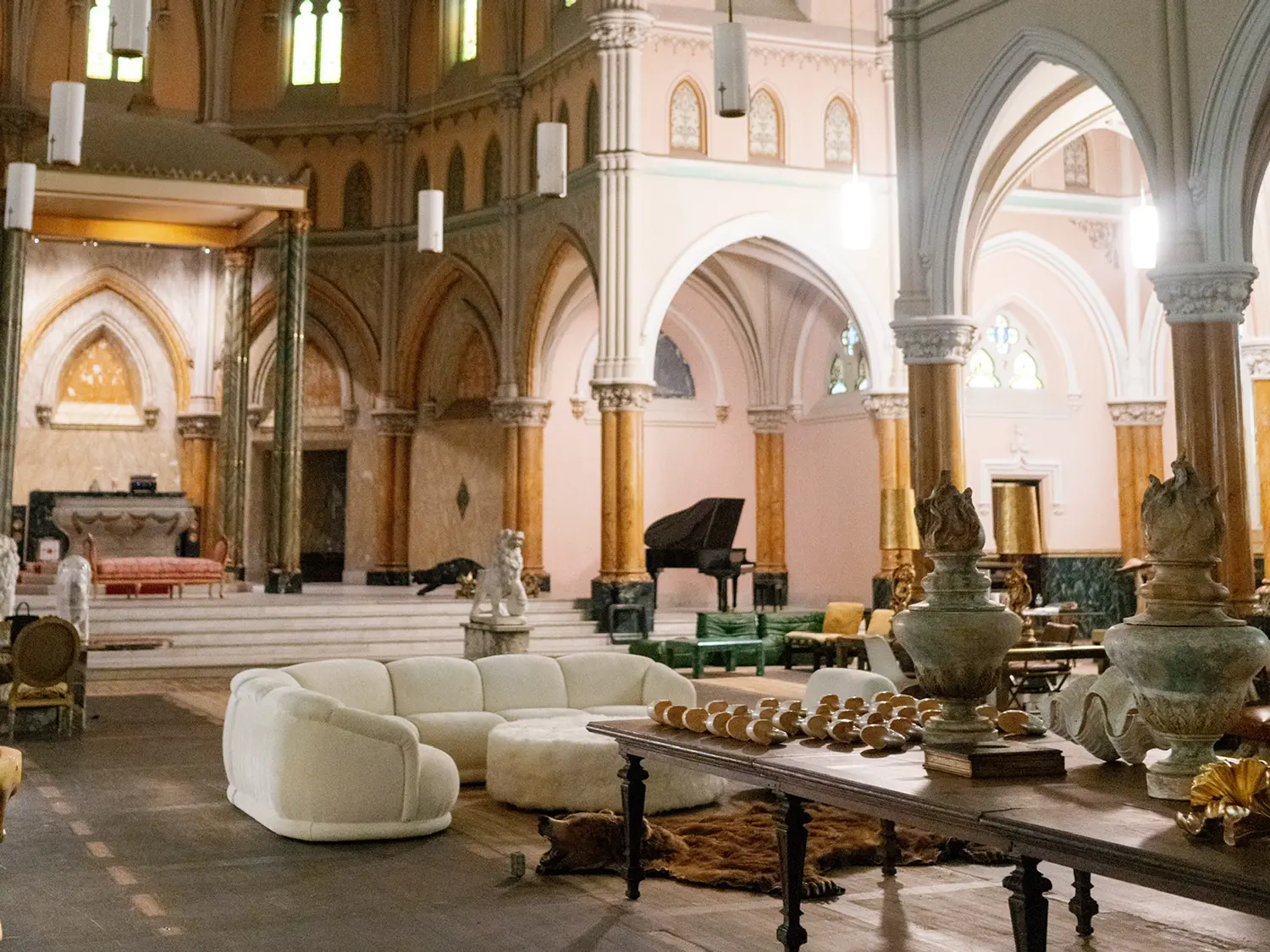
With soaring vaulted ceilings and stunning stained glass windows, the church inspires awe. The original color palette, a pale pink with a mint-colored trim, lends a French air to the space. Towering orange, tan, and black marble columns with intricately designed column capitals flank the sanctuary of the church, and the altar is covered by a baldichin, an ornate canopy structure. The church’s stunning ceiling features a cross vault, or groin vault, with two barrel vaults intersecting at right angles. The vaulting draws the eye upward, and is made more magnificent by the stained glass windows in the church’s clerestory.
“I’m an architecture geek, and the way the groin vaults are here are just a stepped up classic version,” Brahler says. “They’re just so unique. Every little detail in the sanctuary space completely fed me—it was everything. The coloration of the almost orange marble against the pink was not [typically] what you see in St. Louis. It was definitely art-minded, and it just blew me away. Also, the size of it, because at the other church, the sanctuary is quite big, but being in the Gothic style, it’s darker. And this felt a little more French because of the limestone and then the pastel colors up against the dark green.”
The church is now the headquarters and atelier for Euro Trash, with open-concept office space and a stylish showroom filled with furniture and decorative antiques imported from cities across Europe. In addition to the desks and work stations, the team built a photo studio to shoot imagery for the company’s new e-commerce site, which is now online. The walls have been painted a light pink to restore the original color, and work is underway across the property, including large-scale repairs to the church’s slate roof—Smith says they plan to use as much original slate as possible. The rectory also needs a new roof, he adds, and there are outdated systems to modernize. New restrooms on the main floor are in the works and renovations are underway on the church’s second floor and in the adjacent rectory, which will hold offices and dedicated storage areas for lighting, rugs, and other home decor.
“Probably the most important thing for the spring is to get rid of every piece of plastic that’s on the outside of every piece of stained glass, because that’s driving Annie crazy,” Smith says with a laugh. “They used to be clear, but now they’re all yellow.”
Brahler adds: “I don’t throw down for much, but that would be my thing: When it comes to stained glass, especially, I cannot wait… When that is off, I will keep certain lights on at night, and this community will have this beautiful multicolored nightlight as God intended, in my mind. It’s just gorgeous.”
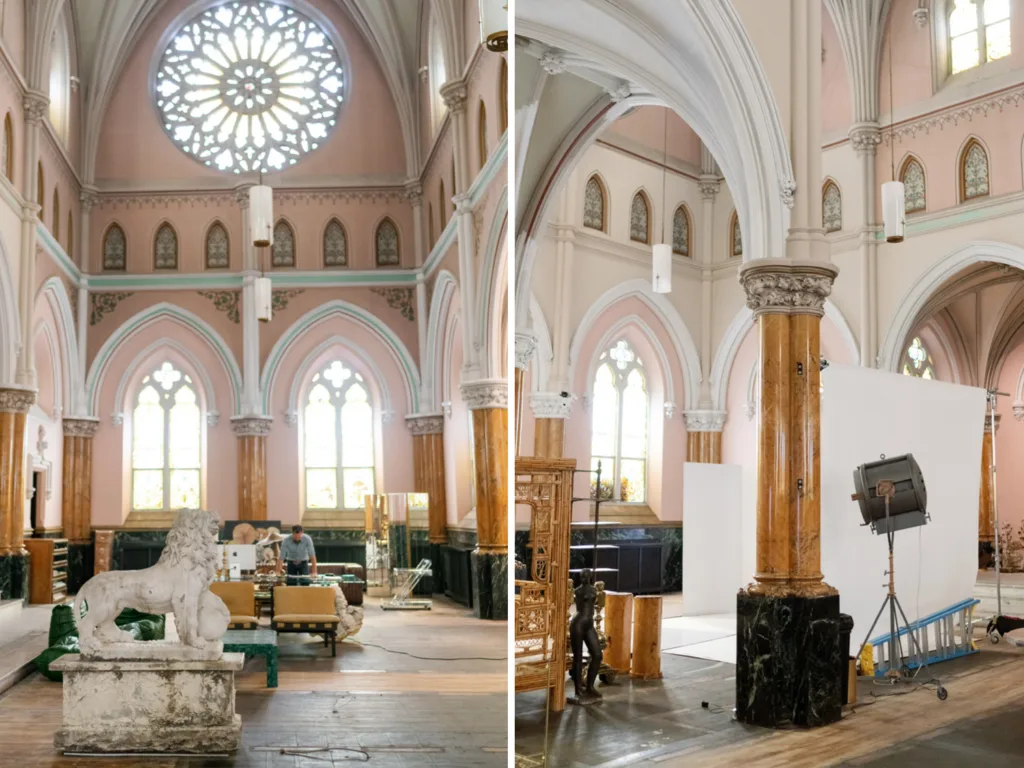
Given its prestigious origins and grand environs, Brahler is now calling the church the “Baby Basilica.” Between the first church renovation (Brahler and Smith say they plan to sell the church at Delmar and Union boulevards), and the new Gate District renovation, the couple have proven they’re passionate about and dedicated to historical preservation.
“This is our home,” she says. “We believe in architectural preservation, especially in St. Louis, when so much of it has been taken away. And it’s just incredible. I have clients who are friends that come here and they’re blown away that St. Louis is what it is. And I just want to hopefully be a little bit of a conduit to show that — that whatever tiny following we have is just a little window [into showing that St. Louis] is awesome.”
In time, Brahler says she looks forward to someday inviting in artists and artisans to exhibit their own work in the space.
“I’m hoping they have the same experience as us,” Brahler says. “We feel pretty calm here, and we’re able to quiet everything else outside and focus on what we’re doing.”
During the day, natural light floods into the church through the stained glass windows, casting rays or lines of light in eye-catching patterns. Brahler finds creative inspiration in the way that light hits, say, an antique chair or a bronze statue, but also in the history of the house of worship.
“I think creativity is definitely a very godlike thing,” Brahler says. “It’s such a deep emotional thing, and it’s really, I believe, a gift to us. A God-given gift to people to enjoy. And true creativity does not happen without history. And, so, I feel that it perfectly makes sense to be here in one of His houses.”
Editor’s note: A previous version of this story included an incorrect term for a structure above an altar. It is a baldichin. We regret the error.