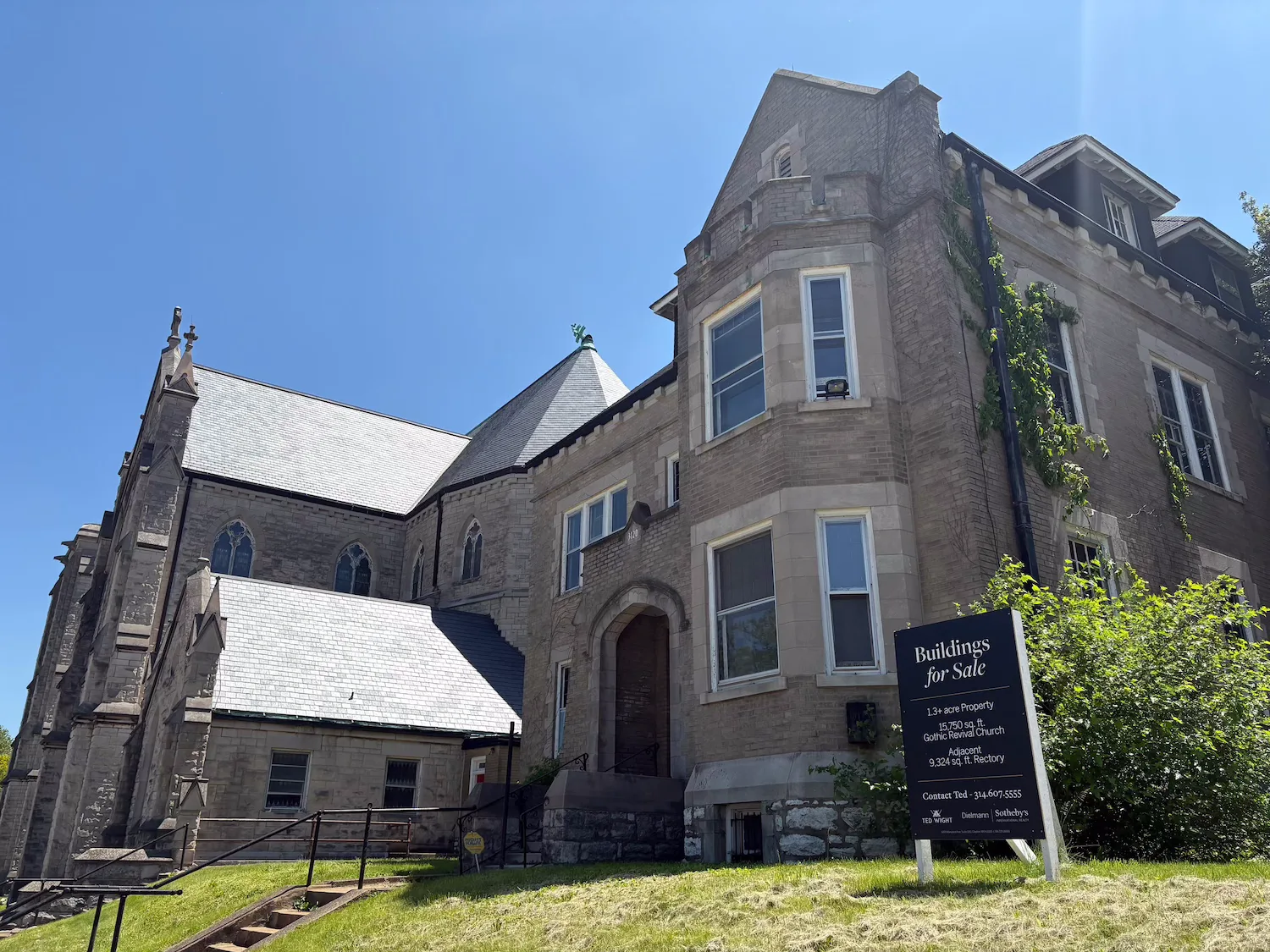
If you are so inclined, you could own the building where Pope Leo XIV lay his head almost half a century ago and where he (perhaps) decided to dedicate his life to the church.
Pat Schuchard currently owns the church and rectory of the former Immaculate Conception/St. Henry parish in the neighborhood in what is now the city’s Gate District. Schuchard quipped that maybe he should turn it into a tourist attraction, joking that he could make up one of the beds on the third floor of the rectory and put a little sign next to it reading, Pope Leo left it just like this.
Get a fresh take on the day’s top news
Subscribe to the St. Louis Daily newsletter for a smart, succinct guide to local news from award-winning journalists Sarah Fenske and Ryan Krull.
All jokes aside, Schuchard says, “It’s a beautiful building. We’re just working on it.”
The election of Robert Prevost to the papacy yesterday sparked excitement in the U.S. as Prevost, now Pope Leo, is the first American pope. Nowhere was that excitement greater than in Leo’s native Chicago. But, among American cities, St. Louis may be right up there with Philadelphia, where he attended Villanova University, in being able to claim second city status. Prevost came here for a year in his twenties in 1977, entering the novitiate for the Order of St. Augustine in St. Louis. He professed his first vows a year later.
Generally speaking, the period in a novitiate is a time of “discernment,” when a young person is trying to figure out if they want to dedicate their life to the church. So the idea that Leo’s path to the papacy hit a pivotal moment in the tan brick rectory on Lafayette is not at all far-fetched.
Hear more about this story from Ryan Krull on The 314 Podcast.
Brother Dominick Jean, a Dominican friar who lives just a few blocks away, tells SLM that the novitiate entails a lot of time spent in prayer and “trying to hear what God is saying to you.”
“It seems to have worked out for him,” he says of Leo’s time just down the street. The place still potentially holds significance for the pope, he says: “The place where we first hear God is important to us.”
A former Washington University art professor, Schuchard and his wife, Carol, have spent their “retirement” painstakingly restoring old buildings around the city and Maplewood, including the Busch family’s former windmill (now Das Bevo), Majorette, and Tim’s Chrome Bar.
The year that a young Robert Prevost lived in St. Louis is the same year that St. Henry closed in Compton Heights, and its congregation merged with Immaculate Conception, which had been established in 1904 and was being run by the Augustinians. St. Henry later burned down; the merged Immaculate Conception/St. Henry closed in 2005.
Schuchard took possession of the buildings a few years ago and says he’s been steadily working on the church and the rectory pretty much every day. He wants to turn the church into a bar and restaurant as well as a place where bands could play, something akin to his Bevo Mill. He’d like to see the 10-bedroom rectory turned into a hotel or perhaps a bed and breakfast. The two buildings together are 25,000 square feet. Many of the overtly religious elements, including confessional booths and stations of the cross, were removed when the Catholic church sold it. The stained glass windows, however, are in terrific condition.
“We’re slowly but surely working on this, it’s a special project,” Schuchard says.
Despite all that work, he currently has the properties listed for sale, just in case the right buyer comes along.
“We put it up for sale. If somebody doesn’t buy, we just keep working on it. I’ve got guys in the parish house right now,” he says. “I guess that’s where the pope used to live.”
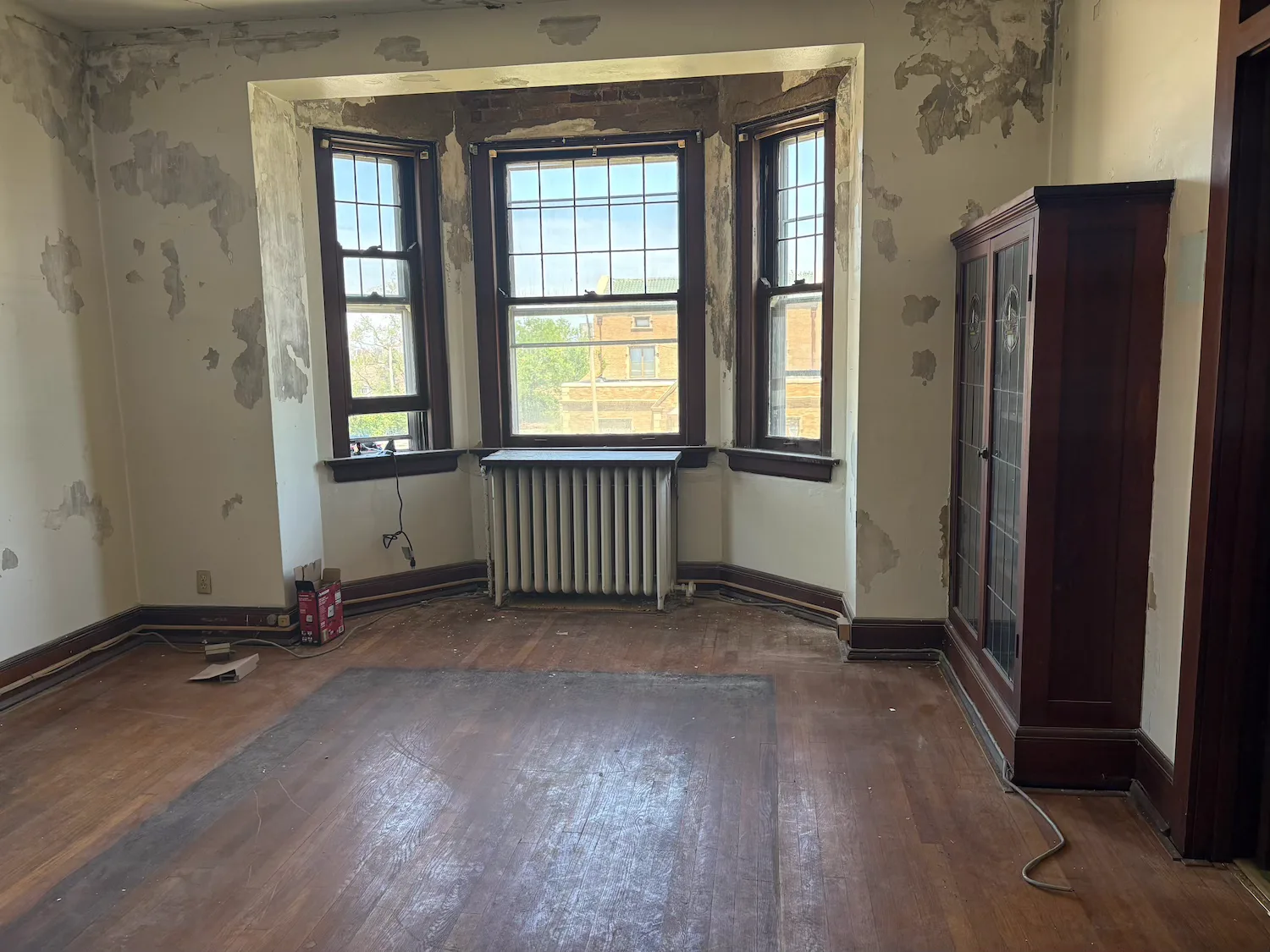
The inside of the rectory is a spartan version of classic South City interior, with wood floors and exposed radiators. A noticeable difference is that in many South City apartments and homes, the woodwork around windows and doorframes sports intricate flourishes of craftsmanship. None of that is to be found in Leo’s old digs, save for the occasional cross embossed into the wood. The building was constructed in 1890.
Schuchard says that the rectory needs a new roof as well as some tuckpointing. About 20 percent of the church’s roof needs to be replaced.
Schuchard says he just learned of the new papal connection this morning when KMOX’s Debbie Monterrey texted Schuchard’s wife.
St. Louis Metropolitan Police Chief Robert Tracy, who lives nearby, reportedly swung by in the morning to check out St. Louis’s newest point of historical significance. While SLM was on the scene, a handful of people pulled up to the church and rectory and got out of their cars to do the same.
“I better open the front door,” Schuchard said. “Sometimes in the early afternoon, I’ll take a snooze [after] I work all morning. So maybe I’ll have some coffee and get to it.”