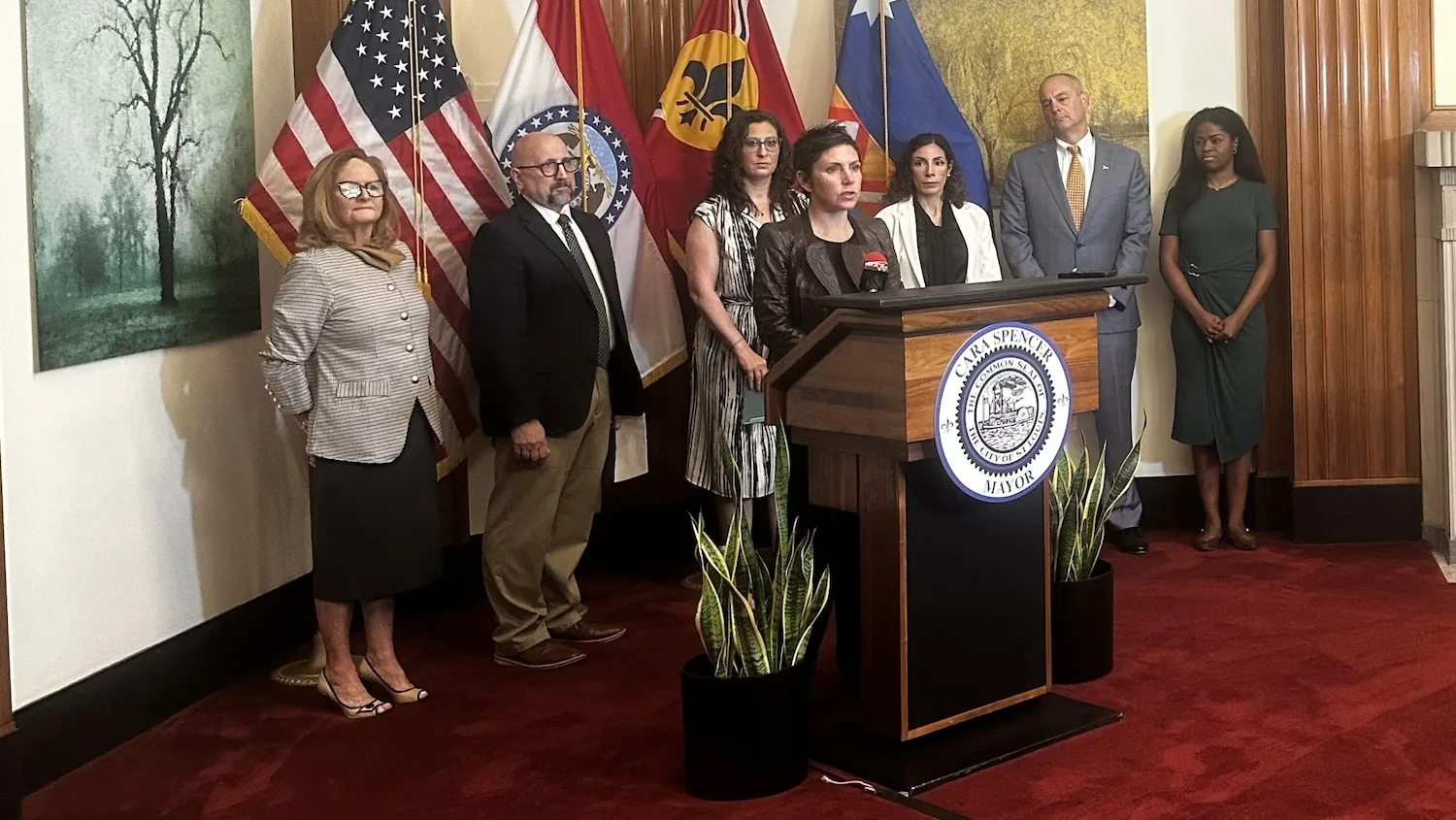
Mayor Tishaura Jones herself can see the problem. On January 22, at a Missouri House of Representatives hearing on a bill to shift oversight of city police from her office to a governor-appointed board, she was asked by a legislator: Why is it that, regardless of stats showing drops in crime, some people say they still just don’t feel safe in the city? Replied Jones: “Perception takes a while to catch up to reality.”
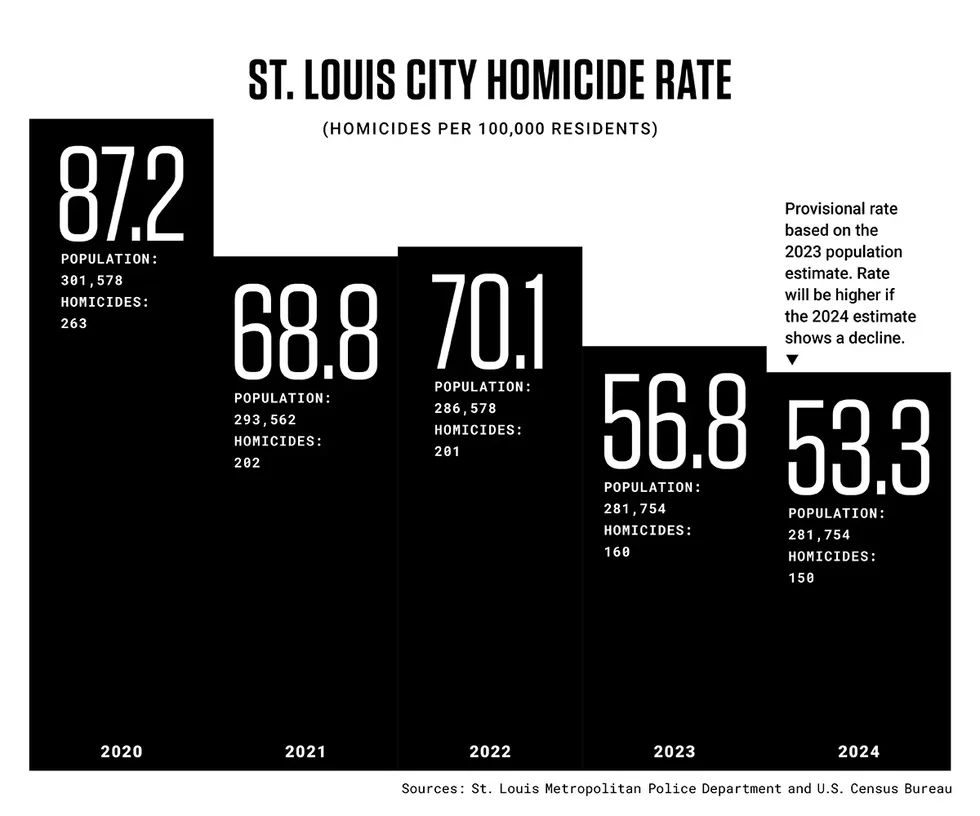
It was a tidy encapsulation of Jones’ three-pronged challenge on this front. First, she doesn’t have much time for catch-up: The mayoral primary is on March 4 and the runoff a month later. Second, Republicans in Jefferson City who want to strip her police-oversight power reject her reality. She touts St. Louis Metropolitan Police Department statistics showing, among other things, a 40 percent drop in homicides on her watch, but Rep. Brad Christ of South County, who’s handling the House bill, essentially called her figures bogus. “Nobody’s being fooled by these PR campaigns,” he said at the hearing. (In response, Police Commissioner Robert Tracy, who also attended, adamantly denied that his department fudges numbers.) But even assuming the stats are solid, Jones still faces a problem with perception among the city’s electorate.
Get a fresh take on the day’s top news
Subscribe to the St. Louis Daily newsletter for a smart, succinct guide to local news from award-winning journalists Sarah Fenske and Ryan Krull.
There are voters who don’t want to believe that crime fell on this mayor’s watch: old-school Dems, say, who loathe progressive views of law enforcement or simply don’t like Jones and prefer her well-funded opponent, Alderwoman Cara Spencer. Then there are voters for whom sensational crime news carries more weight than encouraging crime trends do—an unfortunate yet understandable cognitive bias, given how hyper-attuned human beings are to threats. Then there are those sensitive to disorder, which the Manhattan Institute fellow Charles Fain Lehman defines as “the domination of public space for private purposes.” Stroll from the Arch grounds to Energizer Park, for example, and if you encounter skull-rattling music from a car parked at Kiener Plaza, graffiti in Citygarden, poop in AT&T tower’s pedestrian tunnel, a tent in a doorway, and a drunk man panhandling in a trash-strewn Memorial Plaza, then you might get a vague feeling of lawlessness, even though none of those elements are serious crimes—and most won’t get recorded as crime statistics at all.
As it happens, downtown is one area where both stats and vibes have improved. Multiple residents say the chaos of several years ago—nocturnal gunfire, shrieking engines, short-term-rental bashes—has appreciably calmed. Mischief still occurs, says Dan Pistor, a loft dweller and chairman of the Downtown Neighborhood Association, “but it’s not as prevalent.” Police data parallels that view: From 2021–2024, crimes related to persons, property, and society fell 22, 42, and 37 percent, respectively. Whether that was achieved partly through the boost in patrols funded by the philanthropic St. Louis Police Foundation is open to interpretation, but Jones didn’t trumpet the victory (or even mention it) in her recent State of Public Safety 2025 report, emphasizing instead the myriad programs funded through her Office of Violence Prevention—the preferred approach of her progressive base.
One such program is street outreach—a.k.a. violence interruption. Thomas Abt, the University of Maryland professor whom Jones brought in to help create and advise Save Lives NOW!, the soon-to-be-launched regional anti-crime initiative, says that this tactic has a strong evidence base. And at first blush, the numbers here look good: In 2023, the first year of OVP’s most recent street-outreach contract, there were 25 fatal shootings throughout its high-crime neighborhoods of focus; the next year, 2024, there were 12. Yet, as with the downtown patrols, the question remains: Would a drop have happened anyway? Zooming out to the national level, cities across the U.S. have seen homicides tick back down to nearly pre-pandemic levels. That suggests larger societal forces at play, irrespective of the policies of any one particular mayor.
Municipal elections are notoriously low-information affairs, so it may well be that most voters’ calculations will be far simpler: They’ll ask themselves, Does the city feel safer? and cast their ballots accordingly, whether or not Jones is responsible for the answer. In that case, the police data she points to won’t matter much—just like it doesn’t seem to matter at the state capital. At the January hearing, Jones sounded almost resigned to that reality. “All we can do,” she said, “is keep doing the work.” How long that work continues will be decided shortly.