A new scholarship—backed by a nearly $5 million donation—will allow St. Charles Community College graduates to go on to obtain degrees at four-year colleges, potentially providing opportunities to students who otherwise couldn’t afford to get a bachelor’s degree.
The scholarship will be open to two students who complete their associate degree from St. Charles Community College and will pay $15,000 (or more) per semester for each, covering the remaining two years of a four-year degree. The donation is the largest in the school’s history, college leaders say.
Get a fresh take on the day’s top news
Subscribe to the St. Louis Daily newsletter for a smart, succinct guide to local news from award-winning journalists Sarah Fenske and Ryan Krull.
That donation came as a surprise to the college, as it was left to them by the estate of former McDonnell Aircraft Corporation structural designer Norman Leaf and his wife, Linda. Neither seems to have attended the college, with Norman earning a mechanical engineering degree from Iowa State University, and Linda, a real estate agent, graduating from Drake University. A scholarship fund, and a wing of the college’s new Regional Workforce Innovation Center, will be named in honor of the couple.
But this surprise gift will mean students driven to pursue careers in STEM (science, technology, engineering, and mathematics) can get a leg up on an education that might otherwise be closed to them. Students will be able to apply as soon as the end of this upcoming spring semester and can renew the scholarship for their final year of post-secondary education. They’ll also be afforded the opportunity to potentially get more money, per semester, based on need.
“For students, I think, one of the biggest benefits is that … they took advantage of the fact that they came here and had $105 per credit hour tuition to get their degree from us,” says St. Charles Community College chief of staff Betsy Schneider, who’s also the executive director of the college’s foundation. “Then they have this extra $30,000 [per year] that’s going to help them complete their degree at a four-year [college]. It’s a huge benefit, especially with the way the cost of education has grown.”
The St. Charles Community College Foundation’s board will determine scholarship winners, evaluating financial need through personal essays submitted by students. Schneider said the school will look for students to discuss career goals, how they’d apply the scholarship funds, and what they’d like to do to improve their community.
There are a few stipulations the Leafs left with their gift: The college must follow a specific investment strategy laid out by them, and the college must not let the account get smaller than 80 percent of the principal gift value (which amounts to roughly $4 million), Schneider says. But, over time, investment returns should allow for the scholarship to benefit many more students.
Community colleges have been shown to improve outcomes for lower-income students. Research from the University of Chicago’s Becker Friedman Institute for Economics shows that expanded access to two-year colleges—allowing more students who otherwise wouldn’t go to college to attend—increased both earnings and educational attainment, with the best outcomes among women. Even students who don’t go on to complete a four-year degree saw a boost in earnings, which the researchers posit is due to better access to employer networks, the acquisition of skills, and better job opportunities.
The Federation of American Scientists, which made a case in 2023 for using community colleges as “engines for economic mobility and dynamism” said community colleges “are highly egalitarian institutions that enable underserved individuals to access learning, jobs, and opportunities that would otherwise not be available to them.”
Schneider says she’s seen her community college work with students who might otherwise have no chance at higher education. She relates the anecdote of a student—who came to St. Charles Community College earlier in her career—coming to the college after getting an exceptionally poor education up until that point.
“He said, ‘My mom homeschooled us, she didn’t really do anything, … I taught myself how to read; I taught myself how to write,’” Schneider recalls, adding that the student was able to afford St. Charles Community College only through a scholarship, even as tuition at the time was around $85 a credit hour. “I wish I knew where he was today, but I know that he got, at least, a start because we were here.”
More recently, the school was able to accommodate a student whose family was evicted from their home, and later broke his ankle, leading to a $700 bill and difficulty with schoolwork.
“What I said to her [his mother] is, ‘We are not going to let him lose hope right now,’” Schneider says. “The last thing we need is for that $700 to be the reason that he doesn’t come back, and that starts a cycle we can’t get him out of.”
St. Charles Community College’s role serving students of all income strata allows it to meet students where they are and provide support to students who otherwise may not be able to attend college. With the money from the Leaf family, it can establish a pipeline for driven, underprivileged students to then go on to four-year degrees at little to no cost.
The school has also looked to increase student enrollment through its Be Ready program, which engages high school students in neighboring counties—such as the largely rural Franklin, Warren, and Montgomery counties—to help facilitate the onboarding process and sign up students early. “You will have your SCC fall schedule before you graduate high school,” the program site reads.
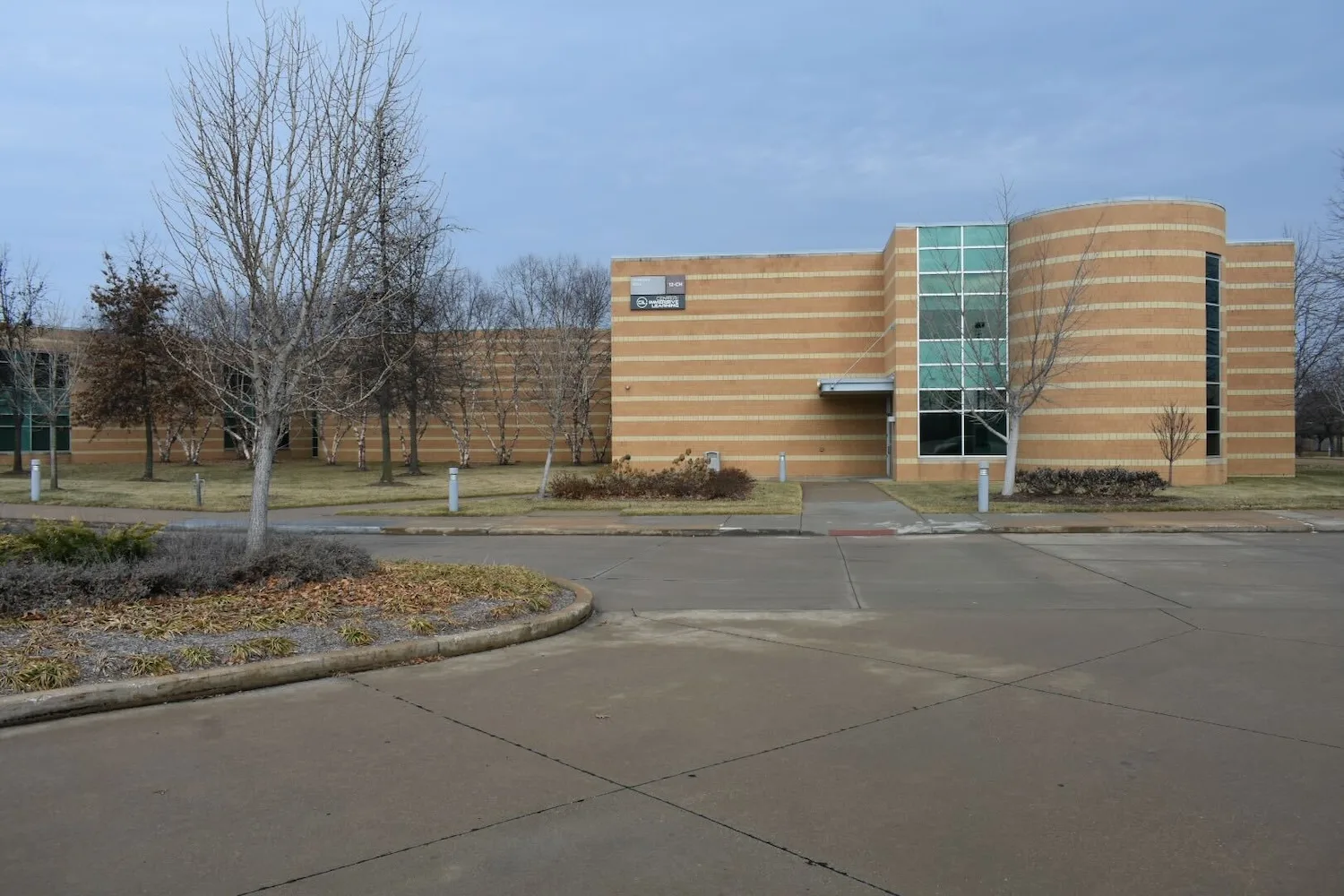
The donation comes as major new initiatives at the college are welcoming students, including the Regional Workforce Innovation Center, which opened in November, allowing training for a number of career paths tied to advanced manufacturing and other fields. Students pursuing an associate’s degree can get cutting-edge workforce training, college leaders say.
A virtual reality program, called Dreamscape Learn, launched at the college in August. That program provides modules to students to learn new concepts virtually. A classroom with multiple VR headsets, and a room equipped with ankle and arm controllers, allows a more immersive experience for virtual learning for subjects including biology, chemistry and history. The college now has around 9,000 students, a 9.5 percent increase from last spring.
When asked about how the school has been able to grow as other higher education institutions grapple with financial challenges, Schneider and Provost Amy Koehler attribute their success to the college’s board of trustees, which emphasizes financial independence from state funding.
“That’s a thing that a lot of higher education institutions don’t do,” Koehler says. (Schneider notes that the college has an endowment of more than $2 million.) “So that, if there are any changes at the state level, or with the new governor, [we can] continue to provide the best equipment.”
Koehler also says she’s seen the college’s impact on people getting good jobs, and higher wages, saying she heard of someone attending it for just one year before quickly making $75,000. That quick pipeline from education to achievement, she says, comes from good stewardship of resources and good community outreach. “When those things come into alignment … it’s a positive for everybody,” she says.