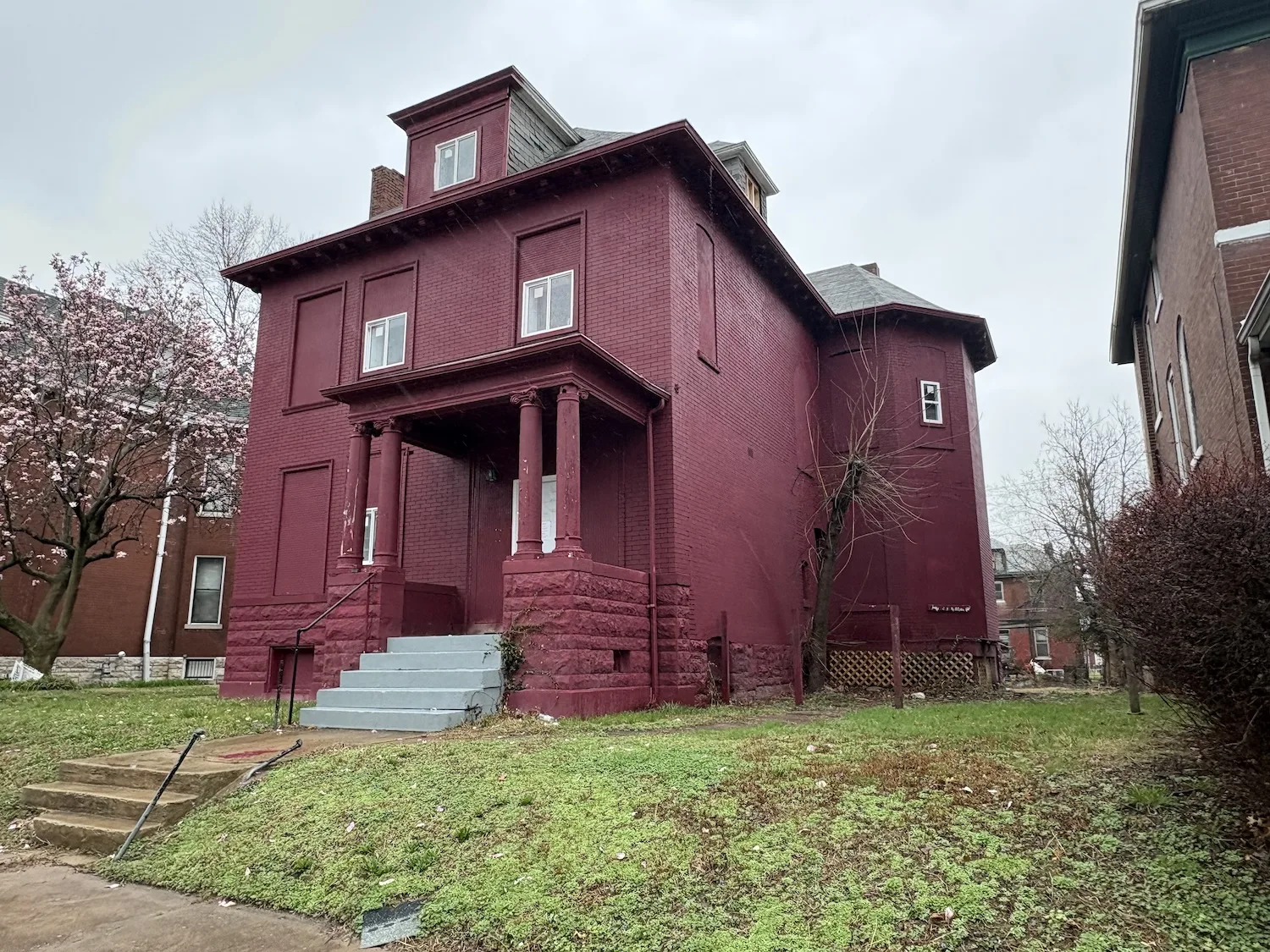
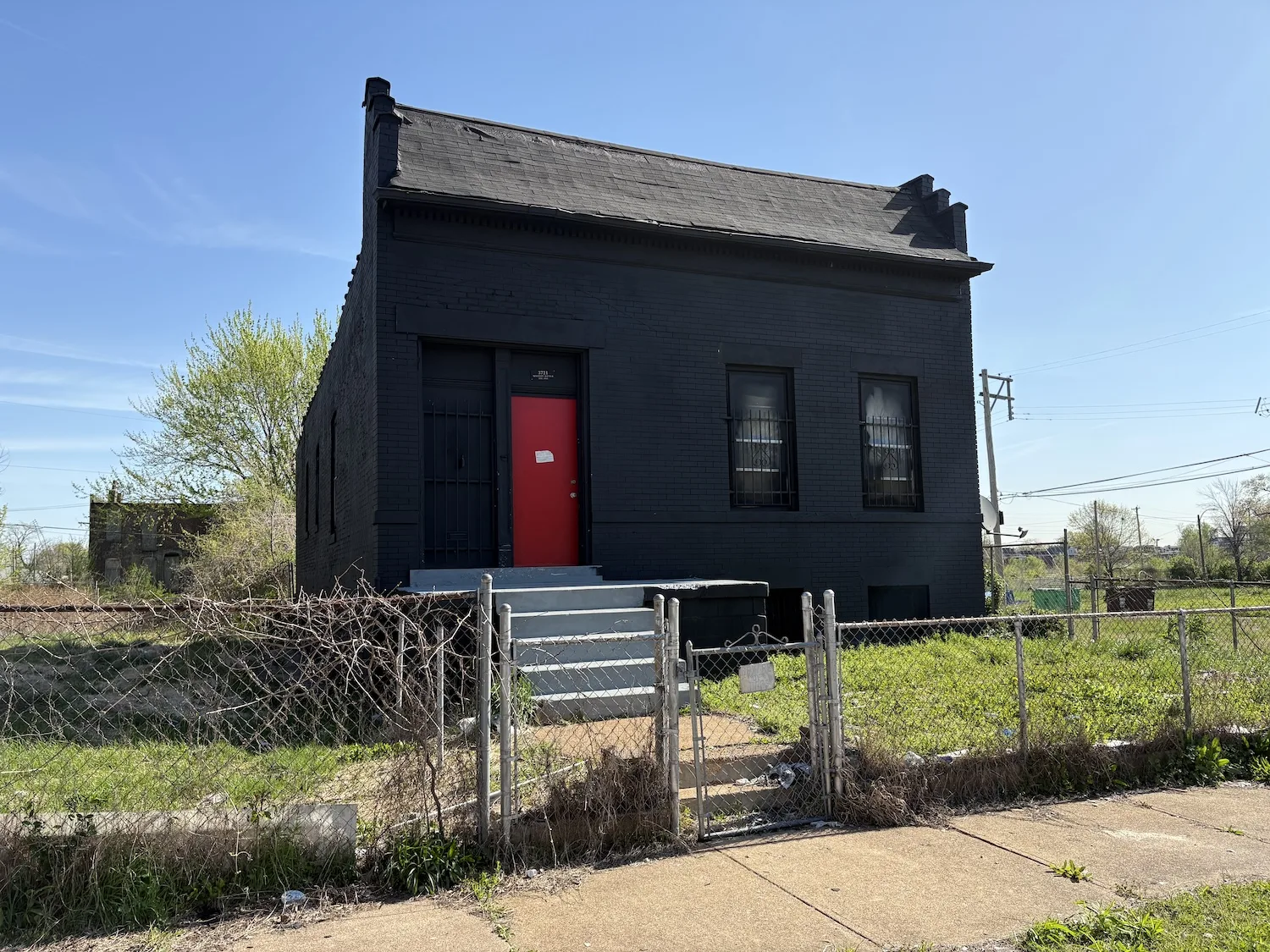
For a while now, St. Louisans have been asking questions about homes belonging to the Kentucky-based rehabbers Lighthouse Estates and Red Door Legacy. What’s up with the painted brick? Why are the windows porthole size? Why are the construction crews working in the dead of night?
Now, the company’s own investors have their own questions. One in particular: What happened to our money?
Get a fresh take on the day’s top news
Subscribe to the St. Louis Daily newsletter for a smart, succinct guide to local news from award-winning journalists Sarah Fenske and Ryan Krull.
Red Door and Lighthouse are both affiliated with Van Laurence Barker, who until recently operated a fix-and-flip business in Indiana, Ohio, Kentucky, Alabama, and Missouri from his home in Fort Knox, Kentucky. He also operated a related entity called Starpoint Holdings that rented out the properties after they had been rehabbed in Red Door and Lighthouse’s distinctive style. That style included houses with what some neighbors call the “murdered out” look of black-painted brick accented by a blood-red door. Other houses are entirely burgundy.
Lighthouse, Red Door, and a handful of other companies affiliated with Barker’s Fort Knox home address have snapped up at least 42 properties in the city, with most of them in North City neighborhoods but with their holdings expanding as far south as Carondelet as well.
“It’s a shame that this entity came in and ruined this house,” says Alderwoman Laura Keys of one home in her ward, a 120-year-old Classical Revival on Dodier Street, which got the burgundy treatment. “And I mean ruined. Aesthetically, it sticks out like a sore thumb. You don’t ever have to paint bricks.”
Now Barker, a 33-year-old retired Army captain, stands accused of running his real estate operation like a Ponzi scheme. He is also currently in federal custody on an unrelated matter.
Investors in Barker’s companies are trying to recoup more than $1.1 million they believed was being invested into fix-and-flip real estate projects like the ones in St. Louis. Those investors say they were sent “misleading or recycled photographs” to suggest rehab work was occurring when it wasn’t. Their lawsuit also alleges that Lighthouse went to lengths to conceal that properties were subject to municipal code violations and demolition orders.
The lawsuit filed in federal court in New York in January claims that the investments were in fact being used to cover Barker’s obligations to previous investors—in other words, that he was operating a Ponzi scheme. The lawsuit claims that Barker’s companies had all the hallmarks of a Ponzi. When reached by phone, an attorney for Lighthouse Estates, after hearing the reason for the call, told SLM, “Yeah, yeah, yeah. Let me call you right back.” The return call never came.
The investors say they were led to believe they were putting their money into “short-term, secured real estate rehabilitation and bridge loans”—essentially providing the capital for Lighthouse to fix and flip the houses, with that capital plus interest then flowing back to the investors. “We want to flip your money as many times as possible in a year,” was how Lighthouse’s marketing arm put it in a September 2025 email to investors included in court filings.
Around that same time, in fall 2025, Lighthouse began missing payments to those very investors.
By then, Lighthouse was “already insolvent or functionally insolvent,” the suit says, yet they pitched their same investors—and even encouraged those investors to tap into their own networks—on a new opportunity, a “secure, high yield banking opportunity” essentially depositing money in an entity called People’s Bank. People’s Bank, so the pitch went, was wanting to grow their deposits and their network. Anyone who deposited money in People’s Bank accounts could rest assured the money was not being used in deals, would remain liquid, and would also return 10 percent interest annually.
The lawsuit alleges that money invested in People’s Bank was instead just used to pay out previous investors to Lighthouse.
Then, in December, Barker found himself under federal indictment for reasons having nothing to do with real estate. On December 17, he was arrested by federal agents at his Fort Knox home as part of the FBI’s “Operation Relentless Justice,” an operation to apprehend child sex predators. Barker is currently facing a charge of attempted online enticement of a minor as well as distribution of child pornography—material he is accused of having sent to an undercover federal agent. A phone call and email to Barker’s defense attorneys did not receive a reply.
Perhaps not coincidentally, the Lighthouse social media accounts went dark the following month. The investors began connecting on Facebook and comparing notes, the lawsuit says, as individuals found out they were not alone in having been left in the dark by Lighthouse and its affiliates
Court filings include worried text messages from investors, like this one sent on January 2: “Hello I have not received any response to my concerns. I have almost $500 k out. I would really appreciate an update on what exactly is going on?”
Investors did receive a written statement from one of the Lighthouse principals. The four paragraph statement is laden with real estate and financial jargon, but the lawsuit says that it is tantamount to a “stunning” admission that Lighthouse operated atop a “Ponzi-like chassis.” The statement, in describing Lighthouse’s business model and where it went awry, notes, “That system only works when inflows remain uninterrupted … Once inflows slowed and leadership disruption occurred, the model became unsustainable.”
Barker remains in pre-trial custody for his criminal case. The parties in the civil lawsuit are not due back in court until May. But in the meantime, their attorney, Tim Alamgir, is asking for the judge to issue a temporary restraining order, freezing the companies’ assets, including their real estate holdings.
If the judge were to issue a TRO, it would be something of a mixed bag locally—a loss for Lighthouse in court but also a virtual guarantee the 40 or so St. Louis properties will remain sitting idle and ugly under the company’s ownership for the time being.
So while this might be a two steps forward, one step back situation, Keys says she’s glad to see Lighthouse and Red Door finally being held to account.
“I love it. I love it. I am ready to see them go,” she says. “Good riddance to bad rubbish. That’s my desire: they simply go away.”
Hear more about this story from Ryan Krull on The 314 Podcast.