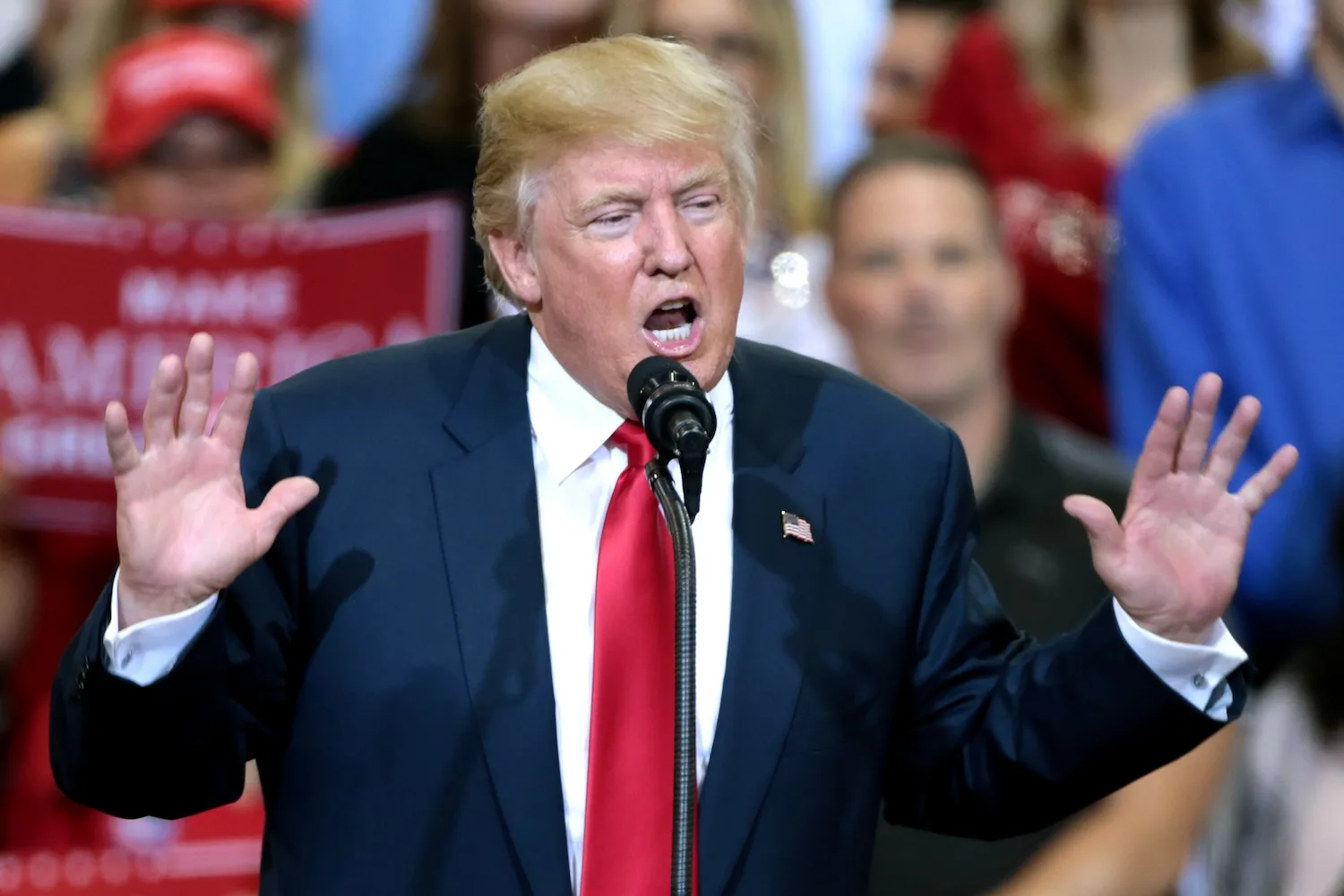
To see why Trump Accounts show potential as a wealth-building tool for low-and-middle-income St. Louisans, you needn’t accept anything that President Donald Trump himself says about it—though he does say things. “The Trump Account will be remembered as one of the most transformative policy innovations of all time,” he boasted at a launch summit on January 28, before inviting Nicki Minaj up on stage and listing the many companies that are donating to the effort: Dell, JP Morgan Chase, Intel, Nvidia. “Even, really, people that truly hate me are making this investment.”
Trump Accounts, when opened by parents of babies born from 2025 through 2028, will automatically be seeded with an initial deposit of $1,000 from the U.S. Treasury. The funds must be invested in a broad-based index fund, such as the S&P 500, and no withdrawals are allowed before a child turns 18. During that time, the parents, parents’ employers, family, friends, states, and charities can all contribute, with varying limits and tax rules applied.
Stay informed on the area’s civic issues
Subscribe to the St. Louis Solutions newsletter to learn about public problems and possible fixes.
Since being folded into the One Big Beautiful Bill Act last summer at the eleventh hour, Trump Accounts have even won an implicit endorsement from Sen. Cory Booker (D-New Jersey) and private praise from other Democrats. Ray Boshara, a policy advisor at the Center for Social Development at WashU, helped shape the legislation on Capitol Hill. He says that while some left-of-center folks crinkle their noses at the label, many also see Trump Accounts as a useful starting point. Certain blue states are quietly considering how to make the accounts more inclusive. Boshara says that when he spoke recently to a Democratic state treasurer’s office, “They were like, ‘We’re not going to deny a thousand bucks to our newborns because we don’t like the name.’” The red states of Texas and Oklahoma, meanwhile, have pledged to match the government’s initial deposit.
A central argument for why all this matters was laid out on The Hill last month in a piece by Boshara, who also has a role at the Aspen Institute and worked at the Federal Reserve Bank of St. Louis for 11 years: The less-wealthy half of Americans hold only 1 percent of all stocks and mutual funds and 2.5 percent of total national wealth. Trump Accounts, he wrote, hold “enormous promise” to change that—provided they undergo a design change that may sound minor but actually has huge consequences.
The idea behind Trump Accounts, Boshara says, goes back several decades to the 1991 book Assets and the Poor, by Michael Sherraden, the founding director of WashU’s Center for Social Development. “He’s really the father of this,” Boshara says. Sherraden proposed, among other things, setting up a wealth-building tool for children at birth; it would be universal in scope but would end up helping low-income children the most. This concept eventually became known as children’s savings accounts.
By the 2000s, some states had begun to set these up by using the pre-existing platform of “529” accounts. Those were named after a federal law that offered tax benefits to parents who saved for their children’s post-secondary education. Sherraden and some colleagues used the 529 platform in Oklahoma to run a large experiment called SEED OK. They randomly selected a treatment group of 1,358 parent-child pairs and a control group of about the same size. The default setting for the control group was that parents would have to opt in to an account; everyone in the treatment group, by contrast, would have to opt out—i.e., they were automatically enrolled. After 17 years, 100 percent of the treatment pairs had an account, whereas only 5 percent of the control pairs did. (The power of the opt-out default setting—a textbook example of “nudge” policy—also became clear in the rollout of an asset-building tool in Maine.)
Boshara says that he and others successfully pushed for the inclusion of language in the One Big Beautiful Bill to grant the Treasury Department the authority to enroll babies in Trump Accounts automatically. So far, however, Treasury has not exercised that authority. Parents must opt in via their tax forms or Trumpaccounts.gov. Boshara does not believe that officials at Treasury oppose automatic enrollment, but rather, that it’s “just too much of a lift too soon. The money is there. The authority is there. It’s just the will to do it.”
Another thing that SEED OK demonstrated, according to WashU professor Jin Huang, is what happens when the government gets the ball rolling for savers: Parent-child pairs were given not only an initial $1,000 deposit, but also savings matches and an incentive to open a separate account with the same child as the beneficiary. All of that combined with the investment gains from a mix of stocks, bonds, and capital preservation funds brought the average balance of each SEED OK account, after 17 years, to about $5,000. “Our model here clearly shows: Yes, that’s feasible,” says Huang. “That’s possible. It can be sustained. It can be effective.” Trump Accounts, which also allow for various revenue flows, show “potential,” says Huang.
That potential would be even greater if they showed the kinds of non-monetary benefits that the SEED OK accounts show. Some SEED OK participants have already used the funds for college, according to interviews gathered and emailed to SLM from the office of Oklahoma State Treasurer Todd Russ. For example, Kylee, now a student at Southwestern Christian University, said, “Knowing the money was there gave me extra confidence [to attend college] because I knew I would have additional funds available if my scholarships did not fully cover the cost.” Syniah, now at Langston University, began to intuit the power of compound interest: “The more you invest, the better, because the funds grow over time and can make a big difference for a student.” Syniah’s mother, Candace, said that mere existence of the account “motivated us to make sure she stayed eligible and earned good grades.”
As for Trump Accounts, Sen. Ted Cruz (R-Texas) said at the launch summit last week that they could grow to $170,000 by the time a child turns 18. His math assumes not only a continuation of the S&P 500’s historic performance of 7 percent after inflation, but also annual contributions of $5,000, which is currently the maximum allowed from parents, families, and friends. For many families, contributing even half that much would be unrealistic—especially since, as Rep. Jason Smith (R-Salem) pointed out at the same event, 40 percent of Americans cannot afford a $400 emergency. (See also the St. Louis Treasurer’s College Kids program, in which every public school kid in the city was automatically given a savings account seeded with $50 , but seven years after its launch, only 15 percent of accounts had risen above that level.)
True, some companies have already made a Trump Account match part of their employee benefits packages. And philanthropists are kicking in, too: Susan and Michael Dell, for example, have pledged $250 for 25 million children living in ZIP codes where median income is less than $150,000. Yet the extent to which low-income families would ever see yearly and sustainable $5,000 contributions into their kids’ accounts remains wholly unclear.
Even if left untouched, though, Trump Accounts would yield about $8,000 after 20 years, according to a paper by the Milken Institute. And with that, Boshara believes, Trump Accounts could show a whole new class of citizens what investing in the stock market can do for them. It would just depend on a switch to automatic enrollment. Says Boshara: “I think there’s genuine bipartisan interest in saying: We’ve actually worked together on this idea over many years, and now that it’s in law, let’s work together to make them better.”