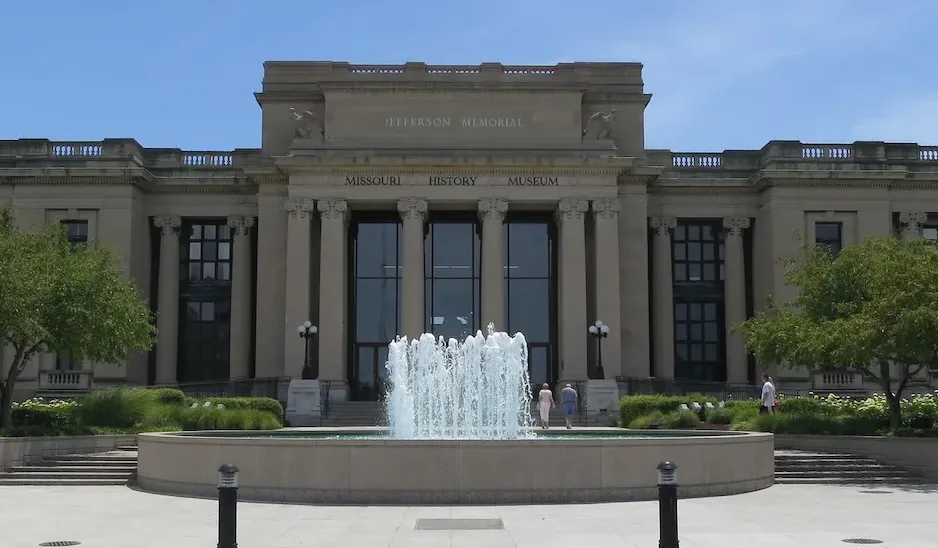
In February, the Missouri Historical Society unveiled its “We are St. Louis” campaign, a $36 million initiative aimed not only at funding its future plans, but also a much bigger goal: Helping St. Louisans better understand St. Louis—and, by so doing, help them believe and invest in this place.
Now the historical society is doubling down on the idea that the campaign isn’t just about itself. Today, it’s launching a new phase soliciting involvement that has nothing to do with its own fundraising goals. Called “I am St. Louis,” it encourages people to see themselves as part of the St. Louis story. Expect to see everyone from Schnucks to the Saint Louis Zoo to Rawlings sharing their own version on social media. The historical society has also made available a series of assets for anyone wanting to learn more or add their story.
Get a fresh take on the day’s top news
Subscribe to the St. Louis Daily newsletter for a smart, succinct guide to local news from award-winning journalists Sarah Fenske and Ryan Krull.
For Jody Sowell, the Missouri Historical Society’s president and CEO, today’s launch has its origins in a speech he’s been giving around the metro long before the February fundraising campaign. It was called “I am St. Louis, and I don’t believe we’ve met.”
“It told stories that people didn’t know, stories of inspirational moments in St. Louis history, stories of the giants whose shoulders we stand on, but who have largely been lost to time,” Sowell recalls. “And I have been speaking for the Missouri Historical Society for 19 years, so I know it’s not the speaker—but I have never seen a presentation go over the way that this one did. People would come up in tears. People would say, ‘I’ve never been prouder of St. Louis than after hearing this.’ And I think it just showed how hungry people are for these stories, how much they really yearn for a sense of pride in St. Louis.”
Indeed, Sowell would often hear from people suggesting wider implementation. “People would say, ‘This should be the region’s campaign. This should be St. Louis’ campaign.’ We weren’t really ready at the time to launch that effort, but we always had in the back of our minds, ‘Hey, there’s really something here.’”
And so in addition to encouraging other entities around town to share their stories, the historical society has also created a video that tells St. Louis’ story without linking it so explicitly to its own work. You can get a pop-up version of the “I am St. Louis” exhibit for your office or even book a one-hour or 30-minute version of the speech that started it all for your group—potentially even customizable.
Says Sowell, “If you want this at your staff meeting, or if you have people coming in and you want to show off the history of St. Louis, we’re happy to help you do that. We’re even happy to then put in a little bit of your own history as part of that ‘I am St. Louis’ presentation.”
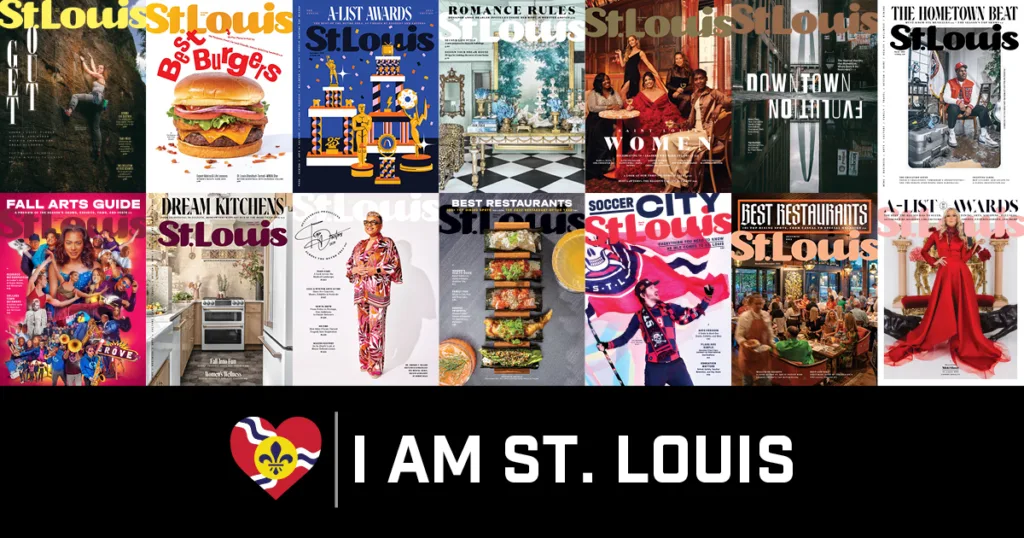
At this point, 38 different organizations around town have signed on to share their “I am St. Louis” story. Among the participants are St. Louis Magazine, whose story reads as follows:
I Am St. Louis
- I’ve been telling the city’s stories since construction began on the Gateway Arch.
- I connect St. Louisans with the region’s best and each other—online, in your inbox, in print, and in person.
- I am the company that shines a light on who deserves an A.
- I deliver award-winning journalism—daily, weekly, and monthly.
- I am locally owned and locally loved.
- I am St. Louis Magazine.
- I am St. Louis.
Sowell hopes many more will join in the weeks to come, acknowledging that the entities participating on this launch date are partners the historical society was already in contact with or people he just happened to be talking to in the past few months. He’s hopeful many more will see that joining in is a way to work for a better St. Louis.
“I am a true believer when it comes to the importance of place attachment, that emotional bond people feel toward a place,” he says. “And all the research has shown that the places with the highest place attachment also had the highest local GDP. They have fewer people leave them. They even survive natural disasters at higher rates. This work just couldn’t be more important.”
He understands that the fact that his organization is now setting out to do this work is a little unusual—but he likes that part, too.
“It really is sort of a grassroots civic pride campaign,” he says. “It doesn’t come from an advertising agency. It doesn’t come from someone outside of St. Louis. You know, we take pride in our role as being the protector and the sharer of the St. Louis story since 1866, so there’s certainly a reason why we might be the group that would do this. That said, have I ever heard of a historical society launching a region-wide civic identity campaign? I have not.”