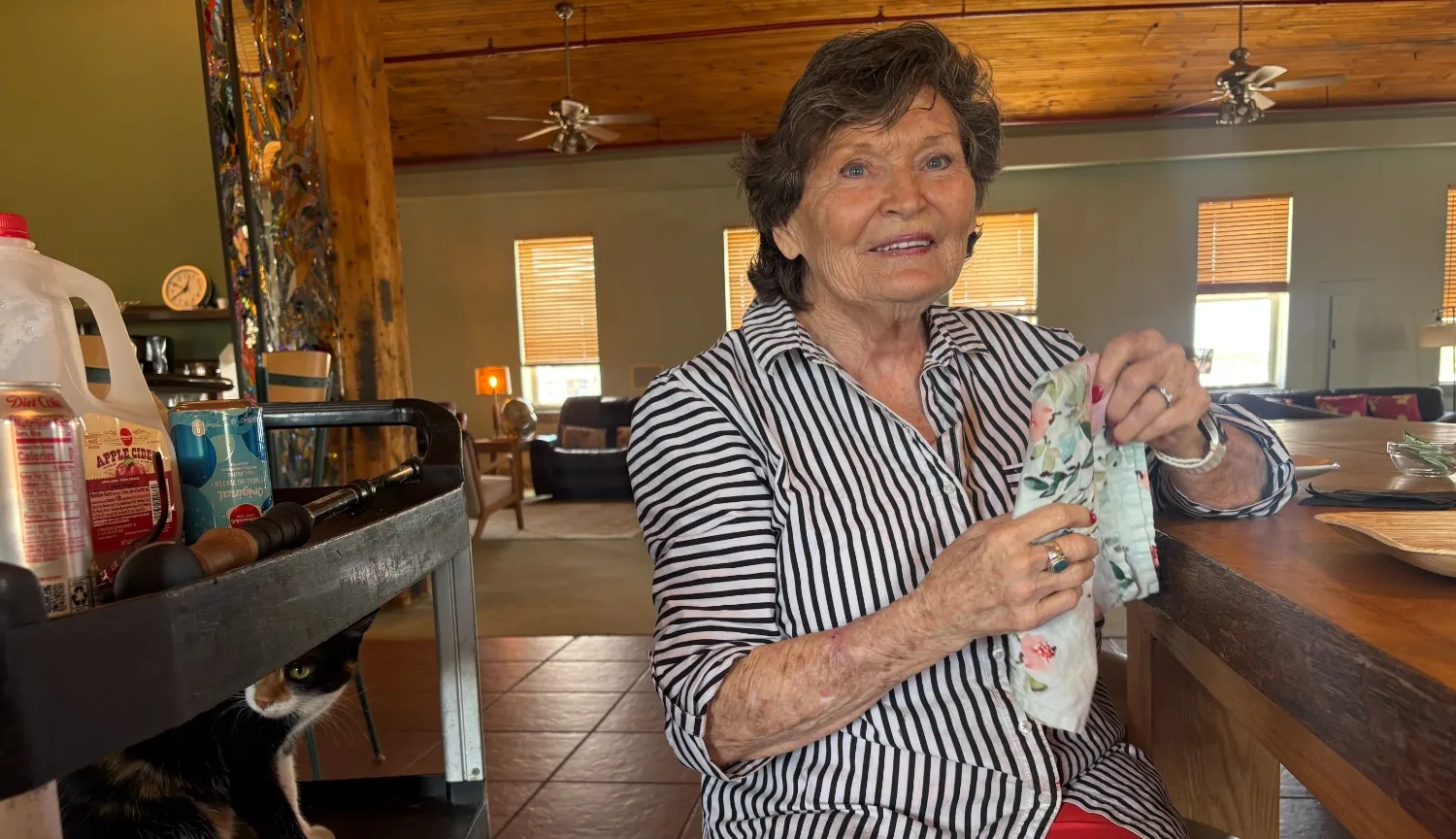
St. Louis’ Kosciusko neighborhood is about to see a notable drop in its residential population—from 52 to 50. Joan and Wayne Long, who’ve lived in the industrial neighborhood east of Soulard since 2000, can no longer feasibly live in the old industrial building whose top floor they’ve long called home.
The couple’s exodus, prompted by them getting older and Wayne’s diagnosis with Parkinson’s disease, also puts around 100 shelter beds in jeopardy. For the past three winters, the couple has opened the lower showroom portion of their building up to people in need of emergency winter shelter.
Get a fresh take on the day’s top news
Subscribe to the St. Louis Daily newsletter for a smart, succinct guide to local news from award-winning journalists Sarah Fenske and Ryan Krull.
The building, which has ties to the A.E. Schmidt billiards empire dating back to the 19th century, has two wings: a larger, three-story red-brick structure to the east and an adjacent, one-story structure to the west. The couple ran a catering and banquet company out of the one-story building for a long time, using the former pool showroom as a banquet hall and living in the upper floor of the eadjoining space. Joan tells SLM that it’s been mostly uneventful when the lower wing of the massive complex they call home fills up with those needing emergency shelter. “Living here, we had no problems,” she says.
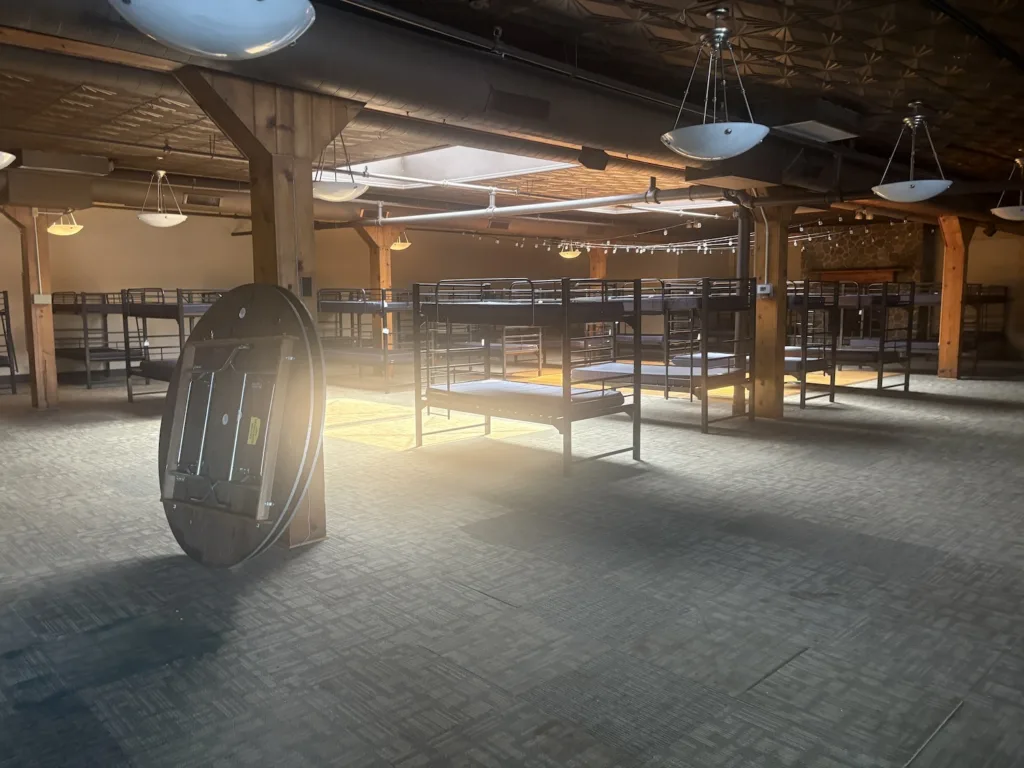
Now they’re planning to move into a smaller apartment downtown at the end of May or in early June. They would like to see the building, which already has an occupancy permit to operate as a shelter, continue as one after they leave.
Joan says they need $2.1 million to offload the building, and unless funding appears soon, the pair feels they have no choice but to sell to a developer or private firm, effectively killing one of the largest emergency shelters in the city. When asked how long she could hold out before they need to sell, Joan quips that she needed the money “about three years ago.” Joan says she’s already tapped a Realtor to look into the sale of the property.
“We could sell it to a developer or somebody who could make apartments—and we may wind up doing that—but I really think it’s perfect for this use,” Joan says.
That’s prompted one prominent shelter provider to try to put pressure on the city to get public funds to keep the space for a crucial public service.
Peter and Paul Community Services CEO Anthony D’Agostino—who’s become a friend to the Longs over the past three winters as they’ve worked together to use the couple’s home as a shelter—says they’ve sought for years to get public funds to keep the shelter operating, but D’Agostino feels like they’ve been strung along by City Hall in discussions to acquire the building.
“If we knew three years ago what I know now, I would have created a capital campaign three years ago, and now we would have a couple million dollars, and we would have a different conversation,” D’Agostino says.
Peter and Paul has seen some philanthropic interest, he adds, but an unnamed donor wanted a five-year payment plan, while the couple needs a lump sum. The donor was also looking for “buy-in” from the city. “They need cash in hand,” D’Agostino says of Joan and Wayne. “They don’t want to wait five years. Private funding is really difficult to get in a short period of time like this, too.”
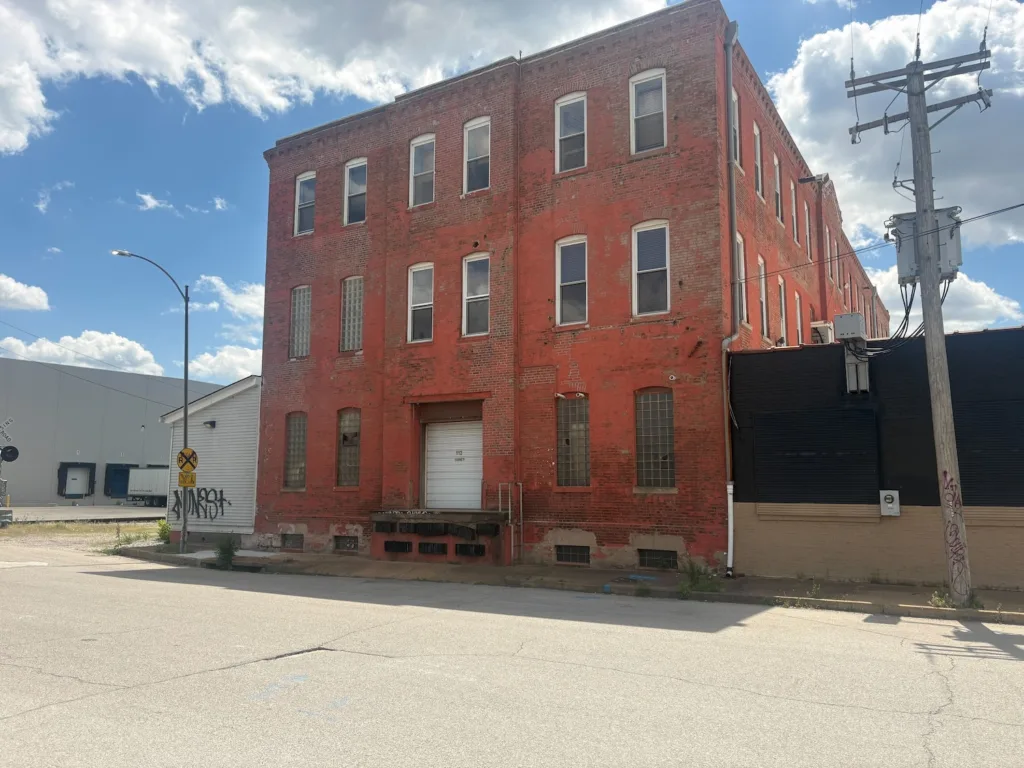
D’Agostino suggests a number of options to keep the building running as a shelter, not all of them necessarily involving Peter and Paul. He thinks that if the city put out a request for bids to pay an organization to secure and run the building, that entity (which he would prefer to be Peter and Paul) could foot the bill to continually operate the 53,000-square-foot facility. Joan and Wayne’s residence, as well as another floor below it, could become a short-term rental, transitional housing, or some other use. He also suggests a potential joint venture between the city and a shelter, where a nonprofit runs a building that the city itself owns.
He sees a potential acquisition of the property with the help of some kind of city money, like Rams funds or ARPA dollars, as an easy win for the city. As he tells it, city officials and shelter providers scramble in the lead-up to every winter to secure shelter space. But this space could stay online permanently, at a one-time cost to the city, and could also make room for growing, longer-term services.
The city does not seem likely to endorse D’Agostino’s asks. On Thursday, Mayor Cara Spencer said the Longs had been “incredibly generous in lending that space, which is their home, to serve as shelter during the most dangerous winter nights.”
“The city is not, right now, looking to run that shelter,” Spencer added, when asked about a potential request for proposals to use city funds to keep Sidney Street online. She also touted the $2 million the city put into its budget proposal for this year, currently making its way through the Board of Aldermen for approval, to fund its Code Blue emergency winter services. She said that allocation to unhoused services is a first for the city. Spencer also said that many of the region’s unhoused are from St. Louis County, and other nearby governments “fail to invest funds” to serve those people.
The city plans to issue a request for proposals to operate Code Blue shelters for the upcoming winter, a human services spokesperson tells SLM. That would pay organizations to procure multiple leases for shelter, versus a single entity buying a single building, spreading the funds across the entire provider network. While Peter and Paul could apply for some portion of those funds to acquire the building, a spokesperson said, the department doesn’t have the “mechanism” to help with the acquisition.
Why It Matters: Some services providers and city leaders lauded the Code Blue initiative. Leaders boasted over 20,000 bed nights, which D’Agostino previously said was a new record, and said they helped 1,000 unique people over many cold winter nights.
But the potential closure of the emergency shelter on Sidney Street would compound mounting losses in the number of emergency beds available. D’Agostino says a similarly sized space entrusted to Peter and Paul for winter emergency shelter, at 3205 S. Kingshighway Boulevard, will also not be available this coming season. If Sidney Street and the Kingshighway shelter both go away, that will essentially halve the bed space Peter and Paul has on offer. It activates annually around 130 in its own spaces and another 300 that are “partner-dependent,” sending them scrambling to find spaces every winter.
What’s Next: “There is no real backup plan,” D’Agostino says of the potential for both of the nonprofit’s largest emergency spaces to be offline this winter. “I guess what we would do is, as quickly as possible, just start calling places and seeing if there’s anyone who would partner with us.”