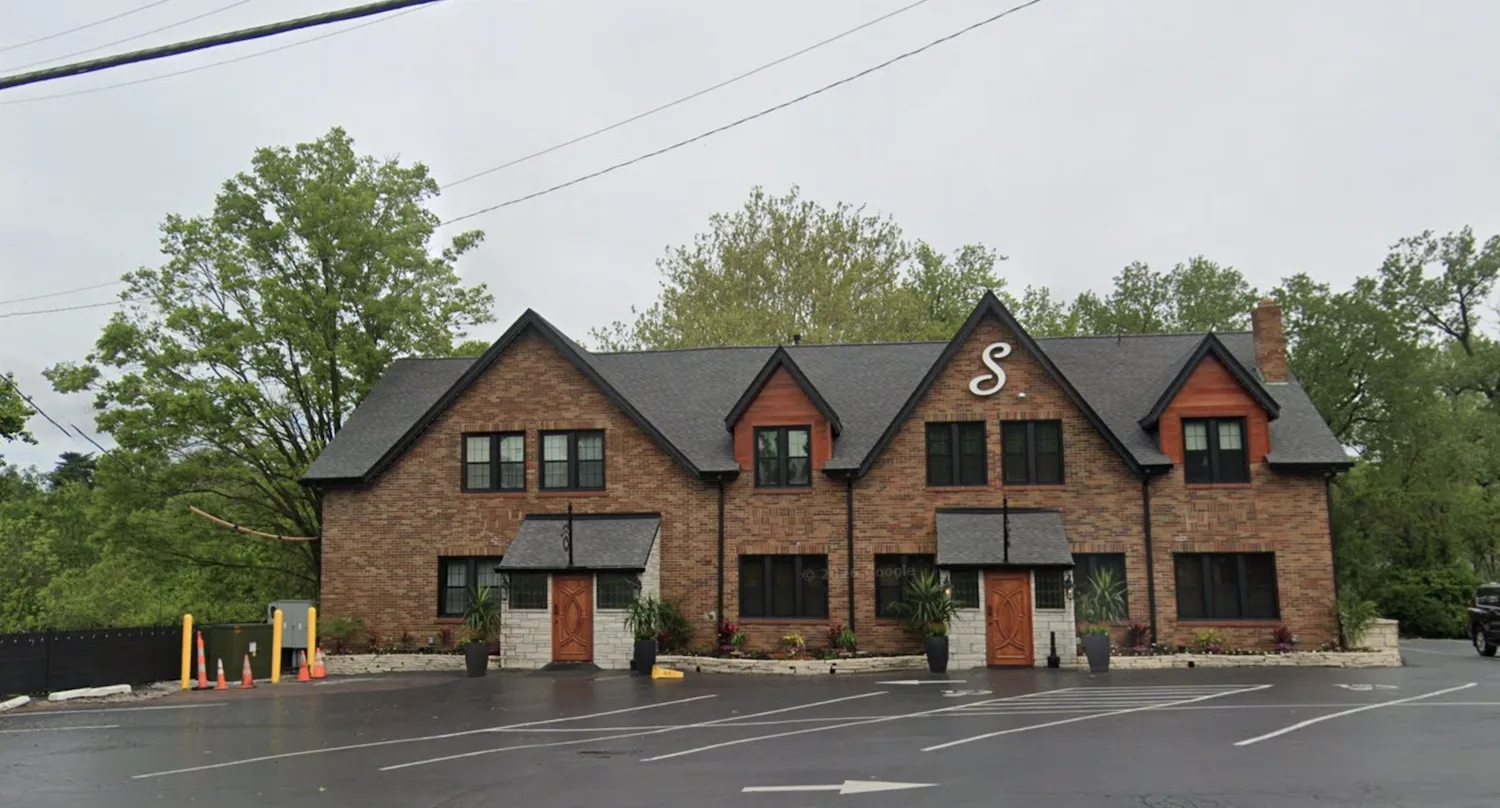
Matthew Braasch was sentenced to 21 months in prison Tuesday for embezzling from Sam’s Steakhouse. The former bookkeeper was stoic in a short-sleeved, plaid button-down shirt as U.S. District Judge Rodney Sippel handed down the sentence, which also includes three years of supervised release after Braasch does his time.
Arguably the biggest intrigue in the sentencing hearing came from a person who was not present. That’s Braasch’s co-defendant, the restaurant’s former general manager Mark Erney, who hired Braasch for the job and whom the prosecutors allege helped Braasch embezzle $1.4 million.
Get a fresh take on the day’s top news
Subscribe to the St. Louis Daily newsletter for a smart, succinct guide to local news from award-winning journalists Sarah Fenske and Ryan Krull.
Unlike Braasch, Erney has a criminal record. In April 2014, he was given five years’ probation and ordered to repay $45,000 after pleading guilty to stealing from the business partners with whom he co-owned a Hamburger Mary’s franchise location in Midtown. His former partners say he still hasn’t paid back what he owes them.
Yet despite that history, earlier this summer, Erney was allowed to join a diversion program aimed at dismissing the more recent embezzlement charges, as SLM previously reported. If he completes the terms of that deal, he will be able to avoid a criminal conviction in the Sam’s Steakhouse case.
And in court Tuesday, Judge Sippel referenced one part of that deal that drew a quiet gasp from one of Braasch’s supporters in the first row: Erney’s deal required him to pay just $10,000 in restitution, while Braasch was on the hook for the full $1.4 million. That’s even though, according to filings by prosecutors, Erney personally benefited from about $400,000 in embezzled funds, allegedly spending $155,000 at Amazon, almost $30,000 at Rehab Bar and Grill, and nearly $8,000 at Just John, both LGBTQ bars in the Grove.
Sippel then seemingly threw a curveball. In court, he noted Erney’s responsibility for the $400,000 in embezzled funds. “Why shouldn’t I order the restitution to be joint?” he asked, seemingly suggesting that Erney should bear some responsibility for the portion of stolen funds. Ultimately, however, the judge’s written order holds Erney responsible for $10,000 in debt to pay off jointly with Braasch, while Braasch himself is responsible for the remaining $1.4 million.
The assistant U.S. attorney prosecuting both Braasch and Erney, Derek Wiseman, declined comment. Erney’s lawyer, Marc Johnson, did not immediately respond to a message seeking comment.
In the hours after the hearing, several observers believed that Sippel had ordered Erney to be on the hook for joint restitution of a much larger sum. Patrick Long, the owner of Sam’s Steakhouse, says he was told by prosecutors that Erney would be jointly responsible for the entire $1.4 million restitution. He expressed surprise and great joy. “I am just so thankful that the judge did something that I did not expect him to do,” he said.
Reached later that day with news that Erney was not, in fact, on the hook for more than $10,000, Long seemed philosophical. “They weren’t going to pay it anyway,” he said. “The deal got exposed whether he likes it or not. It was an unfair deal.” Of Braasch and Erney, he added, “I just think both of them ought to be in jail, but that’s not going to happen. And at least this shows Erney’s true colors.”
Through his lawyer, Braasch also declined to comment. In brief remarks to the court before the sentence was handed down, and the restitution terms changed, Braasch did not reference Erney. His lawyer, however, did.
In a motion to Judge Sippel before the hearing, Braasch’s public defender, Abraham Copi, referenced the seeming disparity between the two co-defendants. He noted that prosecutors pushed for a sentence of at least 21 months, saying that would “send a critically important message to the wider community: that fraud crimes are taken seriously.” Wrote Copi, “However, any such message will surely be undercut by the government’s decision to allow the codefendant—who allegedly stole close to $400,000 and attempted to conceal the fraud—to participate in a pretrial diversion program. Under that agreement, not only will the codefendant not receive a guideline sentence, but he also won’t receive a sentence at all. … Such leniency is difficult to reconcile with the purported need to provide general deterrence.”
In court Tuesday, Copi stressed that he was not accusing prosecutors of acting in bad faith. He also said he was not seeking to minimize his client’s actions. However, he said, “I do have concerns about the co-defendant receiving the agreement that he did.”
Wiseman, however, argued that the vastly different treatments came down to “the facts and the evidence.” Braasch, he said, “was the gatekeeper of all the funds. Not a single dollar gets stolen without this defendant’s actions.”
He added, “Another thing that really separates him from his co-defendant: We’ve got years and years of outright lies, acts of deception and identity theft.” He said Braasch had taken out loans while pretending to be the restaurants’ owners in order to conceal the embezzlement. “The motivation I think is clear,” said Wiseman. “This defendant did this based on greed.”
In sentencing Braasch to prison, Sippel stressed the seriousness of the embezzlement Braasch had pleaded guilty to and the need for deterrence, “both individually and globally.”
As for Braasch, he told the court that he’s taken a job as a medical courier and is working extra shifts to try to pay down his restitution—something that will now have to go on pause while he serves his time in prison. “I know paying back restitution is going to be hard, but I’ll do that I can to pay back what is owed,” he told the judge. His sentence requires him to pay at least $350 each month until the debt is extinguished, which at that rate would take roughly 338 years.
Editor’s note: A previous version of this story indicated that Mark Erney would be on the hook for full restitution alongside Braasch, as multiple witnesses to the hearing believed to be the case and informed the victim after the hearing was over. However, we updated our story after the judge’s written order became public, as it alters that understanding in a significant way.