Little brains need food. Research suggests that nourished kiddos do better in school. One study from 2019 even found that exposure to food-stamp benefits increased the lifetime earnings of needy kids by up to 7 percent on average. So it matters when parents are having trouble stocking their fridges and cabinets—and in the St. Louis region, according to nonprofits and pantries, this has been happening since the pandemic, and there are signs it’s getting worse.
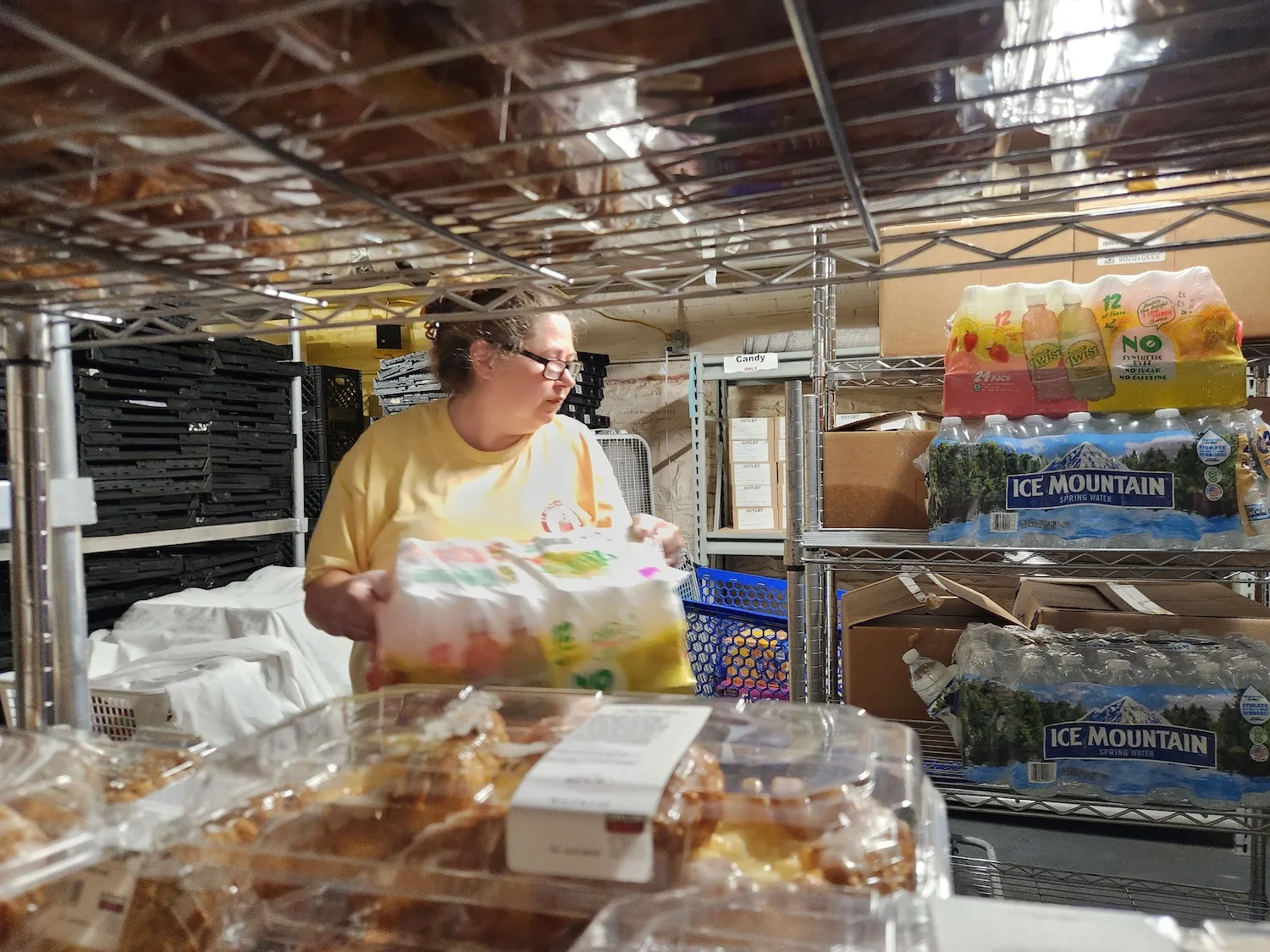
“Every year since COVID we’ve broken a record, and this year we’re going to break it again,” says Rob Telthorst, director of St. Anthony’s Food Pantry in Dutchtown. On a recent afternoon, he pauses in the corner of a basement pantry that’s crowded with volunteers helping guests fill carts with canned goods, pasta, frozen chicken, milk, and bread.
Get a fresh take on the day’s top news
Subscribe to the St. Louis Daily newsletter for a smart, succinct guide to local news from award-winning journalists Sarah Fenske and Ryan Krull.
Telthorst says that his facility served 32,000 guests in 2024, then 46,000 in 2025. That leap, he says, was in large part due to the federal government shutdown last fall. Still, he says, even this year, his pantry is on track to serve 48,000. He speculates, based on what guests have been telling him, that another factor is Missouri’s new work requirements for SNAP benefits (the new term for food stamps). That change went into effect last November. Says Telthorst: “We’ll ask them, ‘How’s it going? What’s going on?’ People will tell you: ‘Got knocked off food stamps.’”
System-wide, the larger nonprofits that organize and distribute large-scale food donations say that they, too, are seeing increases in demand. Operation Food Search, for example, runs MetroMarket—mobile farmers markets that sell produce and dry goods at a discount in neighborhoods with food scarcity. According to the nonprofit’s president and CEO, Kristen Wild, the number of shoppers showing up at MetroMarkets has risen nearly threefold, from 4,536 in the first half of 2025 to 13,982 in the first half of this year. (Wild cautions that it’s not entirely an apples-to-apples comparison because the program shifts from time to time.)
Meanwhile, St. Louis Area Foodbank, another large distributor and direct service provider, has clocked a 6 to 10 percent increase in neighbors served every month in 2026, says spokesperson Ericka Kinkead. She says that in a span of just two months this year, freight costs went up 10.9 percent. Milk alone has gone up 20.3 percent since 2024, Kinkead points out, and most of that rise occurred this year. “If we’re seeing this—and we’re buying in bulk—then we know our neighbors are absolutely feeling that at the grocery store,” she says.
To the extent young kids are feeling it, they may well be disadvantaged by it, too, over time. In the 2019 study mentioned above, researchers exploited the fact that from 1961 to 1975, counties across the U.S. implemented food stamps in a staggered fashion. Using massive datasets spanning decades, the authors calculated that children who in the first six years of their life had parents receiving food stamps would then, in comparison to similarly situated kids without the benefits, enjoy a 7.1 percent bump in adulthood earnings—and also show less likelihood of using public programs as adults. The relevance to economic mobility, though, is not so much how a child gets nutrition; it’s that they get it at all. That seems to be what elevates their prospects.
Back at St. Anthony’s basement pantry, the morning crowd is thinning out, but volunteer Mickey Howell is making sure the bread shelf just outside the entrance is stocked. Asked what kind of people come through, he says, “We get the full range.” People who live on their bicycles. People who need things to care for their dogs. Even people in nice cars. “It always used to surprise me,” he says. “But they might’ve lost their job 30 days ago, 90 days ago. Jobs are disappearing. I mean, this is just the way it is.” He looks over at a woman who has stepped out into the heat with a cart full of groceries. “Do you need some bread?” Howell asks her. “Oh, thank you,” she says. Down by her side, a little girl is hop-dancing. She’s wearing a new backpack she’d gotten inside. It’s filled with free school supplies.