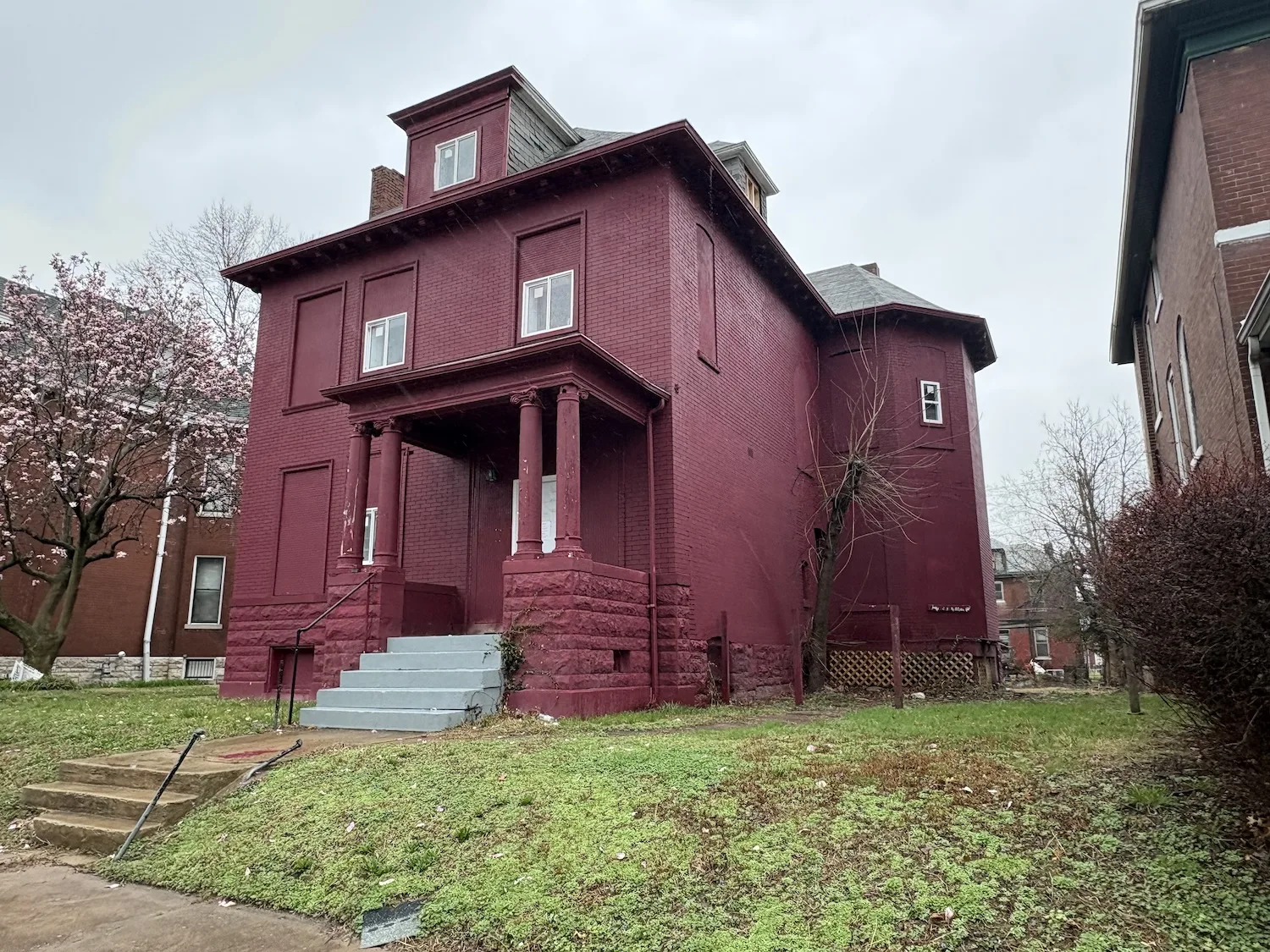
Eight months after the May 16 tornado, St. Louis officials are considering condemnation to address deteriorating, derelict properties whose owners have shown no interest in getting help for them. A Feb. 14 deadline is approaching for residents to apply for private property assistance, yet the vast majority of property owners in the tornado’s path have yet to apply. Officials say the deadline, coupled with data gathered from outreach work, will help the city get a better picture of who’s trying to maintain their property and which homes are abandoned and dangerous.
Recovery officials are making a final plea to residents to apply before the deadline. People with St. Louis’ Recovery Office said Tuesday that the city received just over 1,600 private property assistance applications. It has completed work on 31 properties and has 25 under contract. For another 120, they are refining the scope of work; 508 are being assessed now, and the remaining 923 are being processed (some might require further information). Acknowledging that the pace is slower than desired, the city pledged Tuesday to pilot a new home repair program for existing applicants and said it would be “ramping up” home repair and demolition efforts in March.
Get a fresh take on the day’s top news
Subscribe to the St. Louis Daily newsletter for a smart, succinct guide to local news from award-winning journalists Sarah Fenske and Ryan Krull.
When asked if residents would be out of luck if they came to the city after the February deadline, mayor Cara Spencer said, “We’re not trying to punish folks,” adding that the deadline was necessary to activate Federal Emergency Management Agency and state money. “We have to have a work product,” she says.
“It’s a deadline that is designed to activate our community, to get engaged,” she said. “We do have resources; we have city resources to help folks repair their homes. Take advantage of it.”
But, the city also said the overwhelming majority of properties that it has identified in the tornado’s impact area—5,316 of an estimated 6,599—have not made any application for its assistance. Recovery officials urged property owners to apply if there’s any outstanding need before that deadline. After that, unsafe properties that haven’t applied for assistance and have shown no signs of improvement will be condemned, and could be cleaned up by city contractors at the owners’ expense. A presentation on tornado programs made by the city on Tuesday qualified that that would only occur if no owner was located and if no progress had been made to repair it.
“It’s going to be properties that are very much visibly negative for a neighborhood,” said chief recovery officer Julian Nicks. “Even then, it may not be condemnation, maybe we do a review of structural inspection of the property and we say it’s just in code violation so we have it in the system to, kind of, drive abatement. But, it’ll primarily be a targeted strategy for private, negligent, vacant landlords.”
Spencer shared that sentiment, saying, “Some of the folks … that have been absentee property owners for decades, we do need a mechanism to bring them—forcefully sometimes—to the table, and we will be doing that soon.”
Concerns about derelict, deteriorating properties have been a big issue in the City of St. Louis, with strategies to address the problem long predating the May 16 tornado, especially in historically-disinvested, predominantly Black neighborhoods in North City, some of which were hit the hardest by the tornado. Those comments reflect an apparent eagerness on the part of city leadership to address longstanding nuisance properties in the wake of the tornado.
Nicks also said, through city efforts to make contact with residents, they found 303 people living in “uninhabitable” structures that did not want to leave as of December. But Nicks added that the city has dramatically scaled up the number of case workers handling tornado case management to around 40, approximately double earlier counts. Those case workers are continuing to make contact with people who might not want to leave a badly damaged home or might need other help.
Many residents, however, remain unhappy with the city’s efforts.
At a town hall meeting Tuesday, more than a dozen residents voiced frustration with the pace of funds getting to impacted residents from the city, state, and federal government.
One resident criticized Spencer because she felt she hadn’t seen much money going out into the community. She said the city should be paying people directly, rather than soliciting applications.
“If you brought me my money, I can repair my own home, like I have been the whole 20-plus years I’ve been here,” she said. “I don’t need you or anybody else dictating nothing. … It’s been eight months, we waiting for the next storm?”
Those complaints led to a refrain shared by a handful of critics that evening: “Where’s our money?” While many raised specific, local grievances with Spencer and the recovery team, that resident’s emphatic series of comments led to applause and laughter, with later commenters repeating the phrase.
Why It Matters: A number of programs designed to help people affected by the May 16 tornado are starting to come online, but some residents continue to say they’re too little, too late. Eight months after the tornado, major funds for tornado relief from the state have yet to be spent, and residents feel like little has changed.
But the city says it’s actively processing applications; it just needs more people to apply. North City has long suffered from people buying up property and failing to maintain it. The city is now suggesting it’s ready to take action if those people have abandoned their holdings in the face of the tornado’s destruction.
What’s Next: The city projects repair programs to continue and ramp up in the coming months, and conversations on the future of the city’s tornado response are also incoming. Spencer said discussions about the future of the city’s Rams settlement fund money would happen in the coming months, including continued discussions of how much, and where.