On Tuesday, the City of St. Louis filed lawsuits seeking foreclosure on 173 properties with significant taxes. Three-quarters of those properties are owned by the same entity, a name that should come as no surprise: Paul McKee’s Northside Regeneration.
McKee and Northside have had significant holdings in North City since the early to mid-2000s. Despite big promises of redevelopment, McKee’s successes have amounted to little more than a gas station, a three-bed hospital (now closed), and a grocery store (also closed). The firm is generally seen as an albatross weighing down North City development. In September, the city won a ruling in court allowing it to move forward with eminent domain against 89 of Northside’s properties around the new National Geospatial-Intelligence Agency West headquarters.
Get a fresh take on the day’s top news
Subscribe to the St. Louis Daily newsletter for a smart, succinct guide to local news from award-winning journalists Sarah Fenske and Ryan Krull.
But the newly filed lawsuits should allow a faster, more cost-effective workaround to wrest away McKee properties. The delinquent tax lawsuits filed Tuesday are asking a judge to order the properties sold at a sheriff’s sale, with money going to pay back the city the taxes owed. Any properties that don’t sell at a sheriff’s sale would go to the city’s land bank.
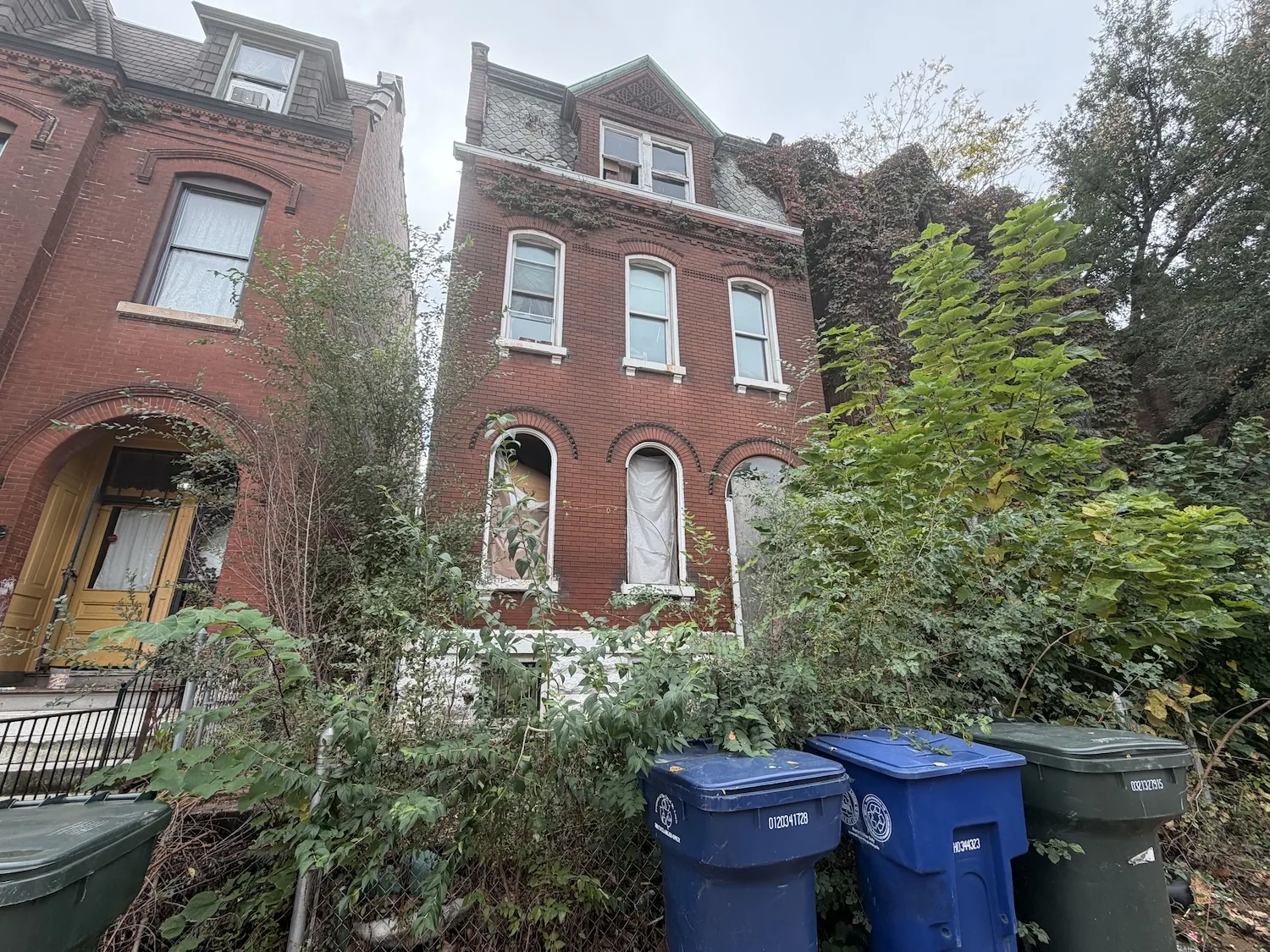
The suits were catalyzed by a pair of relatively new laws, which SLM reported on earlier this month. A 2022 state law allows cities to foreclose on properties over delinquent taxes. A St. Louis city ordinance that came two years later makes it so that fines for building code violations (windows that need boarding up, grass so high the city has to cut it) to be collected in the same manner as a property tax bill—so if they don’t get paid, the city can foreclose on the property.
Paul Puricelli, a lawyer for McKee and his firm’s lender, the Bank of Washington, suggested that those fines and fees are the reason the city has initiated foreclosure proceedings. Puricelli says that Northside paid their property tax bill “in full.”
“Then, about a month ago, in September, we received what they’re calling real estate tax bills, but which purport to show nuisance and demo charges. This is the first that we’ve seen of them,” he says. He said that he has serious questions about the “factual and procedural bona fides of these charges.” In other words, Puricelli and Northside don’t necessarily believe that the city paid to board up a Northside property or cut its grass just because the city says it did. “We’re looking into it,” he says.
Spot checks of the 130 lawsuits filed against McKee properties on Tuesday show delinquent taxes in the mid-four figures—a property on Montgomery Street in Old North St. Louis that owes $4,800, a building on James Cool Papa Bell Avenue that owes $5,820.
Those same spot checks turned up a handful of properties—about half a dozen on the 2700 block of Cass Ave, in particular—that are both in the city’s sights for eminent domain and potentially headed for auction due to delinquent taxes. Most, however, are not in the eminent domain action—suggesting a significant new front in the city’s ongoing war to get land out of the hands of McKee.
For the city to sell McKee properties at a sheriff’s sale would presumably be preferable to acquiring them via eminent domain. Because even if the eminent domain action is successful—as it is increasingly appearing it will be—it still requires the city to pay McKee for the parcels. That wouldn’t be the case for any properties foreclosed on and then sold by sheriff’s deputies on the courthouse steps.
Northside Regeneration-owned properties are not the only targets of the delinquent tax lawsuits filed by the city on Tuesday. The city is also seeking foreclosure on parcels on the opposite side of town, including at least a handful of properties in the Patch.
Not all the 173 lawsuits filed Tuesday were enabled by the new ordinance being put into action. But some were. A spokesperson for the city’s Collector of Revenue office wasn’t able to say how many of the suits stem from those delinquent fines and fees, as the whole point of the ordinance was that they would be collected in the same manner as delinquent tax suits.
However, the spokesperson confirmed that just a little under 75 percent of the 173 suits filed Tuesday were against properties owned by Northside Regeneration.
“I love to hear this,” said Alderman Rasheen Aldridge, whose Ward 14 includes parcels that had action taken against them in court on Tuesday.
“It brings joy to my heart that parcels of Paul McKee are getting out of his hands and hopefully into the hands of people who want to develop them,” he said. “I’m excited.” He blamed the developer for causing the loss of many “beautiful brick buildings.”