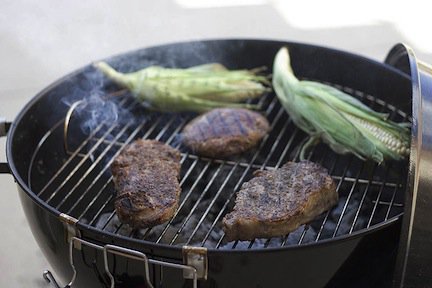
With Memorial Day behind us, your grill is probably all warmed up for summer. While grilling can be both a healthy and delicious way to cook food, it also has a potential cancer-causing caveat. Recent research links grilled meats to cancers, including those of the stomach, lungs, and breast. The culprits are heterocyclic amines and polycyclic aromatic hydrocarbons, two compounds formed when the proteins in meat are cooked at high temperatures.
But don’t retire your grilling gear just yet. By following a few safety measures, you can fire up your grill and avoid any cancer concerns.
Your guide to a healthier, happier you
Sign up for the St. Louis Wellness newsletter and get practical tips for a balanced, healthy life in St. Louis.
It starts with the marinade. A recent study showed that marinades reduce “bad” chemicals from 57 to 88 percent, a significant impact. The marinade must include an acid, like vinegar or citrus juice, and herbs and spices, such as garlic or rosemary. Here are some additional tips for grilling safely.
• Be indirect: Avoid placing meats in direct contact with high flames or extreme heat.
• Get creative: Grill foods like vegetables, veggie burgers, tofu, quesadillas, or even pizza, which don’t produce cancer-causing compounds.
• Flip often: Flipping meats every minute or so can reduce heterocyclic amines by nearly 70 percent.
• Buy bone-in: Choose lean and trimmed meats, but leave bones in. The lean meat has less fat for fewer flare-ups, but the bone will keep it juicy.
• Go silver: Cook meat on aluminum foil instead of directly on the grill to protect it from the open flame. This prevents charring and makes for easy cleanup.
• Keep a spray bottle handy: Tame those flare-ups to prevent charring.
Finally, pair grilled meats with grilled fruits and vegetables. The natural antioxidants found in produce help balance out any cancer-causing compounds in meats. Tropical fruits, like pineapple, and stone fruits, such as halved peaches and plums, are especially delicious on the grill.