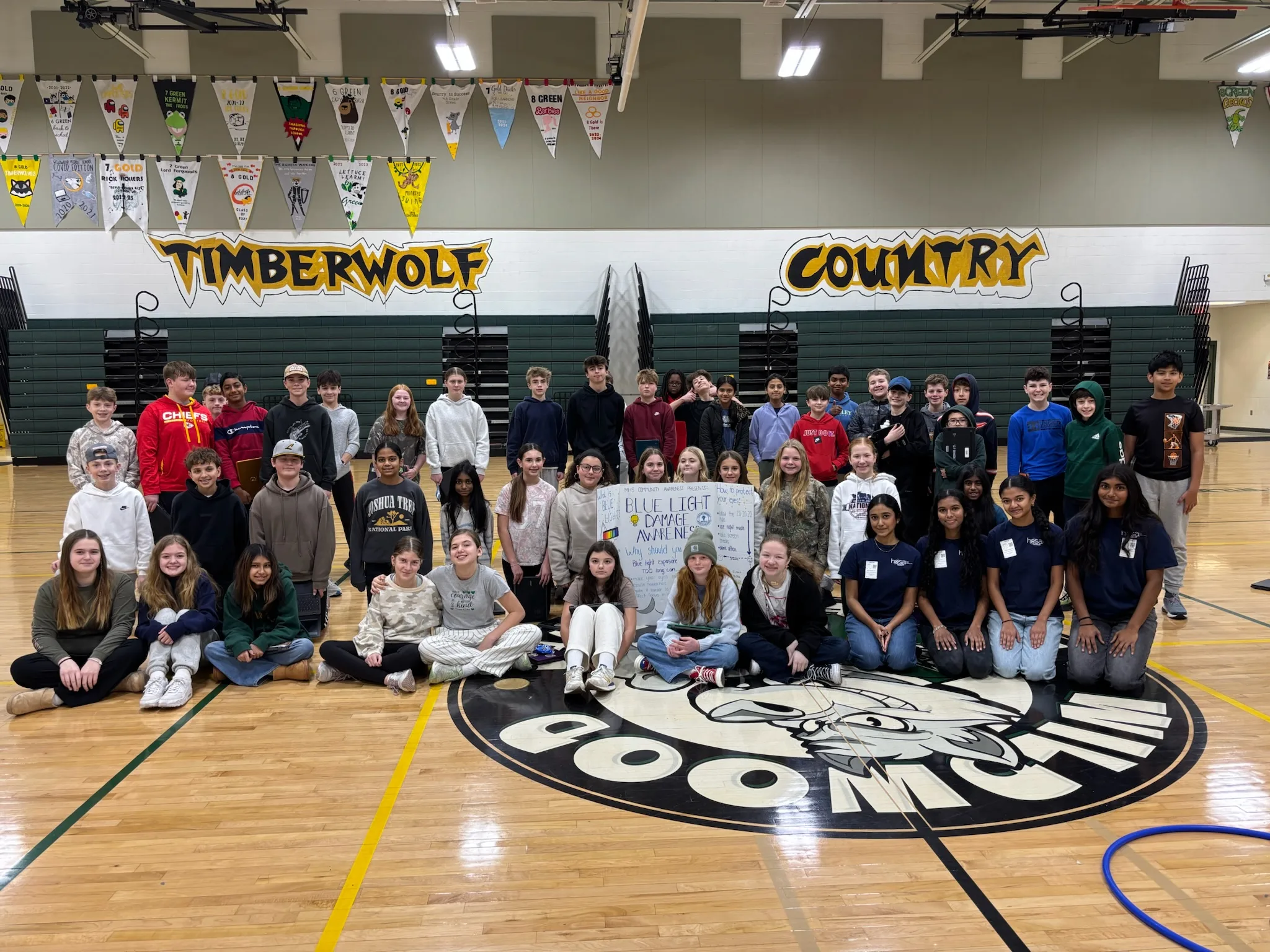
Students at Marquette High School are tackling a modern health issue that affects nearly everyone: digital eye strain from prolonged screen use.
Anshu Rajoli and Tanujha Manikandan, both juniors and members of Health Occupations Students of America (HOSA), have spent the past several months educating the public about blue light exposure, its potential effects on eye health, and simple ways to protect vision.
“Our goal is to spread awareness about the consequences of excessive screen use to community members by providing clear information to help,” Rajoli says. “We want to inform them about simple habits that can support long-term eye health.”
Your guide to a healthier, happier you
Sign up for the St. Louis Wellness newsletter and get practical tips for a balanced, healthy life in St. Louis.
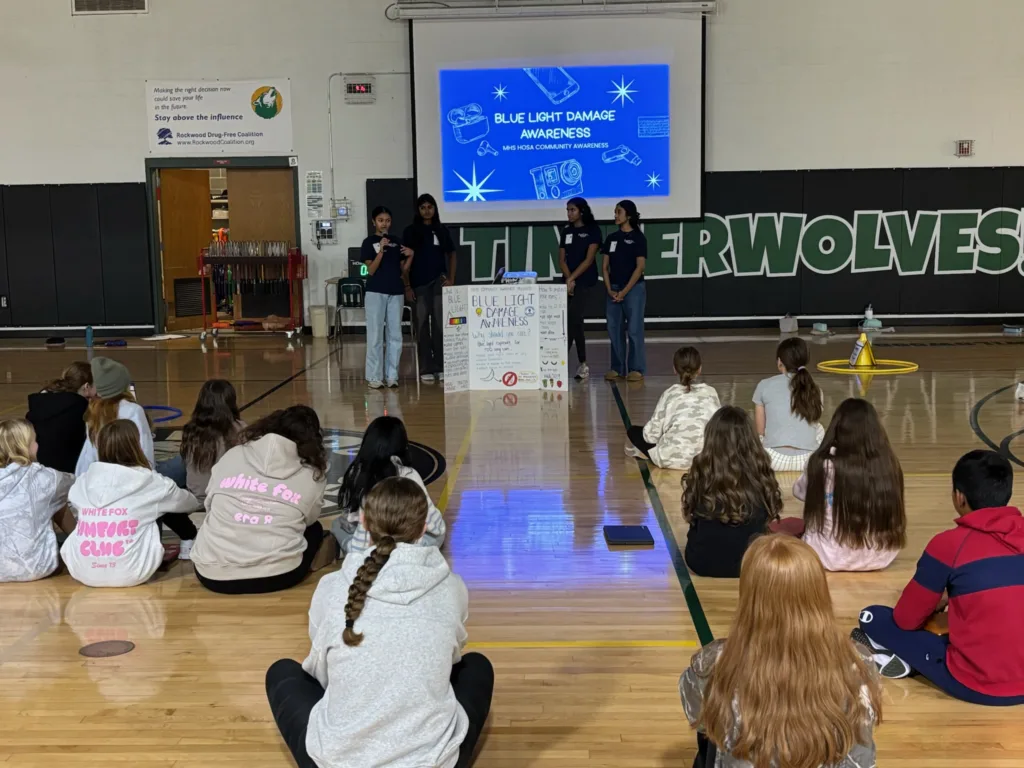
Blue light occurs naturally, with sunlight as its primary source, helping regulate the body’s sleep cycle. But artificial blue light from smartphones, LED TVs, and computer screens—especially at night—can disrupt that cycle by signaling to the brain that it’s still daytime. Extended exposure can also contribute to eye strain and fatigue.
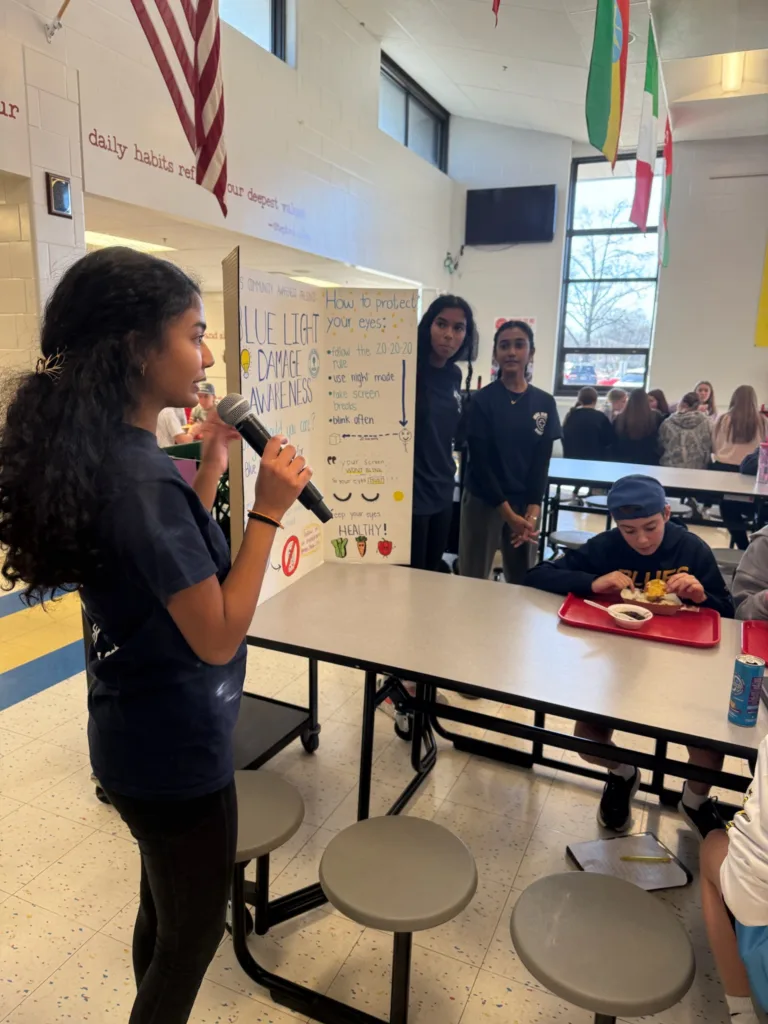
“Most people don’t really know what blue light is, which is part of what inspired us to keep this campaign going,” Manikandan says. “They’ve maybe heard of it but don’t know how it affects them. Everyone always has a lot of questions about it after our presentation.”
The project is part of a larger HOSA competition, which includes environmental, mental, physical, and societal categories. To spread awareness, the team launched a social media campaign, partnered with local media, and gave presentations at schools such as Crestwood Middle School—all with a goal of reaching 100,000 people. By mid-March, they had more than doubled that number. They presented their work at the state conference in March.
“Being in HOSA itself has helped expand our network of who we’re talking to,” Manikandan says. “We’ve really been able to dumb it down and put it into simple words. It’s more of how we’re connecting it to their daily lives than actual research, so they can relate to it as well.”
While products like blue light glasses are widely marketed, one of the simplest ways to reduce eye strain is the 20-20-20 rule: every 20 minutes, look at something at least 20 feet away for 20 seconds. The habit can help reduce fatigue from prolonged screen use.
“It really refocuses your eyes,” Rajoli says. “That’s more like the minimum. Taking a longer break is more beneficial, but it’s the quickest way to reduce the blue light damage.”