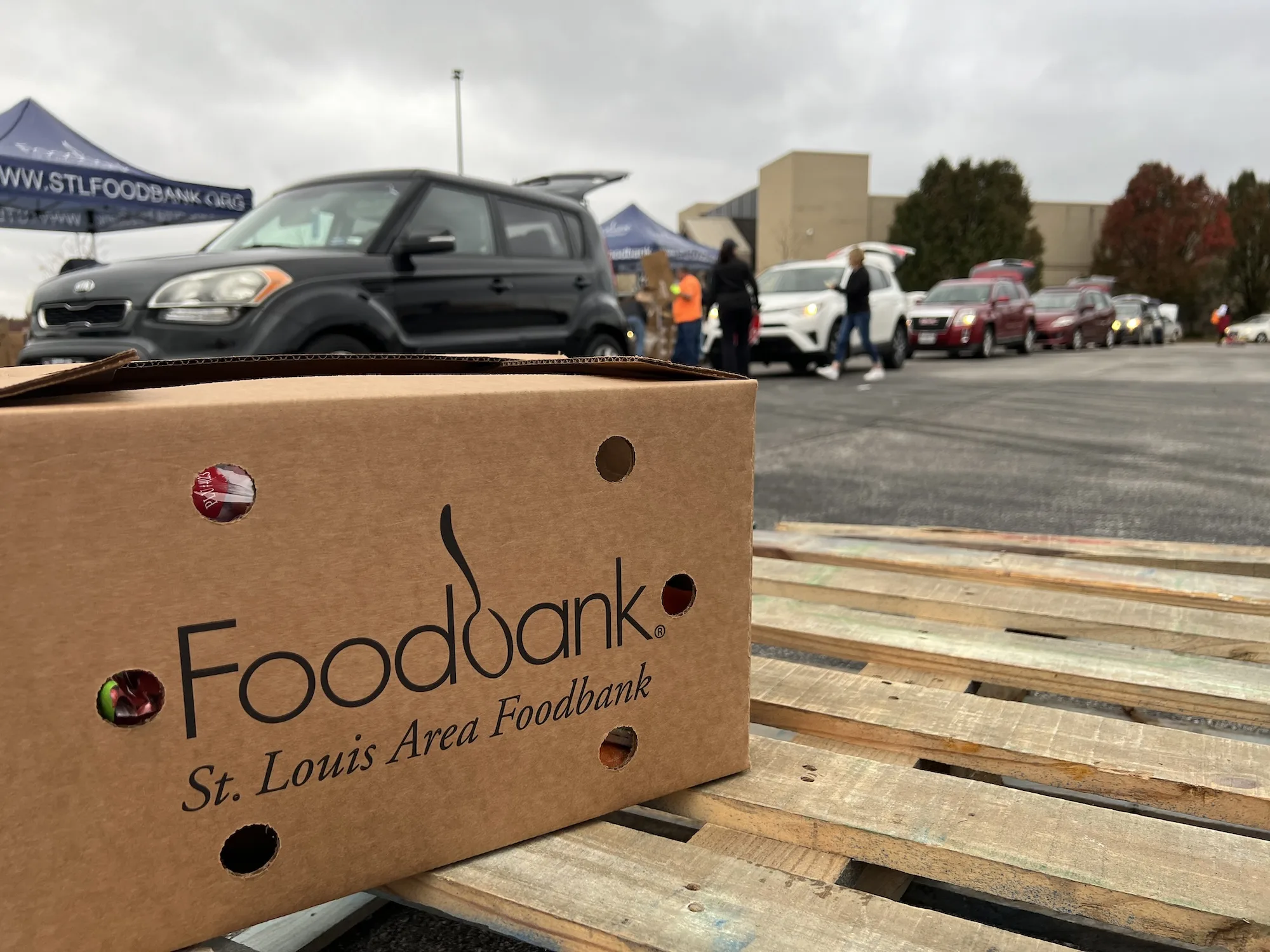
For the St. Louis Area Foodbank, the number 50 holds a lot of weight. It’s the number of years the nonprofit has been feeding the region. That’s 50 years of transformation, nourishment, and supporting the community.
As president/CEO Meredith Knopp notes, 50 is also the dollar amount that the organization needs to feed a family for two weeks. Preventing hunger for families is the Foodbank’s goal, Knopp adds, though there are myriad means to get there—about 50 ways, in fact.
To celebrate the organization’s 50th anniversary on July 15, the Foodbank is launching a “50 Ways in 50 Days” social media campaign.
Marking a Milestone
The 50 Ways in 50 Days will consist of one post per day for 50 days, with each post highlighting a different way to get involved, explains director of marketing and communications Ericka Kinkead. The 50 ways will include such ideas as wearing orange to show support, hosting a community food drive, volunteering, writing state representatives, and creating a lemonade stand.
“It’s going to be this beautiful cross-intersectionality of ways that people can get involved with what we do,” Knopp says. “We’re meeting exactly where people are, in ways that are very simple, tangible, fun, and engaging to people of all ages.”
The 50th anniversary marked a natural milestone to launch the campaign. “For our 50th, we really want to commemorate the work that has been done by the Foodbank in the past 50 years but also look at the future and see where we’re headed,” Knopp says. “And how we can keep that momentum going and be here another 50 years.”
Your guide to a healthier, happier you
Sign up for the St. Louis Wellness newsletter and get practical tips for a balanced, healthy life in St. Louis.
Growing Capacity and Knowledge
Since its founding in 1975, the Foodbank has worked to support families across 26 counties and grown capacity from about 135,000 pounds of food annually to more than 42 million pounds per year. “Our focus has really changed,” says chief development officer Alesia Roccia. “We have made a lot of strategic investments in both talent and technology to really add a science to the art of what we do. We have a lot more discretion in terms of what we are receiving. We are being much more proactive about reaching out to get healthy fruits and vegetables and protein.”
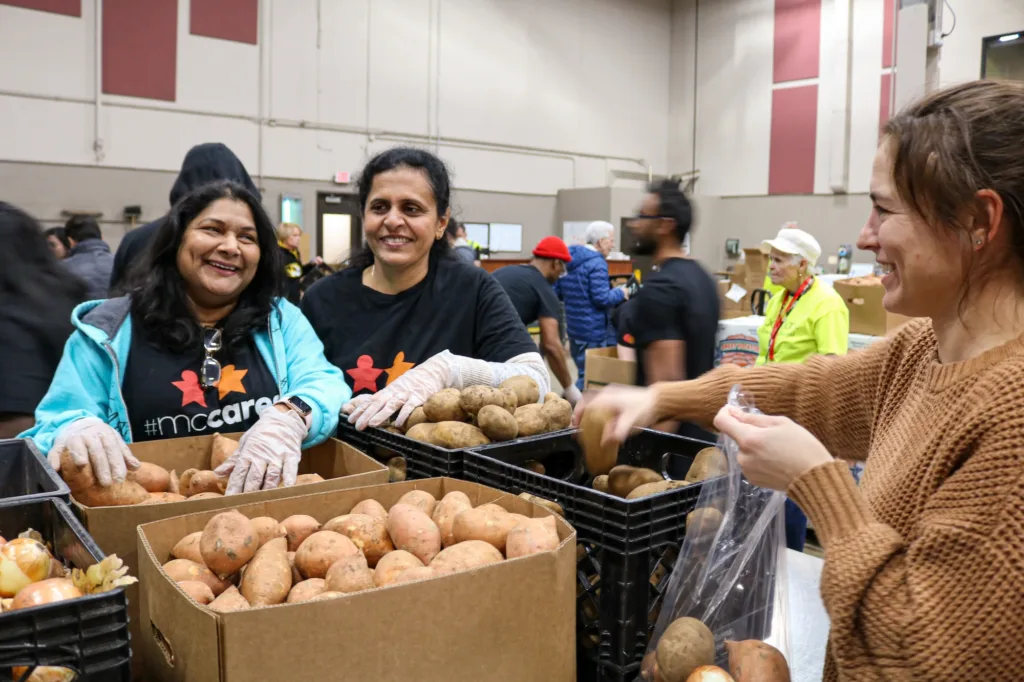
Roccia explains that the Foodbank provides education about nutrition. For instance, the organization often uses color-coding: Green indicates food that you should eat regularly, yellow for food to eat in moderation, and red for treats. “It’s about being clear about what comes later down the road based on your diet,” she says. “If you have diabetes, then you can have these other issues. And for kiddos, when they’re growing and forming, you can’t live on frozen pizzas and Twinkies. That’s actually not a food group.”
Another initiative has been the inclusion of recipe cards in school markets and pantries. “So if there’s frozen ground turkey, beans, and tortillas, they can make tacos,” says Roccia. “They have all of the instructions and ingredients to make a meal.”
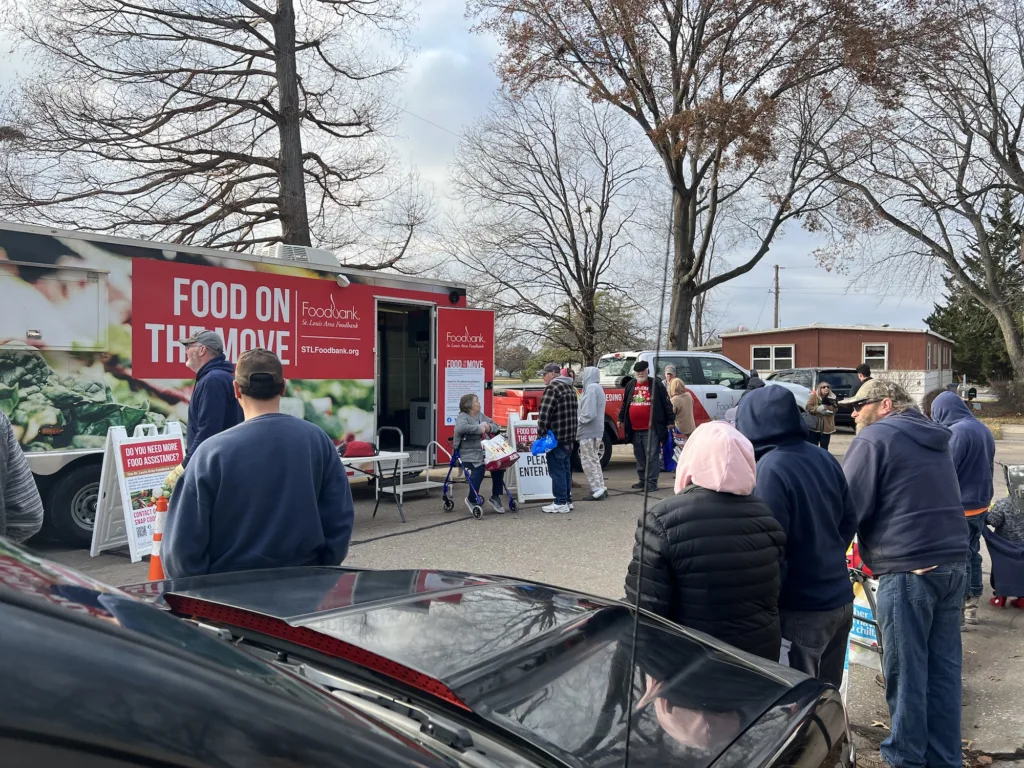
The Foodbank has also focused on removing transportation barriers with its Food on the Move program, as well as providing food pickups with dignity and reducing food waste. “About 40 percent of the food in the U.S. ends up as waste in the trash,” Kinkead explains. “So it’s not that we have so many people who are hungry because there’s not enough food to go around; we’re just not very effective and efficient at distributing it.”
Knopp hopes that the 50 Ways in 50 Days campaign also increases awareness of the Foodbank as a regional resource. “We really want to make sure that people know that we are very much their local food bank, even if they’re in Iron County, Missouri,” Kinkead says. Because its client base is so widespread and diverse, another focus is considering cultural concerns and food desert access. “Our programs ensure families get to make those choices on what they take, because they know what’s best for their family,” says Kinkead.
Federal Funding Changes
Knopp explains that the Foodbank’s efforts have recently been impacted by federal funding cuts to the Local Food Purchase Assistance Program, in which the nonprofit has participated in Illinois. “We are meeting with lawmakers and legislators to advocate for the neighbors we serve,” Knopp says. “That wasn’t money that was coming to the Foodbank to fund us; it was money that we were giving to local farmers, because we were purchasing their fruits, vegetables, protein, and dairy. It was an economic benefit–-an engine–for local farmers and growers. They would then give us a portion of whatever they’re producing and, in turn, we would distribute that organic, fresh food to families in need.”
Knopp says she’s also monitoring changes with the The Emergency Food Assistance Program program, which helps supplement the diets of low-income Americans. “That is a program that we cannot supplement,” she says. “We’re right now tracking about 34 truckloads of food that was supposed to be coming here—there’s no way that we can replace the full value of that.”
Upcoming Events
To kick off the final month of the hunger campaign, the Foodbank will host two large-scale drive-thru distribution events, including at Word Wide Technology Raceway on August 28 and outside of Busch Stadium on August 29. Both events will be “herculean efforts,” says Knopp, with the goal of feeding 500 families in two days. “The really cool thing is we’re going to be feeding these families for not just a meal or a week, but we’re going to give them enough food to last for a month because that need is absolutely there,” Knopp says. “We’re all seeing it with the grocery prices. The need continues to increase, and we can’t continue to meet that demand unless we have community support. Our communities are really great about rallying behind us.”
Then, September will be Hunger Action Month, with the team hoping to feed 50,000 people.
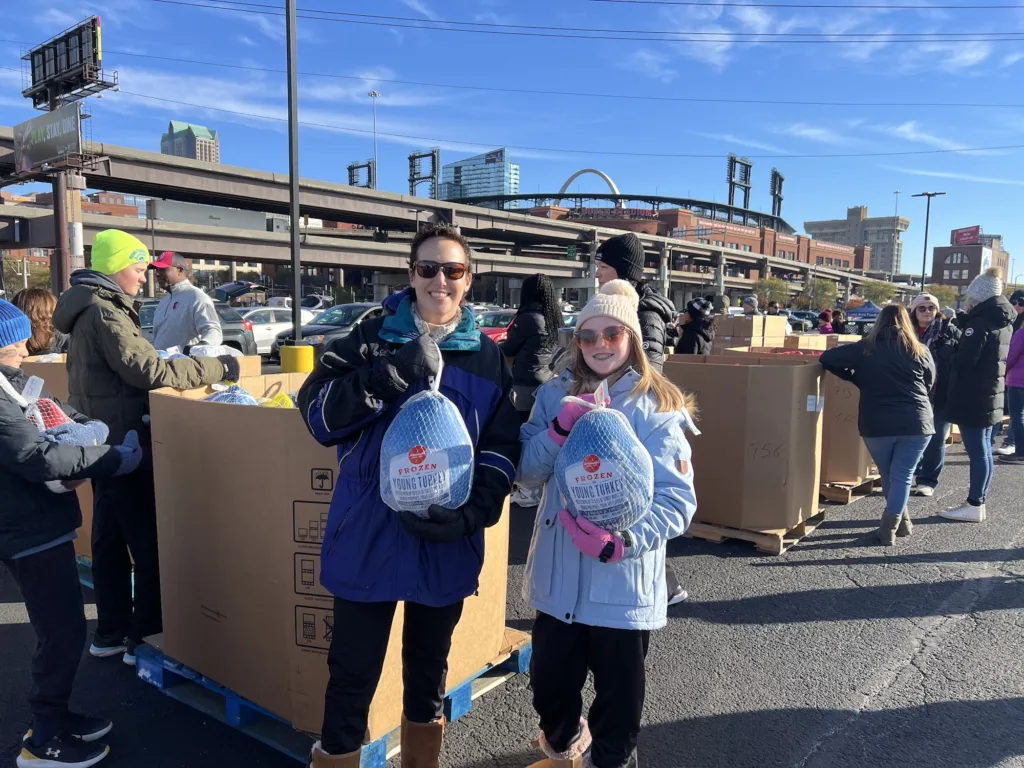
Showing support doesn’t have to be a huge lift, Kinkead adds. “We just want to make sure that people know that we do need their support, but there are a lot of different ways they can do that. It doesn’t have to just be financial. It can be volunteering your time. It can even be just advocating or sharing our posts on social media…There’s a way for every single person to get involved and make a difference.”
Facts from the St. Louis Area Foodbank
All data is local to the 26 counties that the Foodbank serves across Missouri and Illinois.
- 1 in 7 people in Missouri and Illinois are food insecure.
- 1 in 6 children are food insecure. That is roughly equivalent to the total number of students in the following districts combined: St. Louis Public Schools, Rockwood, Wentzville, Francis Howell, Fort Zumwalt, Parkway, Edwardsville, and Collinsville.
- In Missouri, 58.8 percent of people facing hunger may not qualify for SNAP; in Illinois, 49.3 percent of people facing hunger may not qualify for SNAP. Across the bi-state region, 37 percent of children facing hunger may not qualify for free or reduced-price meals.
- The 428,060 food insecure persons in the bi-state region could fill Busch Stadium 10 times.
- Less than 4 percent of Foodbank donations go toward administration and fundraising costs.