This story first appeared in the Outdoors newsletter. Click here to learn more and sign up.
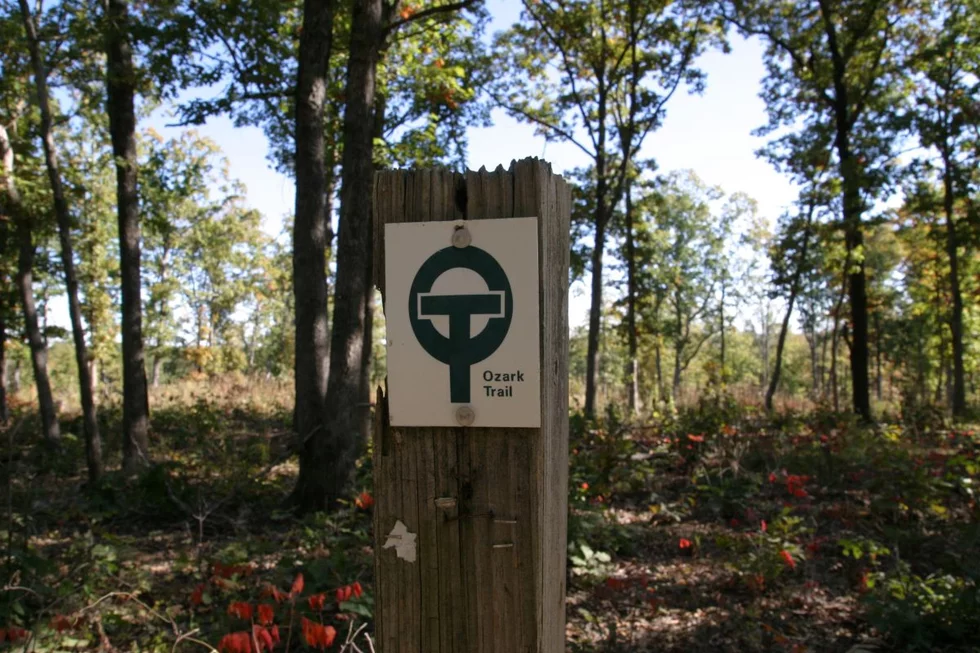
On a recent trip to the Courtois section of the Ozark Trail, Kathie Brennan glanced around at all the cut trees and thought: Gosh, it looks like a bomb has gone off. “It’s going to be ugly for decades,” says Brennan, who is the president of the Ozark Trail Association, the nonprofit that maintains the 364-mile path passing through much of the Mark Twain National Forest, in southern Missouri.
Discover your next outdoor adventure
Subscribe to the St. Louis Outdoors newsletter to get smarter about hiking, biking, paddling, climbing, and camping within the St. Louis region and beyond.
There’s nothing unusual about timber being harvested in the Mark Twain. That’s one reason it exists. The U.S. Forest Service has a “multiple-use mission,” and the uses include outdoor recreation, yes, but also timber production, livestock grazing, and management of fish, wildlife, and the watershed.
Still, Brennan says, a minor change in forest management could make a “huge” difference in the look and feel of the Ozark Trail from a hiker’s perspective—and this year, a rare opportunity will open up to push for that change. Chris Torres, a Forest Service spokesman, says his agency “is in the beginning stages of exploring a way to better manage the lands along our National Recreation Trails, the Ozark Trail included.” Specifically, the idea is to look at the Mark Twain’s forest plan—its official goals and practices—and attach an amendment, which involves public input. Kathie Brennan says that during such a process, she’d push to protect the canopy over the OT through the creation of a protective corridor.
In essence, a protective corridor drastically limits timber harvesting within a certain number of feet from the center line of the trail. Just to the south, in Arkansas, such a corridor already exists along the Ozark Highlands Trail, which runs inside the Ozark-St. Francis National Forests. According to material sent by the Ozark Highlands Trail Association (the OTA’s counterpart across the state line), a similar problem had arisen back in the 1980s: the volunteers there blazed a trail, then a timber harvest ruined it. So the OHTA clamored for a corridor. They got one that extends nearly 200 feet from the center line on both sides.
Asked whether it works, Steven Parker, a past OHTA president and current maintainer, says: “Yes. At least, it helps.” The trail still has spots with damaged canopy, he said, but that’s mainly due to weather events or pests killing trees. True, there’s been some timbering within the corridor, he adds, but that is due more to private companies that purchase a timber plot and venture outside the boundaries of the timber sale than to direct activity by the Forest Service. (That may be occurring closer to home, too. Chris Adams, the OHTA’s maintenance coordinator, wrote in an email: “A couple of years ago, I helped the Ozark Trail in Missouri with a maintenance weekend. I saw firsthand that the logging company was cutting trees on the trail. In fact, I cut a couple trees that were across the trail they had cut.”)
Torres, the Mark Twain’s spokesperson, points to some of the same phenomena above as reasons for harvesting near the trail: the removal of dead and damaged trees, which affect hiker safety, plus the promotion of specific species. “It is understandable that hikers may not find this visually appealing—especially for the first year after a treatment,” Torres says. “However, within just a few years these areas often look vibrant and are teeming with native species of plants, attracting pollinators and foraging animals.”
Brennan says, however, that tree removal makes the Ozark Trail not only less pleasant to hike, but also much harder to maintain. Shade from the canopy makes the trail easier to see on a bright day and cooler on a hot day. Fewer trees, by contrast, will mean fewer places to mount the trail markers, which aid navigation. It will also mean more briars and vegetation growing over the trail, which will require more frequent hacking by a volunteer group that’s already trying to hold together about 364 miles of pathway.
Brennan says she’s been advocating for a corridor for years, and is ready to do so again when the Forest Service’s amendment process officially kicks off. “If the Ozark-St. Francis can do it,” she says, “why can’t the Mark Twain?”
You can sign up for email alerts on that process here.