When Steve Bost set out to learn more about the Ozark chinquapin, sometimes called the Ozark chestnut, he never knew those efforts would eventually lead to a modern-day conservation marvel.
In 2005, Bost discovered that chestnut blight, a fungal disease, had wiped out more than 4 billion American chestnut trees when it arrived in North America in the early 1900s. In particular, it did a number on the Ozark chinquapin, whose natural range once extended from coastal Virginia to eastern Texas.
Discover your next outdoor adventure
Subscribe to the St. Louis Outdoors newsletter to get smarter about hiking, biking, paddling, climbing, and camping within the St. Louis region and beyond.
The next year, Bost founded The Ozark Chinquapin Foundation to help restore the tree across the Ozarks. Such organizations as the L-A-D- Foundation and Pioneer Forest, Missouri Botanical Garden, state agencies, and other partners quickly jumped on board. Over time, there’s been extensive research on the tree’s role as both a food source and a folk legend. Lab analyses reveal the chinquapin’s nut to be a rich source of protein, carbohydrates, and magnesium. A mature tree might grow as many as 6,000 nuts around this time of year, providing a key food source for wildlife. Tea brewed from the leaves was long storied as a folk remedy for whooping cough. The Cherokee revered the tree so much that one translation of chinquapin is “bread tree.” The tree’s usefulness didn’t end with nourishing life. The rot-resistant wood was ideal for durable fence posts, furniture, and mountain dulcimers, making it an integral part of life for native people, early settlers, and their descendants.
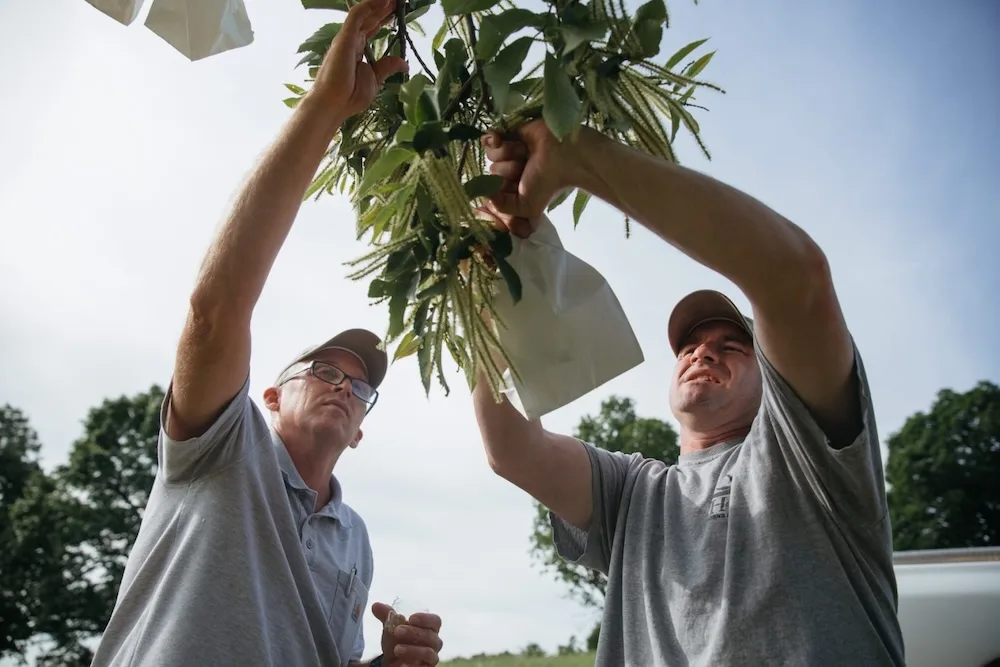
With so few trees remaining in the wild two decades ago, however, resurrecting the Ozark chinquapin became a two-part problem. The first issue was finding the existing trees, which only grow in well-drained soil. “There are a few rare remnants that are scattered, but they’re few and far between, and there’s less of them all the time,” Bost says. The second challenge was cross-pollinating them with trees tested and known to be blight-resistant. Since the first successful cross-pollination in 2010, Bost and OCF volunteers have traveled thousands of miles to locate a single 50-foot tree, climb it, and pollinate the chinquapin by hand. In other cases, OCF plants genetically diverse saplings near chinquapins found in the wild, where as many as 80 percent of the offspring will develop blight resistance that’s equal to or exceeding that of their parent trees.
OCF faced other significant hurdles in its early efforts. In 2012, during prolonged periods of drought, when heat indexes topped out at more than 120 degrees, OCF volunteers would carry gallons of water across the Ozark hills to water seedlings. “We did it on a shoestring budget, and it’s taken the hard work of volunteers across the country to make it happen,” says Bost, who remains OCF’s president.
Bost says receiving a U.S. plant patent provided “the biggest thunderbolt…so we do finally have lab-verified, blight-resistant trees.” To date, OCF’s database encompasses 212 individual trees, which form the cornerstone of the breeding efforts. In 2024, OCF began planting the trees in the Ozark National Scenic Riverways, in habitat where the Ozark chinquapin would have grown historically and is a species of conservation concern. Two years later, Bost says, some of the trees are approaching 7 feet tall and putting on blooms.
Today, OCF’s network of contacts has grown across the country, with Bost traveling the Midwest and Southern United States in search of more thriving chinquapins. “We continue to find them in places where people didn’t think they existed,” Bost says, describing recent trips to the coastal areas of Virginia, the Carolinas, and Delaware. “That’s been the story more and more lately.”
Working from secluded nursery plots in Missouri, Arkansas, and Oklahoma, OCF has built a reserve of seeds that are sent to members of the foundation every winter with the hopes that these seeds will be planted and help further propagate the species. Over nearly two decades, thanks to approximately 2,000 members and an estimated 34,000 seeds, Ozark chinquapins have been planted in 34 states, as well as Europe and Australia.
“It’s been a tedious project but well worth it,” Bost says. “It’s mission accomplished, but the mission isn’t over.”