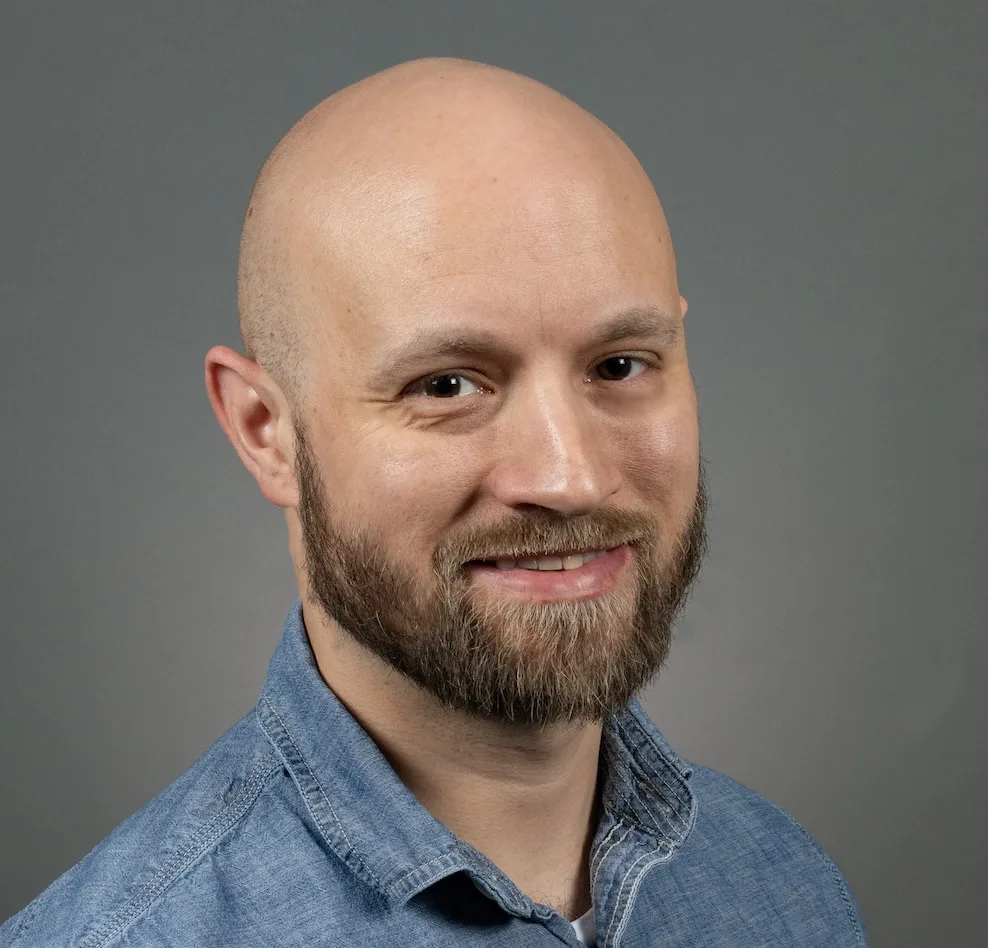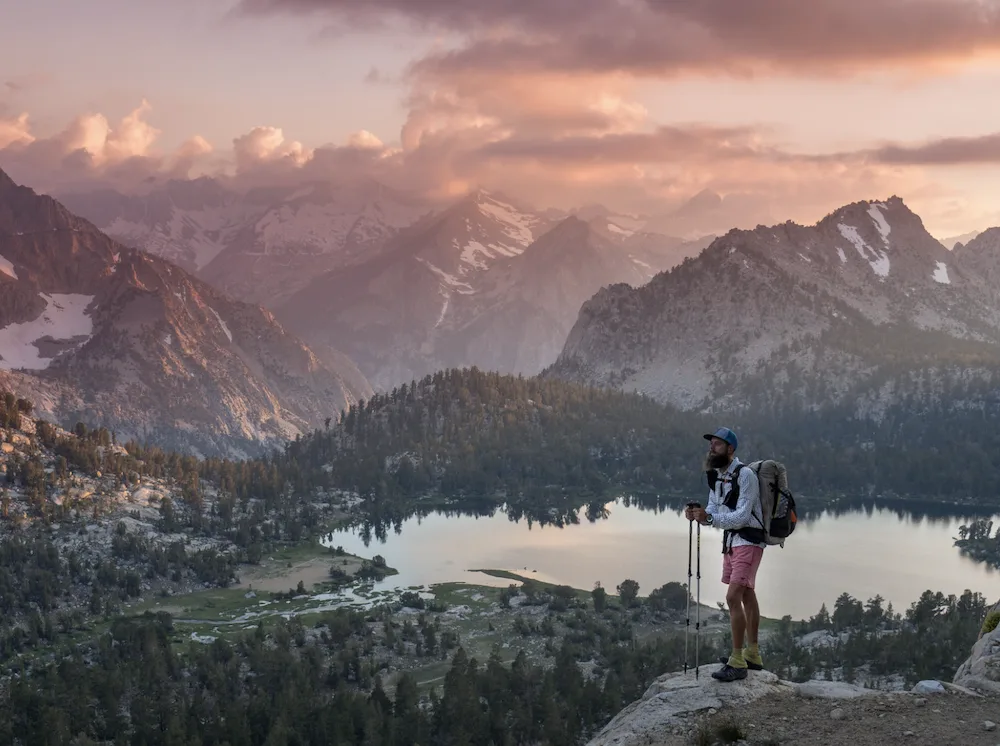
On the afternoon of June 22, Scott Miller is cool and calm. Evening time in basecamp at Three Forks, Montana, finds him collected, relaxed, and ready. In less than 24 hours, he’s going to start a cross-country expedition in a bid for ultra-endurance glory.
“Other than a key piece of equipment that went missing for a few hours, it’s been a pretty quiet day,” quips the Minnesota-based adventurer and team captain. “And we found that, so everything is looking good right now.”
Discover your next outdoor adventure
Subscribe to the St. Louis Outdoors newsletter to get smarter about hiking, biking, paddling, climbing, and camping within the St. Louis region and beyond.
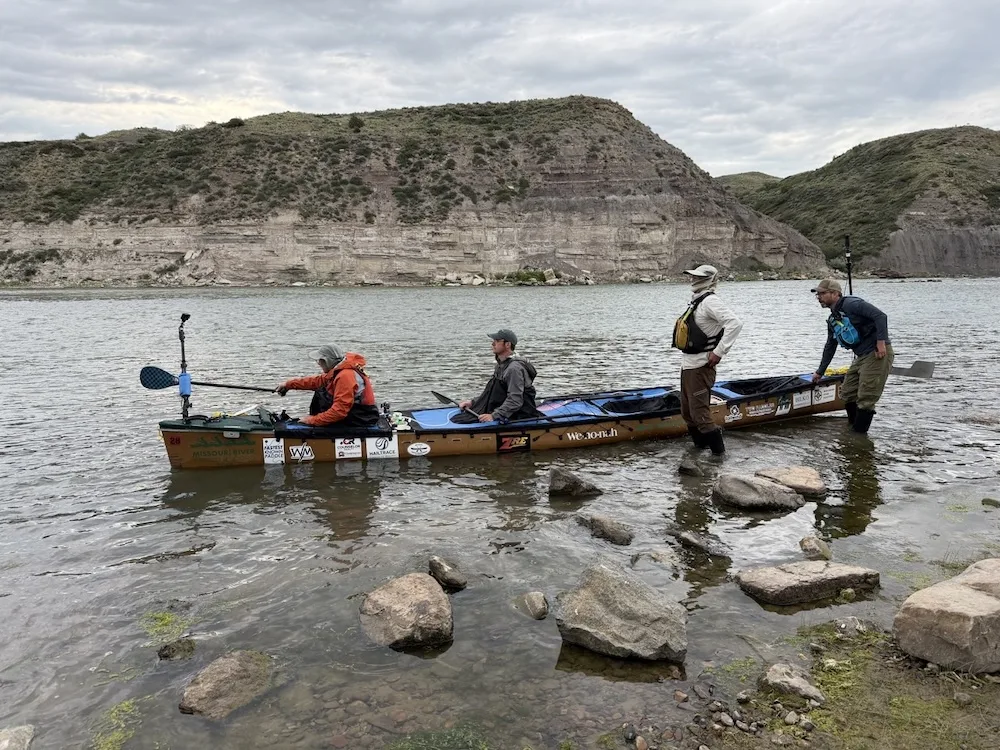
Scott and his companions, Scott Duffus, Lada Zednik, and Curt Leitz, are setting out to break a world record: navigating North America’s longest river, the Missouri River, in less than 33 days, 18 hours, and 45 minutes—the record that Verlen Kruger and Steven Landick set in 1980.
“They’re legends of the paddling world,” Miller says. “Breaking that record has never even been attempted, so far as we know.”
The crew is aiming to arrive in St. Louis roughly 10 days ahead of the 1980 record—but bad weather, low water, and wind can all play a role in the proceedings, says Miller. “That’s kind of what I’m looking forward to, though,” he says, “seeing how the crew and the boat perform when we run into those obstacles, whatever they may look like.”
Miller knows something about the ever-changing whims of Mother Nature and what it takes to attempt and best a world record in ultra-endurance paddling. In May 2023, he led a four-man team to set the new Guinness World Record for navigating the Mississippi River in 16 days, 20 hours, and 16 minutes. It was redemption for the bitter defeat and nearly fatal end to his team’s 2021 attempt, which came just short outside New Orleans, miles from the finish line. “We learned a lot from that attempt,” Miller says.
Due to differences between the Missouri and Mississippi rivers, there are some tradeoffs that present their own challenges, he adds. Some are beneficial: Traffic on the Mississippi is larger in volume and individual boat (or barge) size than on the Missouri. On the other hand, despite the Missouri only being 1 mile longer than the Mississippi, the latter has much faster water, which allowed the 2021 and 2023 crews to sleep one paddler every four hours and sometimes two team members for eight-hour stretches at night. Sleep will be a luxury on many stretches of the Missouri in eastern Montana, North Dakota, and South Dakota, where huge reservoirs bring the current to a standstill, and headwinds could exponentially increase the resistance on the team’s efforts.
While the 23-foot craft (christened The Might Duffus after one of the team members, who’s also its chief shipwright) is designed around the precept that some of the team will be able to catch rest in the boat, every stop along the way is a gamble against the elements and an ever-ticking clock. “Obviously, we like sleeping in the boat, because when we’re on land, we’re not making much progress downstream,” Miller says.
With safety and a steady pace in mind, the team will have many amenities unavailable to earlier adventurers, such as Meriwether Lewis and William Clark, as well as Kruger and Landick. Throughout the expedition, Miller’s crew has a 22-person support team ready to lend first aid, food, or extra clothing at a moment’s notice. A documentary film crew is following the journey, in addition to many experienced paddlers who have completed the MR340.
A GPS application is also tracking their progress against the pace (as near as it can be calculated) of the 1980 world record holders. Those interested in keeping up with the attempt can visit RiverMeter.app for a live map, waypoints, and an overview of the trip’s vital statistics. (As of 8:40 a.m. on June 29, the crew was located on the portion of the river forming Fort Peck lake in northeastern Montana, having traveled more than 535 miles in less than six days. That pace puts them roughly 11 hours ahead of their target time.)
On the eve of The Mighty Duffus’ launch, Miller’s attitude was unflappable. The crew’s start time was chosen, he explained, so they could see the Gates of the Mountains, north of Helena, Montana. Miller was excited for the grueling 18-mile portage, the fabled Missouri Breaks, the free-flowing preserved area in South Dakota, the Loess Bluffs of northwest Missouri.
“I can’t think of a better way to go on an epic adventure than by doing it long-distance on a river like the Missouri,” Miller says. “In a way, it reminds me of The Lord of the Rings.Yes, the river has changed a lot from the way it looked when native peoples lived there, but it’s still wild and it’s still beautiful.”
For more information on the Missouri River speed record attempt, visit missouririverspeedrecord.com, Facebook or Instagram. To track the team’s progress in real time, visit rivermeter.app.