This story first appeared in the Outdoors newsletter. Click here to learn more and sign up.
Ferne Clyffe State Park doesn’t attract as much notice as other natural havens in Illinois, says Site Superintendent Jay Massey. “Starved Rock [State Park] gets closed because of the crowds,” he observes. “Here, you can walk trails and get secluded in nature. We have everything here that the biggest parks have, but what we don’t have are the crowds.”
Discover your next outdoor adventure
Subscribe to the St. Louis Outdoors newsletter to get smarter about hiking, biking, paddling, climbing, and camping within the St. Louis region and beyond.
That ability to tree-bathe in solitude is only one of the draws of Ferne Clyffe. Some others: intermittent waterfalls, ancient rock shelters, a 16-acre lake, bluffs that you can climb (given the training and equipment), and more than two dozen miles of paths and trails. True, getting there from St. Louis takes at least a couple of hours, one-way. But you can always break that up by camping overnight.
Jump to section:
History
The name “Ferne Clyffe” was the coinage of two brothers from Cairo, Illinois who once owned the land and appreciated its eponymous plants (and also, apparently, Middle English orthography). The land came into state ownership at midcentury and today is surrounded by Shawnee National Forest, which is cradled by the Mississippi and Ohio rivers.
Plan a Visit
Leaving from the Arch, your drive to Ferne Clyffe will be a straightforward two hours. If you want to stay overnight, you can camp up in the Deer Ridge campground, which accommodates RVs and boasts both a shower house and flush toilets. For a quieter vibe, head to Turkey Ridge campground, which is more primitive but does have potable water and pit toilets. Reservations aren’t required but if you want to make them for a trip between April 1 and October 31, you can do so here.
Spring and fall are the prettiest times to go (for the blossoms and foliage, respectively), but Massey says that even in the summertime, you can enter the canyons and just feel the temperature drop. Another great time to visit, he adds, is right after rainfall, because that’s what activates the park waterfalls, which are rain-dependent.
Hiking
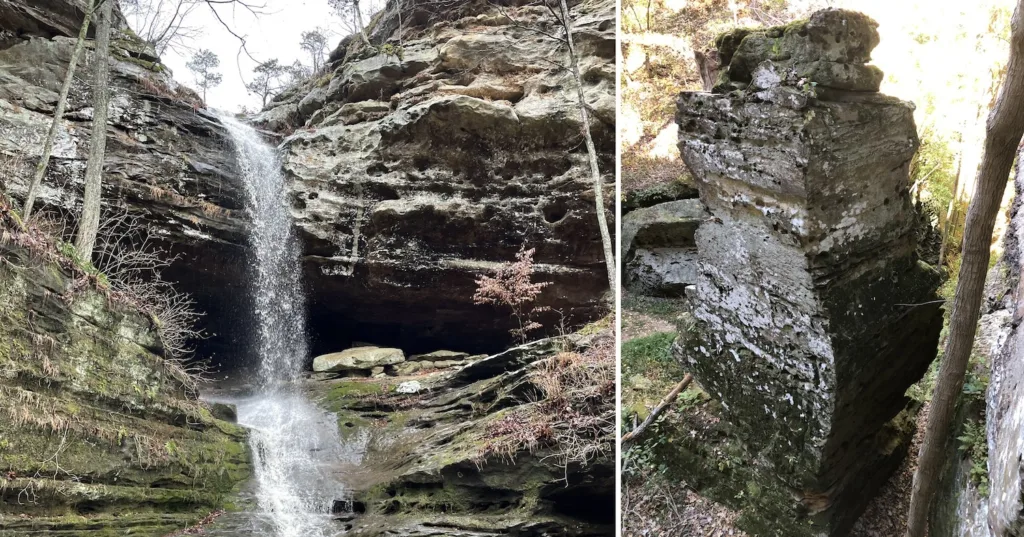
The heart of the park is Big Rocky Hollow, which is a canyon-like space edged by bluffs and giant boulders. A great way to take it all in is to stroll along the Big Rocky Hollow Trail, a gentle 0.75-mile out-and-back that leads you right to the foot of an intermittent 100-foot waterfall.
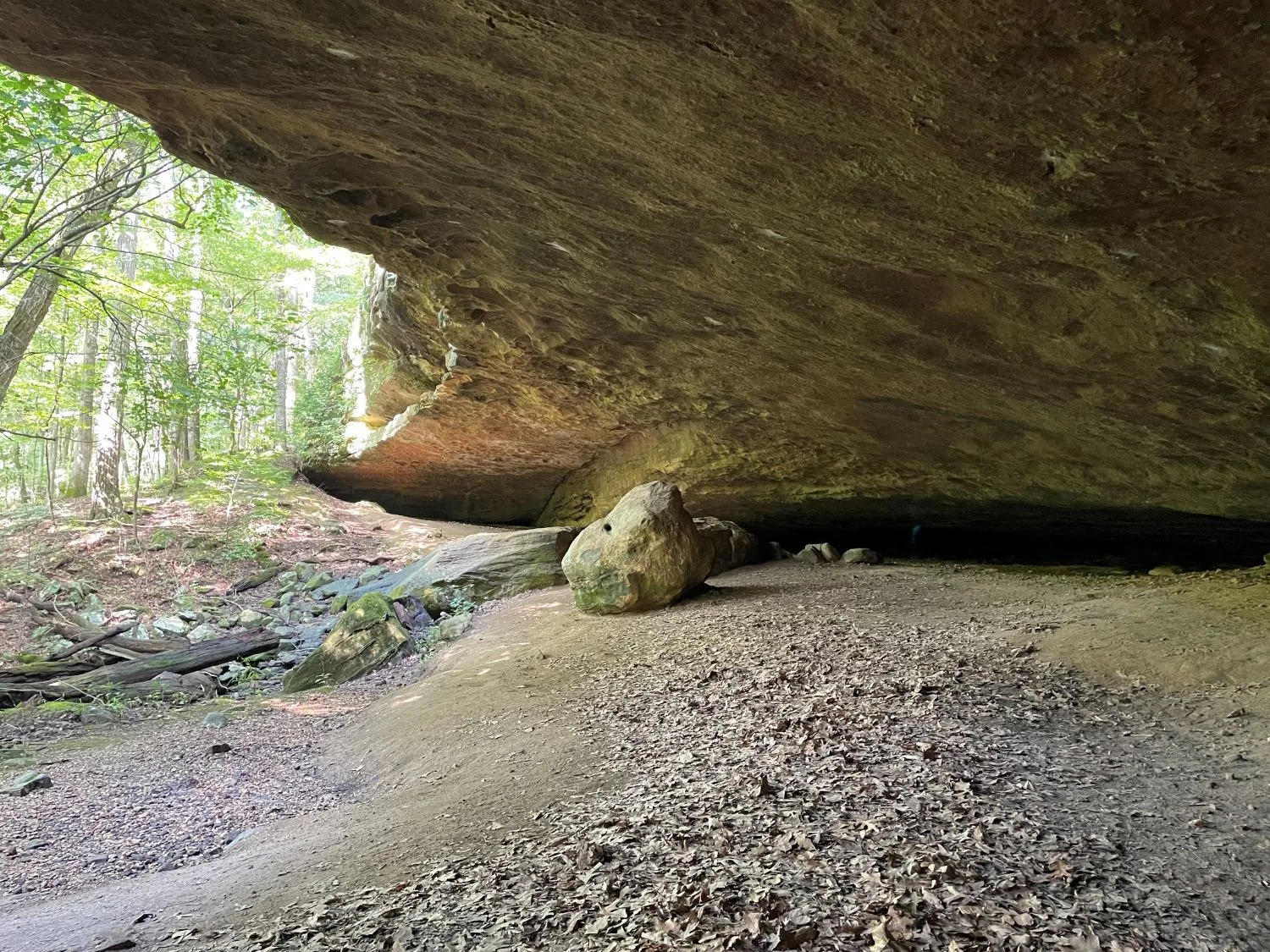
To embark on a slightly more moderate hike without having to change parking spaces, try the Hawk’s Cave Trail. That path, which is a half-mile total, leads you up to the 150-foot-long shelter bluff, one of the largest in Illinois. (Quick aside: Photos don’t do it justice. It feels much bigger when beheld in-person.) Then you wind back down past some strange, honeycomb-like rock formations.
For those wanting to raise their heart rates a bit and also see an unusual geological feature, the Happy Hollow Trail beckons. Park at the Buck Creek parking area to find the trailhead. This moderate trail is about five miles long, gains about 350 feet in elevation, and passes a natural land bridge.
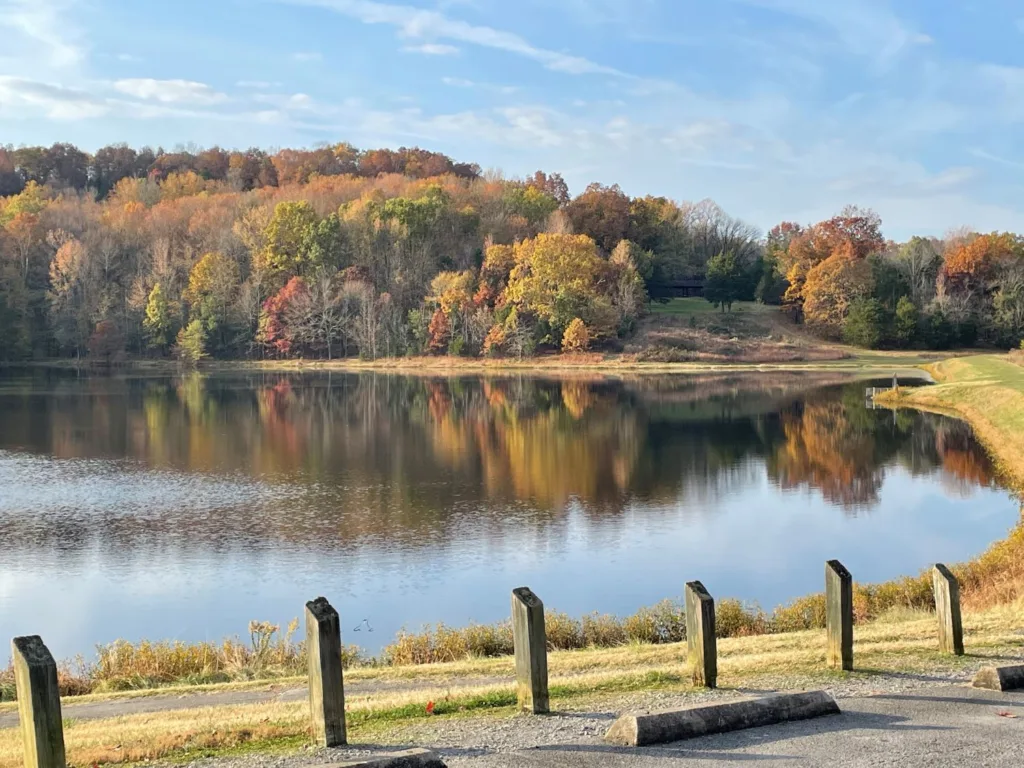
Finally, on the way out, you might want to try another easy trail: the one-miler that traces the shore of Ferne Clyffe Lake. This walk affords a great view of autumn leaves if you go during that season.
Click here for a list of all hiking trails and here for a brochure that has a trail map.
Rock climbing
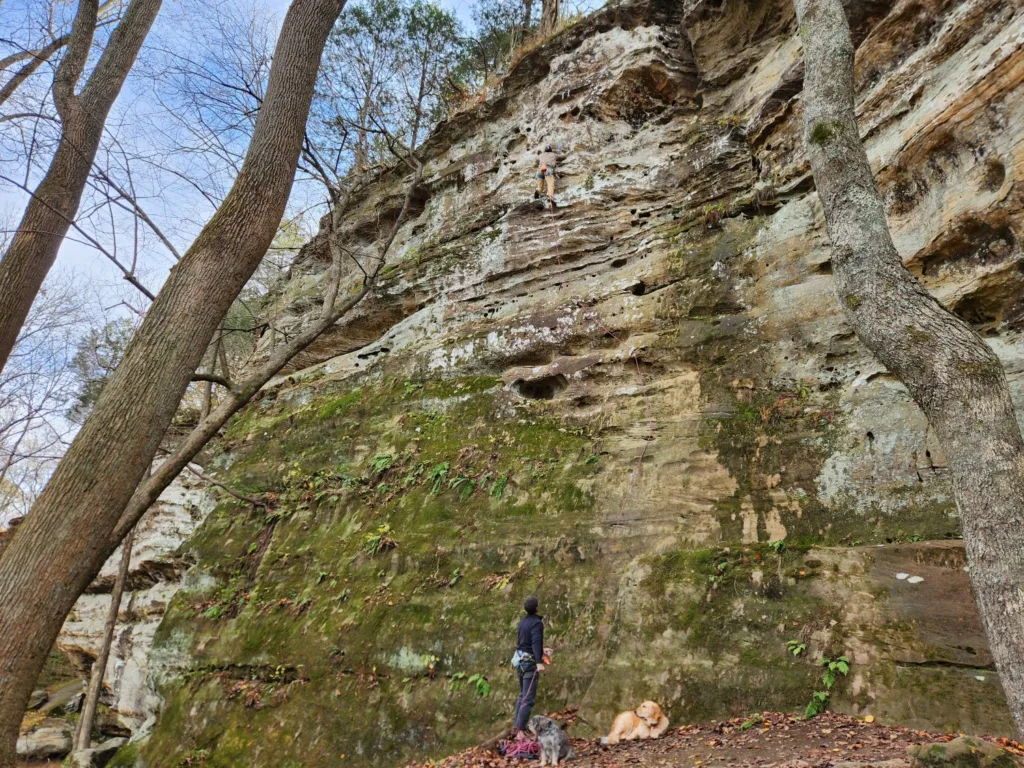
Several years ago, the park’s sandstone bluff line was closed to climbers, but that all changed when—thanks to Massey and the Illinois Climbers Association—Ferne Clyffe officially re-opened its crags. Now it’s one of the most popular climbing destinations in the region. According to the Mountain Project, there are nearly 100 sport climbs and eight boulders to choose from. Massey said in late August that an expansion of climbing routes was in the works. For more details on what’s available, click here.
Fast Facts
- Opened: 1949
- Address: 90 Office Dr, Goreville, IL 62939
- Acres: 2,430
- Trail miles: 26
- Camping: Yes—primitive and RV
- Pets: Yes, must be leashed at all times