Nicholas Murphy’s story is the kind that inspires movies: a St. Louis piano talent who grew up in subsidized housing, studied at Carnegie Mellon, and is now pivoting to nursing at Barnes-Jewish College Goldfarb School of Nursing—with service (and music) still at the center.
Murphy grew up in the Clinton-Peabody apartments in South City. He found a passion for playing piano as a teen, practicing in local libraries and with support from area nonprofit Pianos for People. He first saw piano as a route out of the poverty-stricken environment of his childhood. Music scholarships led him to study international relations and politics at Carnegie Mellon University, which earned him a role as benefits and housing coordinator at the International Institute of St. Louis.
After his job was impacted by federal cuts, with most similar programs also facing uncertainty, he knew that he needed to pivot. “All of my dreams and aspirations were sort of cut short overnight,” Murphy says.
Murphy saw Goldfarb’s scholarship opportunity on a billboard off of I-64 and jumped in fast. Murphy is now in his first year of BJC’s accelerated BSN program—one of the most rigorous paths into the profession—as a full-ride scholarship recipient. As much dedication as the intensive program requires, this was hardly the plan that Murphy first envisioned for himself.
“I’m definitely not one of those folks who wanted to be a nurse since they were a kid or who wanted to be in a medical professional because my family has done so before me,” he says. “It’s more like a matter of exigence and navigating the current political climate.”
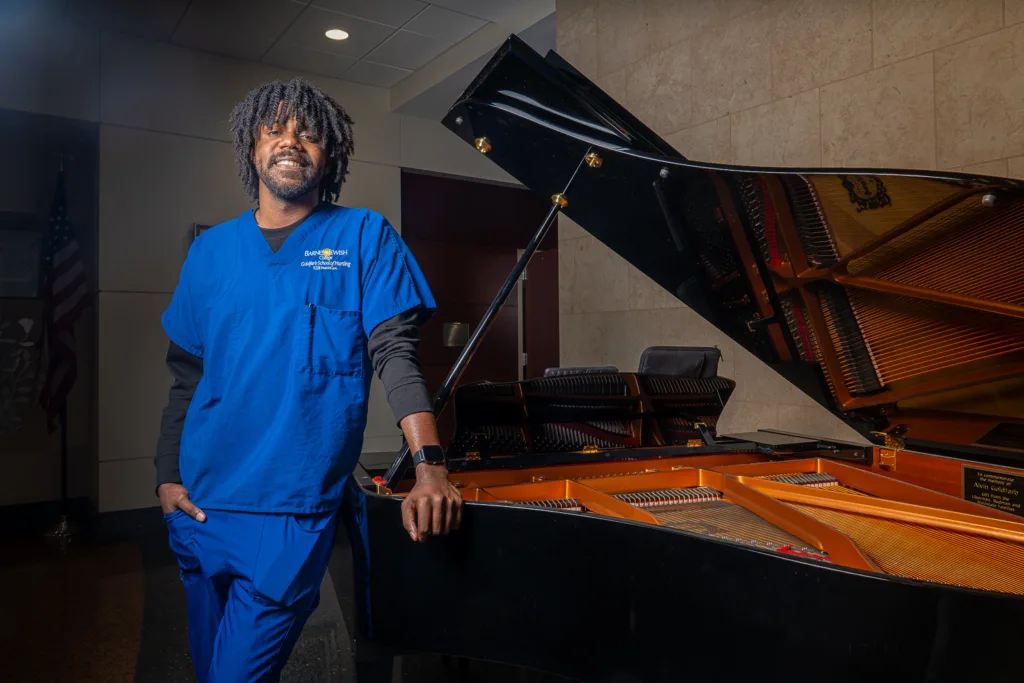
He’s aiming for high-acuity work, such as trauma, emergency, or even the operating room, and wants to eventually take that experience into international health leadership and systems-level advocacy. “What matters the most to me is the ongoing crisis of healthcare internationally. My goals are mainly political,” he says. “I have constantly observed over and over again, especially in my time in the International Institute, that oftentimes refugees specifically, for example, experience really unique barriers to healthcare that most other people don’t have. There’s this whole cascade of bureaucratic mess that prevents patients who have high needs from getting care… All I see in that is a discrepancy in healthcare across borders, and so many of the brightest minds around the world are coming to St. Louis because programs like BJC’s are designed to attract that talent.”
Your guide to a healthier, happier you
Sign up for the St. Louis Wellness newsletter and get practical tips for a balanced, healthy life in St. Louis.
After studying as an exchange student in Tokyo and abroad in Central America, Murphy views nursing school as a route to his ultimate career aspirations—he says he knows that health equity is where he wants to make a difference. “Once I am done with this particular chapter in my life, I hope to take the next step to developing my education in a leadership space,” he says. “Whether that be with an organization such as the United Nations, Doctors Without Borders, or even BJC itself, I believe it’s truly imperative for me to be able to learn as much as I can about this particular subject matter and begin to become an advocate on a systemic level for the most vulnerable people in our communities.”
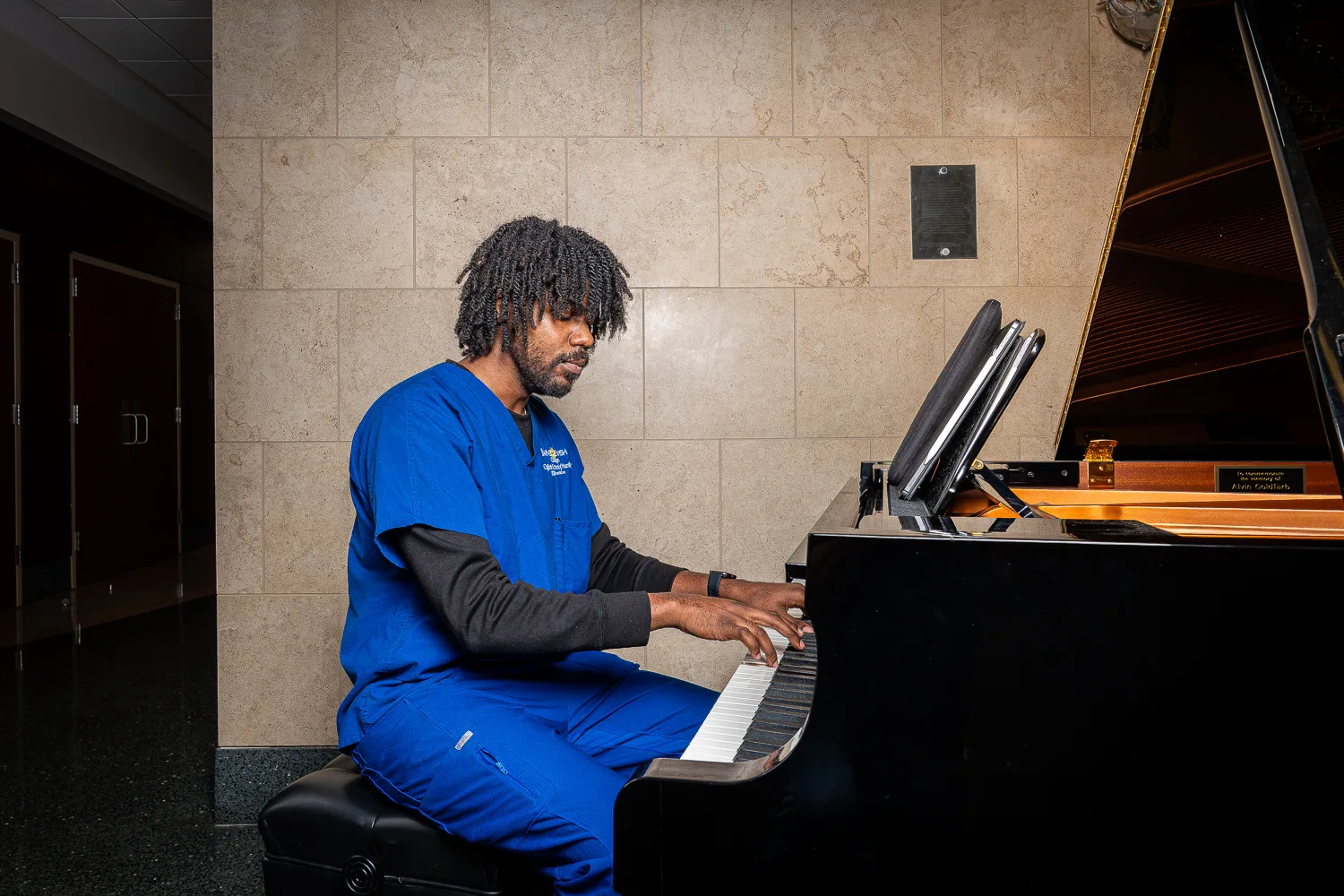
Medicine might be his means to changing the world, but music is what Murphy calls his “cornerstone of connection with people.” You can often catch him playing in the Goldfarb lobby as a kind of everyday reset—for himself and everyone walking by.
“Music is one of those things that brings me joy,” he says. “At BJC, the administration was really kind in allowing me to play the grand piano in the lobby. It’s hard to explain the power of music, but I already feel like it has completely changed the atmosphere of the school for the administrators, the faculty, staff, and even my fellow classmates.”
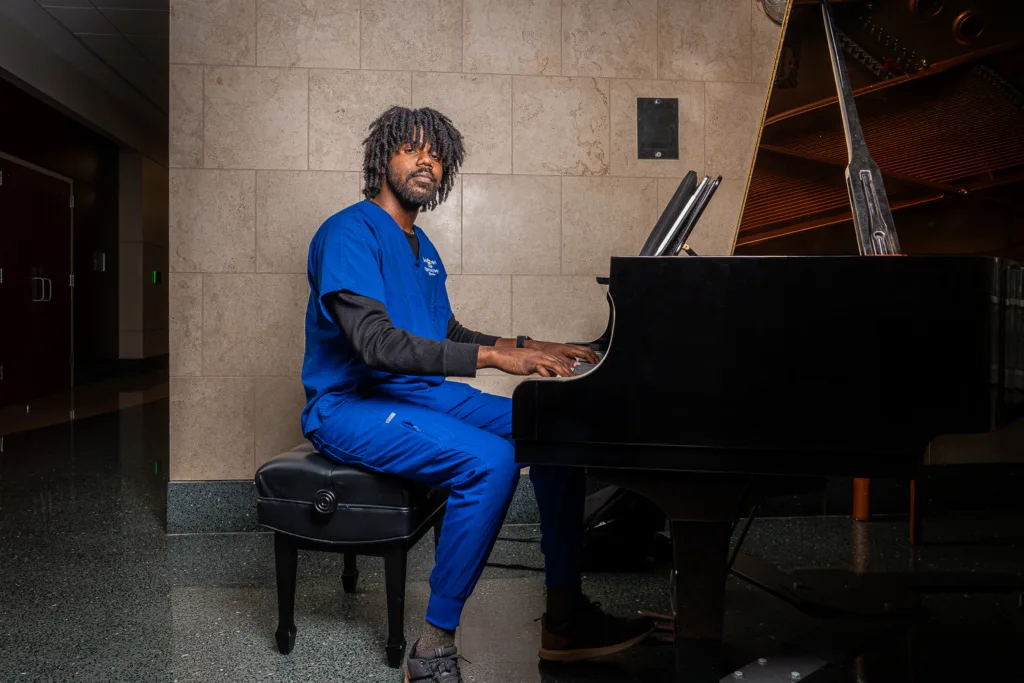
Music has also given Murphy the proper listening ear needed for patient care, he says. “I often tell people to hear music in the noise. When I listen to music, I’m not only understanding the particular sounds or just enjoying the melody,” he says. “I’m understanding the structure of the song itself. I feel like this allows me to unique ability to just pay attention to specific details, which allows me to better understand my patience needs.”
Although it’s been a vast career shift, Murphy would encourage others interested in impactful change to consider the same if they have a big idea. “It’s like the analogy, The best time to plan a tree was always yesterday, but the second best time to plant the tree is now,” he says. “If there’s something that you’re interested in learning or growing in, consider doing something small today that will help that tree come into life, so to speak.”
Murphy says the tree he planted with piano took him to where he is today. Ultimately, for Murphy, a life of service is about giving back to the community that has supported him for years, including his grandmother and Pianos for People director James Bulter, whom he calls his first mentor and second dad.
“The unwavering support of so many people like Mr. James is what is able to propel me. When I lost my job, he told me, ‘Hey, Nicholas, don’t let this break you, man,’” Murphy says. “My perspective shifted, from feeling like the world was treating me unfairly, to ‘I was given the world—what can I do to give the world to somebody else?’”