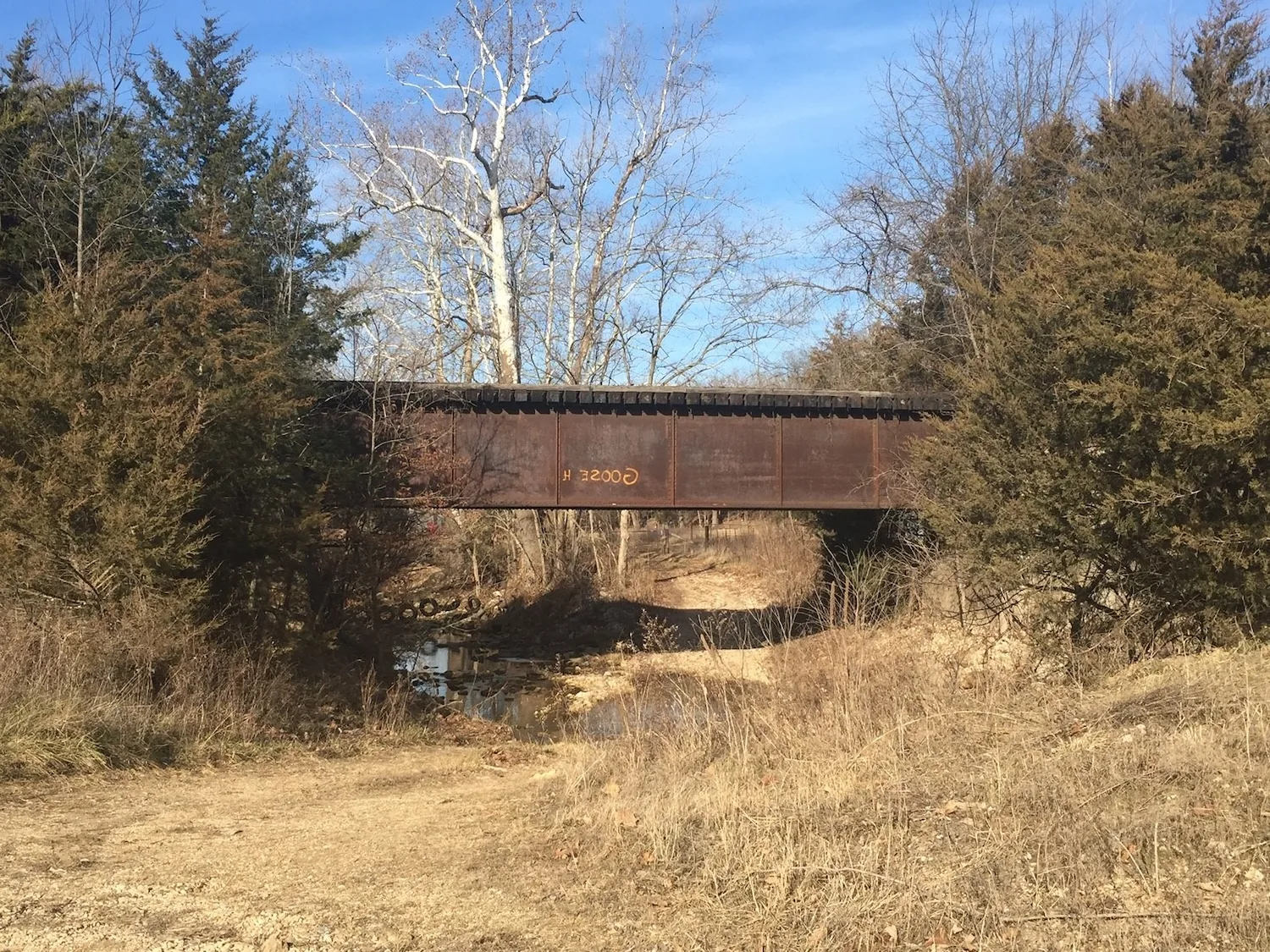
A group of 22 Missouri landowners got checks from the federal government last month—their long-fought compensation for what they alleged was the wrongful taking of their land. In accepting that settlement, they join another 51 Missourians paid out for the same reason in March.
But the battle isn’t over. Meghan Largent, an attorney with Lewis Rice who represents the litigants, says another 17 rejected the government’s offer. Their case will go to trial in St. Louis.
Get a fresh take on the day’s top news
Subscribe to the St. Louis Daily newsletter for a smart, succinct guide to local news from award-winning journalists Sarah Fenske and Ryan Krull.
“This case has been going on for 11 years now,” Largent says. “I’m happy that most of the folks I represent are now finally getting paid.”
Largent’s roster of clients—90 land owners in total—made their claims in response to the federal government turning over land for the creation of the Rock Island trail that backers hope to construct across Missouri. The recreational hiking and biking trail being planned for the path of the long-defunct Missouri Central Railroad could eventually stretch 144 miles and connect with the Katy Trail to create a 450-mile recreational loop.
Largent says her clients didn’t oppose the trail’s creation—but they did believe they deserved compensation for their land to be used in it. As Largent explains, they’d granted an easement to the federal government for the railroad to use the land, but that didn’t extend to other uses. So when the railroad and the federal government turned over the land to the Missouri Department of Natural Resources in 2015 for recreational use, they believed they should be compensated. In 2022, a judge agreed.
That left just one question (which still took another four years): How much exactly were they owed?
Cue a somewhat unusual process. As Largent, who specializes in these claims, explains, anytime someone is suing the federal government for $10,000 or more, they must go to the United States Court of Federal Claims. The judges don’t consider damages like normal courts. They’re just seeking to determine “just compensation” for the land that’s been taken. For the land owners going to trial on November 16, that means the judge will travel to rural Missouri to personally eyeball the properties in question.
Largent grew up in Franklin County and says she’s been working cases on behalf of these land owners all the way back to 2015. It was originally an even bigger group: When she left her Washington, D.C.-based firm in 2019 to start at Lewis Rice, more than half stayed with the D.C. firm. (She notes that the ones who stayed with her old firm all still have their cases pending.) It’s been a long journey.
But she’s pleased by the $1.95 million she’s been able to secure for the two groups of clients who’ve settled. (The government will also pay attorneys’ fees on top of that, so all that money goes to the land owners—an average of $26,712 each, although amounts vary wildly.) She sometimes hears people ask, “Wouldn’t it be better to have a trail running through your property than a railroad in your backyard?” But she notes that this is different: “They haven’t run a train on this track since 1979,” she says.”There are trees over a foot in diameter growing between these tracks.”
Beyond that, she notes, these are people who often live far from their neighbors. “It’s a different psychological impact than if you have property in a suburb or a city. Ninety-nine point nine percent of people will use this trail to hike and bike and pick up their trash when they’re done,” she says. “But, it’s open to the public.”
While the state took control of the land more than a decade ago, however, it’s not clear when the Rock Island trail will ever be completed. The trail, which runs from the town of Windsor (90 minutes southeast of Kansas City) to the town of Beaufort (which sits in Franklin County, just west of Union), was named the 93rd Missouri state park in 2023, but it remains a work in progress. Gov. Mike Parson earmarked $77 million for its construction in 2023, but the Senate later zeroed it out and future funding remains unclear.
Last year, backers opened the first official stretches of trail: one mile of trail in Belle, Missouri, and 2.5 miles in Owensville. That still leaves more than 140 miles to go.