In the minds of many Midwesterners, rock climbing isn’t a local activity. Instead, the sport often evokes visions of ropes along sheer cliffs and near-acrobatic finger holds.
Illinois Climbers Association president Doug Rothe knows the perception well. His climbing journey began on a trip to Wyoming, and it continued with a trip west each year. Like many people, he didn’t know about the climbing gems around him in the Midwest.
“Then, I was introduced to Southern Illinois,” he says. “It’s a whole different world.”
The group’s mission is to preserve climbing and bouldering access in the Land of Lincoln through education, conservation, and cooperation. Primarily, the group works with landowners and state entities to develop new climbing areas and maintain existing trails and routes. These areas include three state parks—Ferne Clyffe, Giant City, and Pere Marquette—along with Cedar Bluffs in Buncombe, Alto Pass, and the famous Jackson Falls area of Shawnee National Forest.
Discover your next outdoor adventure
Subscribe to the St. Louis Outdoors newsletter to get smarter about hiking, biking, paddling, climbing, and camping within the St. Louis region and beyond.
The ICA also has strong community engagement. As Rothe points out, “If you get involved, you’ll meet people quickly.”
But the wealth of opportunity for climbers wasn’t always a sure thing, according to Rothe. In fact, he notes, the ICA’s genesis as a grassroots organization sprang from when Illinois leaders were considering the end of climbing in state parks. “They eventually did to various levels,” Rothe says, “and that got the idea forming in people’s minds that there needed to be a group watching out for and maintaining a relationship with land managers and owners.”
One solution to the lack of climbing access was Holy Boulders, a privately owned area near Pomona, Illinois, which the ICA acquired with the help of national climbing advocacy nonprofit Access Fund when the property went up for sale in 2011. Ten years later and with the help of Access Fund, ICA added the adjacent property, House Boulders, to their holdings. Both areas are preserved for public use and represent the kind of sandstone formations famous to Southern Illinois climbing.
Holy Boulders also hosts the ICA’s annual Pilgrimage, a gathering of climbers from across the country who compete and celebrate the sport every fall. The Pilgrimage, described by Rothe as “a climbing festival with 500 of your closest friends,” serves as ICA’s primary funding mechanism for property taxes and insurance, as well as trail maintenance. Each sport route costs about $100 to equip, which adds up quickly on rock faces with multiple routes. The ICA is planning its 2026 competition, which will celebrate the 25th anniversary of the discovery of the Holy Boulders, on October 31, Halloween.
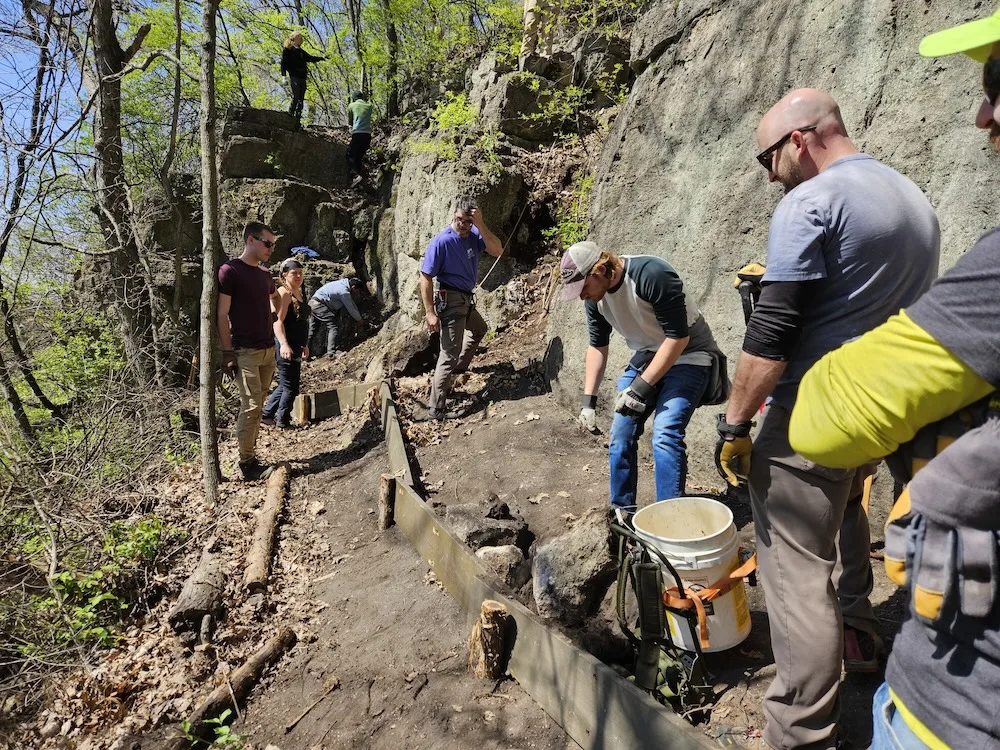
“We’re a user group on public lands, but we’re not the only ones. So we try to work with other groups like the equestrian community or photographers,” Rothe says. “The manufacturer tumbles those shiny, new bolts until they’re light gray, and that blends in nicely with the mottled white lichen that we have in Illinois.”
ICA’s other primary focus is advocacy. With 250 active members, the nonprofit hopes to grow its reputation not only with the members of climbing gyms and college climbing clubs but also with legislators and state organizations. Size in numbers not only gives ICA political capital when advocating for issues affecting the sport, but it can also help provide an advantage for helping solve conservation-related concerns.
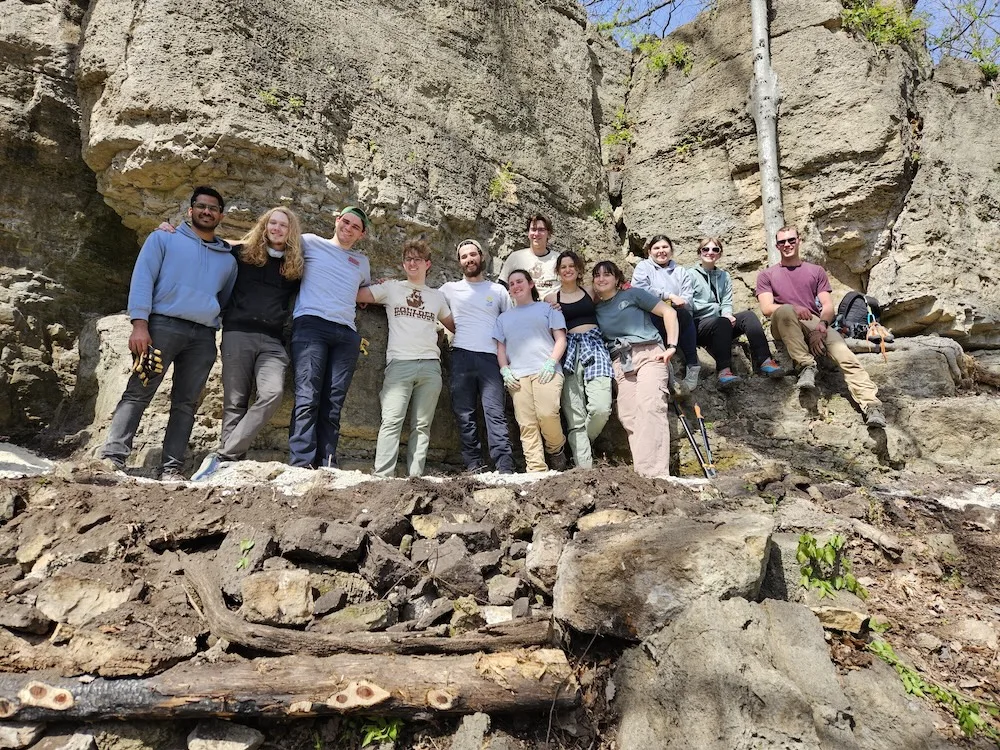
“If there’s something that’s not happening properly, we can jump in and try to make it right, even if it’s just erosion that needs fixing,” Rothe says. “When you’re talking about moving a 300- or 400-pound rock away from an area, there’s skill involved with that and grunt work. That’s a place where the climbing community can really help.”