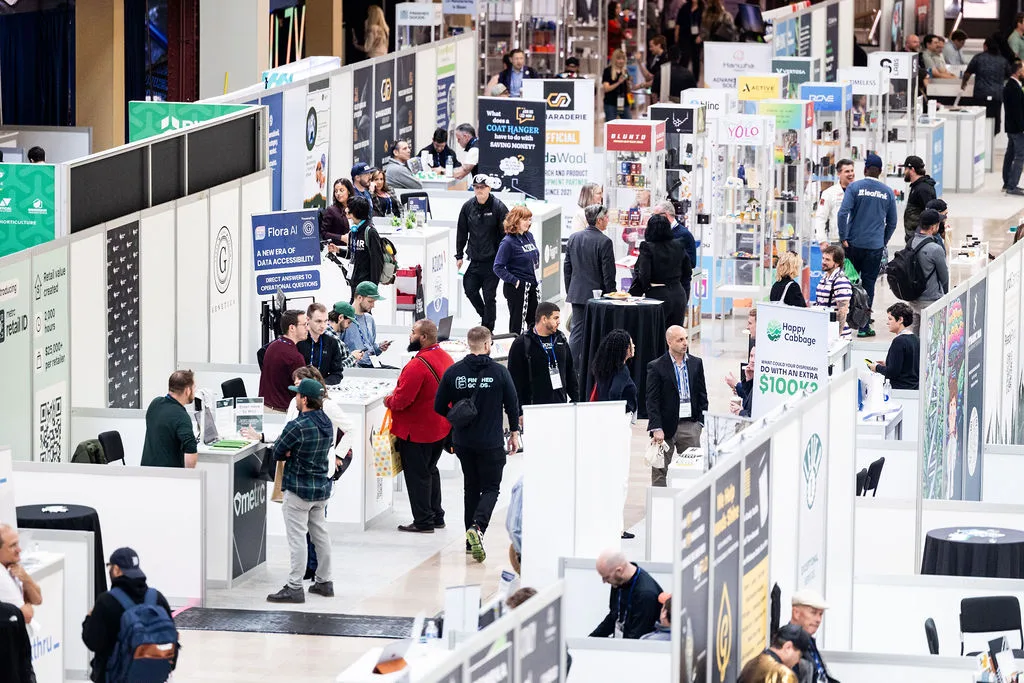
For the second year in a row, George Jage is bringing his signature cannabis trade show, MJ Unpacked, to St. Louis. Designed as a way for industry leaders to connect and discover the latest happenings in the world of cannabis, Jage sees MJ Unpacked as not merely a trade event but also as a bellwether for those who want to understand the space’s current moment. In the runup to this year’s MJ Unpacked, September 3-5 at Union Station Hotel St. Louis, Jage talked to SLM about what to expect and what he feels are the most exciting things happening in the world of cannabis.
This is your second year hosting the fall MJ Unpacked in St. Louis. What brought you back? When we first came to St. Louis last year, we had done analysis the prior year on where a good place to hold our fall event might be, and Missouri, Michigan, and Oregon were all good options. Missouri has great operators around the state that would allow us to build attendance and had been operating for a bit as a marketplace, so we decided upon here. We looked at both Kansas City and St. Louis, and I just loved Union Station. I am not Michelangelo, but I understood how he might have felt when he was shown the Sistine Chapel. It’s such a cool space to design an event around and turned out to be a great property to work with. We feel that St. Louis being by Illinois gives us more access to connected states that also have legal and functional use. People in Missouri have a Midwestern value set. They are hardworking, friendly, and they support their community, but there is also a sense of distrust of outsiders. People needed to “trust by verify,” so we wanted to do a show that turned a lot of heads—and we did that.
Your guide to a healthier, happier you
Sign up for the St. Louis Wellness newsletter and get practical tips for a balanced, healthy life in St. Louis.
Is there anything new this year that you are especially excited about? This year, we made some fundamental changes to the event design; instead of front-loading the information sessions, we have a half-day of conference content across all three days. And we have really good content. We are also inviting local budtenders for the last day. They have a lot of influence, and we want them to interact with brands and suppliers, so they can understand that when they see flower in their dispensary, they know the guy whose product it is and why it’s a better product. This brings fresh energy onto the show floor. Also, if there is a word people will use about this event, it is ‘curated.’ We curated our audience, and participants have to be licensed operators, managers, or higher. There will be fewer conversations, but the ones that happen will be with the right people. We are also doing a pitch stage on the show floor where we are giving people three minutes to pitch ideas. St. Louis is the first show we will be doing this at, and we don’t know how it will go. But it will be fun.
Have you noticed any significant changes in the cannabis industry since last year’s MJ Unpacked? We’ve really seen a lack of available capital that isn’t predatory , and it is really putting a squeeze on things. Because of this, we are seeing a lot of small operators shut down across the country. The bigger ones with debt have defaulted, so we are seeing a lot of consolidation. I’d always hoped that cannabis truly could become an industry with a million millionaires, rather than a handful of billionaires. Small businesses are where innovation happens, while the large provide scale. Having a good symbiotic relationship like this is important for any kind of economic ecosystem. Colorado is a good example of this; it was one of the first markets to approve adult use, but it is on a downward slide because there is this race to the bottom because of oversupply of product related to demand. People have to move product, so they’d like to get something rather than nothing for it. Similarly, in places like Michigan, you can buy an ounce for $50; it hurts everybody. Missouri is unique in that everybody is a vertical operator. There are a handful of companies that are dominating the state market, but they are all carrying each other’s products, so there is reciprocity. However, this is making it difficult for small and emerging brands to find shelf space in the state. It’s not a closed market and is not exclusionary in any way, but that’s just what the market dynamics are when everybody is a vertical operator.
Another thing I have noticed is that shoppers want opportunities to be brand loyal, but they are also value shoppers; they want the highest potency for the lowest cost. What we have done for decades with a lot of cultivation is to breed hyper THC strains and breed out minor cannabinoids. We are maybe seeing a resurgence in the other direction; one of my favorite strains is Aliens on Moonshine, which is 14 percent CBD and 11 percent THC. If I go golfing, I love that one because it makes you super relaxed but not too high to where you can’t move your hands. It lets you soak in the natural splendor of the golf course.
What’s the latest on the hemp-derived cannabis market? This was a big topic of conversation at last year’s event. Broadly, we have seen increased concern in and around the hemp-derived cannabis market. It’s something I’ve been watching very closely. I am vehemently against unfair business competition where these products are able to be sold across state lines with no age restrictions. On top of that, they have people adulterating them with unknown chemical processes. People are making gummies in their garage and selling them in convenience stores; the clarks there who are selling them aren’t trained, so they sell someone a 50-mg gummy that puts them in the hospital, and when the news breaks about this, it’s that someone went to the hospital from a gummy. It makes the legal cannabis industry look bad because people do not understand the difference.
Are cannabis beverages still something to be excited about? I’d really like to see a more aggressive development and new retail channels for hemp beverages. We launched a hemp beverage expo in Georgia this year and are probably bringing it to Missouri in 2026. I like them as an alternative to alcohol with the idea that you can change the intoxicant but not the social lubricant. A lot of people don’t want to combust cannabis; I’m excited for the day when we start seeing endcaps at Sprouts and Whole Foods with hemp beverages, and there are many sharp entrepreneurs who are excited about this side of the market. People in Missouri have come to the table about regulating hemp-derived products and said, “Let’s leave a carve-out for hemp beverages, so that they can be sold in places where alcohol is sold as an alternative to alcohol that is age-restricted.” That is the model we need.
What is the one thing that really excites you about the St. Louis cannabis scene? I’m excited about what St. Louis is doing to create a farm club for social equity and allowing communities typically shut out to enter the cannabis market and compete in a different league of similar businesses and not against the larger market. It gives them a chance, but it has been a slow grow because of access to capital. Microbusinesses are salt-of-the-earth people, and I look forward to seeing what opportunities they can get.