LISTEN TO YOUR HEART
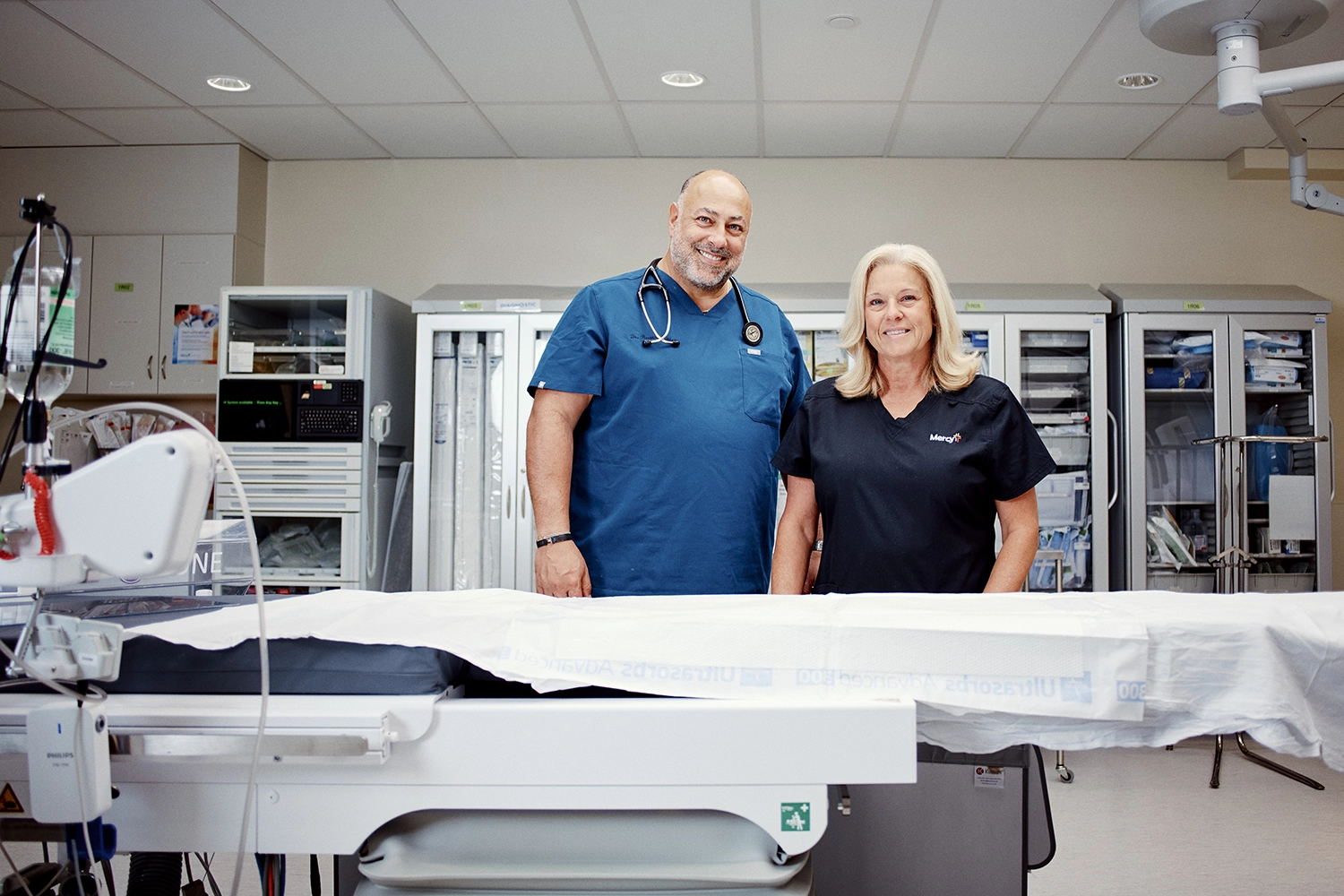
As the manager of a cardiac catheterization lab and diagnostic cardiology department, Jill Steiger thought she knew how to avoid becoming a heart disease patient. However, with a family history of heart problems, she also knew not to ignore indicators, which recently crept up on her while on vacation.
Your guide to a healthier, happier you
Sign up for the St. Louis Wellness newsletter and get practical tips for a balanced, healthy life in St. Louis.
She breathed heavily on hikes but reasoned, Maybe I’m just out of shape. Then a simple stroll from the parking lot to her lab at Mercy Hospital Jefferson resulted in shortness of breath, and she could no longer deny that her heart was struggling.
Steiger learned as a teenager that she had high blood pressure and has worked with a primary care provider to manage it. But after entering her 50s and experiencing a stroke, she’s also become a patient of Dr. Bassem Mikhail, whom she knew from working in the same cardiology department. Mikhail convinced her to undergo a cardiac imaging test known as a CCTA and then a cardiac catheterization procedure, which confirmed that she had developed coronary artery disease and needed treatment. “The really neat part of it is [that] my team took care of me. It makes me a little emotional,” she reflects. “I’ve been doing this for the last 20 years, and I thought, Oh, this is going to be a piece of cake. …But I was scared.”
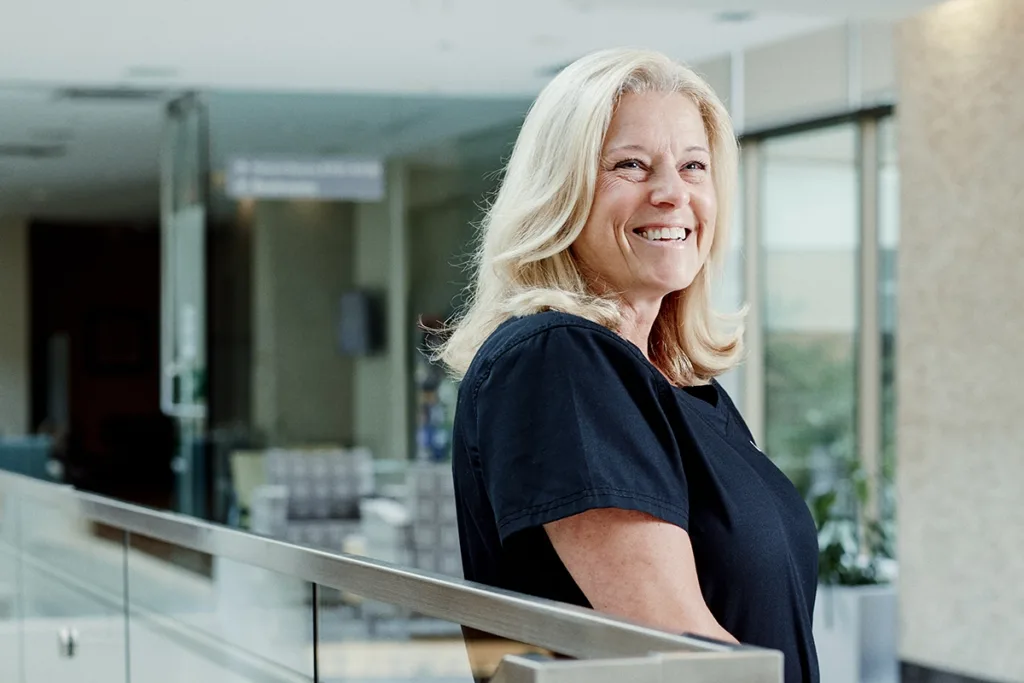
Thanks to Mikhail and the team, she received a stent to restore blood flow through the blocked artery, likely avoided a heart attack, and returned to work about a week after the procedure. With medication and biweekly cardiac rehabilitation, she’s feeling “better now than I have in a long time.”
“I have been to other providers that did not take my high blood pressure and my cholesterol as seriously as Dr. Mikhail,” Steiger says. “A lot of times, women have different symptoms, and it’s so easy to blow it off for yourself and for your providers.”
Excuses might be made for being in menopause or being too sensitive, Steiger explains, so women often avoid complaining about so-called “normal” symptoms. “If there’s something wrong, you need to get to the right person that listens to you,” Steiger advocates. “You know your body. I knew that I could walk from the parking lot into work and not be short of breath. I’ve never had that problem, and I knew immediately—there’s something just not right. You have to listen to yourself.”
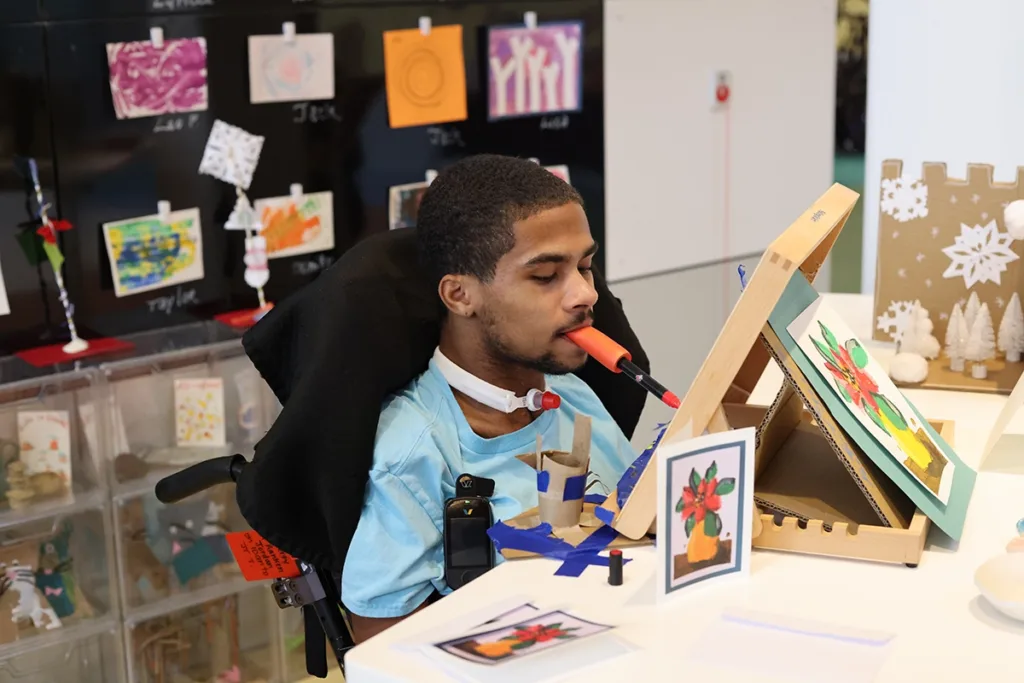
A FOOTBALL PLAYER’S HIDDEN TALENT
A paralyzing injury changed 17-year-old Jatayvion “JT” Thomas’ life last September, redirecting his athletic drive toward a new form of expression.
A football tackle gone wrong sent him to University Hospital in Columbia and then to Ranken Jordan Pediatric Bridge Hospital in Maryland Heights, where he spent a combined six months recovering from a severe spinal cord injury. Without the use of his hands, arms, and legs, he discovered a surprising talent: mouth painting.
“When [Ranken Jordan staff] first introduced me to coming down to the art room, I was up for it, but I was like, Am I just gonna watch? Or, what am I gonna do?” Thomas says. “Maybe a couple of days later, they were like, ‘Do you want to try to paint with your mouth?’ My immediate answer was no.”
With encouragement from art teacher Julie Villhard, who leads the therapeutic art program at Ranken Jordan, he decided to give it a try. “I [had] never done it either. I said, ‘I’ll do it with you,’” Villhard says. “We would sit side by side when we did our paintings, and he would watch me really closely and just do each line I did.”
Controlling the paintbrush was a win in itself, considering that Thomas could barely speak for two months and had to regain strength in his neck. Later, he impressed Villhard with his paintings of animals—more difficult figures to re-create than the natural landscapes they had practiced. For Thomas, painting a bull changed his mindset about pursuing art: “I have a history of riding bulls, so we painted a bull, and it was very good,” he shares. “I was like, Maybe painting is my thing.”
Thomas often spent six hours per day honing his craft and completed at least 20 paintings before being discharged. “It definitely motivated me a lot to get out of my bed or get in my chair and go do something,” he says.
Ranken Jordan is known for its “Care Beyond the Bedside” model that engages patients in creative activities throughout their rehabilitation journeys. Supported by the Arthur and Helen Baer Foundation, the art program is one that’s “huge in healing because we all know that when our mental state is better, that helps our physical state,” Villhard says.
Thomas’ bull painting sold at a charity auction, and another painting of his titled “Let There Be Light” is on display in the Young Artists Exhibition at Saint Louis Art Museum through this fall. He plans to continue painting and sharing his work on Instagram, and next semester he’ll begin studying agriculture at the University of Missouri.

HEART TO HEART
Macey Brown had a relatively “normal” childhood with few medical interruptions, despite living with a donated heart since she was 9 weeks old. Last summer, however, symptoms of heart and kidney failure progressed, sending her back to the hospital for a second transplant at 17 years old.
Hypoplastic left heart syndrome is a rare but severe condition that occurs when a newborn’s heart is underdeveloped on one side and requires immediate treatment after birth. In Brown’s case, she needed a heart transplant and lifelong monitoring by a cardiology team.
“Patients who are transplanted need to be on lifelong immunosuppression [medication],” explains Dr. Lakshmi Gokanapudy Hahn, a WashU Medicine transplant cardiologist and member of Brown’s care team. “One of the main side effects is that it can lead to kidney injury, because that is how the immunosuppressant medications are cleared out of the body.”
By October of last year, Brown’s team and family determined that she needed a heart and kidney transplant at St. Louis Children’s Hospital. “I kind of felt like it was coming just because of how much in and out [of the hospital] I had been doing,” Brown says. “My parents kept me in the know; they don’t sugarcoat anything. They were being straightforward. Same for my doctors; they’re really great about that.”
Children’s has done dual transplants of other organs in the past, but Brown’s was the first combined pediatric heart-kidney transplant in Missouri. Over two days, she underwent nearly 20 hours of surgery with some rest in between each transplant. Slowly but surely, she got back on her feet and was home for Thanksgiving.
“Organ donation is an immense, immense gift,” Gokanapudy Hahn emphasizes. “This is a child who would not have had a chance at having a childhood, or becoming a teenager, or growing up without organ donation.”
“It saved her life twice,” says her mom Pam. “We got the kidney team, the heart team—everybody works together to make sure both organs are still working properly, and everything’s going great.”
Earlier this year, Brown rejoined her cheer team, where she’s moving and shouting again like she’s done throughout high school. She graduated in May, returned to St. Louis Children’s Camp Rhythm as a counselor for kids with heart conditions, and is now headed to Maryville University to study nursing. “I just want to be able to give back to people the way that they’ve given to me,” she says, referring to her medical team at Children’s. Between the hospital staff, her family, friends, fellow church members, and the cheer team, she says she’s lucky to have “never felt alone.”