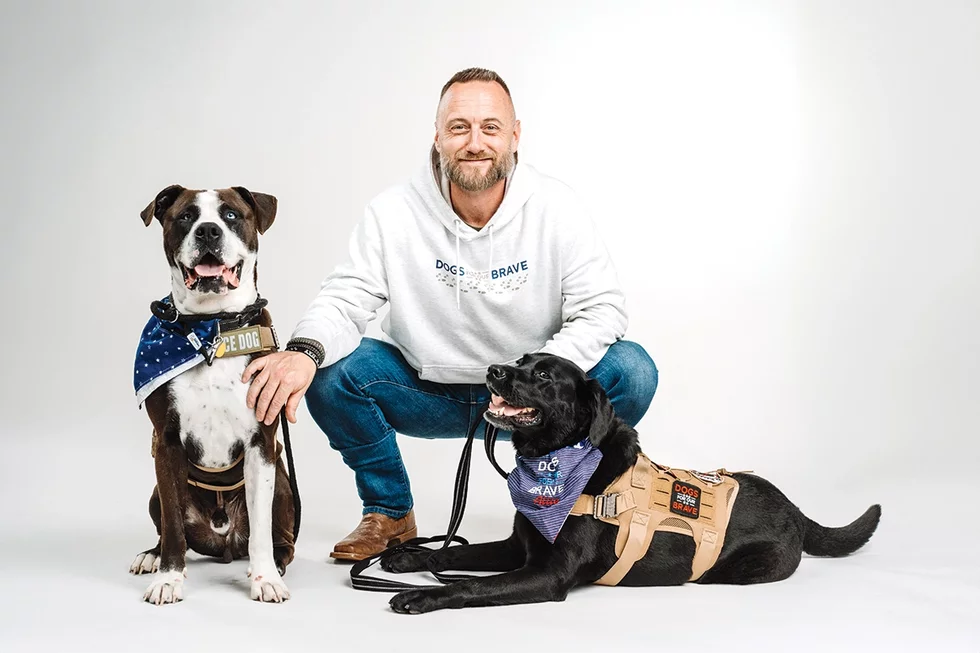
Bryan Pieschel was a youth sports coach in St. Louis when terrorists attacked the United States on September 11, 2001. “That day changed me,” he recalls. “It changed everything for a lot of people. I kept seeing pictures every night on the news of lost service members. My thought was, ‘Do I have the ability to at least save one?’”
Pieschel enlisted in the Army and served as both a lead company medic and lead battalion medic attached to a mechanized engineer unit. He was deployed in 2005 to Baghdad, where he routinely faced improvised explosive devices, sniper activity, and other frontline combat. After experiencing physical injury due to an IED and developing significant PTSD symptoms, he was medically discharged in 2009.
Your guide to a healthier, happier you
Sign up for the St. Louis Wellness newsletter and get practical tips for a balanced, healthy life in St. Louis.
“Being involved in that environment was seeing the worst of what comes from a combat experience,” he recalls. “We lost several members of the unit. We sent quite a few home with significant injuries. It was a civil war that we were caught in the middle of at that point. The horrific violence—there was no way you could come out of that unchanged.”
When Pieschel came home, he says his ambition to help his fellow servicemen and women didn’t lessen: “You never lose that desire to serve, to take care of your brothers and sisters. You may become disenfranchised with the military itself but not the individuals you serve with. What we experience together is a shared life experience that most just will never understand.”
A caregiver by nature, Pieschel wanted to use his experiences and background to help other area veterans get the help they need. He started leading the veteran’s services department at Dogs For Our Brave in July 2023. The organization provides professionally trained service dogs at no cost to those who have sustained injury or illness while serving. The nonprofit rescues its dogs at every opportunity, thereby saving two lives at once, Pieschel explains, and offers free support that covers all food, veterinary care, and pharmaceuticals for the life of the dog.
Every dog is trained to do traditional commands, such as sit and stay, as well as assistance commands, Canine Good Citizen skills, and Assistance Dog International commands. These skills include opening the fridge to grab a water bottle, turn lights on and off, and retrieve items. All dogs also learn social-emotional skills to assist veterans with post-traumatic stress moments and nightmare interruption. More specific commands can be taught to individual dogs that are tailored to their veterans’ needs.
These are services that Pieschel says provide mobility assistance and a sense of comfort and confidence, particularly for those who have suffered injuries that cost them a sense of freedom in daily life. “They know they have somebody with them that has their back,” Pieschel explains. “That relationship that they build with that dog is so invaluable.”
The most challenging part of the work, he says, is encouraging veterans to reach out in the first place. “Veterans who really struggle are so often very hesitant to ask for help because they don’t want to admit they need it,” he adds. “We’re trained to be self-reliant and to problem-solve, so it’s very difficult for us to step forward and be like, ‘I need help. I can’t do this on my own.’”
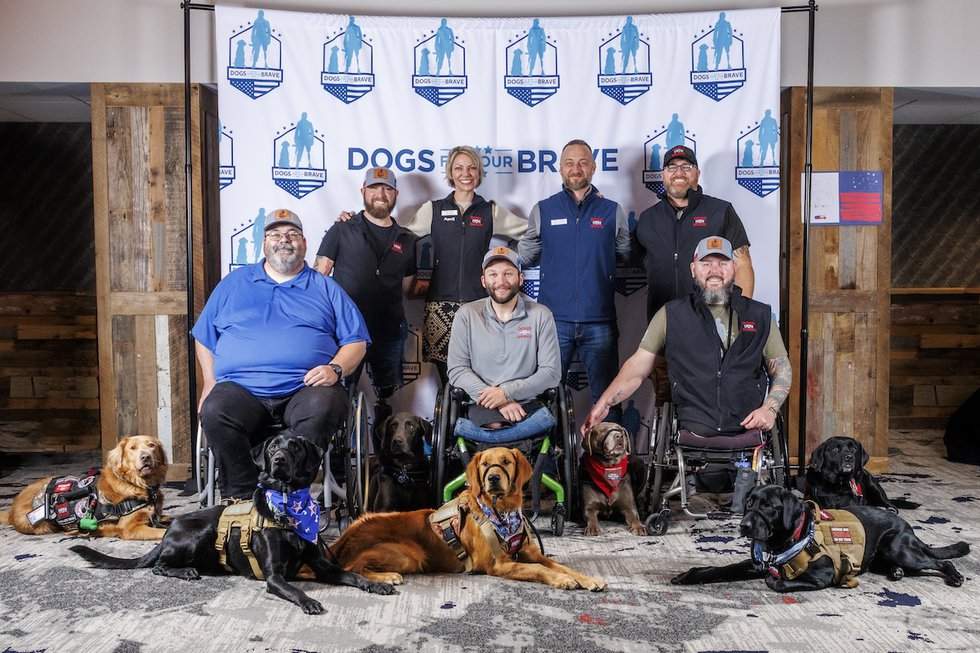
This work is essential, Pieschel adds, as the country’s veteran community faces a growing mental health crisis. “We have to stop the numbers,” he says. “I know it’s double digits, the guys we’ve lost from our unit, whether to suicide, overdoses, or alcoholism. And I know there’s a lot of guys out there that their numbers are even higher from units they serve with. We have to get back in the fight to take care of our own because there aren’t enough entities out there that are going to do it for us, as much as we believe they should.”
Dogs For Our Brave’s services allow an avenue for helping veterans return to a positive living environment. “The key part is improving their lives and getting themselves back to a place of positive interaction within their own home, within their family, their caregivers, whatever that may be,” he says.
The nonprofit ensures follow-through with its services via a check-in process. “We remain very close with our veterans to ensure that the dog is doing what needs to be done. So if the veteran needs support or further training, we’re there to provide that,” says Pieschel. “Being able to have that consistent contact allows me to essentially be ‘Doc’ again and take care of them any way that they need but also to challenge them to get out of their comfort zone. That is a big piece of getting them comfortable to receive their freedom again.”
What most people don’t understand about PTSD, Pieschel says, is that it never goes away. “No matter how much valuable, essential therapy you go to—you’re never gonna forget what occurred, nor do we want to,” he says. “We don’t ever want to forget our brothers, our sisters that we lost. It’s so difficult to be able to separate and not be angry about what we experienced, whether it happened to us personally, we were injured, or we witnessed it. And that’s true for trauma in general—we won’t ever forget, nor do we want to forget. But we do want to learn how to manage it.”
Pieschel explains that he’s here to help fellow veterans both through and beyond Dogs For Our Brave. “If a veteran reaches out, and they’re not the right fit for our program, I’m gonna try to get them to resources that are the right fit,” he says. “You have to reach out, but we’re here to help you in any way we can. This is not a fight you have to fight alone.”