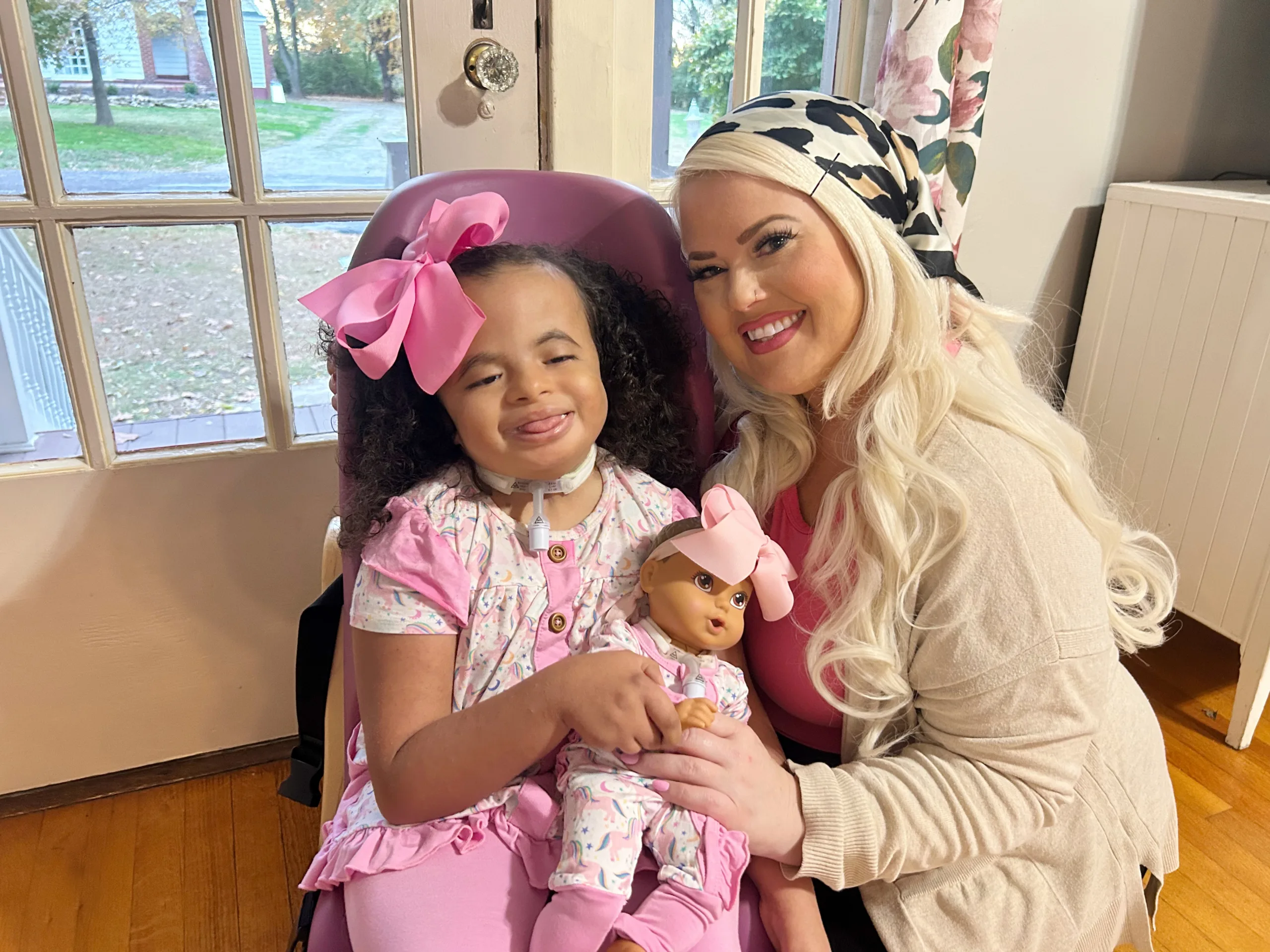
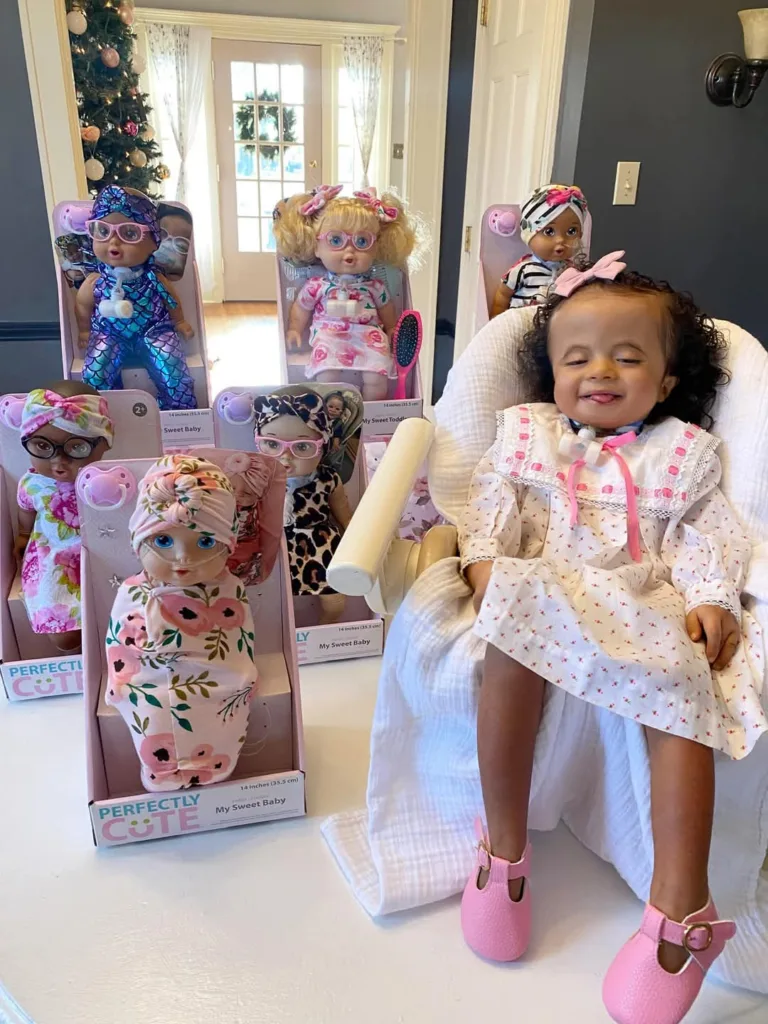
When Rose Watson’s niece turned 4, Watson knew exactly what to give her: a doll that looked just like her cousin Lavender, complete with a feeding tube, tracheostomy tube, and ventilator.
The little girl had always been fascinated by Lavender’s medical equipment, affectionately calling it her “cute cords.” So Watson, a seamstress from Normandy, found a doll with a matching skin tone, made identical dresses for the doll and Lavender, and recreated the medical devices her niece had grown up seeing.
Her niece was thrilled. Not only could she carry a miniature Lavender wherever she went, but she could also practice connecting the doll’s feeding tube and explain the equipment to others.
That was in 2019. What started as a birthday gift has since grown into a passion project reaching families around the world. Watson now customizes dolls to represent children with disabilities and medical complexities, especially those receiving care at St. Louis hospitals that have played an important role in her own family’s journey.
“Whenever I posted about it, people were like, ‘Oh, my gosh, I want one for my child,’” Watson recalls. “I’ve made them for kids all over the world at this point.”
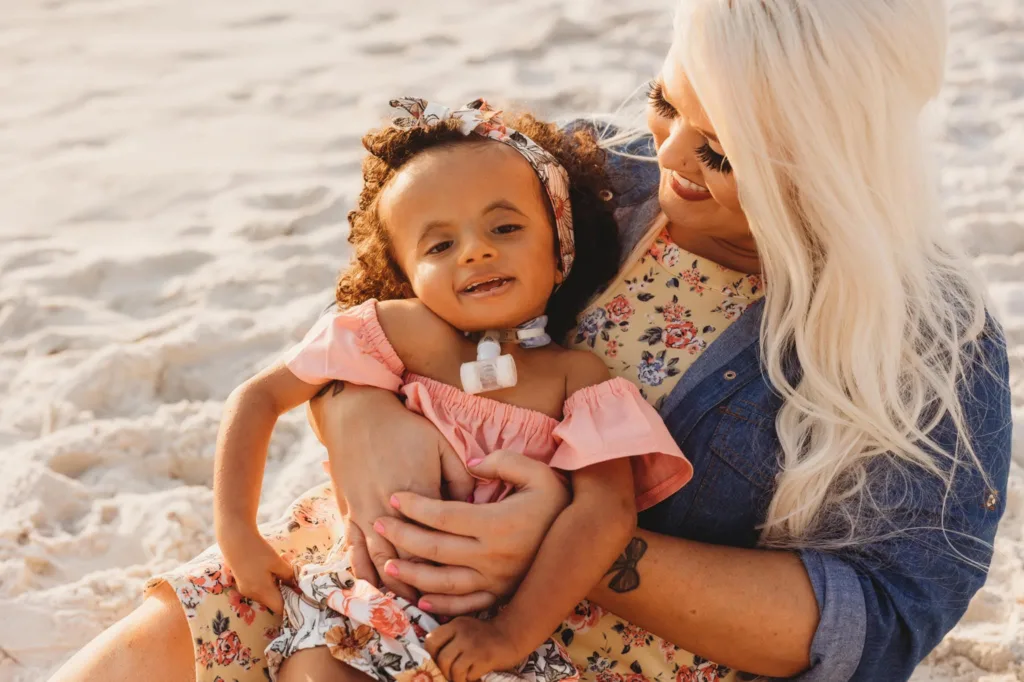
At the heart of Watson’s work is the little girl who inspired it all: her youngest daughter, Lavender, who turns 10 in December.
Discover fun things to do with the family
Subscribe to the St. Louis Family newsletter for family-friendly things to do and news for local parents, sent every Monday and Thursday.
A doll that looks like me
Lavender was born with trisomy 18, a genetic condition associated with significant developmental and medical challenges. During her first year, she spent much of her time at SSM Health Cardinal Glennon Children’s Hospital, eventually requiring a tracheostomy and ventilator to help her breathe.
For Watson, having a hospital equipped to care for children with trisomy 18 just 15 to 20 minutes from their Normandy home has made an enormous difference.
“I have friends who come to Cardinal Glennon from four and five hours away,” she says. “We just happen to be by one of the trisomy-friendly hospitals.”
Today, Watson describes her daughter as a happy, social little girl who loves swimming, swinging, watching Ms. Rachel, and spending time with her mom and 18-year-old sister, Luella.
“I think people have this perception of children, or anybody with medical complexities, having a sad life,” Watson says. “But she truly is the happiest person.”
Lavender’s personality and experiences drive Watson’s work. Through her Instagram account, @little.miss.seamstress, Watson shares customized dolls featuring feeding tubes, tracheostomy tubes, ventilators, oxygen cannulas, ports, scars, birthmarks, and other details that reflect the children who receive them.
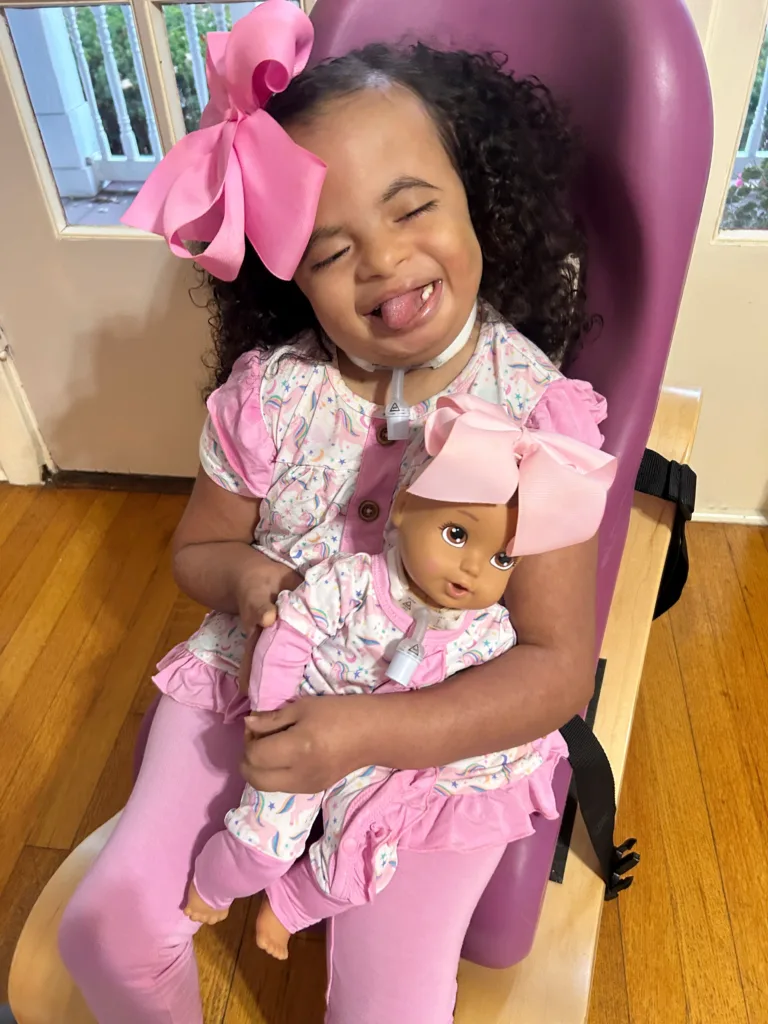
The dolls offer more than a familiar face. For children who rarely see their medical devices represented in toys, they can provide a powerful sense of belonging. They also help siblings and friends better understand equipment that might otherwise seem intimidating.
Watson remembers receiving a video of an older girl opening a doll with a feeding tube just like hers.
“She just started crying so hard,” Watson recalls. “She was so happy to see a doll that looked like her.”
Watson has also found ways to share that joy closer to home, donating dolls to children receiving care at Cardinal Glennon and Ranken Jordan Pediatric Bridge Hospital, where Lavender attends therapy.
She continues to accept requests through social media, often connecting families with other families or supporters who offer to cover the cost of a doll. Knowing firsthand how expensive caring for a medically complex child can be, Watson tries to make the dolls available at little or no cost to the families receiving them.
“Most of the time, I don’t even have to charge these families who want one for their child,” she says.
Making Halloween accessible, one costume at a time
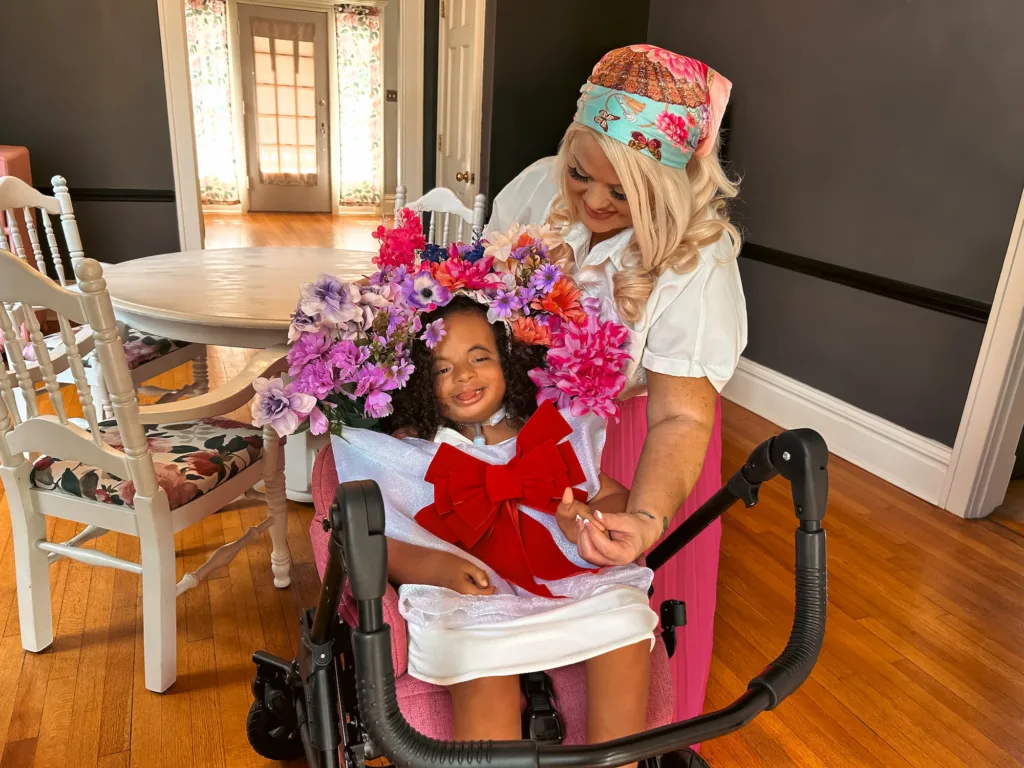
Watson’s creativity extends well beyond dolls. For nearly a decade, she’s been designing elaborate costumes for Lavender, a tradition that began during her daughter’s first year in the hospital.
With Halloween approaching and no discharge date in sight, Watson brought her sewing machine and bags of fabric into Lavender’s hospital room. “I don’t know how long I’m going to have my daughter with me,” she remembers thinking. “I want to make sure that I can look back and have all these pictures and memories of her in these costumes.”
The costumes became a bright spot for the family and hospital staff, who looked forward to seeing Lavender’s latest look. When December arrived and they were still hospitalized, Watson kept sewing, this time creating Christmas-themed outfits.
The tradition stuck. Every year, Watson dreams up new costumes, complete with wigs, makeup, and plenty of personality.
“She loves dressing up,” Watson says of Lavender, who is nonverbal. “She is always cracking up while I’m doing the makeup or the wigs or whatever it is.”
This Halloween, Watson took that creativity a step further through a collaboration with Compleat, the nutrition brand whose tube-feeding formula Lavender uses.
Watson and Lavender were one of three families who helped develop the brand’s Tubie-Ween collection, a series of Halloween costumes designed specifically for children and teens who use feeding tubes.
Inspired by Lavender’s love of flowers, Watson transformed her daughter into a colorful bouquet of wildflowers. The design incorporated easy access to her feeding tube, allowing Lavender to enjoy Halloween festivities without uncomfortable adjustments or interruptions.
The project also went beyond the three participating families. Compleat made customizable, step-by-step costume patterns available so other families could create tube-friendly Halloween looks of their own.
For Watson, the collaboration was a natural extension of something she’s been doing for years: finding creative ways to make everyday childhood experiences more accessible.
Finding community in St. Louis
As Lavender has grown, Watson has become increasingly aware of the small barriers families of medically complex children encounter in everyday life.
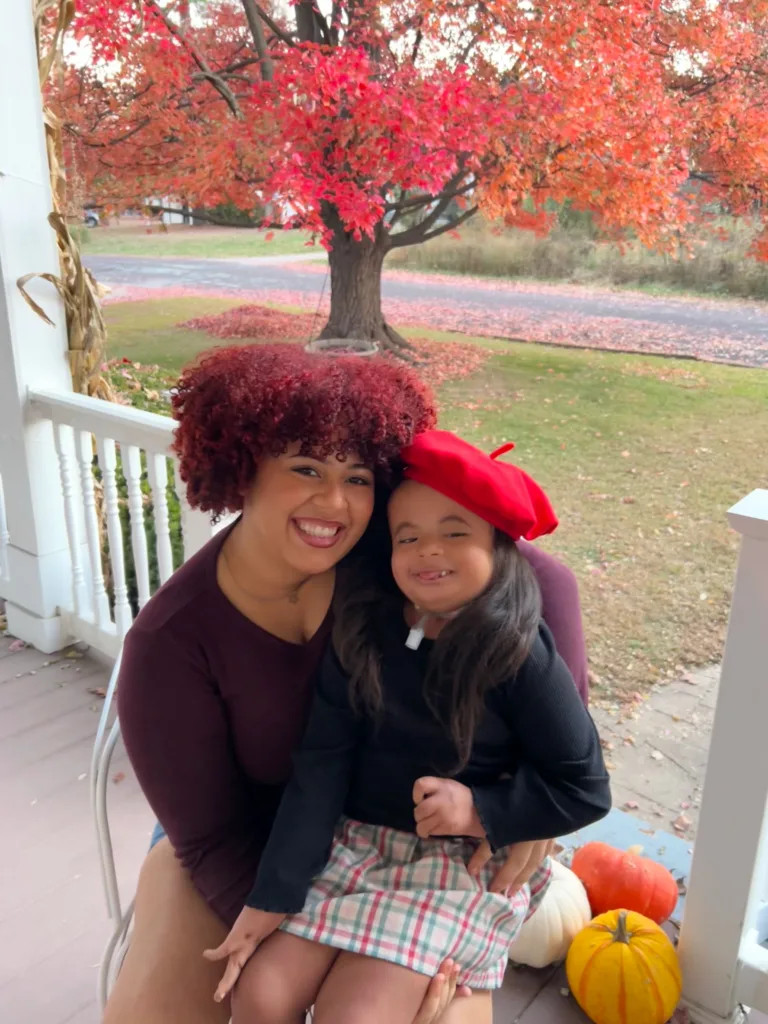
Clothing, for example, can make accessing a feeding tube difficult, particularly when a child is out in public. Watson appreciates retailers such as Target that now offer adaptive clothing but hopes more brands will follow suit.
“It really doesn’t take that much more,” she says. “As a seamstress, if I’m able to do it, these huge companies are definitely able to do it.”
Closer to home, Watson has found that a little extra effort can go a long way toward making family outings more inclusive.
She recalls a visit to Eckert’s in Belleville, where staff brought out a ramp to help get Lavender’s medical stroller onto a wagon for a trip to the pumpkin patch.
Once aboard, Lavender was in her element, happily bouncing along the bumpy path.
The family also enjoys visiting the Saint Louis Zoo and local parks, but one of Watson’s favorite places is Ranken Jordan, where Lavender receives therapy.
Watson emphasizes it’s become more than a medical facility for her family. It’s a place where she and Lavender can spend time around other families who understand their experiences.
“A lot of the time in public, we don’t see medically complex children with trachs and feeding tubes,” she says. “Whenever we’re there, that’s my happy place.”
That sense of community has been invaluable since Lavender’s birth. Watson remembers feeling overwhelmed by the medical knowledge she suddenly needed to acquire, from managing a feeding tube to caring for a tracheostomy.
The parenting groups she’d relied on while raising Luella couldn’t always answer those questions. Instead, she found support through online communities of parents navigating similar diagnoses and medical needs.
Many of those friendships have lasted for years, even after some families experienced the loss of a child.
“They’re my family now,” Watson says. “We really lean on each other.”
Big dreams for Lavender and beyond
Today, Lavender is doing well. She hasn’t needed a ventilator in approximately five years, and Watson says the family can generally manage illnesses at home rather than in the hospital.
It’s a life Watson once struggled to imagine during those early months of uncertainty. “I remember, at a certain point, I was like, ‘I don’t want to be her nurse. I want to be her mom,’” she says.
Eventually, she realized she could learn to manage Lavender’s medical needs while still enjoying the everyday moments of motherhood. Those moments include plenty of time with Luella, whose close relationship with her younger sister gives Watson hope for a more inclusive future.
Watson says Luella and her friends interact with Lavender just as they would with anyone else, speaking directly to her and including her in their conversations. “I feel like these kids are living in a different world than during my childhood,” Watson says. “We can learn from each other.”
As for what’s next, Watson has a few dreams of her own. She’d love to develop a line of customizable dolls that could be made to look even more like the children who receive them, rather than modifying dolls purchased from retailers.
And for Lavender? Watson hopes for more travel, another trip to the beach, perhaps a visit to Disney, and, ideally, a chance to meet her favorite celebrity, Ms. Rachel, who previously sent Lavender a personalized video after seeing her watching one of her shows.
“I want her to do all the things,” Watson says.
In the meantime, Watson will keep sewing, creating, and sharing her daughter’s story, one doll or costume at a time.
“I have a lot of dreams when it comes to Lavender,” Watson says. “She’s my biggest inspiration.”
Families interested in requesting a customized doll or supporting Watson’s work can contact her through Instagram at @little.miss.seamstress or through the Loving Lavender Facebook page.