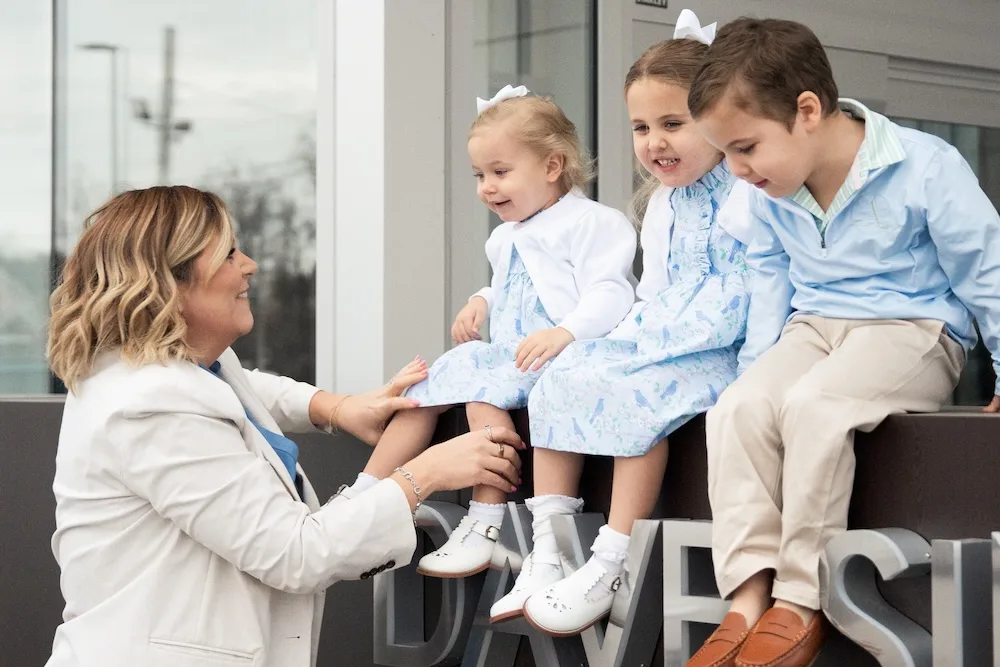
It’s a typical Monday morning at the International Schoolhouse (1414 Bellevue Avenue). Children file through the doors into brightly colored classrooms, greeting their teachers with hugs and a cheerful “Hola, Señora Carolina.”
Carolina Diaz-Silva—known as “Señora Carolina”—is the founder and head of the preschool-through-second-grade Spanish immersion school. Though she oversees daily operations, she knows every student and parent by name. Mornings often begin with hugs, greetings, and even dancing.
As one of the few Spanish immersion programs of its kind in St. Louis, the private school stands out—but its sense of community is just as central as its curriculum.
Discover fun things to do with the family
Subscribe to the St. Louis Family newsletter for family-friendly things to do and news for local parents, sent every Monday.
Administrators, teachers, parents, and students operate like an extended family. For parents like Jaspur Coleman, a hospitalist at Washington University in St. Louis, that makes all the difference.
“They know every kid. They’re hugging every kid,” she says. “That makes me, as a parent, feel totally comfortable dropping my 2-year-old off for eight hours a day.”
Joseph Brunworth, whose two children attend the school, echoes that sentiment. “They immediately immerse not only the students, but the families,” he says. “Not only did our children learn so much, but the community it builds between parents is amazing.”
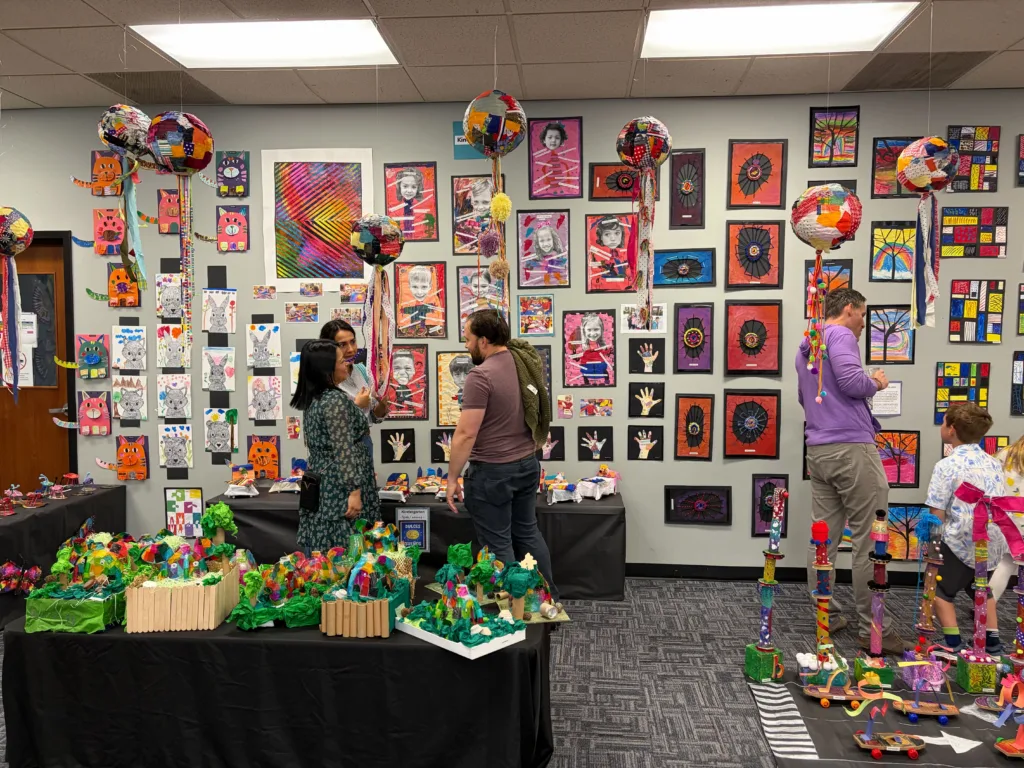
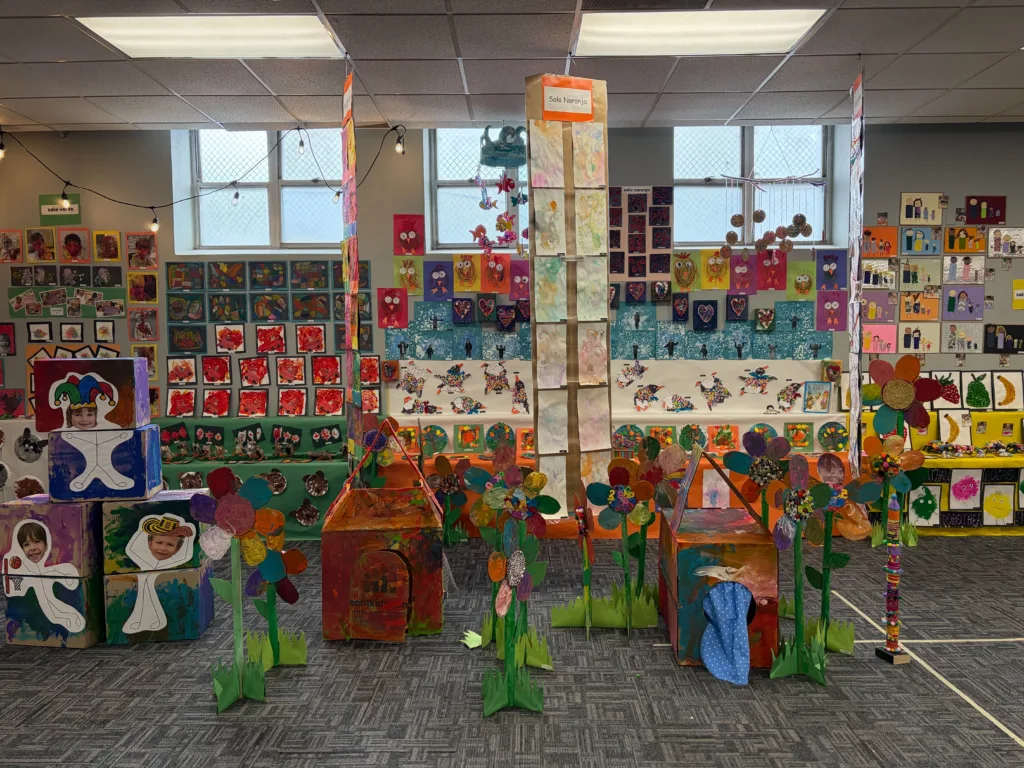
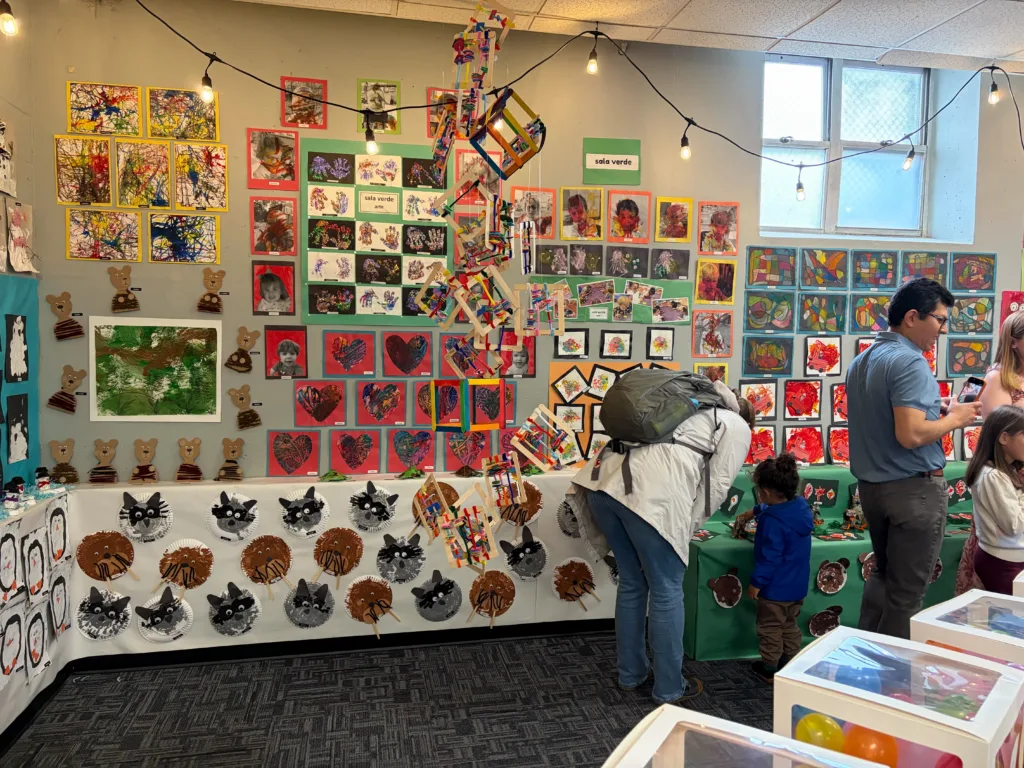
That community was on full display at the school’s annual art show this month, where hundreds of families gathered to celebrate student work with food, music, and dancing that stretched well beyond the scheduled end time.
Brunworth, who studied Spanish for years, wanted his children to have a bilingual education. “This is the kind of opportunity you’d expect in New York or San Francisco,” he says. “To have it in St. Louis—and for it to be this good—was beyond our expectations.”
The results, he says, were immediate. His son Miles began singing songs like “Twinkle, Twinkle Little Star” and “The Itsy Bitsy Spider” in Spanish at just 2 years old.
“I studied Spanish for 10 years,” Brunworth says. “The amount he learned in three months was roughly equivalent. It blew me away.”
At the school, language learning is fully immersive. “The motto is, We don’t teach Spanish—we teach in Spanish,” Diaz-Silva says.
Students still develop math, reading, writing, and social skills—just entirely in Spanish. “The only difference,” she explains, “is that it’s happening 100 percent of the time in Spanish.”
That immersion extends beyond language into culture. Teachers from Peru, Puerto Rico, Colombia, and other countries expose students to a wide range of dialects and traditions. “It’s very authentic,” Brunworth says. “Spanish is spoken all over the world, and that diversity is represented here.”
A walk through the school makes that clear: toddlers counting in Spanish, preschoolers flipping through flashcards, and older students conversing with ease.
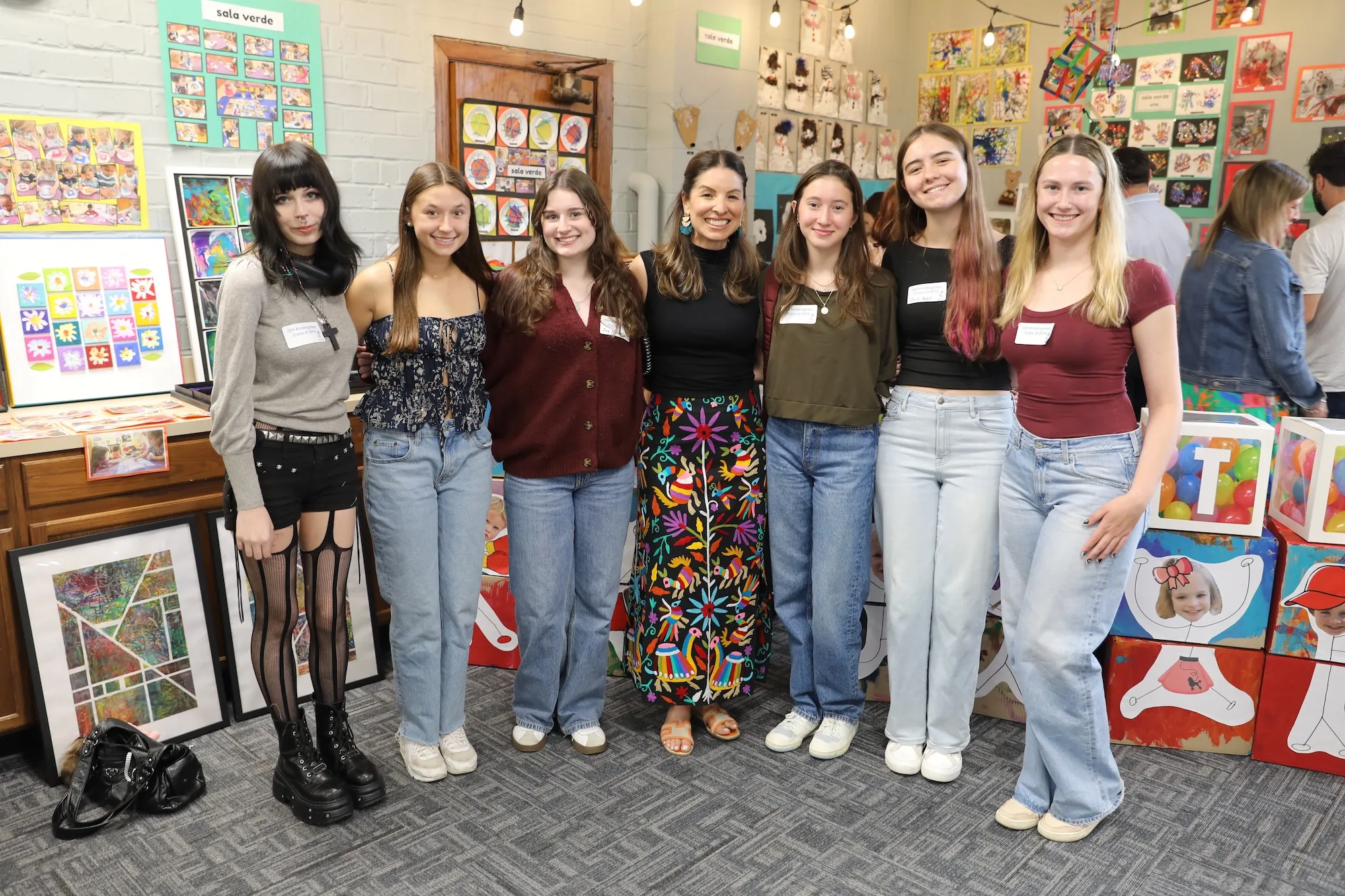
Even years later, the impact remains. Claire Nehrt, now a student at WashU, attended the school as a child and still returns to practice her Spanish. “Even if my Spanish isn’t perfect, they’re all still teachers,” she says. “They want to help you succeed at any stage of life.”
Nehrt recently reunited at the school’s art show with childhood friends Ava Bribriesco and Lucia Lerena—friendships that have lasted more than a decade.
For Bribriesco, whose father is Mexican but didn’t grow up speaking Spanish fluently, the experience was especially meaningful. “The immersion helped me learn and retain Spanish,” she says. “It allowed me to continue that connection to my culture.”
That lasting connection—to both language and community—is what sets the school apart. “Ex-students always want to come back,” says office administrator Julia Bandy. “Even on days when public schools are closed, parents drop them off here because they want to be here.”
Since opening in 2009, the school has grown steadily. Diaz-Silva began with just 10 students. “I thought I had made a huge mistake,” she says. “I was walking parents through an empty room, telling them how great it was going to be. But they believed in it.”
In those early days, she even cooked meals for students herself—rice, beans, lentils, and meatballs—then taught parents how to recreate the dishes at home.
The school quickly expanded, reaching 50 students in its second year and 85 the year after. Today, it serves children through second grade, with demand continuing to grow. “Every year, parents ask for a third grade,” Diaz-Silva says.
At its core, the school’s mission extends beyond academics. “It’s very much about promoting love and community,” Nehrt says. “It enriched my perspective as a child to be surrounded by people from so many different backgrounds.”
Diaz-Silva sees that impact every day—especially when students interact confidently with Spanish speakers in the broader community. “Our children hear someone speaking another language, and they don’t think it’s strange,” she says. “They’re curious. And that’s incredibly rewarding.”
That curiosity, she adds, is the foundation for something bigger. “Learning that something different isn’t scary—that’s the beginning of the solution.”