Evangeline “Evie” Mae Statler’s life began as a dream long ago for her parents and 10-year-old brother Mason. From hearing the name Evangeline for the first time in a game Mason was playing—which the Statlers later learned meant “bringer of good news”—to literal dreams about adding a little girl to their family, this baby was beloved before she even existed. So, when that twinkle in their eye became a positive pregnancy test, it felt predestined all along.
Fast-forward to 23 weeks pregnant, when Maddie Statler felt a little more tired than usual and noticed some pain in her lower back. “I was sure there’s no way this is me going into labor or anything. And then I started having what felt like contractions,” Maddie says. “It wasn’t until I went to the bathroom and had bleeding that I was like, OK, we need to go to the hospital, which was an hour away from where we live. So we all got in the car and went to the hospital. Doctors, sure enough, said, ‘You’re having contractions. You’re going into preterm labor.’ And that was just so scary.”
Discover fun things to do with the family
Subscribe to the St. Louis Family newsletter for family-friendly things to do and news for local parents, sent every Monday.
The doctors at Saint Francis Hospital in Cape Girardeau did an ultrasound scan, which showed baby Evie at a normal heart rate. “That just made us feel so much better because she was doing perfectly fine, just bouncing around, so energetic,” Maddie describes. “The plan from that point on, they told me, was to try and stop the contractions with medication and to keep her in as long as possible. They explained that each day really mattered to keep her in.”
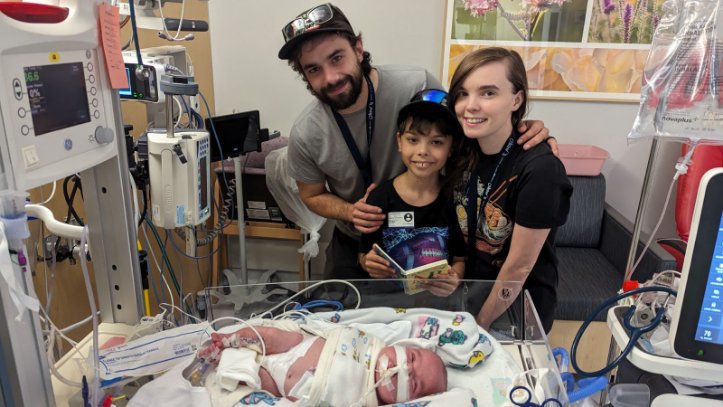
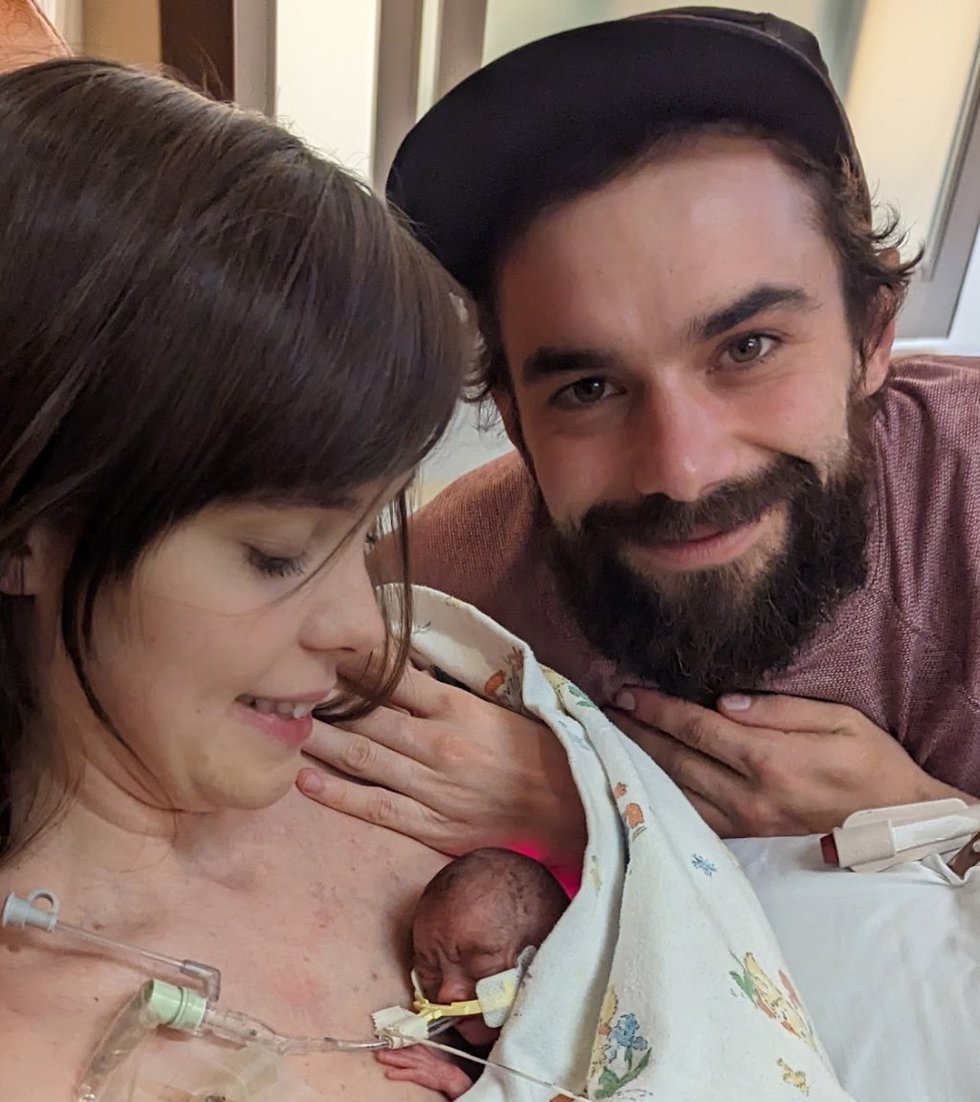
Evie was born 16 weeks early at just 14 ounces. The Statlers were told she had a less than 50 percent chance of survival, and even then would face a range of medical issues. “The whole time, I just believed that’s not my baby—that’s statistics,” Dylan Statler says. “Which was maybe a coping mechanism because how could you hear all these things and not be like, ‘Oh my goodness,’ you know? And some days, it really did feel that way—like, well, maybe she isn’t gonna make it. But I really did believe it from day one, that that’s all fine and good, but that’s not our baby.”
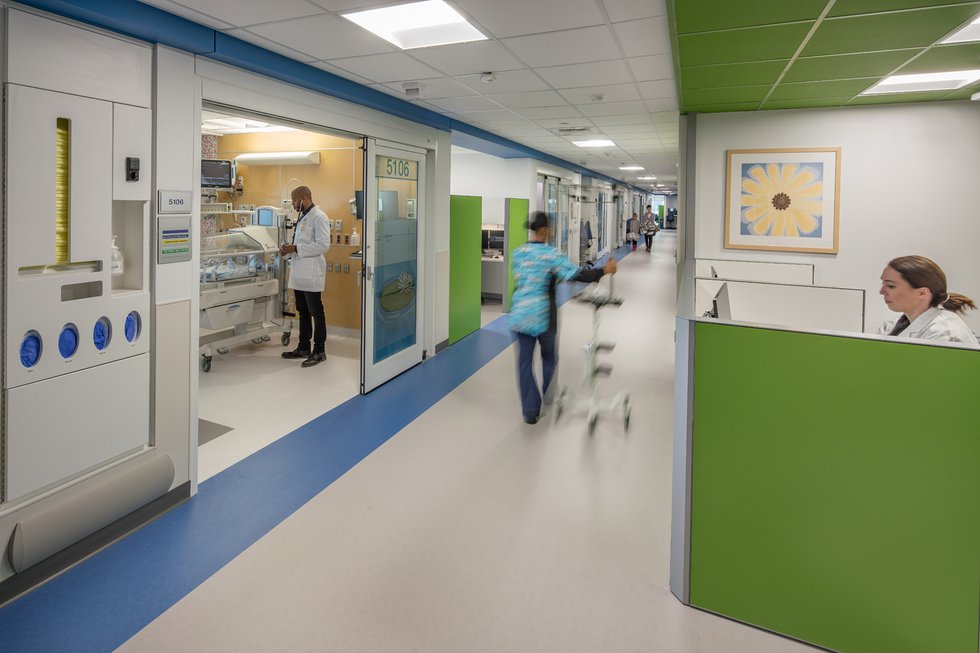
Like many babies born extremely prematurely, Evie had a host of health complications, including pulmonary hypertension, that required a higher level of specialized care. After four months at Saint Francis, Evie was transferred near her original July due date to St. Louis Children’s Hospital, where the NICU team could offer a more intensive level of support.
“Pulmonary hypertension is the diagnosis of very high blood pressure in the lungs, which is a known complication of extremely preterm babies, but can be very challenging to diagnose and treat,” says Dr. Melissa Riley, Washington University neonatologist at St. Louis Children’s Hospital. “Evie came to us because she needed the expertise that we have available here at Children’s. She needed a cardiac catheterization. A lot of people have heard of cardiac cath because adults have them to look at their heart function, vessels, blockages, and such. But at Children’s, we can actually do a cardiac cath on a tiny baby, and it gives us great information about the way the heart is functioning, the pressures that are there, the pressures in the lung. There are certain procedures we can even do when a baby’s having a cardiac cath. But it takes a lot of expertise to be able to do a cardiac catheterization on a tiny baby, and we are one of the only places in the area that can do that.”

Not only were the Statlers fortunate to have an in-state hospital that could perform this level of treatment for Evie, but also, they lucked out with timing in the field as a whole. “Neonatology is such a young field of medicine, if you think about it,” Riley says. “Most NICUs opened in the ’70s and ’80s. The advancements over the last 40 to 50 years have been really phenomenal. But when you look at even what we’ve done over the last five to 10 years, where we’re able to not only give children a chance, but also give their families hope, I think is really fascinating. Cardiac catheters for premature babies is one of the very cool technology advancements in neonatology over just the last several years.”
Maddie and Dylan went into survival mode, balancing responsibilities at home, taking care of their son, and spending as much time in the NICU as possible. “It was a rollercoaster. There’d be good news, then two steps backwards with bad news, and then three steps forward,” Dylan says. “Kind of like the tide coming in—a wave pushing in and receding. From the outside, it might sound like, ‘I can’t imagine putting my life on pause and having to be at the NICU every day.’ But something just happens. It’s instincts; it’s your baby in there. The world kind of slows down or stops even, and time isn’t really linear anymore.”
The Statlers describe the beeping sounds of the NICU as the noise they’ll remember most from this time, with Maddie having nightmares about those sounds even at home. As she explains the trauma of what the Statlers call their personal marathon, Maddie gets emotional while expressing the experience of working with the staff at Children’s. “The NICU nurses and everybody that works in there are some of the best people,” she says. “They’re just special; they’re kinda like superheroes. They’re blessed with the skill and knowledge to take care of your baby. It’s definitely scary, putting the care of your baby in their hands, but now, they’re like a second family to us. It’s amazing having this whole team of people with one goal to get Evie better and that just truly love her and want see her get better and get home. They’ve cheered us on along the way. And it’s not just doctors and nurses—it’s also physical therapists and occupational and respiratory therapist and speech therapists and pharmacists and dietitians. It’s just humbling. They saved our baby’s life, and we forever will be grateful for them. They truly have loved her like they would love their own child.”
When Evie finally turned a corner and started improving day after day, Dylan describes the feeling as coming up for air after being held underwater for far too long. To cope during that time, Dylan painted his way through. As a professional artist, Dylan was inspired by his daughter to create an emotive acrylic on canvas entitled Waiting for Her Arrival. The painting is currently on display at Art St. Louis as part of the Art St. Louis XXXIX The Exhibition. “The idea behind it was the feeling of getting your house ready for someone special to come over—you want to tidy up the house, get it pretty, put the flowers in the vase. It was like I was preparing for her to come home. I got the flowers in the vase, and this was kind of like assuring to me in my subconscious that she will come home one day. It was something to focus on; it was hope. There’s also a lot of crazy patterns in the background, and it represents the emotions and the rollercoaster that this NICU journey has been. The focus point is the beauty of it all, and the fragility of life. I just wanted to paint something pretty for her, and then all the all the other details started coming in.”

The Statlers hope to create art prints of the series inspired by Evie—currently six paintings in total—and give them to other NICU families as a medium of inspiration. For other parents in similar situations, Dylan recommends taking it one day at a time: “For us, it was about taking those small victories and going with it and believing she’ll come home. We had a lot of prayer teams and community supporting us and giving us encouragement. Family and community is definitely important at that time.”
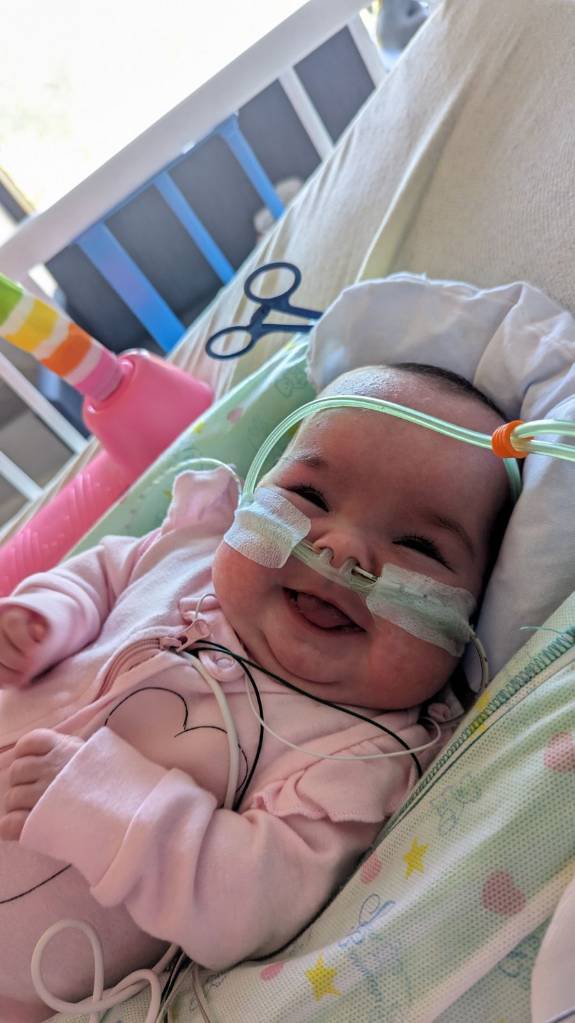
One thing that her parents and the staff at Children’s can agree on—Evie is a truly special baby. “To see her progression, to see her response to medications, therapies, nutrition, and time, she’s spectacular,” Riley says. “She’s beautiful; she’s interactive. She smiles; she’s curious about the world around her. So when I say I was able to help this family take this extremely preterm, incredibly immature, prone to infection baby and gift her back to her parents the week before Christmas as healthy as I could ever have guessed her to be and more…it’s pretty remarkable. When I think of Evie and her family and how they’ve handled this entire journey, I’d say they are remarkable. She is remarkable.”
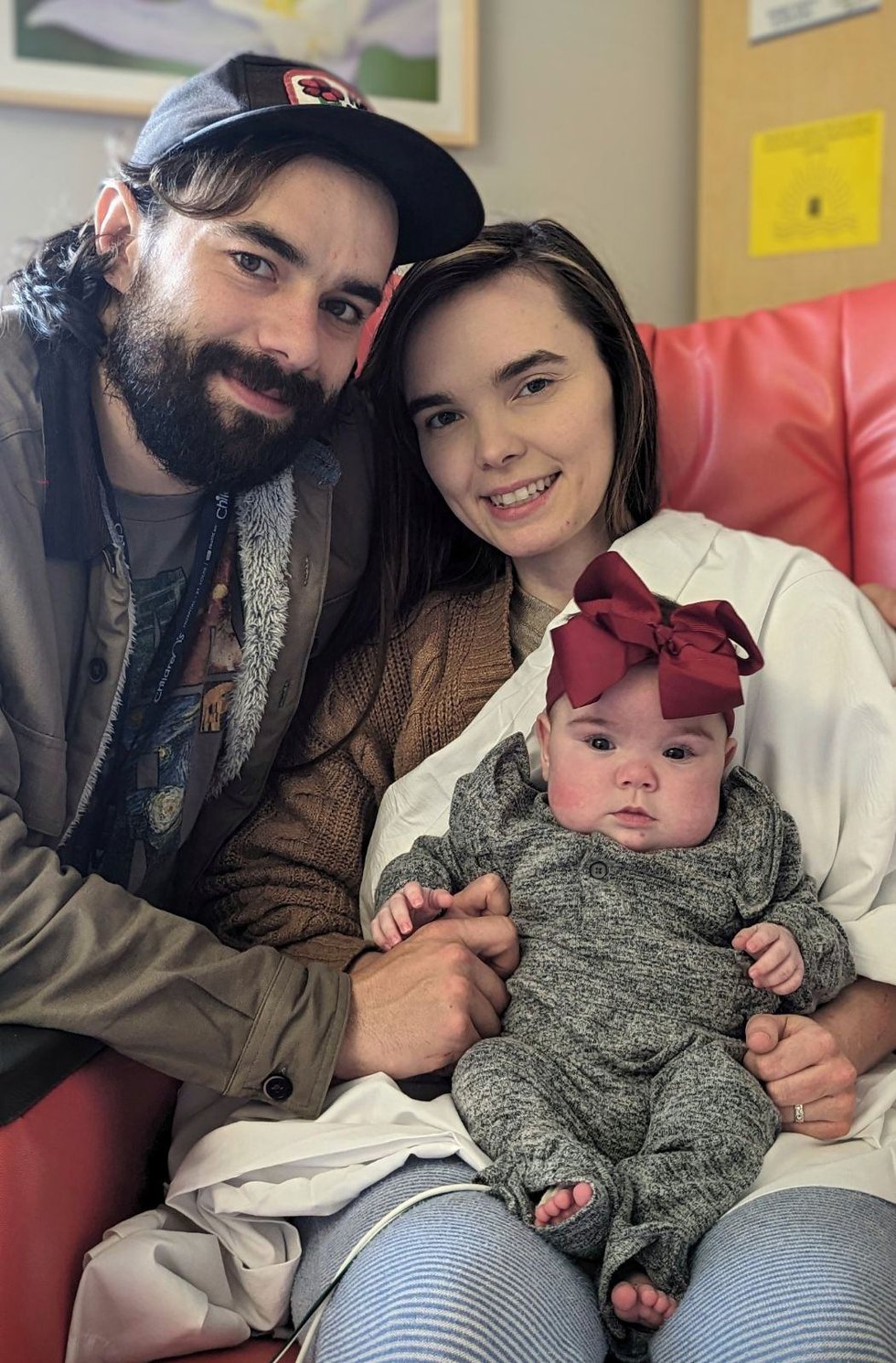
As for the future, Maddie and Dylan are elated to celebrate the holidays at home with their entire family present. They acknowledge they have a long road of doctor’s appointments and follow-ups ahead—including various forms of therapy, checkups for her feeding tube, eye doctor appointments, heart specialist follow-ups, and more—but they are taking the wins as they come. Evie recently had her breathing tube removed, which Dylan describes as miracle in itself, and is stronger today than ever. The Statlers will be staying close to home for a while, as preterm babies are at higher risk for infections. Their joy over the privilege to just be home, though, is evident. “I’m just excited to see how she reacts to being in the outside world because she’s never been in the outside world before,” Maddie says with excitement.
And for the big, bright future ahead for Evie specifically, Maddie says she hopes her story and her life will inspire and bring hope to everyone around her. “I know she’ll do big things,” Dylan agrees. “She already has.”


