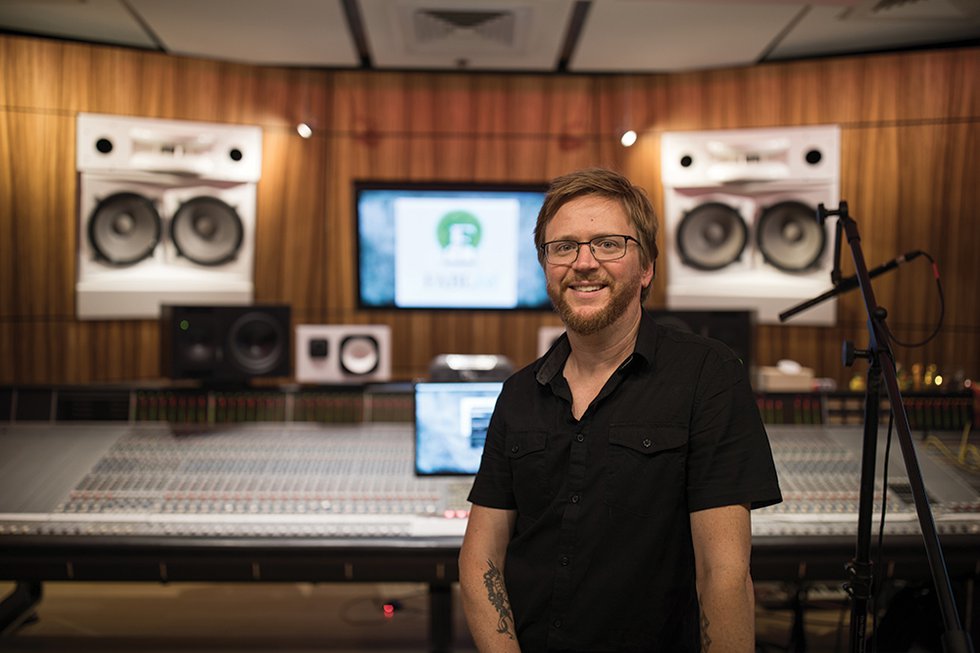
In an age when high-definition screens fit in your pocket and hundreds of movies are accessible with a mere tap, the art of audio storytelling is in the midst of a creative renaissance. With two decades of experience in sound production and design, Adam Frick is at the forefront of the resurgence. The 40-year-old St. Louisan founded local podcasting network STL Vernacular in 2015 and produced interactive audio project UnHeardOf Cherokee Street in July. This fall, he began fundraising and preproduction for several storytelling projects under the title Sonic Stories.
Two of the five Sonic Stories projects are geared to an audience of children. What do kids get out of an audio story that they wouldn’t from, say, watching a movie? I’ve worked on a lot of really great visual entertainment for kids, and I plan to keep doing that, but I think there’s something really powerful about the audio-only medium. It allows kids to create these worlds; their brains are in charge of picturing the characters and what the world looks like… I also think it’s important that kids are able to make these heroes into versions of themselves. We don’t see a lot of diversity in gender, race, and other ways in hero stories, but any kid can listen to an audio story and create a hero that’s a little more like them.
Discover fun things to do with the family
Subscribe to the St. Louis Family newsletter for family-friendly things to do and news for local parents, sent every Monday.
In September, Midwest Artist Project Services awarded you a sponsorship to begin fundraising for Sonic Stories, a collection of audio projects. What does that sponsorship allow you to do? The number of grants available to individual artists is quite small, so the sponsorship allows me to apply for grants that require the grantee to be a tax-exempt organization. That opens a lot of doors to funding—plus, individuals can now donate and receive tax deductions for their contributions.
In August, you launched a Kickstarter campaign for a storytelling project called Fablist. The campaign eventually fell short of the fundraising goal, but what did you learn from that experience? That I’m not very good at it. [Laughs.] Launching a Kickstarter is like everything else these days: You can’t just rely on having a good product that people are going to get excited about; it has to be gamed, and you have to seed it with money. You have to have money to push at the end if you want to be sure you make your goal, and you have you have lots of paid PR.
You’ve since renewed fundraising and work on the project under the SonicStories umbrella. Could you explain the concept of Fablist? We tell cinematic audio stories for modern families that are based on fables and fairytales from around the world. Each story has a simple moral message at its core. There’s no preaching, no doctrine, no religion. But the stories have, inherent in them, these real simple lessons, like “Be kind to each other” and “Tell the truth.”