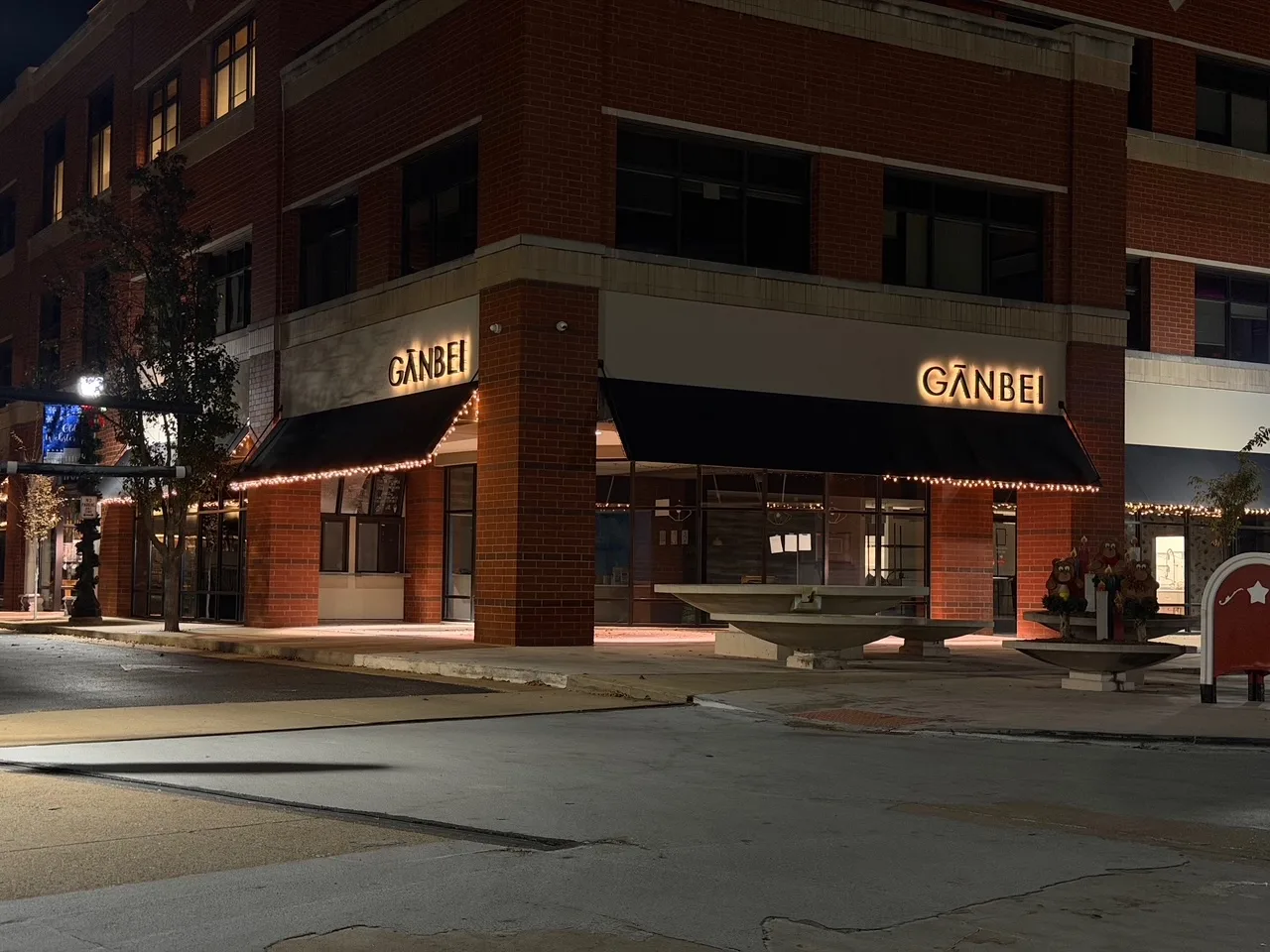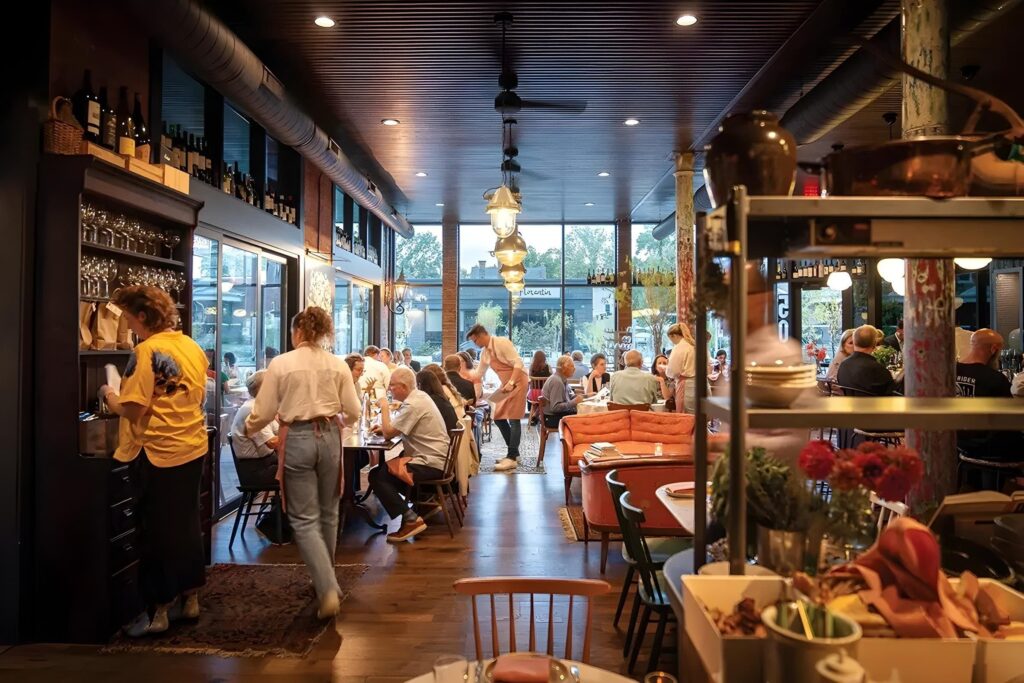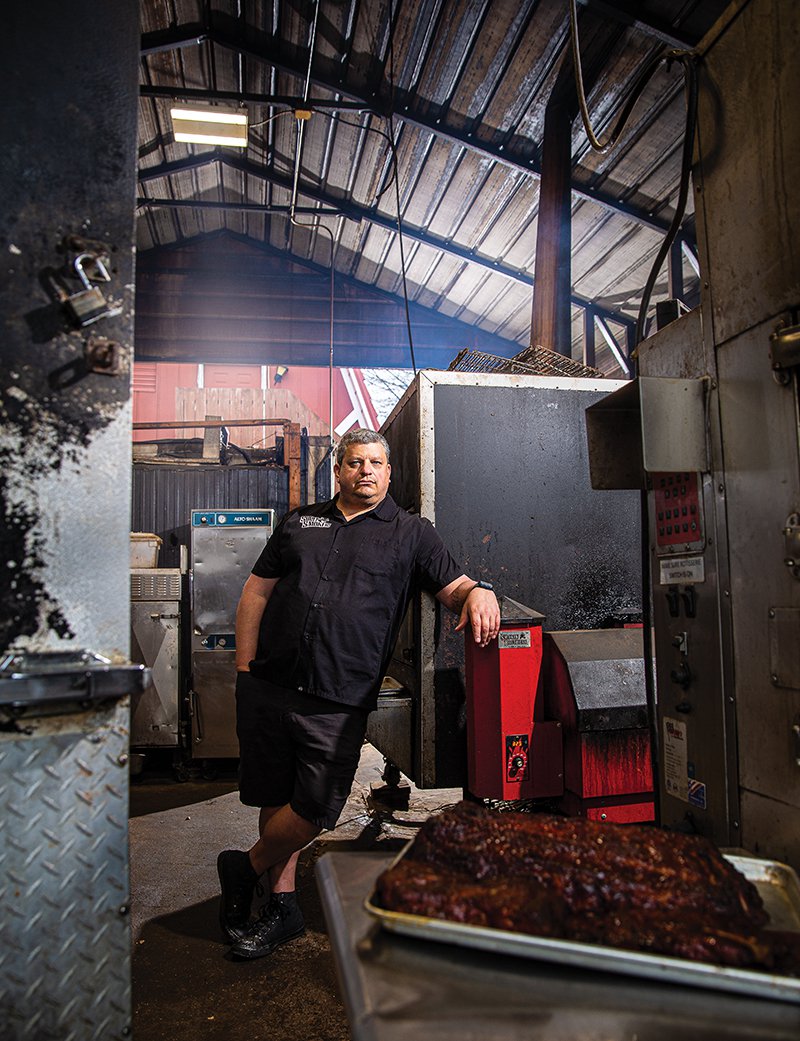
Jeff Fitter worked the competition barbecue circuit for years with Super Smokers founder Terry Black before buying the remaining Eureka location from him in 2017. A fully equipped food truck now turns out barbecue and Cajun fare at private catering gigs and in Affton at 9 Mile Garden. Undeterred by the pandemic, the indefatigable entrepreneur doubled down by opening a second brick-and-mortar less than a block away. The store (located at 9527 Gravois, in a former AutoZone Auto Parts store) is slated to open this Friday.
What did you do prior to getting into the barbecue business? I spent 20 years doing IT for companies that provided food and technologies to inmates in prisons and jails. One of them was owned by Andy Taylor of Enterprise Rent-A-Car fame, who applied the same customer service principles to both companies, which bore fruit for me when I got into the restaurant business.
Find the best food in St. Louis
Subscribe to the St. Louis Dining In and Dining Out newsletters to stay up-to-date on the local restaurant and culinary scene.
Was your family in the restaurant biz? My mom was a regional manager for Naugles back in the day. [Laughs.] Does that count? Way back in the day, my grandmother worked for Farberware, doing demos for their standalone convection oven, which was brand-new technology at the time. I’d accompany her to places like Famous Barr and Stix, Baer, and Fuller and help pass out food she had just cooked. She didn’t teach me to cook—I was like 8 or 9 at the time—but she did teach me the passion for cooking.
What was the first dish you were proud of? There was this group of girls that my friends wanted to impress. I said, “Let’s not take ‘em to dinner. Let’s cook ‘em dinner.” I volunteered to cook even though I didn’t really know how; we picked up some filets, potatoes, and green beans, and I cooked for eight of us. About halfway through dinner, I realized no one was complaining—or even talking—just eating. At that point, I knew I’d done something right.
When did you catch the barbecue bug? I was born and raised a meat-and-potatoes guy. I loved anything cooked on a grill, but I ruined more meat than I made right. One day, I saw a kettle on a patio, smoking, unattended, for hours, so I asked what was going on. It was then that I learned about smoking meats instead of just grilling, and later I discovered the art of smoking and not to ignore the social aspect. It provided an opportunity for the family to just sit around and talk, and at the end you had something great to eat.
What’s the best item for a novice to learn to smoke? I tell people to start with something they like, but that low and slow is the only way to go.
What was the first item that you barbecued? Ribs. I overcooked them so badly, they were inedible, which is hard to do. I cooked them to the point that they were crenulated—make that petrified. Needless to say, we had to order pizza.
Did you start your own barbecue team, or were you first a member of a team? I started my own team, Phatso’s, but also worked on Terry Black’s Super Smokers team. Phatso’s did three competitions per year, and Terry’s team did the big ones, so it worked out well. He and I ended up buying the smoker from the old Busch Stadium—a big barrel job with a rotisserie called The Champ, which, appropriately, was its brand name.
Competition BBQ judging is terribly subjective, is it not? The judges all use the same grading sheet, but, yes, it’s their opinion that’s on that sheet. One guy taught me a long time ago to ask how many judges were fresh out of school and how many were experienced. He would cook according to that answer, because he knew what both of them were looking for. I did a lot better in competitions once I started asking the same question.
How many judges are involved in the average barbecue competition, and how many teams usually compete? It depends on the size. There could be 30–80 judges. They sit in tables of six, plus a head, and they don’t get to judge all of the categories.
How many teams enter the average competition? There are, like, 500 teams at the [American] Royal in Kansas City, maybe 300 at the Rodeo in Houston, and, like, 1,000 at Memphis in May. Our first competition, out of 90 teams, we took third in brisket and ribboned in ribs. In 2019, we went to Memphis just to compete in ribs and finished 21st. There were 116 teams that year just in that category.
What’s one thing the average person might not know about barbecue competitions? The incredible sense of community. It’s an empty parking lot until the competitors show up, and then everyone helps everyone else. These guys are your competition for the morning of the turn-ins. Before and after, you’re trading tips and techniques, telling stories about crazy techniques you’ve tried at home and how much trouble you got into for buying the next new smoker. After the turn-ins, we’re again a band of brothers, rooting for whoever gets to go to the award ceremony.
What does it cost to enter a barbecue competition? Memphis in May is thousands of dollars. Some of the smaller local ones are $300 or $400. That’s how we got started in catering. Our team’s wives said we had to figure out a way to afford all these buy-ins, so we started a catering company to be able to continue to cook in competitions.
When you bought Super Smokers, you kept the name. When we were considering changing the name, an article appeared naming Terry Black the godfather and Super Smokers the root of St. Louis barbecue. So my wife, Michelle, and I thought, We’d rather be known as the people who saved Super Smokers.
Did you change some of the recipes? I got really good at cooking brisket, so I changed that one. I will put ours—Swift 1855, a top-tier Angus brand, the same we take to the competitions—up against anybody’s Wagyu brisket anytime. The public responded. We used to sell 75 percent pork; now it’s a little over 50 percent, with brisket a very close second. You can get it fatty or lean—just tell us how you like it. Now we do our burst ends a little differently. We use all of the brisket, leave a little fan on it, then cube it, season it, sauce it, and put it into the steam table to let the sauce glaze over. Other people put their ends back into the smoker, so the sauce bakes in. I think the way we do it is more flavorful.
Is brisket the hardest cut of meat to cook? It is the toughest, literally and figuratively, and takes the most finesse. A pork butt’s a pork butt—you don’t do much to it: you flip it, smack it, rub it down. But each brisket must be hand-trimmed and then watched carefully, temped throughout the process, as they cook at wildly divergent times.
What barbecue secrets will you divulge? We slurry the ribs every hour in a mixture of brown sugar, apple juice, and lemon juice, which contributes to that telltale sweet glaze. When we cook a whole hog, we inject it throughout the cooking process, using a mix of pineapple juice, apple juice, a little bit of jalapeño, and a little salt but not enough to be considered a brine. The goal is to enhance the flavor of the meat, not overpower it. I believe you should taste the meat first, not the seasonings or sauce.
Almost everything I learned was done on the back of Super Smokers. Those techniques and recipes were largely used by Mike Emerson and Skip Steele, too—who helped create them there. But times changed. Today’s diner is considerably more educated. You can’t cook what we all cooked 10 or 15 years ago and have it fly today. Expectations are significantly higher. Super Smokers didn’t stay relevant with today’s market, and I set out to change that. It wasn’t so much their proteins—those recipes were basically sound; it was the side dishes and lack of marketing that needed help.
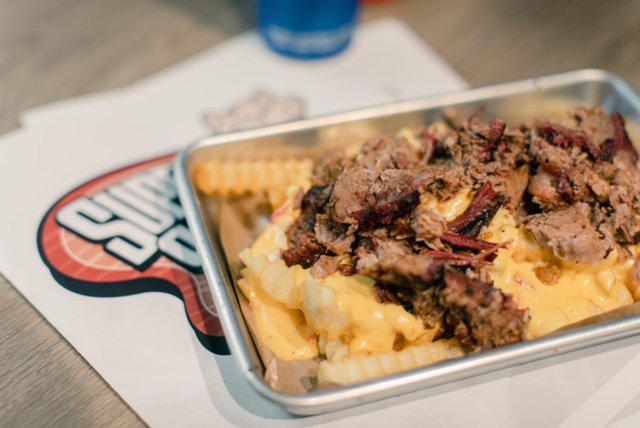
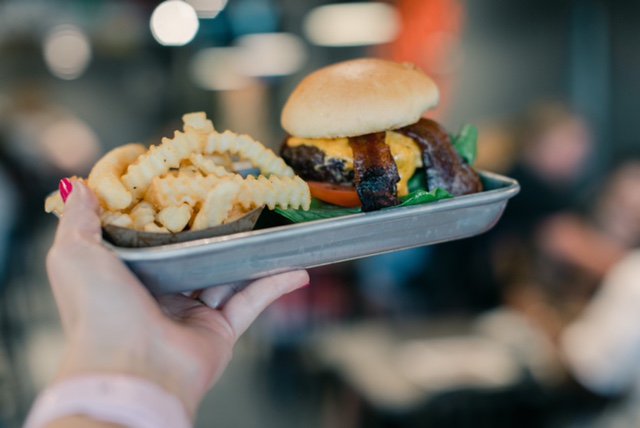
Discuss the importance of side dishes. Having fresh scratch-made side dishes is a great selling point and differentiator in today’s market. The traditional items bring in a certain group of consumers, but they come with others who might want something different or might not want barbecue at all. Today, you have something for everybody, or certain groups will pass you by. That’s why we added things like barbecue nachos, mac and cheese topped with burnt ends, and jackfruit tacos, which are vegetarian.
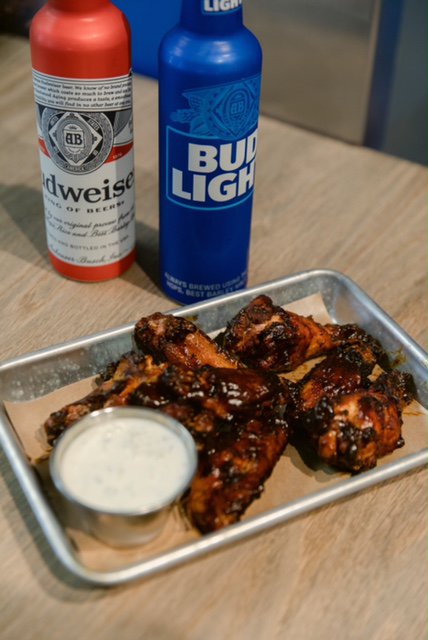
How else did barbecue change over the years? People want fresh food, which means barbecue cooked that day, not the day before. It costs more to do it that way. If we have extra food, we find an outlet for it instead of serving it the next day. Some people balk at the price of today’s barbecue, but cooking fresh—and staffing for that—are two of the reasons it’s more expensive. We cook a par every day, and when it’s gone, it’s gone. It took people a long time to accept that here, but that’s the way it’s been in other parts of the country, like Texas, for years. There, you better line up early, because by early afternoon, they’re sold out. I’ll give up a sale and pray that you come back tomorrow, rather than compromise serving something less than fresh. The cooking methods, meat sourcing, meat prep, seasoning, choice of smoker, choice of hardwood—all of those are still important and have to work together. We use the same processes as before; we just apply them differently to become more relevant to today’s market.
And you added breakfast in Eureka. How does that tie in with barbecue? It started when I served homemade biscuits and gravy, then brisket and gravy, from the back of my pickup truck at my kids’ soccer games. It’s not your typical diner-style breakfast; it’s a smokehouse breakfast. The biscuits are huge and homemade. Our bread pudding became the basis for the French toast. The whole thing is nontraditional by design. In Affton, we’ll start with brunch and expand it into breakfast if it resonates.
Kid’s menus are common, but Super Smokers also has a senior menu. How did that come about? Seniors don’t get a discount, but they do get smaller portions. If they can’t finish something, then it’s not the right value for them. So there’s value there, which they ultimately appreciate. I just want people to get the quantity of food they’re looking for and leave happy. If you want to order off the senior menu or the kid’s menu, be my guest.
What’s the most rewarding part of being in the barbecue business? When I get compliments from people visiting from Texas and Oklahoma, who think that no good barbecue exists above the Mason-Dixon line. They come around after sampling some of my brisket and creamed corn. They cook brisket completely differently down there—especially in Texas—so it’s nice to get their approval for how we do it up here. But in general, if my food can take people away from their troubles and they can enjoy themselves, if only for a few minutes, then that’s good enough for me.
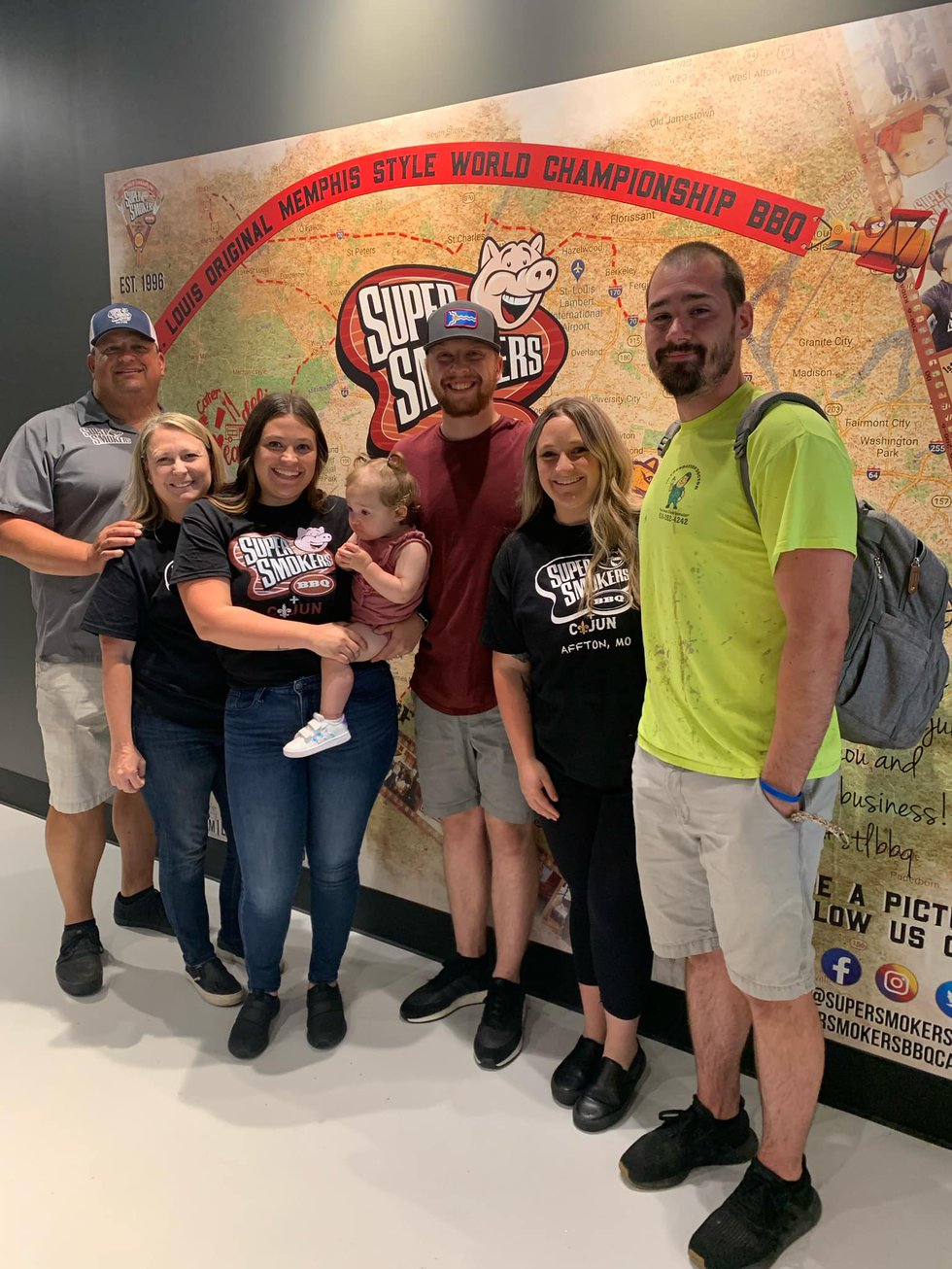
Is your family involved in the business? I couldn’t have done all of this without the support of my family. I get emotional just talking about it. My wife handles the finances, my youngest daughter runs the Eureka store, and my oldest daughter works part-time and lives near the new store. We all stand shoulder-to-shoulder in this. I’m not sure I could have pulled this off any other way.
What kind of equipment do you use? A Fast Eddy’s wood pellet smoker by Cookshack. It’s the cooker, the process I use with the cooker, and the meat that fits the process. It’s the whole combination.
What adjustments did you make during the pandemic? Barbecue translates to carryout very well, so when the dining room closed, we became box-lunch experts. We started feeding first responders, about 100 a week. When things stabilized a little, they began to hire us to the tune of about 300–500 people per week. That wasn’t the reason we did it, of course, but we maintained the opportunity to feed people, which is what this business is all about.
You had a food trailer before you had a food truck. I bought the trailer to use in competitions. My plan was to buy the restaurant, get it on a growth path, and then compete in all of the competitions that I could. I customized it to the max, with a complete 16-foot kitchen and smokers off the back. You hear that the restaurant business is all-consuming, and it is. Well, I entered one competition in two and a half years, but we did grow Super Smokers 30 percent since we took over.
But you also used the food trailer in Affton. Before 9 Mile Garden opened [in Affton], we set up shop on the adjacent parking lot just to gauge interest. When we sold as much in a lunch as the Eureka restaurant did all day, we knew that a brick-and-mortar was the likely next step. In the meantime, 9 Mile opened, and our trailer participated in several shifts per week. A 28-foot food truck took the trailer’s place. It has a charbroiler, a griddle, two fryers, a steam table, warmers, a refrigerator, and a freezer, so we can do a lot more than barbecue. Have kitchen, will travel. We plan to have it on the road five days a week, plus cater events, such as weddings and neighborhood dinners. Both of those became a huge market for food trucks in the past few years.
So having a Super Smokers mobile kitchen became almost as important as having a brick-and-mortar location. In Eureka, the trailer was like our ghost kitchen. During the pandemic, taking our show on the road opened up new neighborhoods—and new markets—to people who have rarely, or ever, experienced the brand. That mobile kitchen doubled our day’s sales, consistently and very efficiently. Having a truck at 9 Mile almost accomplishes the same. People experience us there and then book us somewhere else.
Why open a brick-and-mortar in the shadow of 9 Mile Garden? The truck is only scheduled at 9 Mile a few shifts per week, plus the building we leased had been vacant for 12–15 years, so the landlord was eager to make a deal. When 9 Mile opened, people came from all over. We already felt good about being in Affton. With a permanent location, we feel even better.
Talk about the space and the menu. It’s 4,000 square feet, with 80 indoor seats plus a patio, so it allows us to be all that Eureka is and more. I want to lean into the Cajun menu.
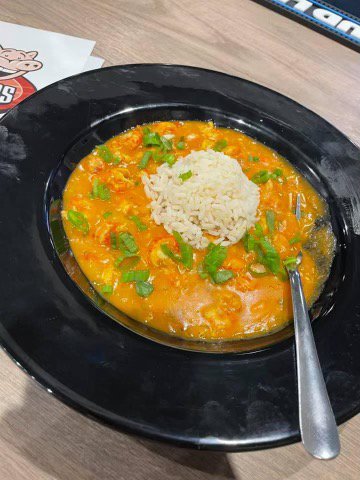
When did Cajun food become part of the menu and why? Years ago, I knew that when I finally opened a restaurant, Cajun food would be a part of it. Kernis Louviere, who hails from New Iberia, Louisiana, is one of my mentors and a former Super Smokers catering manager. He’s also the winningest gumbo cookoff champion in the United States. He won so much, they wouldn’t let him compete anymore. He was encouraged to bring his gumbo—because people loved it so much—just not allowed to enter it. Kernis is an all-around great Cajun cook and was kind enough to share his recipes. I tinkered with the idea in Eureka. In Affton, it will be full-bore.
You’re active in the Eureka Chamber of Commerce. Why should a restaurant join the local chamber? For a lot of the same reasons that people enter competitions: community. A lot of the success I experienced is because of all the little things I do with and for the community. Barbecue is a business and a livelihood, but that’s not why I do it. I do it to try to improve people’s lives, mentor them, improve the community. The chamber is a great way a person can do that. At the end of the day, I’m a kid who dropped out of high school, found his way in the corporate IT world working bootstrap to bootstrap, and, fortunately, found success. I spend a lot of time talking at career days and with students. The hardest thing I ever did in life was become successful, because of how I paved my own road. There are easier ways to go about it. I took the long way.