A new neighbor recently installed a home security camera, but it appears to be aimed at my back door. What can I do? –Katie P. Webster Groves
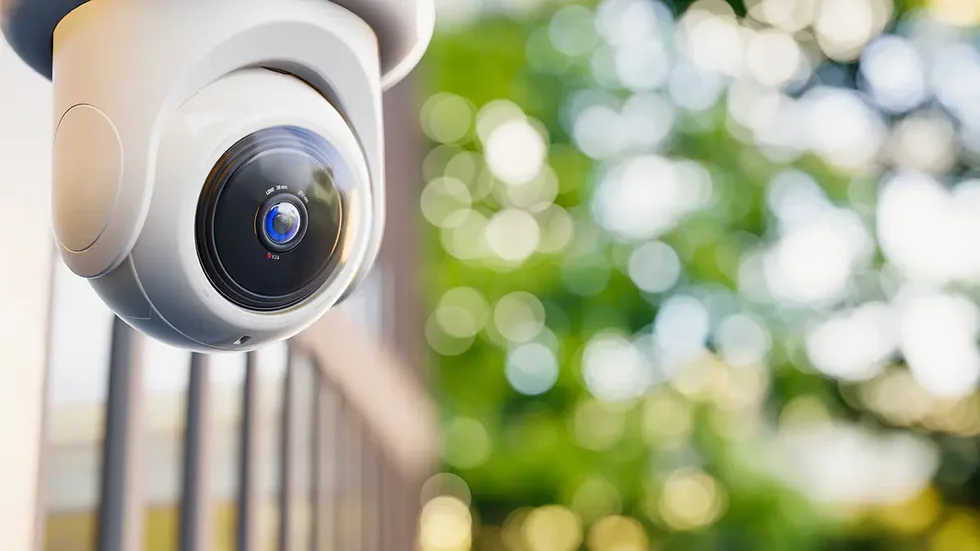
The Webster Groves Police Department will periodically field calls from homeowners about residential security cameras, says Interim Police Chief Greg Perks. “Most issues are quickly reconciled by speaking with the parties involved and addressing the caller’s concerns,” he says, adding that it typically takes some re-adjusting of the camera’s orientation to clear up the issue. As more homeowners elect to install security cameras around their property, a natural consequence of the technology is that it could pick up activity from the surrounding area, including a neighbor’s house. While some homeowners view cameras as a deterrent to crime–and therefore welcome their presence–others see them as having the potential to invade their privacy. (Most cameras have a viewing range of about 30 to 100 ft. PTZ, or Pan, Tilt, and Zoom, cameras capture images and video up to 1,600 ft., with some models offering night vision.) “Security cameras can be legally installed on a property for the purpose of security,” says Perks. However, a revised Missouri statute, RSMO 565.253, states that cameras can’t be installed in areas where a person has an expectation of privacy without their consent. These include a neighbor’s home interior (a bedroom, bathroom, for example) or a yard surrounded by a security fence. By thinking through the placement of cameras, homeowners avoid disagreements with their neighbors. Aaron Walbrandt, president of Walbrandt Electric & Technology, encourages clients to perform a walkthrough when selecting the location of cameras. “In new construction, we can plot out those locations on the architectural drawings and even display the viewing range of the cameras,” he says. “For existing houses, we’re at the mercy of where cables are or can be run, or if there’s an electrical outlet or a WIFI signal when the camera can’t be hard-wired.” The placement of cameras typically includes areas of entry into or around the home. “For this reason, we keep [a camera’s] field of vision pretty tight on the house,” says Walbrandt. “In some situations, that view does pick up areas of the neighbor’s yard and house, but we would take every precaution to ensure that view doesn’t include anything inside the house, through windows or doors. If we did run into a situation where a client was concerned that newly installed cameras created a potential privacy issue, I would ask the client if we could show the neighbor exactly what that camera is viewing.” While homeowners are not obligated to seek permission from a neighbor before installing a system, communication helps deter concerns, says Perks. “If you or your neighbor have additional concerns, a police department is always able to get involved and help mediate the concern between neighbors and ensure that cameras are installed in a way that your neighbor’s privacy isn’t being infringed upon.” Says Walbrandt: “Ultimately, we believe that cameras on anyone’s house is a benefit to everyone around them. In one situation, yard workers at one house had equipment stolen from their truck. Our client, their neighbor, pulled video from the security cameras and provided it to the police.” The Webster Groves Police Department offers a Community Camera Program that allows residents (or businesses) to register their systems. “This can aid in some investigations if we’re able to review neighbors’ cameras when a crime has occurred,” says Perks.
Get a weekly dose of home and style inspiration
Subscribe to the St. Louis Design+Home newsletter to explore the latest stories from the local interior design, fashion, and retail scene.