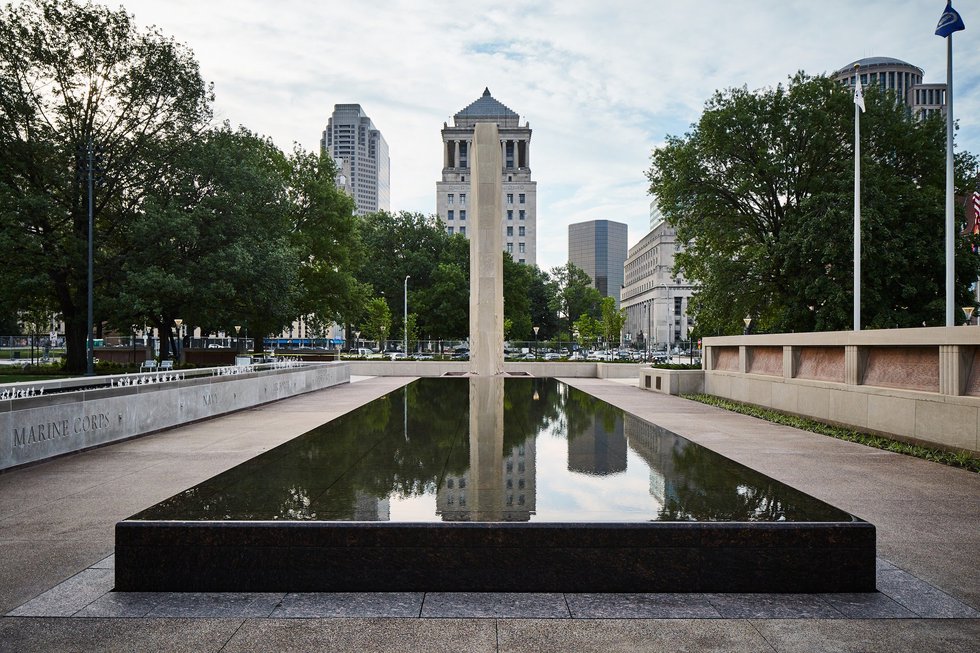
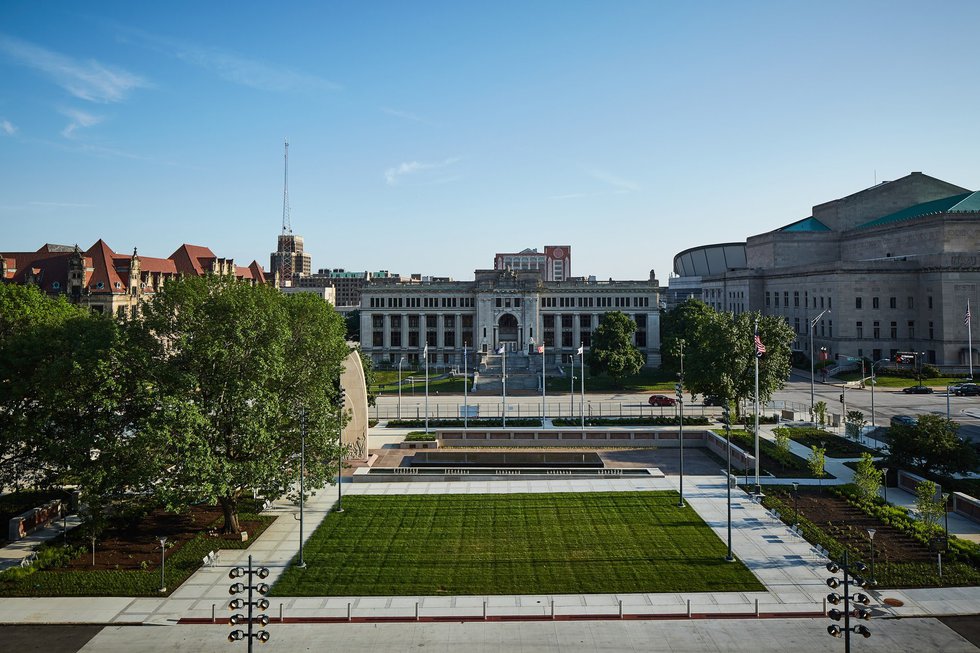
Staff members at the Missouri History Museum were faced with a daunting task when they began the renovation of the Soldiers Memorial downtown. How do you reimagine a building sacred to veterans and their families, yet unknown to much of the public in the St. Louis region? The answer to that question is finally here. On November 3 at 9 a.m., there will be a Grand Reopening Ceremony at The Soldiers Memorial. Museum staff members gave me an advance tour of the newly refurbished memorial on Tuesday, while workers were putting finishing touches on the displays.
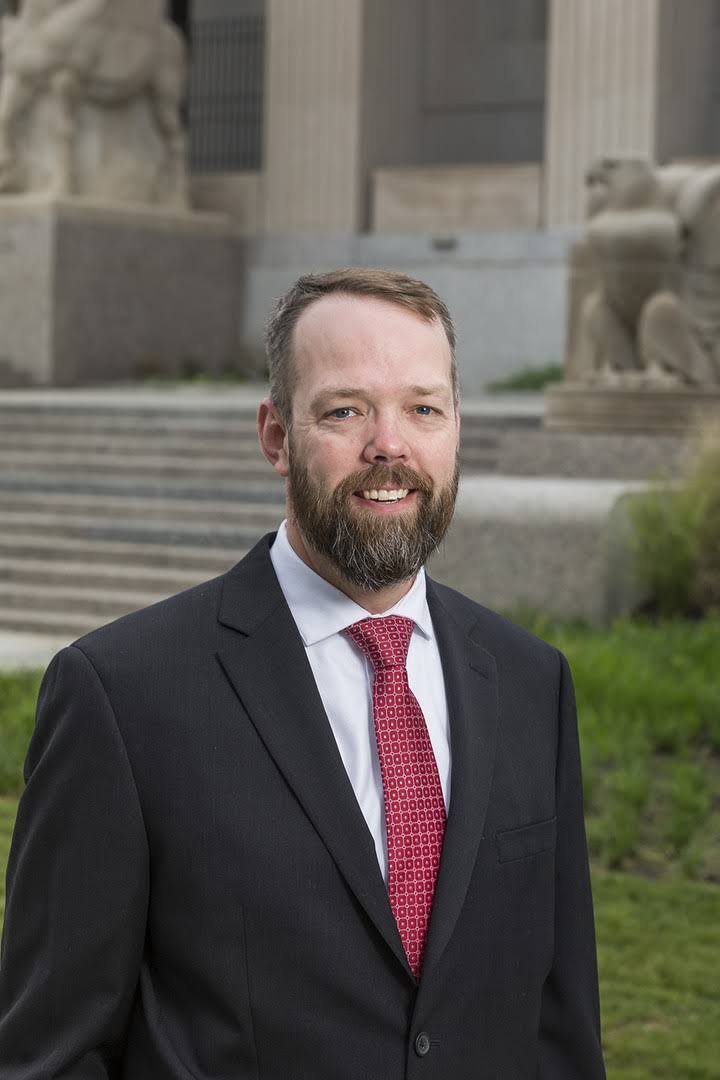
First, I was introduced to the new director of the Soldiers Memorial, Air Force veteran Mark Sundlov. Though he was born in Fredonia, New York, Sundlov is a perfect fit for the memorial, combining extensive museum experience in North Dakota with experience serving in a Minuteman missile command. He found a place to live in Lafayette Square a month ago and has been busy absorbing the history of St. Louis. The new 43,000-square-foot special exhibition galleries in the basement will offer plenty of room to feature the collections of the History Museum and Soldiers Memorial. First up is World War I; expect a rotating series of exhibits in the future.
Get a weekly dose of home and style inspiration
Subscribe to the St. Louis Design+Home newsletter to explore the latest stories from the local interior design, fashion, and retail scene.
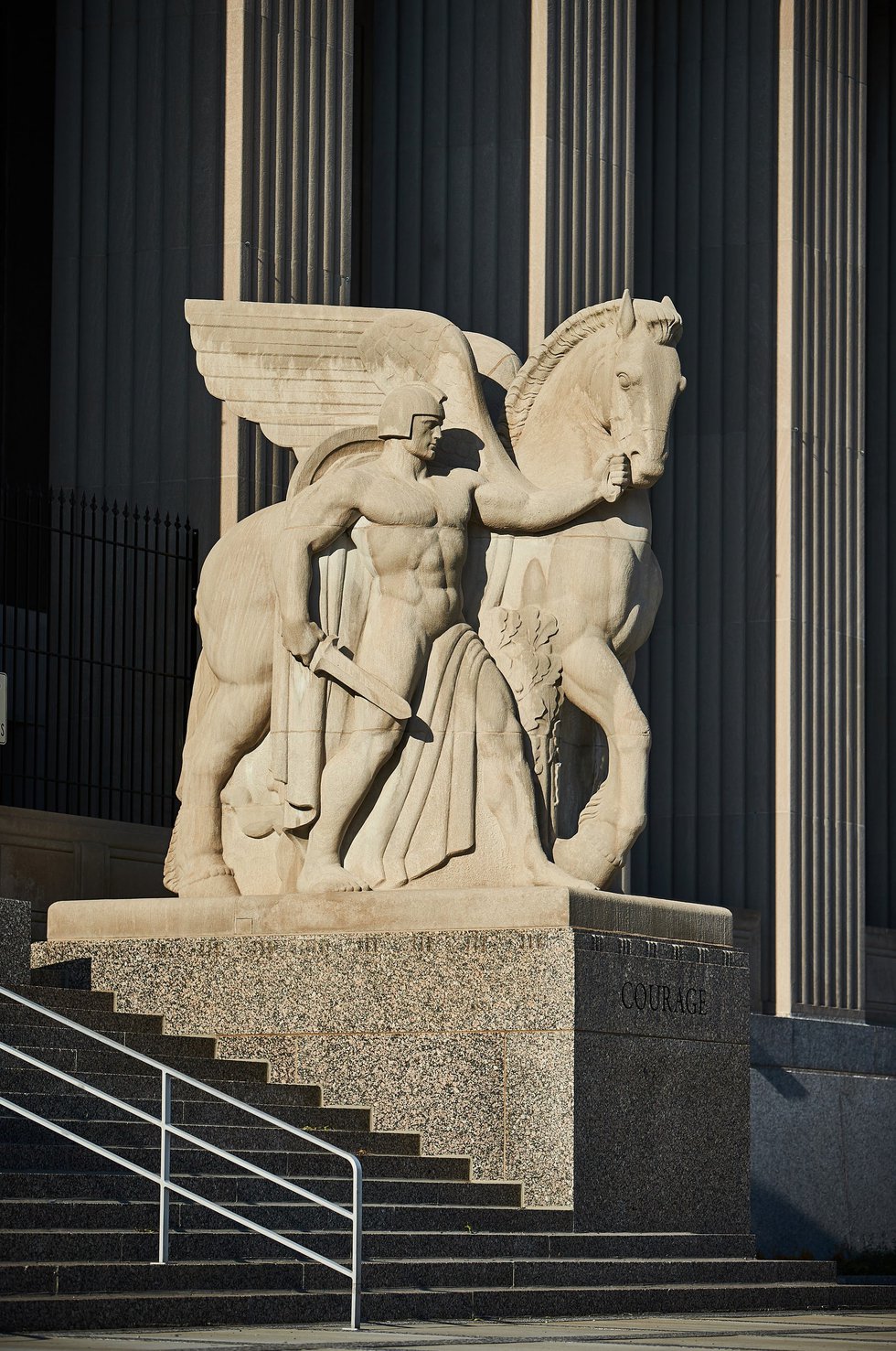
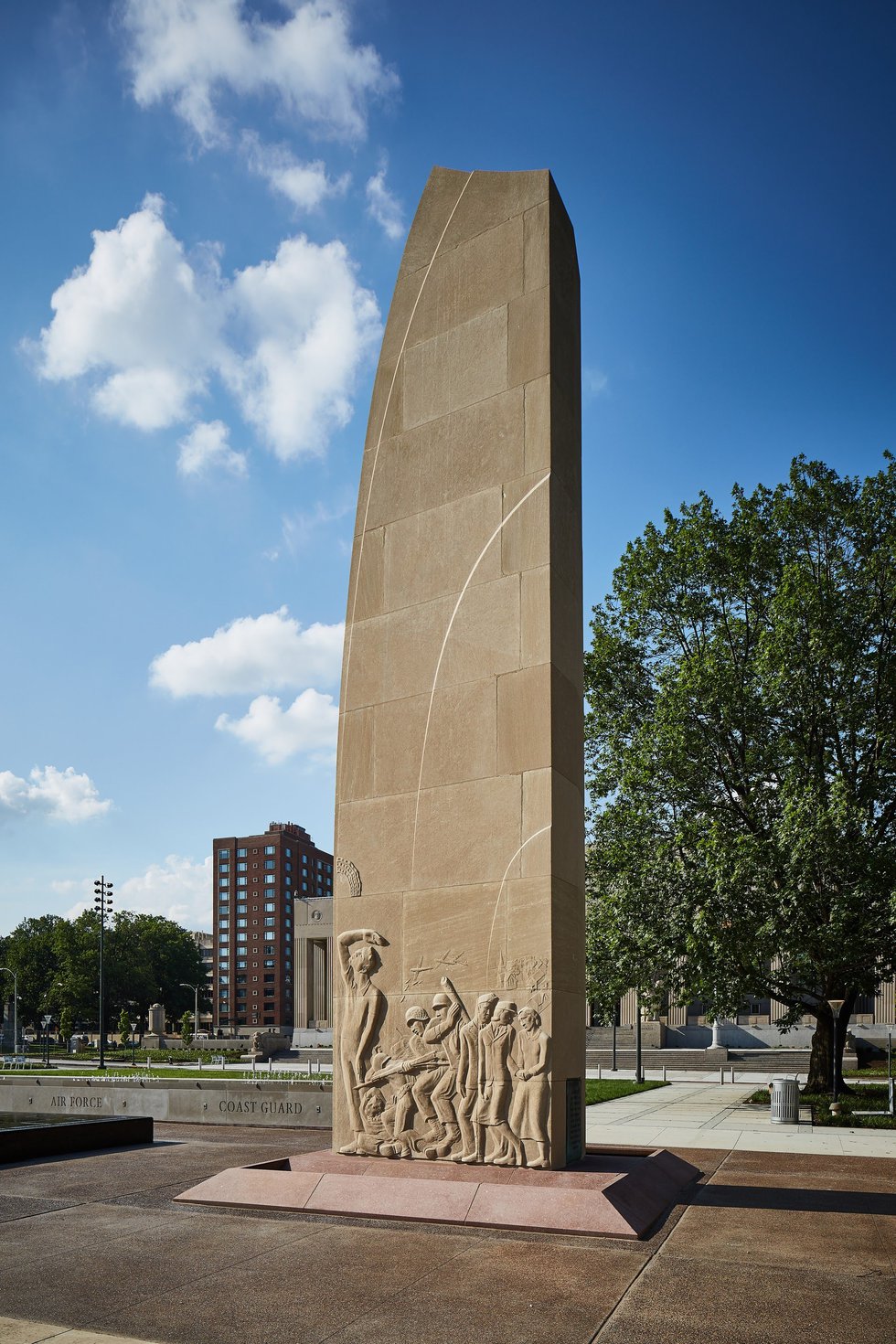
The Soldiers Memorial is not new to me; I’ve visited the old city-run museum many times, and I’ve covered its recent transformation. But the stout late Beaux-Arts building still offers up surprises. I was reminded of these serendipitous discoveries on this week’s tour, as Project Manager Karen Goering led the way through the renovated grounds and building. The cleaning of the exterior (which besides the standard automobile exhaust probably still wore some of the city’s infamous coal dust on its façade) revealed a complexity and attention to detail I’d never noticed. When the memorial opened in 1938, the Beaux Arts style was already losing its battle with Modernism, but it didn’t give up without a fight.
For the first time, I discovered that one of the roundel portraits of soldiers along the cornice of the building features a soldier wearing a gas mask—a sadly iconic symbol of the First World War. And now that the original elevator doors have been carefully conserved, I noticed barbed wire detailing behind the soldier on the left panel, again another fitting reminder of trench warfare. The colossal black granite cenotaph in the central loggia shines with the subtle placement of LED lighting, which also reminds us that both men’s and women’s names are listed. A special touchscreen display allows visitors to look up the names; staff members are collecting photographs of each service member.
After admiring Emil Frei & Associates’ beautiful restoration work on the Gold Star mosaic, originally created by the Guidicy Marble & Terrazzo Tile Company above the cenotaph, we proceeded into the first gallery, which contains the first half of “St. Louis in Service,” drawing on the wealth of both the Soldiers Memorial and Missouri History Museum collections. As is customary in any museum exhibit, the curators had to carefully select from a huge number of objects to tell the story of how St. Louis residents served in American wars. The new military and firearms curator, Mike Venso, spoke about some of the more notable objects on display. For me, it was exciting to finally see the Emerson gun turret, which is one of director Frances Levine’s favorite objects in the memorial. It is also, I believe, the largest object on display in the galleries. And I learned the story of Private Spottswood Rice, who escaped slavery to join the Union Army during the Civil War. One of his descendents, Chaplain Major Kyle Taylor, will give the invocation at the Grand Reopening.
Marvin-Alonso Greer, education and visitor experience lead at the Soldiers Memorial, introduced an aspect of the educational experience that our government would probably prefer us to forget: the Bonus Army. In 1932, tens of thousands of World War I veterans marched on Washington to demand unpaid benefits from the federal government. The police shot several protesters dead, included St. Louis butcher William Hushka. I look forward to Greer bringing more St. Louis veterans’ stories to life as vividly as he did during my visit.
The second gallery brings the story of St. Louis and its veterans all the way up to the present day. As I’ve mentioned before, Rocky Sickmann, the Marine who was captured in Tehran during the Iran Hostage Crisis, has loaned his diary to the museum, and two pages are currently on display. To safeguard the paper, these pages will be rotated out periodically; on display right now is his entry for Thanksgiving. A banner welcoming Sickmann home from Iran hung from Lambert’s control tower; that banner is also on display, museum conservators having accomplished the leviathan task of removing dirt while preserving the signatures that remained on the canvas. Soldiers Memorial collections manager Shay Henrion was carefully installing display cases while we viewed this gallery, and she stopped to explain the process of choosing and caring for these sensitive objects. For me, the most moving object was the scorched remnant of an improvised explosive device (IED), made of an old muffler and recovered from Iraq. Many of my students are veterans, and some were wounded by IEDs while serving in Iraq or Afghanistan.
That final piece of blackened steel encapsulates everything that makes the Soldiers Memorial so successful. Interpreting history in a museum setting is surprisingly difficult. Back in March, I finally made it to the Casa Buonarroti, a small art museum in Florence that owns two of the Renaissance artist Michelangelo’s earliest sculptures. The visitor experience is terrible—cigarette smoke-filled galleries, rude employees, etc.—yet the museum maintains a solid four out of five stars ranking online. History museums such as the Soldiers Memorial do not have the luxury of Michelangelo sculptures as a draw. They have a rusty piece of an old muffler, and their job is to bring it alive for visitors. In that task, the new Soldiers Memorial succeeds spectacularly.