If you think of the design of a room as a layering process—first comes the layout, then the furniture, followed by the textiles—then don’t worry too much about when you make your selections for the windows. In other words, windows don’t need to be set in stone from the start.
It is important, though, to consider what the space allows for in terms of its architectural details, says Megan Temple, of Megan Temple Design. “Is there room on each side of the window for drapery? Is there enough depth in the window casing to allow for Roman shades? In older homes, is there a radiator by the window that’s going to get in the way of drapes? Even if you already have the room set, and you’re looking to update your window treatments, you have to think about what the space allows for,” she says. “We have an idea of what type of window treatment we’re going to be planning for, but we don’t necessarily have the fabrics.”
Get a weekly dose of home and style inspiration
Subscribe to the St. Louis Design+Home newsletter to explore the latest stories from the local interior design, fashion, and retail scene.
Kathleen Grim, an interior designer at architectural firm Srote & Co., specializes in mostly new construction projects—and that plays a role in the timing of her design decisions. She starts the window conversation early on, so that the plan is in place by the time the casing is being installed. “I can get a window treatment installer out there to measure accurately,” she says, “because the dimensions can change slightly [when the casings are installed].” Additionally, the design of the casings can influence her thinking too. Beautiful, elaborate casings may not be good candidates for drapery. The same is true for outside mounts because they could potentially cover up the casings. If a client desires motorized shades, those decisions need to be made relatively early since it’ll be necessary to run electricity to the area.
Function, just like timing, plays a critical role in how to decorate a window: How is the space used? Who’s using it? “If this is a couple that works in the medical profession and might need a blackout option in a bedroom, I want to know that. If this is a room that has a covered outdoor space right off of it, so it doesn’t get a lot of direct sunlight. That’s something I want to take into consideration. Is this a room that faces west and it’s a study, and there’s going to be glare on the laptop screen at the end of the day, and we need to accommodate for that?” says Grim. Temple and her team are currently working with a client who wants to add a game table to a living room with a bay window. The window is dressed in drapes but its location at the front of the house makes it easy for bystanders to see inside. But natural light is important to her clients. “So in this situation, we’re doing cafe shutters,” says the designer. “You still get light coming in at all times of day from the top of the window but you have flexibility and privacy at the bottom.”
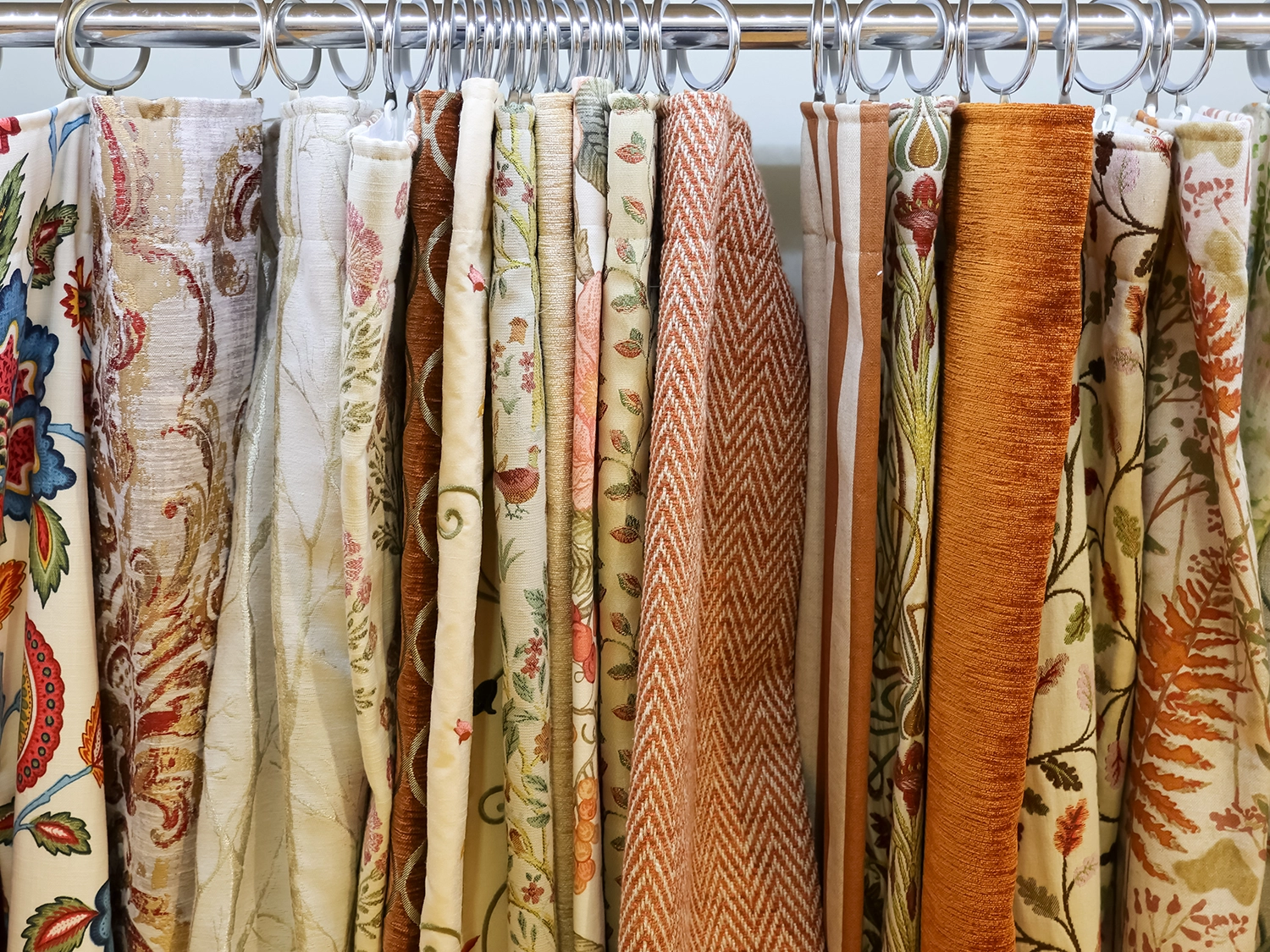
Once you have an idea of how you need your window treatments to function, consider varying the dimensionality of patterns and prints, and keep in mind the visual weight of the room. “If you already have a colorful print on the rug or the pillows, then I would pick something [for the windows] that complements those but is a bit more subtle,” says Grim. The idea is to mix different textures and scales so that one doesn’t compete with the other. On the other hand, if they’re kind of the same, then your eye doesn’t know where to land, adds Grim. “You need something to be the lead or the star of the show that draws your attention, and then the others to support it,” she says.
“Scale and proportion is the mistake I notice most,” says Grim. People often hang the rod a couple inches wider than the window frame—but she likes it wider than that, more like 10 to 12 inches, depending on the room and how close the window is to the corner. “It makes the window look bigger and adds more drama,” she says. And if you mount the rod a few inches above the window, it makes the ceiling feel taller. It also means you can pull the drapes fully to the side so you actually get to enjoy the full expanse of the window— “mount them too close to the edge, and the glass stays partially covered no matter what,” she adds.
If your goal is to accentuate the height of the room, or soften it without the look of heavy velvet, select a Roman shade for privacy and decorative drapes to frame each side of the windows. “That way, we’re keeping the weight of the window at a minimum or to scale,” says Temple. Home offices are another good candidate for drapery, says Grim. “A lot of the time it’s just hard surfaces—desks, bookcases, that kind of thing. Adding drapery panels provides an element of softness, helps with sound, and balances out what can otherwise be a pretty severe, geometric look.” That said, she notes, functionality may win out here too: a shade you can pull down while you’re working might serve the room better than a full panel. Tall-ceilinged or main-level rooms, and spaces going for a cozier feel, are especially good candidates for combining treatments (layering a shade under drapes, for instance).
In short, fabric panels add drama, texture, and color to a space; shades are more practical and add functionality to the room.