

In the Benton Park neighborhood, a cautionary tale is unfolding. If you ever questioned the wisdom of taking the utmost care when rehabbing historic structures, follow along with me.
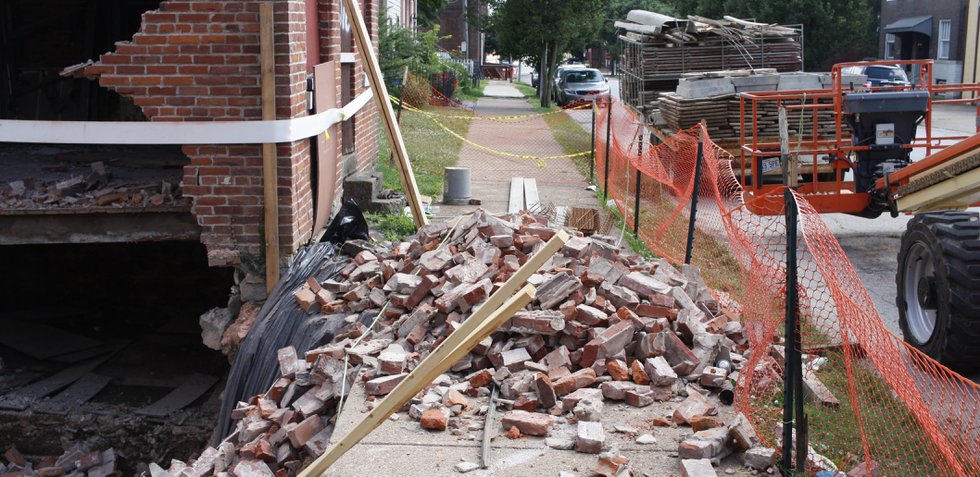
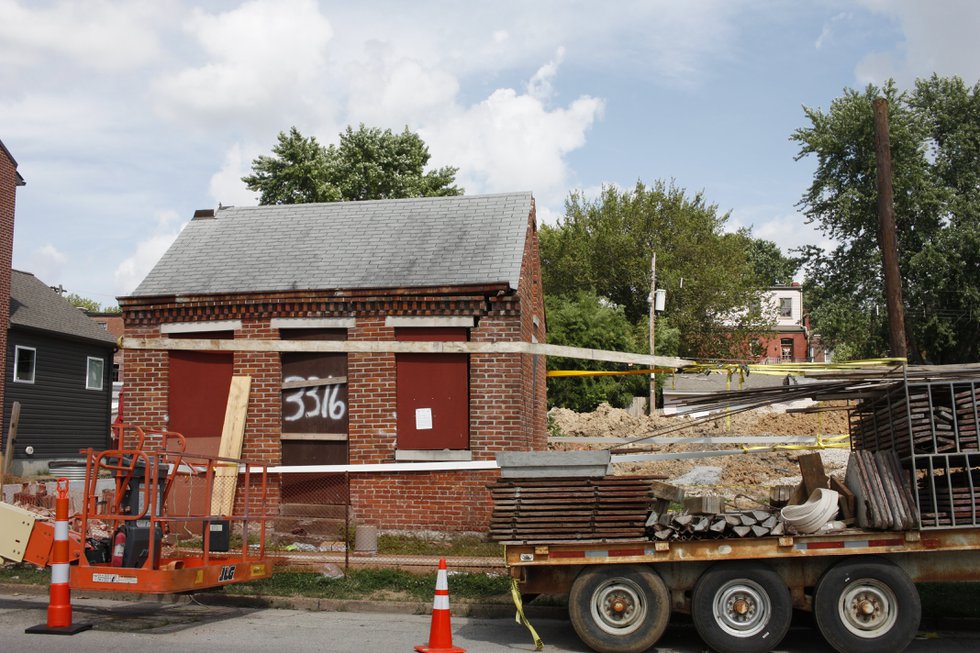
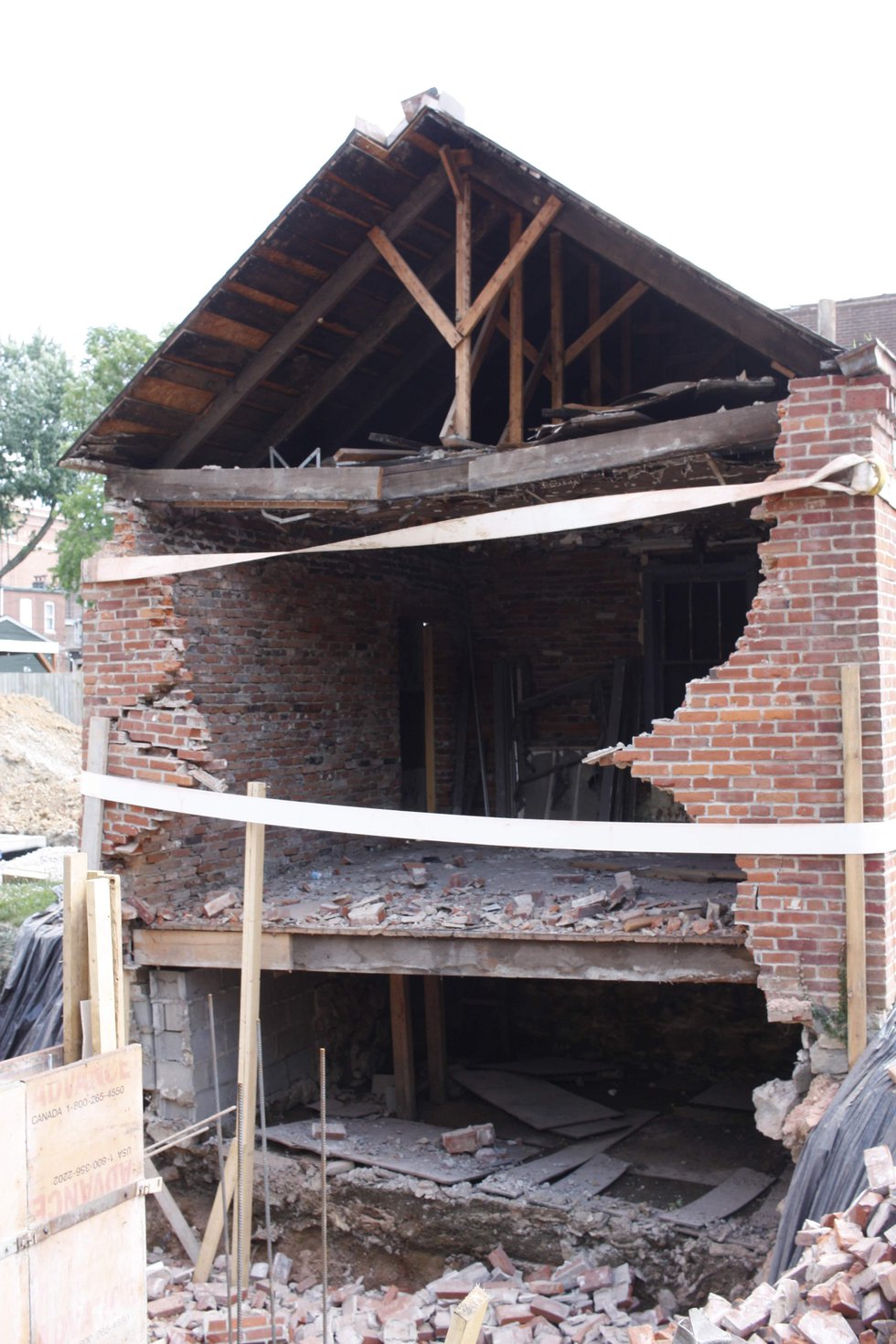
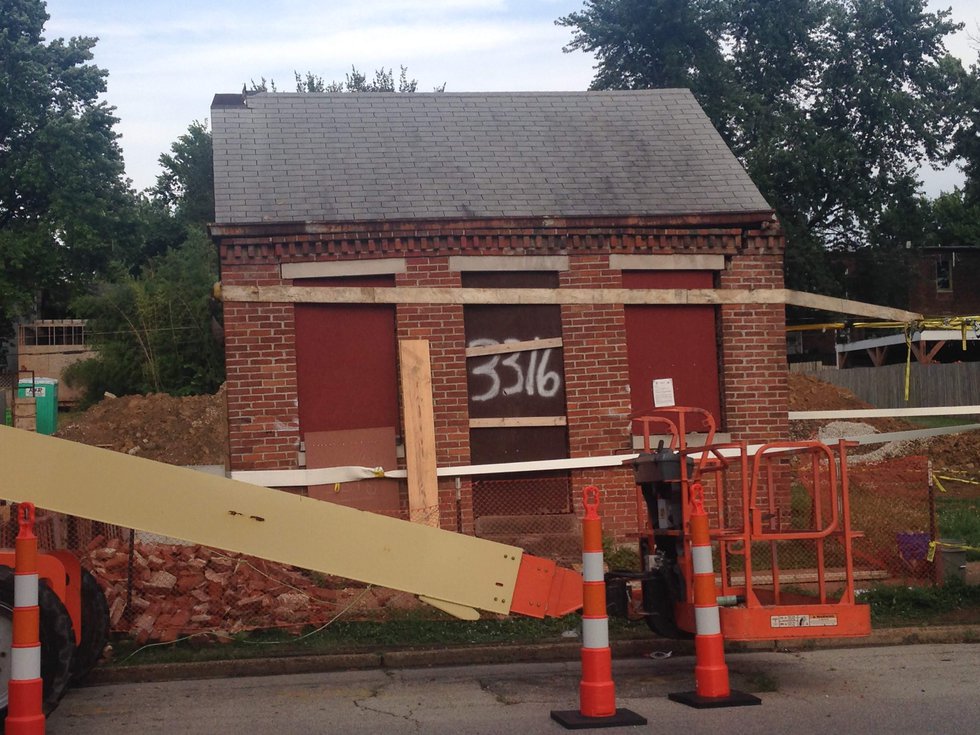
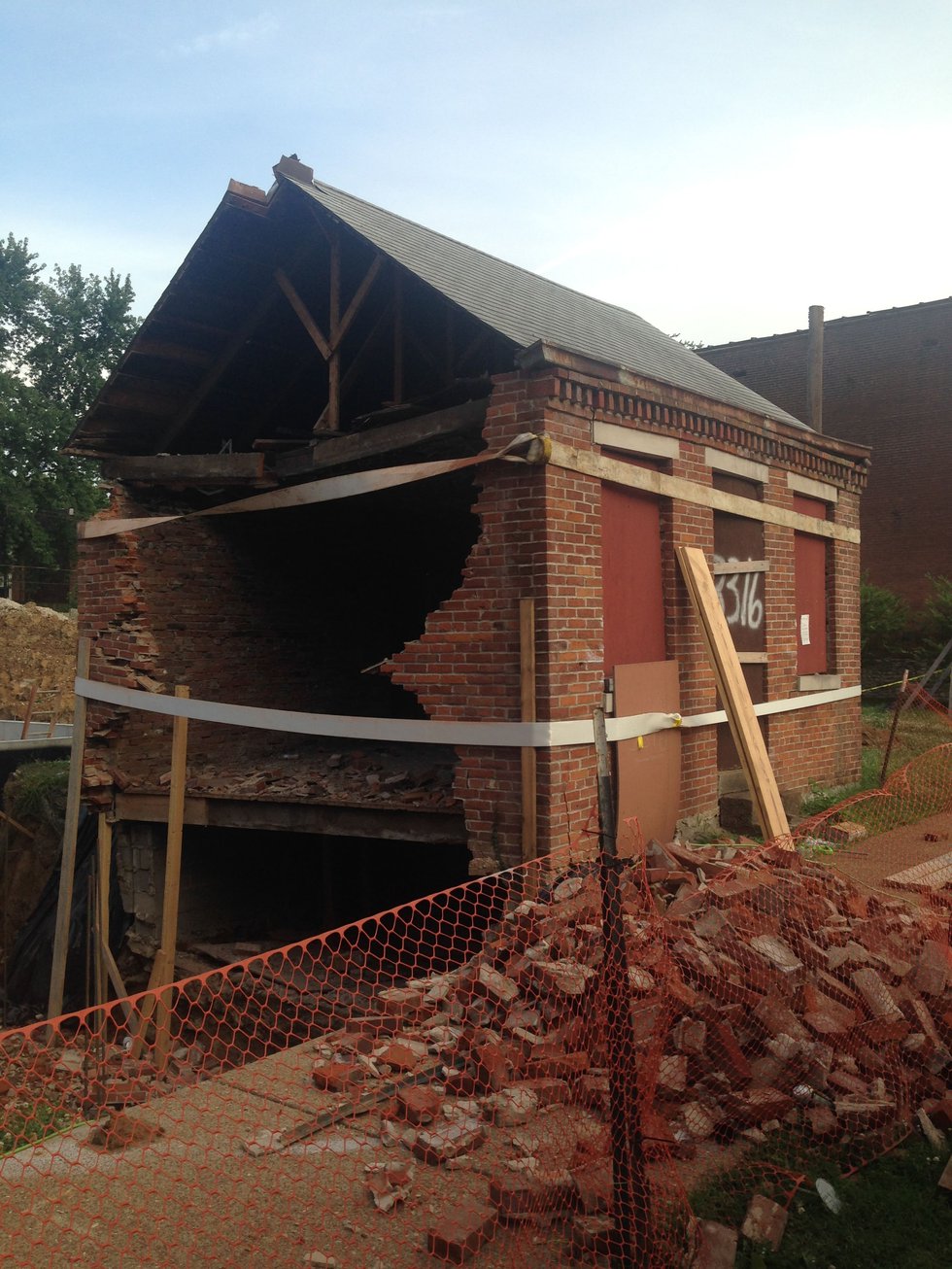
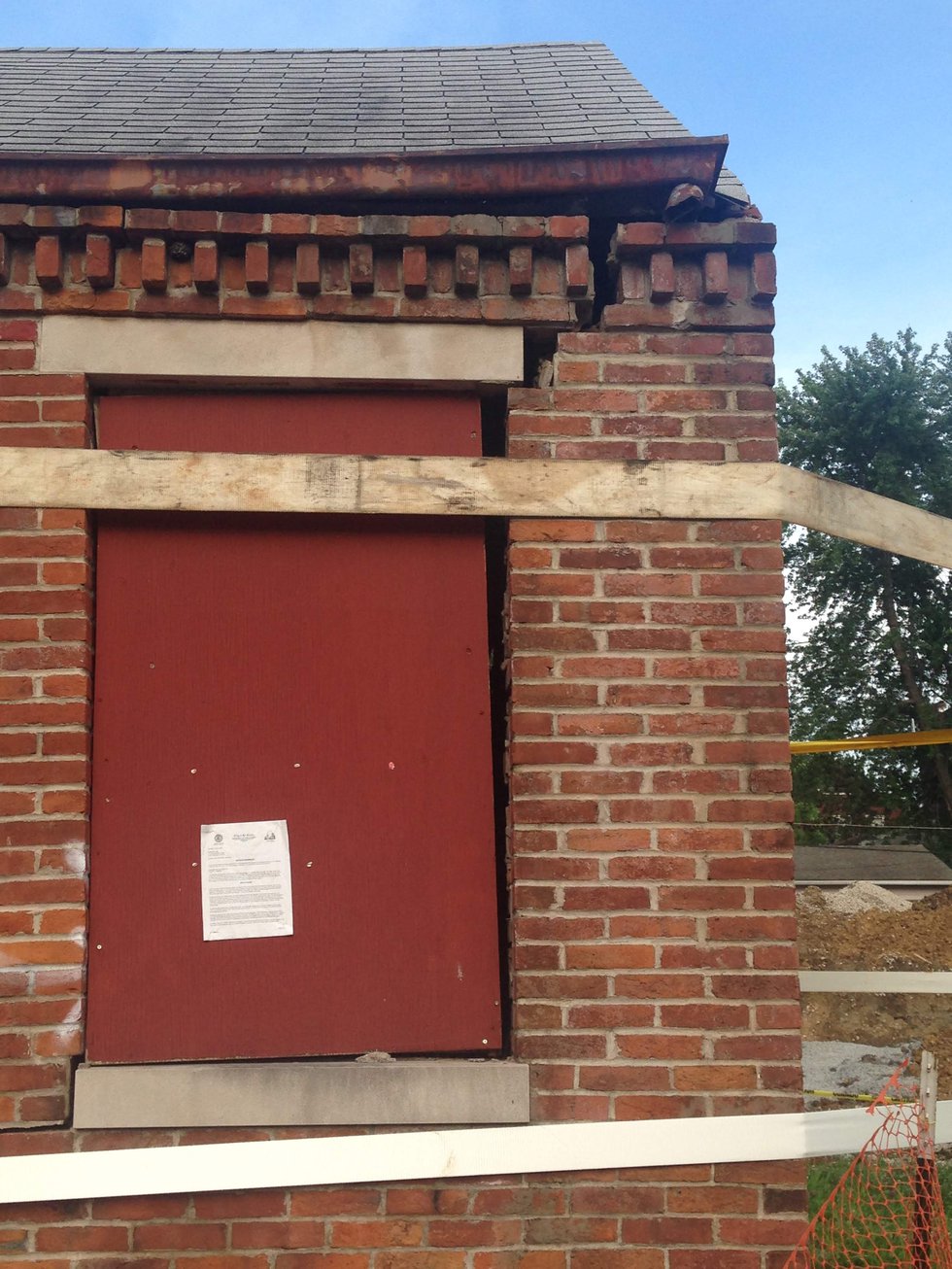
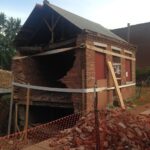
The small cottage at 3316 Lemp Avenue, beloved by many residents and visitors of Cherokee Street, suffered a major structural damage when its northern foundations were undermined earlier this month. To preserve the integrity of the Benton Park Historic District—as well as the story of African-American history in St. Louis—this historic structure has to be saved.
Get a weekly dose of home and style inspiration
Subscribe to the St. Louis Design+Home newsletter to explore the latest stories from the local interior design, fashion, and retail scene.
I’d hesitate to assign an exact date of construction to the small house, which now sits amidst larger two-story structures that are typical of Benton Park after the Civil War. But archaeological excavations have revealed interesting finds, and the importance of the site is indisputable. Not surprisingly, the house and its surrounding lots show evidence of German-American habitation. What’s more intriguing is the discovery of cowry shells, which points to the presence of African-Americans. The cottage has long been considered an Underground Railroad stop, though I personally believe that more archeological excavations and research are needed to confirm the house’s role for helping enslaved African-Americans escape to Illinois or Canada.
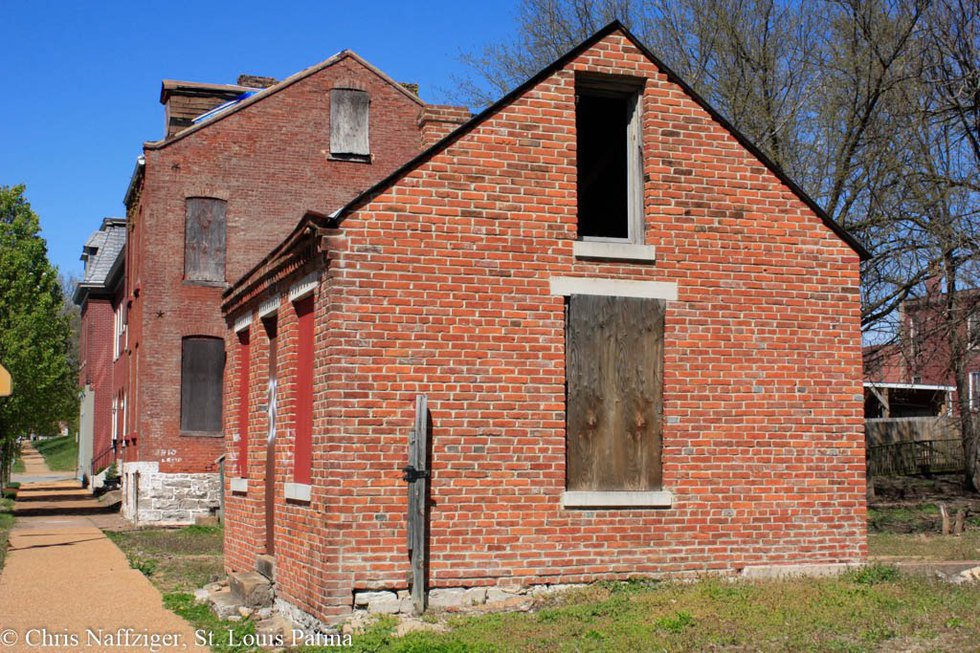
In any event, there’s plenty of history to this structure, and it’s already escaped demolition once. Over a decade ago, there was a plan to knock down the abandoned building and replace it with condominiums. Local resident Glenn Burleigh gathered signatures urging the preservation of the cottage, and it was structurally stabilized with City of St. Louis funding, then mothballed and left in excellent condition to await a viable use. Ideas suggested over the years have included turning it into a “microhouse,” for those looking for a small housing footprint, or a garden house for a community garden. The stabilized house can be seen in my photograph from 2016: The walls are plumb, straight, and the masonry and mortar are in excellent condition.
Fast forward to early this summer, when Rubicon, which has done other historic renovations and new construction in the City of St. Louis, secured the property in order to build a one-story addition that would wrap around the original brick cottage. I looked at the designs, and while the plan removes the house from public use, I thought the new addition was sensitive and complemented the original historic structure. The plans were approved by the Cultural Resources Office and the Preservation Review Board, as is necessary in Benton Park.
Around the Fourth of July, I began to hear rumblings from various people interested in historic architecture, not to mention residents of Benton Park. The pictures they showed me were shocking: A yawning hole in the ground for the foundations of the new addition revealed a non-existent foundation and a cracked brick wall on the north side of the cottage. I called 9th Ward Alderman Dan Guenther on the phone. He’s been going by the construction site, which is in his ward, every day, and he was there on the first day of excavation for the new foundation. He told me about the moment when everyone realized that the soil up against the historic cottage’s foundations was fill. In other words, it wasn’t compacted enough to hold up to the stress of the excavation the way “virgin soil,” or natural soil deposits, would have.
Online city records indicate that the house was structurally condemned on June 26. (Note: this means that unsafe conditions must be corrected, not that that a building must be torn down.) A day earlier, city records show Rubicon filing an addendum to their building permit for the addition, describing a change to the foundation. I emailed the building commissioner, Frank Oswald, for clarification but haven’t yet received a response.
I then spoke with Paul Hohmann, a nationally recognized architect in the field of historic renovations in St. Louis, who counts among his projects the Arcade Building and Metropolitan Lofts. While Hohmann was careful to couch his observations with the disclaimer he was not present for the mishap, he did offer some compelling insights.
“It looks like they should have done some stabilization before they start excavating for the new foundation,” Hohmann observed. Also, with a building the age of this cottage, the construction crew “should have excavated a couple feet at a time while [they were] digging against the foundation. If you don’t, you’re really asking for trouble.”
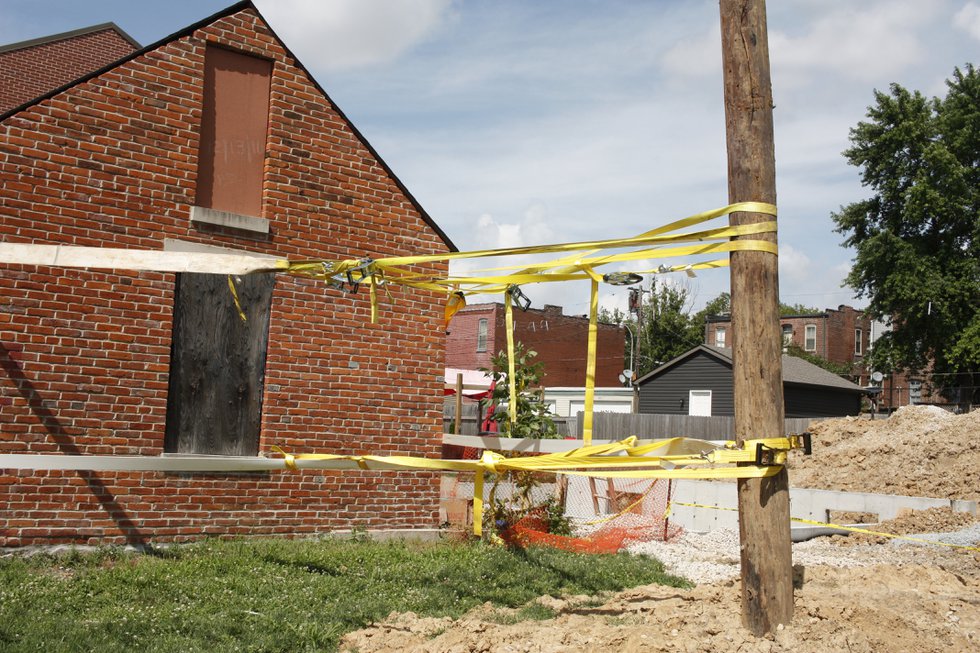
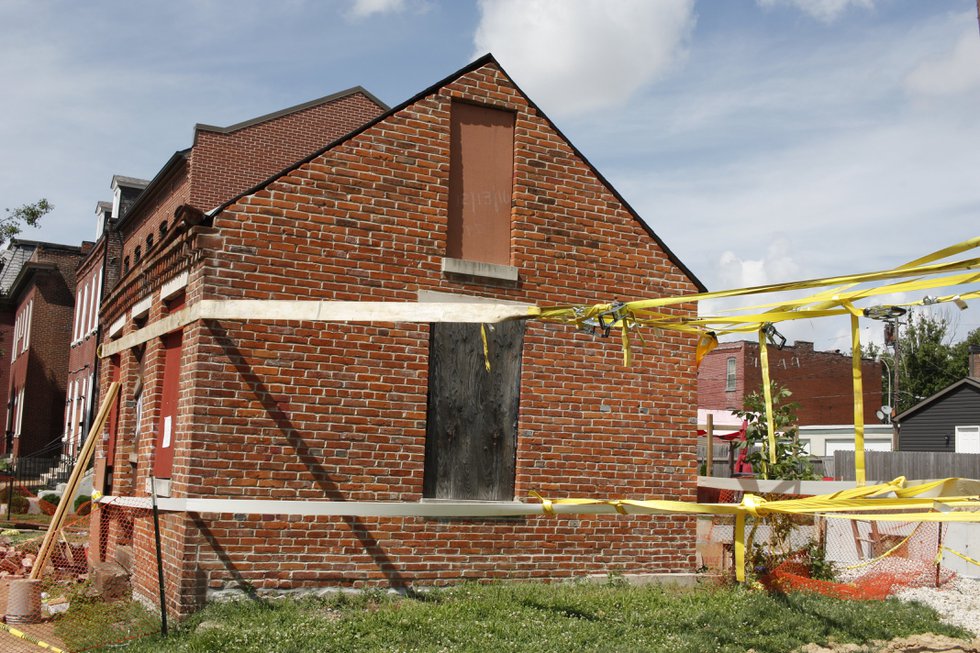
I asked Hohmann about the temporary bands that are wrapped around the house, attached to a telephone pole. He replied that he’s seen that done as a temporary solution, but judging from his tone, it’s not an optimal one.
In regard to the front wall, I asked both Guenther and Hohmann about its status. From my observations, and by comparison to my 2016 photo, it looks to be completely compromised. A large crack has opened on the right side, and the whole front façade is now out of plumb. Hohmann agreed: “They’re probably not going to be able to just pull that back into shape.” Guenther confirmed that the entire front façade will have to be deconstructed, reusing the same bricks. (I’m concerned that the bricks from the north wall, which is now completed removed, have been left in a haphazard pile on the sidewalk and are being compromised.) The whole roof will have to be rebuilt as well, Hohmann observed. At least, from outward appearances, the back eastern wall and southern side wall seem to be in good condition.
I spoke with Randy Vines, a well-known St. Louis preservationist who’s a member of the Preservation Review Board and a businessman on Cherokee Street. Speaking for himself and not the full board, Vines told me, “The loss of this building would be a real travesty. Its renovation has been long overdue. I believe it’s incumbent on the developer to secure and stabilize the building as safely and quickly as possible.”
Guenther assured me that he is keeping his full attention on this project, and that there’s no basis for the fears expressed online that the cottage will be demolished forever. The Benton Park Local Historic District assures me that the house must remain there, in that form. I emailed the president of Rubicon, Matt Hartig, asking about a timeline for laying a new foundation and stabilizing the house, and he responded: “We are working to make the building safe to continue with a new wall under the east side. Wall will be poured below grade, then stone and brick above re-laid. North elevation will be removed/repaired as needed as well.”
I am happy to hear that all parties involved, from Alderman Guenther and the Cultural Resources Office to the developer, Rubicon, are committed to saving the cottage. I’ve been following the reaction online, and many people in the Benton Park and Cherokee Street community are very upset. One commenter asked, “Is it OK to be mad about this?”
I think it is OK to be mad about this situation. Rehabbers and developers should carefully examine the conditions where they are working. No two buildings are alike.
Benton Park is missing its little Lemp cottage, and I look forward to it being restored as quickly as possible.