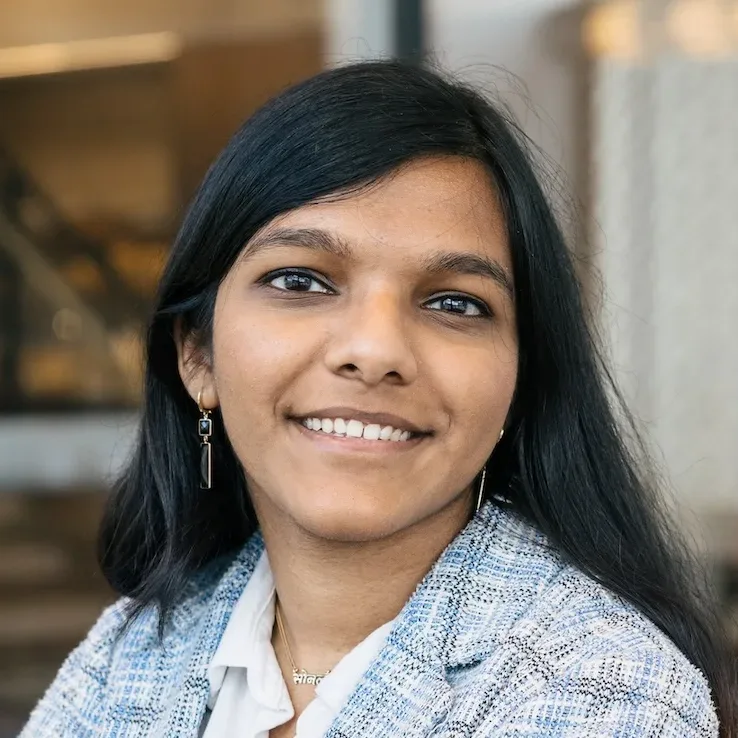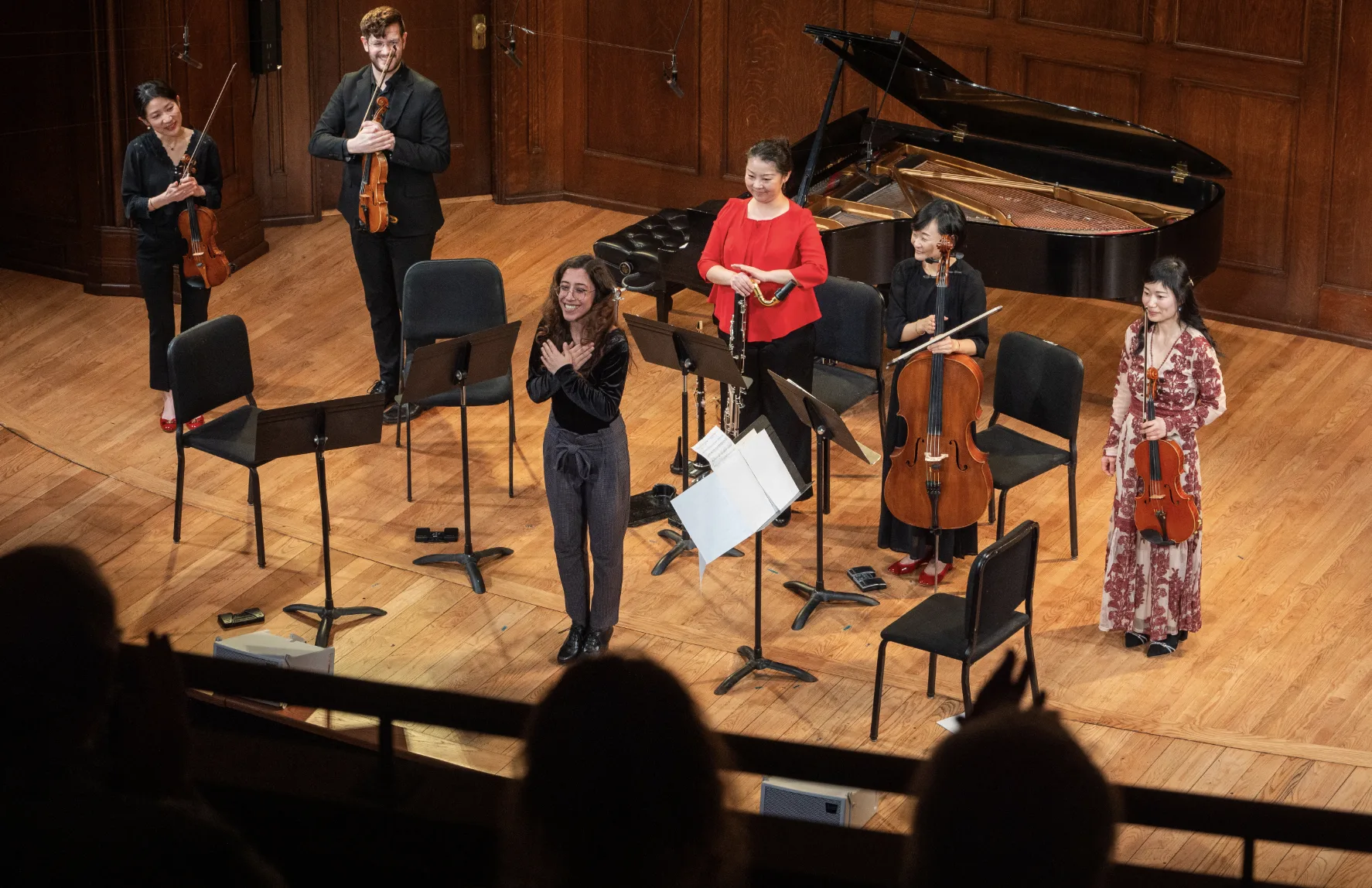
Through the Mizzou New Music Initiative, also known as MNMI, music students Mon Ieong Cheok Kai, Dominick DeStefano, and Dean Wibe spent the past year composing original orchestral works. On May 13, their compositions will come to life on the Powell Hall stage.
Ieong, DeStefano, and Wibe all come from different musical backgrounds, but their respective journeys led them to composition at the University of Missouri and the MNMI program.
Get a guide to the region’s booming music scene
Subscribe to the St. Louis Music newsletter to discover upcoming concerts, local artists to watch, and more across an eclectic playlist of genres.
Prior to the MNMI, Ieong and Wibe performed with the Mizzou New Music Ensemble, which is dedicated to showcasing new, contemporary music by living composers. As performers, Ieong and Wibe interfaced with several composers, sparking their interest in pursuing composition more rigorously.
“That exposed me to so many different types of musical styles, different ways to compose and think about music, and I just started having so many ideas of my own,” Wibe says.
Established in 2017, the MNMI program, invites three student musicians to spend the year composing a full orchestral work for the SLSO. During the year-long program, students work with artistic directors and libraries to develop their pieces. After spending the fall semester working on their compositions, the SLSO rehearses the draft during a “reading session” for composers to hear the work, after which they continue revising leading up to the performance in May. The students also learn about the technicalities of composition, such as how to integrate brief pauses towards the end of a page of sheet music so musicians can easily flip the page.
Wibe’s piece, titled Leaves Strung from Web, features several downward musical falls and interconnected lines, inspired by nature. “I was seeing you sometimes like a single leaf hanging from a spider web, but it would be dangling 10 feet from a tree,” he says. “It just felt kind of eerie. It had this presence to it.”
Ieong’s piece, originally titled in Chinese, translates to “self-balance” and is inspired by the reprieve he found from social pressures as a composer. Ieong entered University of Missouri as a performance student and added composition during his second year. As an international student from Macau, Ieong struggled to connect with other students in the program, so he took on composition.
“It let me try to escape those feelings, so I can just focus on doing music,” he says. Expressing himself through music—and hearing other student composers’ works—helped him finally connect with other musicians.
“The most exciting [part of composing] is different ways to express ourselves. And in this particular piece, I add a lot of silence in this piece…which gives us time to reflect,” he says.
DeStefano’s piece, titled Masses, is a fantasy based on hymns. “The piece pulls its materials from two Sacred Harp chorales, which is a Protestant choral tradition,” he says. “The chorales are in the piece, though hidden and obscured.”
The student composers’ different musical and personal backgrounds bring unique stylistic elements to each of their pieces. “It’s just really interesting to see [other students] creative voices and what they’re doing with the same prompt,” DeStefano says.
Throughout the process, the students exchanged ideas and learned from one another. For Ieong, coming from a percussion background, composing for an orchestra featuring so many string instruments was a learning curve. He got support from Wibe, who is a cellist.
“Dean and Dominick are very helpful…we often pass our ideas. We are friends and colleagues,” Ieong says. “I often ask [Wibe] different string techniques, which is super helpful as a composer.”
A hallmark of the MNMI is giving students the opportunity to hear their compositions performed live during a reading session so they can revise and improve, according to Paul Pietrowski, chief operating officer at SLSO.
“The composer can listen to how the colors are, the tones, or if there are any kind of rhythm changes they need to make. It really gives them the best tool to hear their work come to life,” he says. Students receive feedback from the conductor and artistic staff during the reading session, which they can then choose to incorporate into their work.
“We don’t consider the SLSO as a museum for music of just the past. It’s a space for the music of today and then a space for the music of the future,” Pietrowski says. “Having a live orchestra be a ground to experiment for a composer is really important, and it’s ingrained in our DNA.”
Since several musical technicalities cannot be fully realized on computer playbacks, hearing the work performed live during the reading session was a significant stepping stone. Ieong substantially revised his work after the reading session in December with the help of Stefan Freund, artistic director of the MNMI.
“He is basically the only one who supported me to basically change the whole piece, because he believed me, [that] I can pull it off, even though we have limited time,” Ieong says.
The program culminates in the upcoming free community concert at Powell Hall on May 13 at 8 p.m. Samuel Hollister will conduct the performance. Tickets are not required.
“I’m excited to hear how [the music] sounds, because there’s a lot of things that I can’t fully realize on my computer,” Wibe says. “It’s going to come to life.”