A St. Louis-based agtech company developing a new way to execute broad gene edits in plants has secured another $1.62 million in funding to develop its technology.
Spearhead Bio, which spun out of the Donald Danforth Plant Science Center last year, announced the oversubscribed seed round last week, which was led by BioGenerator Ventures and the Danforth Technology Company. Other investors included QRM Capital, Grit Road Partners, the St. Louis County Port Authority Helix Fund, and SDH Capital.
Keep up with local business news and trends
Subscribe to the St. Louis Business newsletter to get the latest insights sent to your inbox every morning.
“The fundraising itself allows us runway for another year and a half to two years to accomplish a number of scientific and business milestones that we’ve laid ahead of ourselves,” says Spearhead Bio’s chief scientific officer Keith Slotkin. He adds the seed round was structured as a Simple Agreement for Future Equity, or SAFE, which still means the company is eligible for funding from the National Science Foundation (it won the foundation’s Small Business Technology Transfer Phase I grant last year).
It’s another recent example of an agtech company finding traction in St. Louis. Danforth Center President Giles Oldroyd says in a statement the recent fundraising success underscores his organization’s commitment to growing the region as a global center for agtech innovation.
“Spearhead Bio’s oversubscribed raise shows investors agree: the science coming out of the Danforth Center is market-leading, and this region is the right place to build it,” he says.
Slotkin explains Spearhead Bio’s task ahead is adapting the technology that originated in his academic lab at the Danforth Center, where Slotkin is a principal investigator as well as vice president of commercialization, to work with crop development pipelines at commercial companies.
Spearhead Bio’s innovation, called TAHITI, centers on Slotkin’s research into transposable elements—pieces of DNA he likens to glue. When working alongside a tool like CRISPR, which works like a pair of scissors in the genome, the new technology from Spearhead Bio can let scientists make much larger gene edits.
“That’s a totally new area that people haven’t been able to do before, as well as things like what we call intragenic,” he explains. “So introducing large pieces of DNA, but not introducing any foreign DNA, and that means it’s regulated like a large gene edit rather than a [genetically modified organism].”
Slotkin calls middle ground the “best of both worlds,” where a scientist is able to insert a desirable trait into a specific plant in a way that doesn’t lead it to be classified as genetically modified. Because of the regulatory burden those innovations face, it can take them much longer to come to market—a fate Spearhead Bio can help plants avoid.
While Slotkin’s lab proved this capability in an academic setting, translating it to a commercial one is not trivial.
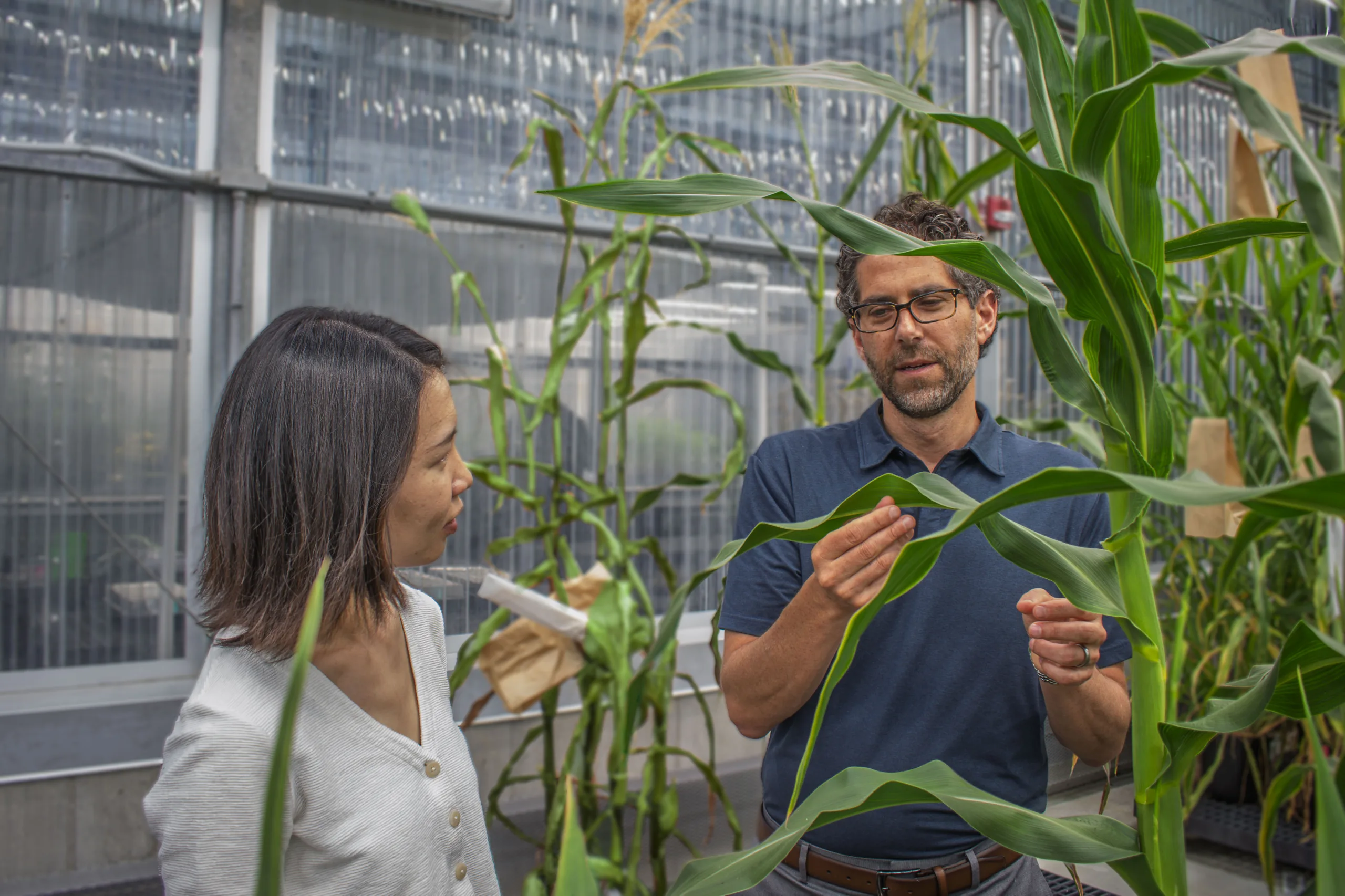
“We were analyzing plants [where] the plant is as high as my knee and it’s growing in soil. They analyze plants when they’re little tiny nubs of plants in tissue cultures,” Slotkin says. “They have to do it really early because their pipeline is so large they need to filter down to a smaller number of plants very quickly, so we needed to adapt the technology.”
Agricultural companies want to know if an edit they made is working long before a plant grows and develops, he says. And there’s plenty of appetite from ag-focused companies both large and small, Slotkin adds.
“We’re crop and trait agnostic,” he says.
Moving forward, Slotkin says the company continues to expand the number of crops its technology can work on, having started in Arabidopsis, also known as thale cress, and then moving to soy, rice, and corn. He declined to share some of the future crops as that could reveal some of the specific companies he’s working with.
“People understand what they want to engineer, they just have no way to do it efficiently,” Slotkin says. “That’s where Spearhead Bio is useful.”