In May 2026, Julieta Imperiale established NanoJump Bio‘s U.S. operations in St. Louis while continuing operations in Argentina. The move came as the company approached a key transition: Its DNA-extraction chemistry had been validated, and the next step was turning it into a functional device that customers could use.
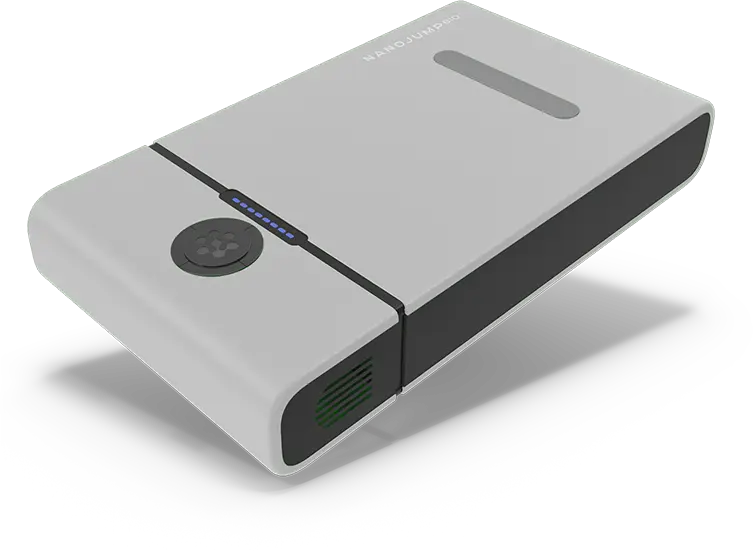
NanoJump is developing an automated device designed to extract and purify DNA or RNA at the site where a biological sample is collected. The company is starting in agriculture, where plant and soil samples may travel long distances before genetic analysis can begin.
Keep up with local business news and trends
Subscribe to the St. Louis Business newsletter to get the latest insights sent to your inbox every morning.
Imperiale, a pharmacist with a Ph.D. in nanotechnology, came to St. Louis after NanoJump was selected for Arch Grants’ 2025 cohort. Gabe Angieri, Arch Grants’ outgoing executive director, says the company stood out both for its technology and its fit with the region’s agricultural strengths.
“NanoJump Bio is a particularly interesting company,” Angieri says. “Julieta is developing really cool technology that would be a game changer.”
Agriculture also made St. Louis a natural landing spot, Angieri says. Over decades, the region has built a dense agtech ecosystem around such institutions as the Donald Danforth Plant Science Center, Bayer Crop Science, and the 39 North Agtech Innovation District, bringing plant science research, agricultural companies, startups, investors, and specialized talent into close proximity.
Emily Lohse-Busch, executive director of 39 North, says St. Louis now has more than 85 agtech startups and companies. TIME also recently named BioGenerator, BioSTL’s startup arm, among “America’s Best Incubators and Accelerators of 2026.”
Giles Oldroyd, president of the Danforth Center, says that concentration matters as much as the region’s relatively affordable facilities.
“Competitively priced facilities within a thriving ecosystem are very attractive,” Oldroyd says. “Competitively priced facilities on their own are not enough. You have to have the ecosystem.”
For NanoJump, that ecosystem is already proving useful. Imperiale has connected with companies including Solis Agrosciences, BioHeuris, Plastomics, Cicadea Biotech, and Ceres Demeter, opening conversations with potential customers interested in testing the device once a functional prototype is available. NanoJump has also connected with Missouri Enterprise, which has introduced the company to several St. Louis-area prototyping and manufacturing providers as it explores local production options.
“Competitively priced facilities on their own are not enough. You have to have the ecosystem.”
Moving Into the Field
To understand NanoJump’s pitch, it’s helpful to start with one of the first steps in genetic analysis. Researchers collect a biological sample, extract and purify the DNA or RNA inside it, and then analyze that material using technologies such as PCR or sequencing. Imperiale says the tools used for analysis have advanced quickly, while extraction often remains tied to the laboratory.
“We are developing a portable and automatic device that brings the extraction step to the place where the sample is collected,” Imperiale says.
Moving that step into the field could save time, but it could also preserve a more accurate picture of the sample itself. Soil offers one example. The microorganisms inside a sample remain alive after it is collected, meaning some can die while others grow as the sample is transported.
“If you can extract the DNA at the moment you collect the sample, you can preserve something much closer to a snapshot of the soil at that specific moment,” Imperiale says.
Plant breeders face a different version of the same problem. A breeder searching for a particular genetic trait may start with thousands of young plants and ultimately keep only a fraction of them. Extracting DNA on-site could allow breeders to identify promising plants sooner, rather than waiting for samples to be shipped and processed elsewhere.
NanoJump has spoken with more than 20 organizations in several countries interested in evaluating the technology, Imperiale says. Across those conversations, the same problems surface: transportation delays, changes to samples in transit, and restrictions on transporting whole or unprocessed samples across borders.
Agriculture is the company’s first market, but Imperiale sees a broader one. The technology could eventually have applications in health care, food testing, forensics, and biodiversity research.
“If you can extract the DNA at the moment you collect the sample, you can preserve something much closer to a snapshot of the soil at that specific moment.”
From Prototype to Product
NanoJump has generated strong results by extracting DNA from agricultural samples. Now it has to make that chemistry work reliably inside a complete device.
The company is integrating its extraction process into a functional prototype, with customer validation expected to follow. It is also continuing intellectual property work, seeking capital, and weighing how the device could be manufactured at a price that customers will pay.
For Imperiale, who spent about 15 years as a researcher before becoming an entrepreneur, that has required a different way of thinking about the technology. “One thing is to work in the laboratory,” Imperiale says. Creating a commercial product “is very different” because the company also has to account for equipment, regulation, manufacturing, and price. “If you make a product that is very expensive, you turn into a noncompetitive startup,” she says.
Those questions become more consequential as NanoJump gets closer to putting a complete prototype in customers’ hands. The company has not yet begun those tests, but Imperiale says conversations in St. Louis have echoed what she heard during earlier customer research elsewhere.
“We are hearing the same needs we have already heard in other markets,” she says.
“What I hear from companies a lot of the time is that they’re shocked at how well things work together.”

Building in St. Louis
The next question is whether the connections that NanoJump is making in St. Louis can help the company close the gap between a working prototype and a commercial product.
Lohse-Busch says companies entering the region’s agtech sector often notice how readily local organizations make introductions across the industry. “What I hear from companies a lot of the time is that they’re shocked at how well things work together,” she says. Lohse-Busch describes the role as “connecting the dots” among companies, investors, researchers, and service providers.
For NanoJump, that network could become particularly important as Imperiale considers how the device will be developed and manufactured at scale. Missouri Enterprise has introduced NanoJump to several St. Louis-area prototyping and manufacturing providers as the company explores local product development and manufacturing options. NanoJump has not yet begun substantive conversations with those providers, and no product development or manufacturing agreements have been finalized.
There is still plenty to prove. NanoJump needs to finish the prototype, validate the complete system with customers, raise additional capital, and determine whether it can manufacture the device at a price the market will accept.
Over the next year, Imperiale hopes to begin customer pilots and build commercial relationships, including some in St. Louis. For her, the clearest measure of success would be practical: customers or partners testing NanoJump’s technology here and progress toward market that can be traced, at least in part, to the company’s move.
“I have to say that I already feel very good about that decision,” Imperiale says.

St. Louis Magazine’s “Spotlight on Bioscience” series is supported by BioSTL, a St. Louis–based nonprofit dedicated to turning the region’s world-class research strengths into high-growth startups, a skilled workforce, and a globally recognized innovation hub.